Self-growth
 Apps & Digital Tools
 Business & Career
 Success
 Growth Tools
 Psychology
 Communication
 Relationships
Key takeaways:
11% can’t recall the last time they tried something completely new.
94% turned to familiar shows, books, or music over new media in the past year, and 66% have canceled real-life plans to rewatch something old.
41% have chosen a partner they weren’t very attracted to because they offered safety and stability.
52% have turned down a job, trip, or relationship because it felt like too big a leap. Likewise, 29% say financial uncertainty holds them back.
However, having prioritized familiarity, 50% admit they’ve grown bored with their current lives.
Exploring something new is good for the mind. It lifts your mood, forces you to think, and keeps you sharp. But it can also be scary. You don’t know what to expect or whether you’ll like it.
It’s much easier to stick to your routine, doing the same things day in, day out. Familiarity is comforting and convenient. But it doesn’t challenge you or help you grow.
Headway app surveyed 2,000 adults on how often they try new things, what stops them from stepping outside their comfort zone, and the consequences of staying stuck in their ways.
Daily deja vu: Are new experiences becoming a novelty?
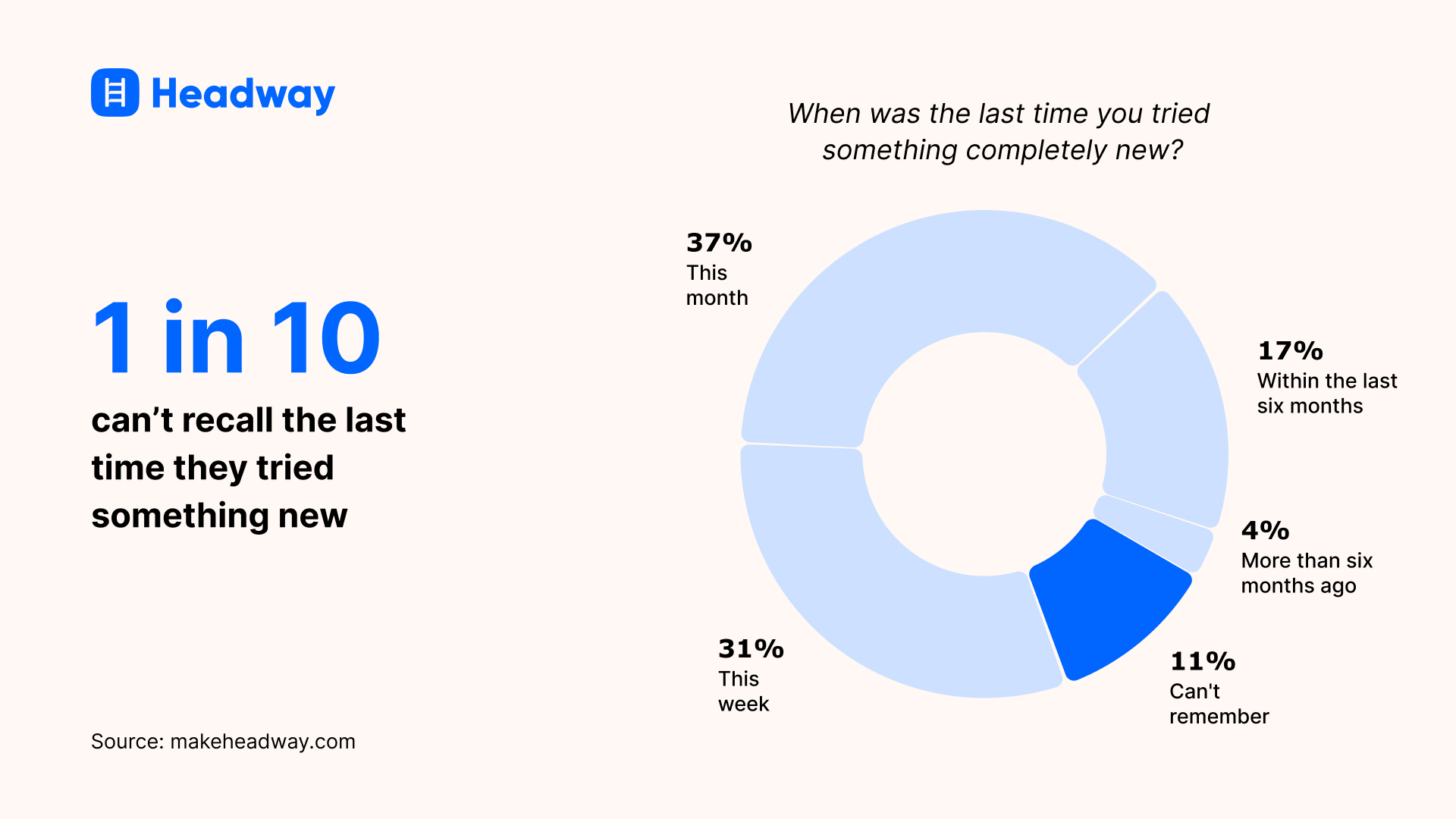
Most have tried something new in the past week (31%) or past month (37%). However, for 11%, their last ‘first’ was so long ago that they’ve forgotten it.
Rewind, rewatch, repeat: The rise of comfort content
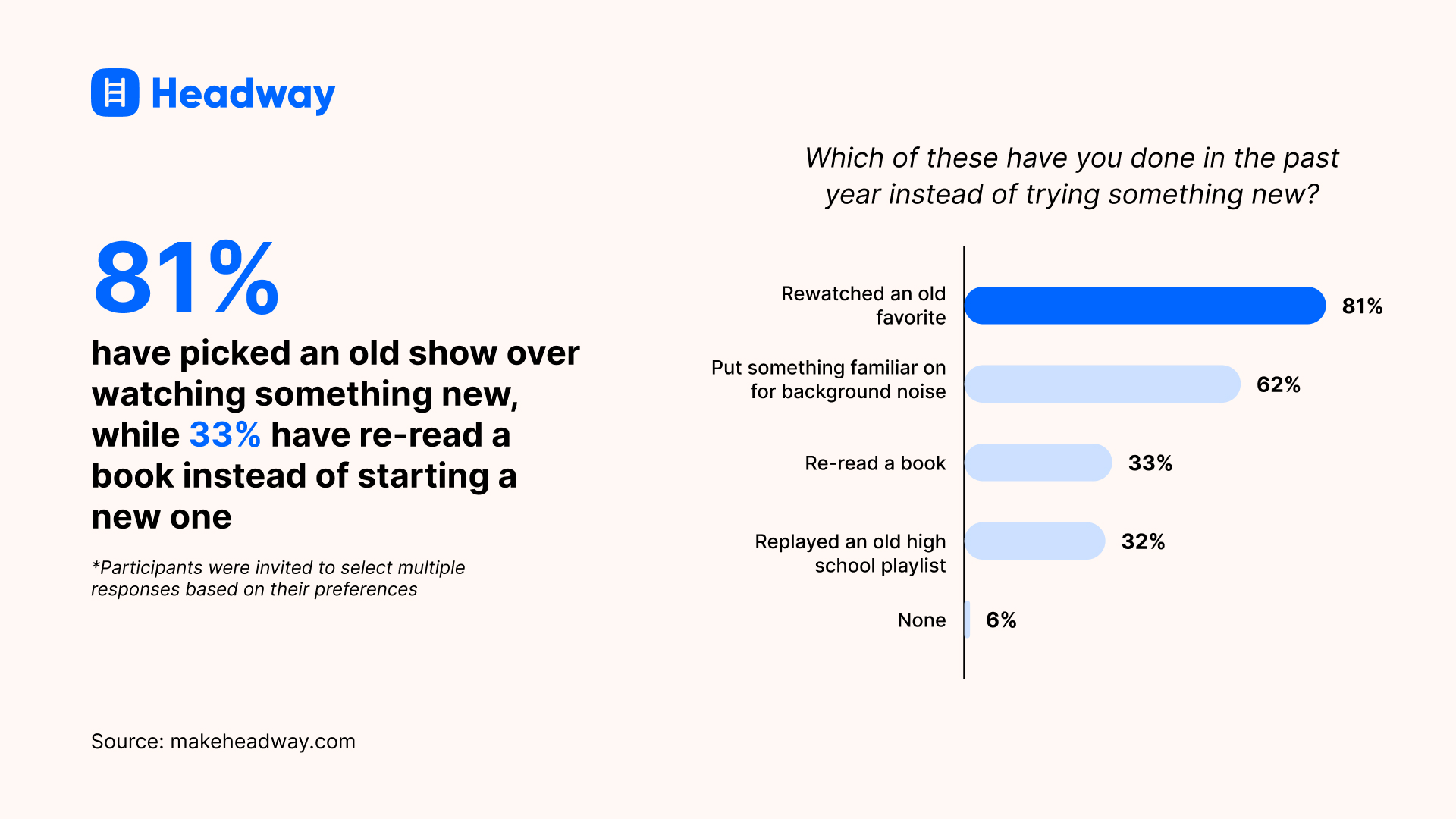
Streaming services, audiobook portals, and social platforms offer near-limitless new entertainment and information…Yet, despite so much choice, 94% tune to the same old shows, books, and songs. In the past year, 81% rewatched old favorites, 62% put on familiar shows for background noise, 33% reread dog-eared books, and 32% re-live their youth through their teenage playlists.
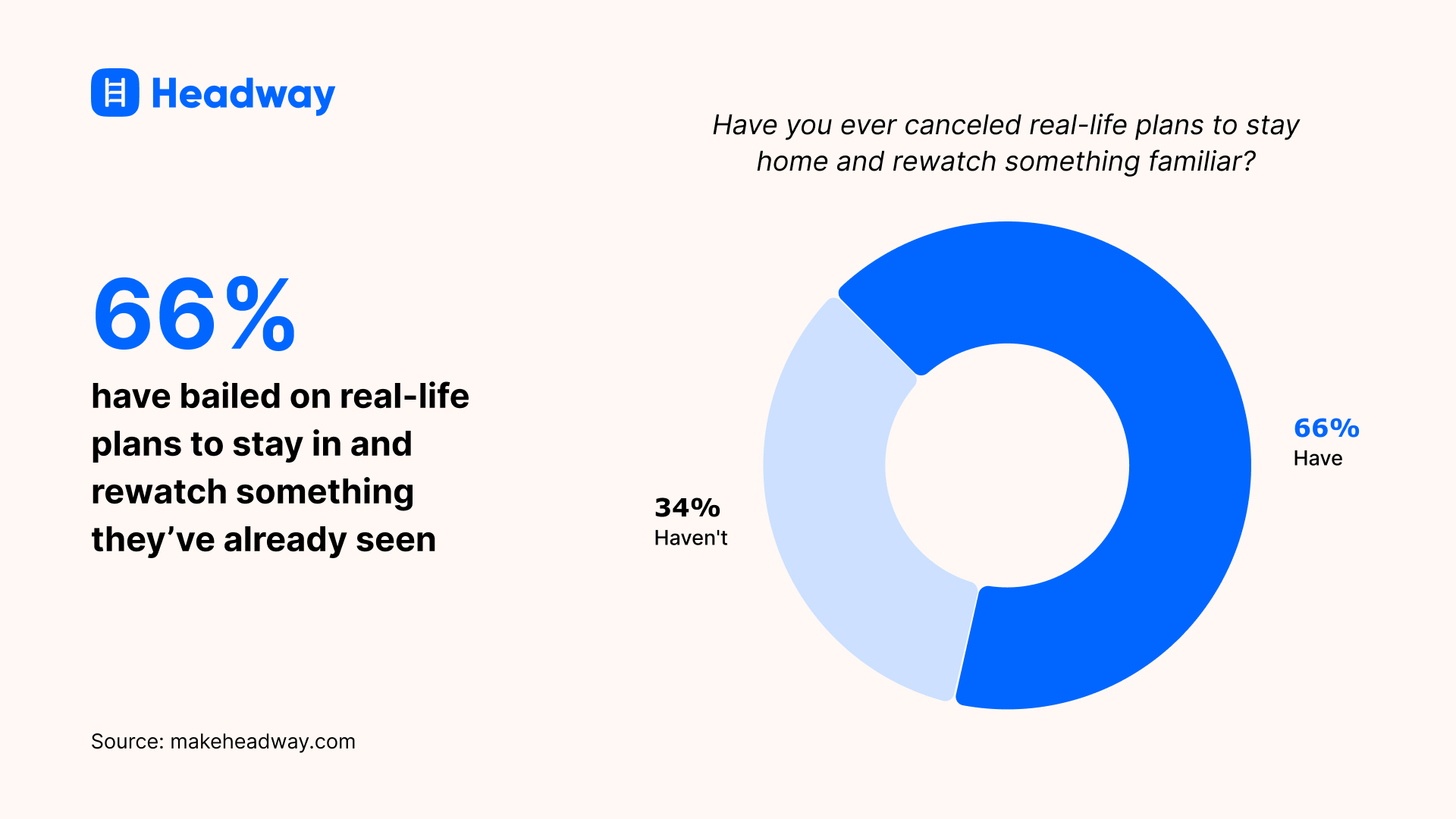
It isn’t just new shows that many are hitting pause on. It’s nights out, new connections, and novel experiences, with 66% having canceled real-life plans to stay in and watch something they’ve seen countless times before.
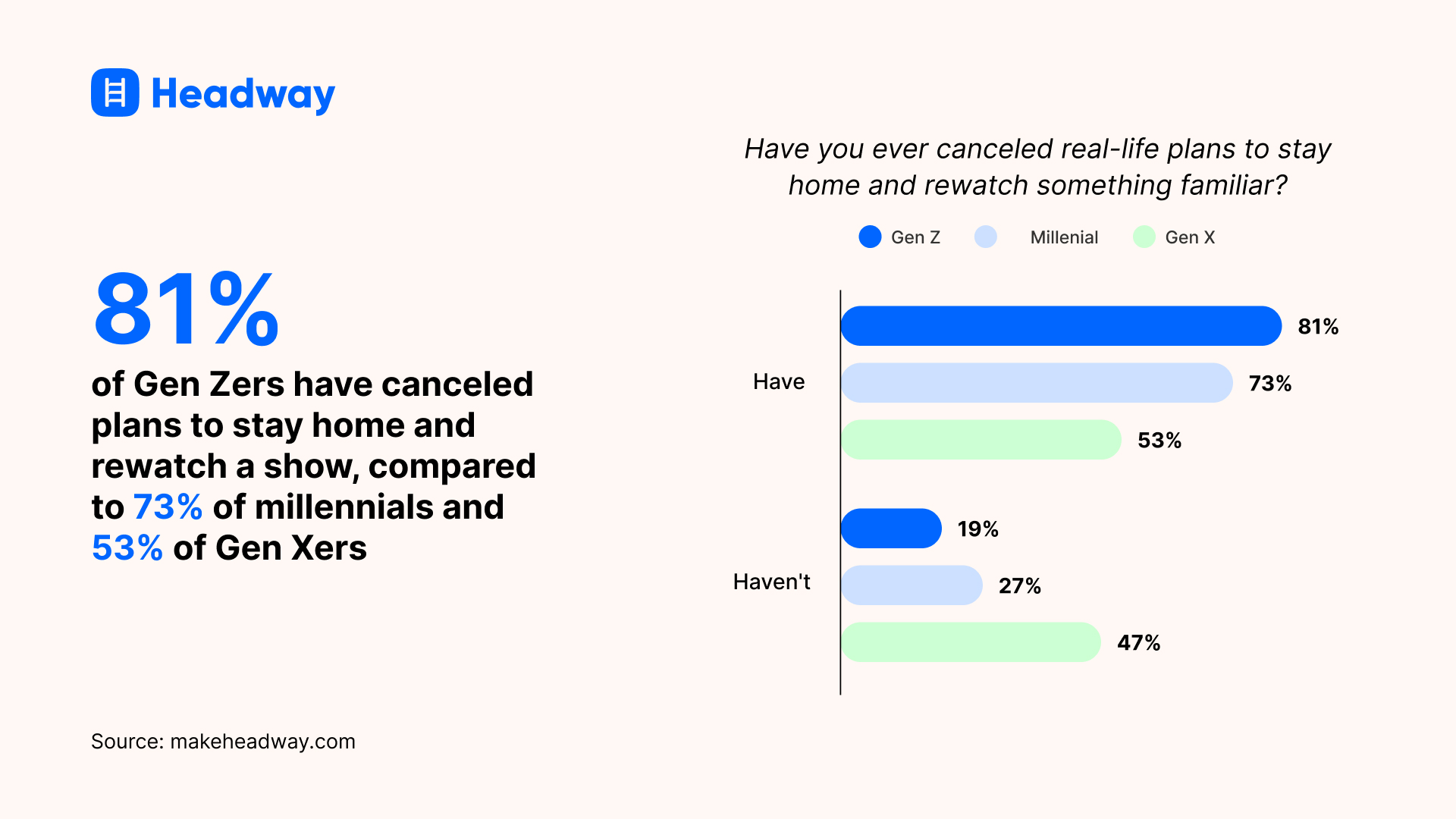
And it isn’t a case of getting older and settling down, either. In fact, younger generations are more likely to choose reruns over real life – with 81% of Gen Zers and 73% of millennials having canceled plans to watch an old show, compared to 53% of Gen Xers.
Brains, beauty, or a safe bet? Our attraction to familiarity
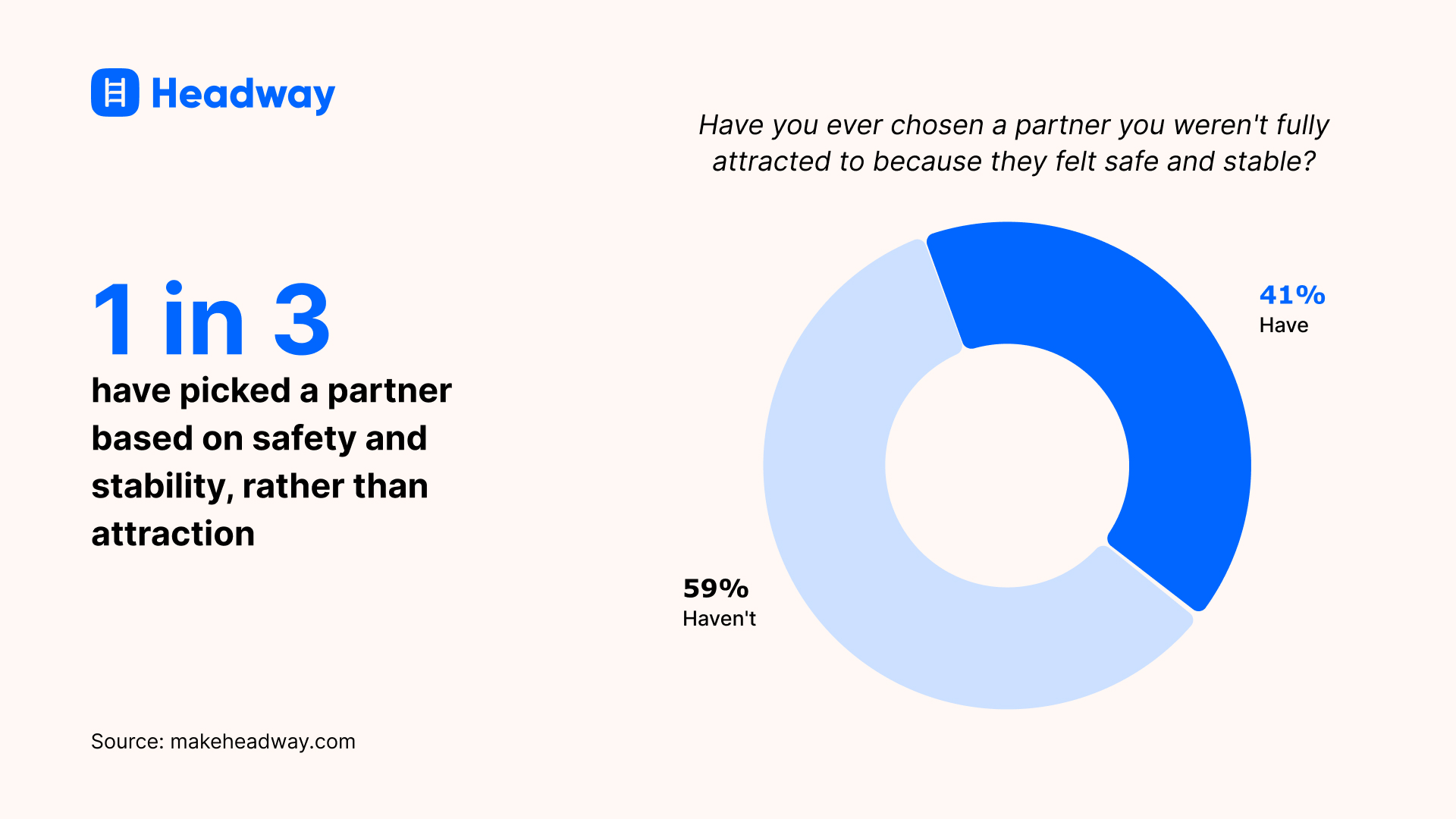
Not every romance starts with a spark. In fact, attraction isn’t even a deciding factor, with 41% having started a relationship with someone who didn't quite spark their interest, solely because they felt safe and offered stability.
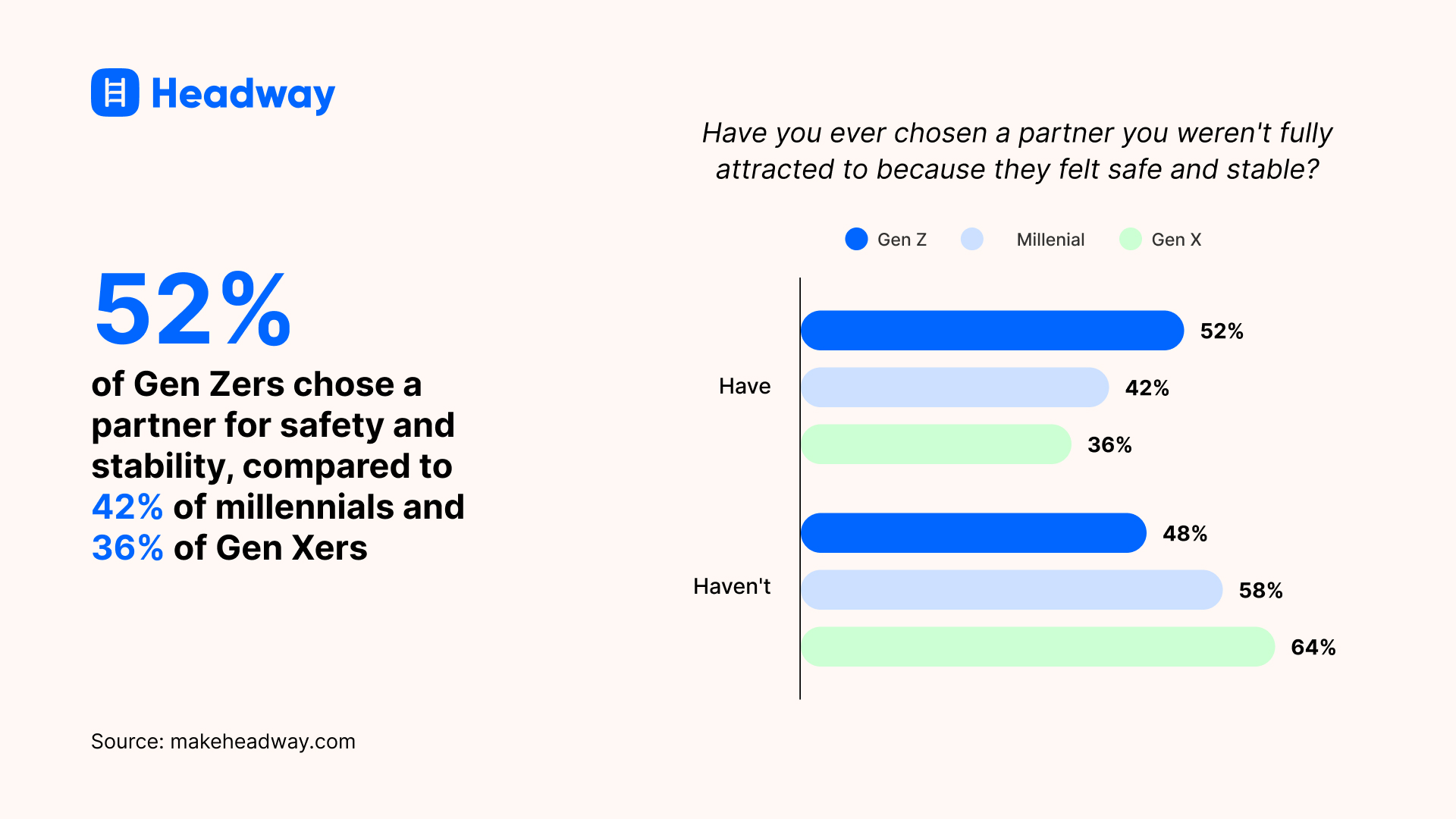
Having come of age during turbulent times, Gen Zers are unsurprisingly those most likely to seek comfort over chemistry, with 52% having picked a safe and stable partner they weren’t really attracted to, compared to 42% of millennials and 36% of Gen Xers.
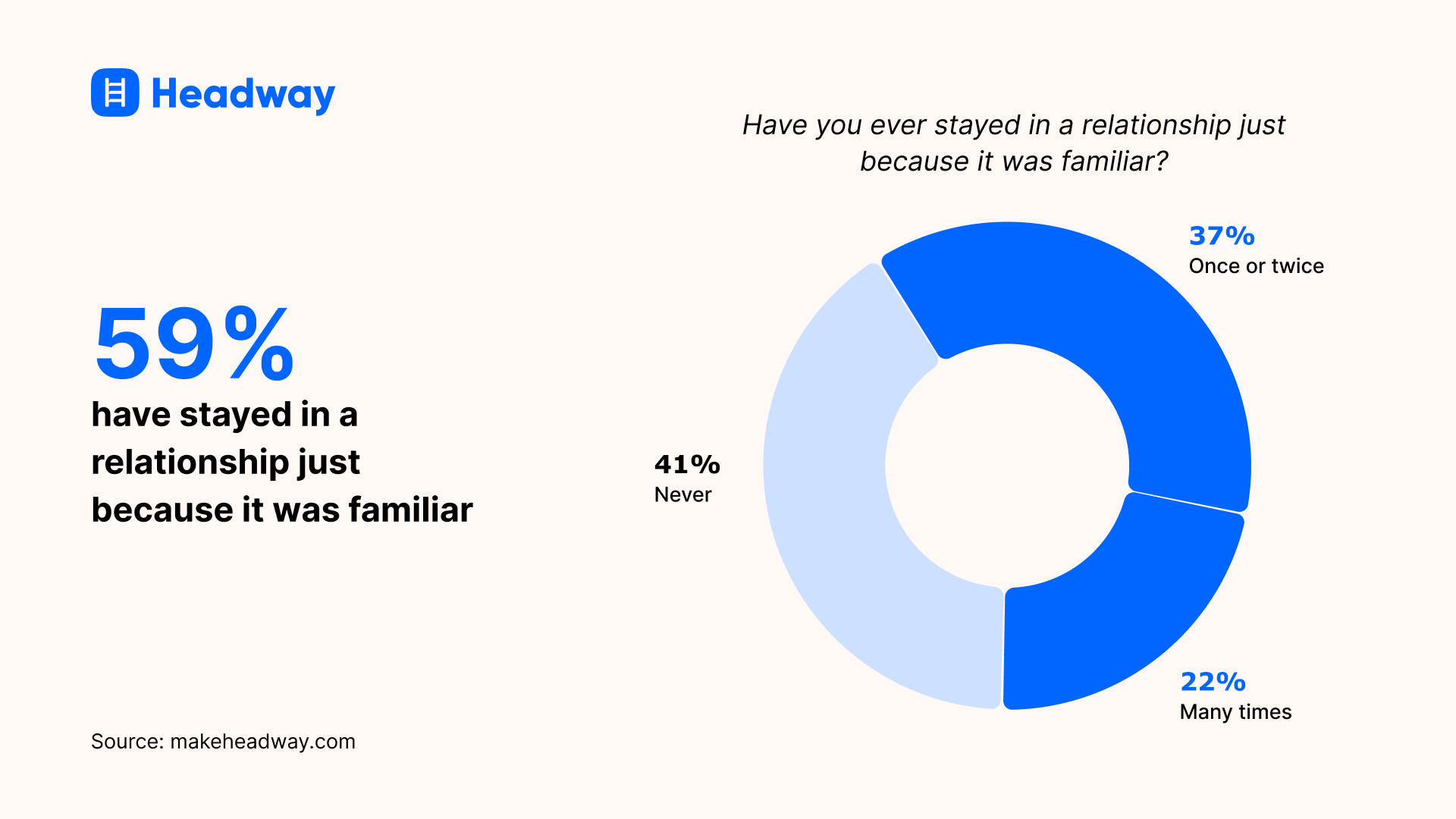
Connections fade, and relationships break down, but even if you know it’s over in your heart, your head often encourages you to put off the inevitable breakup – 59% say they’ve stayed in a relationship just because it was familiar, with 22% frequently ignoring their feelings.
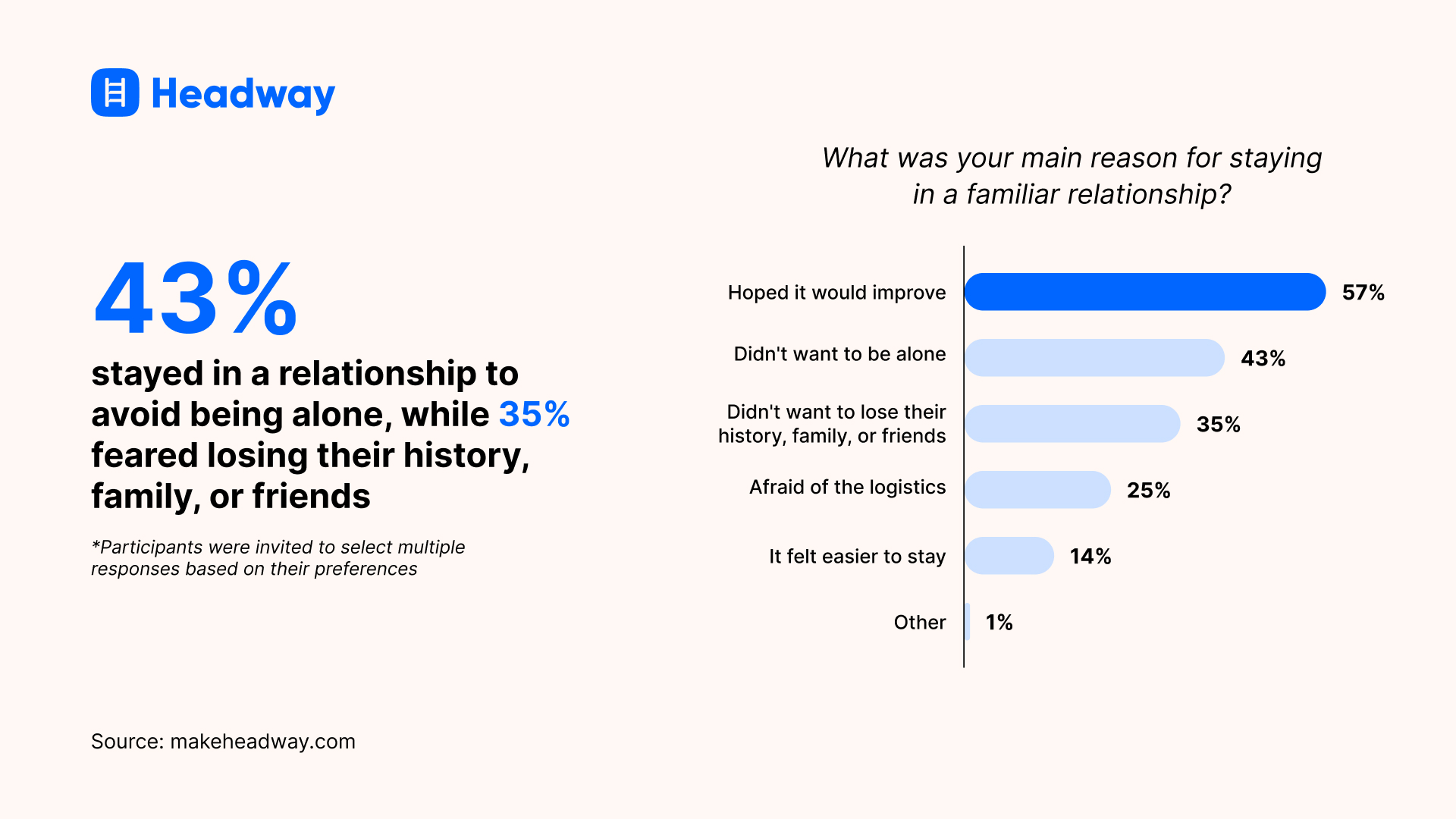
Some 57% stay in relationships that aren’t working, hoping the good times will return.
However, for many, it’s not about optimism, but comfort and convenience. Some 43% fear being alone, 35% don’t want to lose their history, family, or friends in the breakup, and 25% don’t want to deal with the logistics of moving out and moving on.
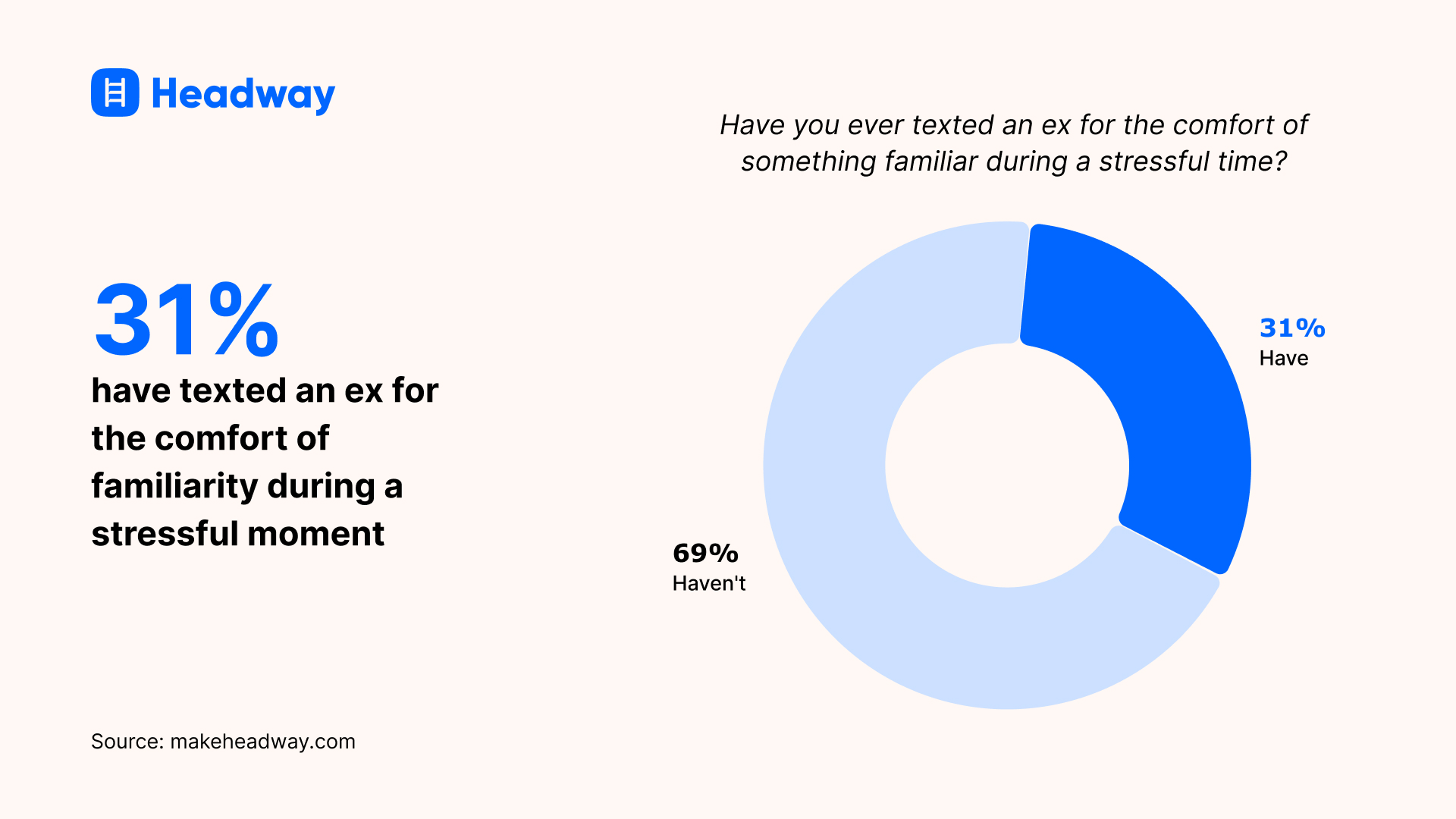
Relationships that aren't working typically reach a breaking point. But for some, “It’s over” really means “It’s over… until I need a shoulder to cry on.” When times got tough, 31% admit they turned to an ex for comfort.
Outsourcing overthinking: Leaving the difficult decisions to AI
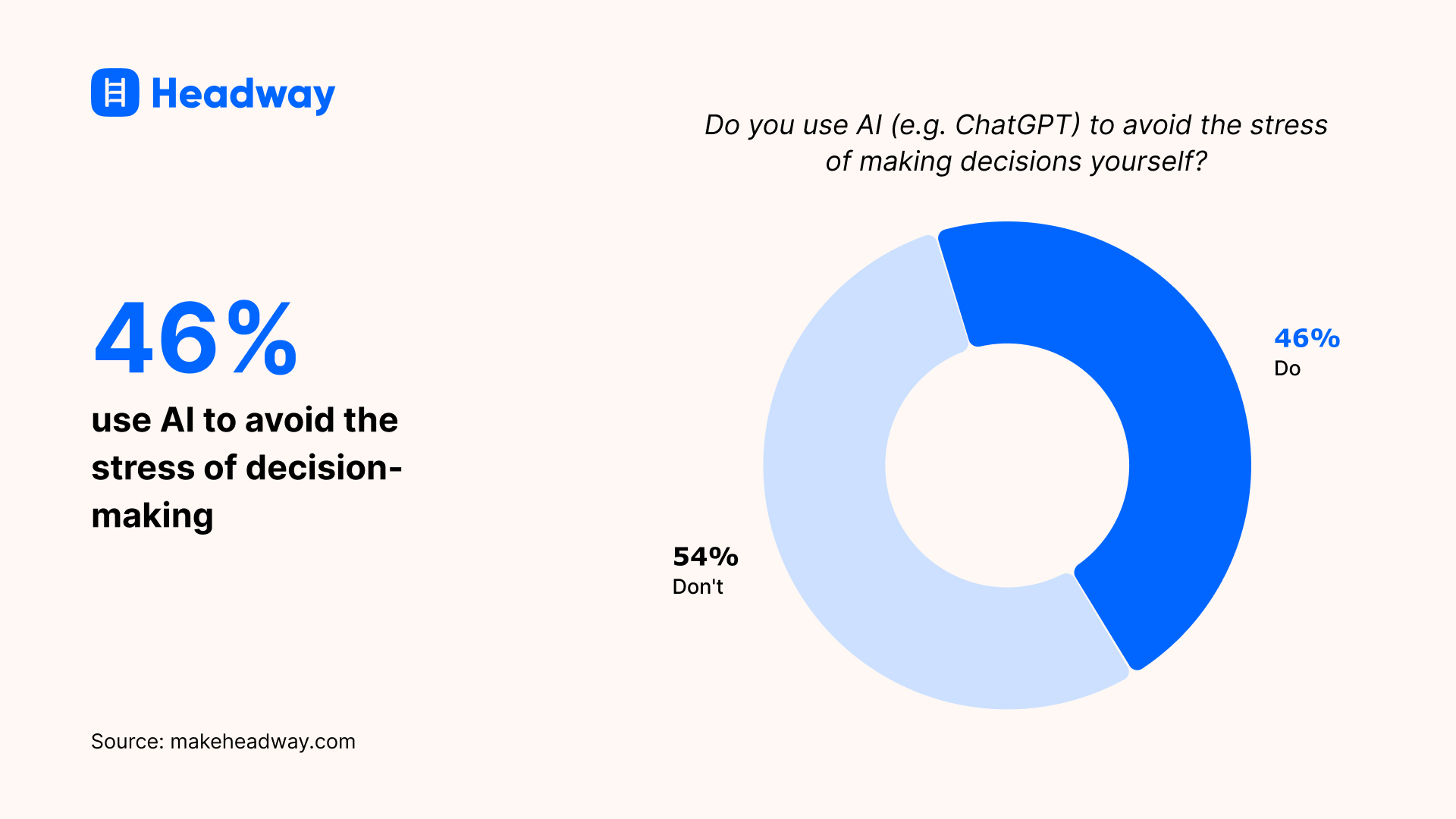
Decision-making is stressful. There are endless options, and that nagging feeling of “What if I make the wrong choice?” Instead of pausing to think or trusting their gut, 46% have found an easier, more convenient alternative – outsourcing the stress and letting AI make the tough calls.
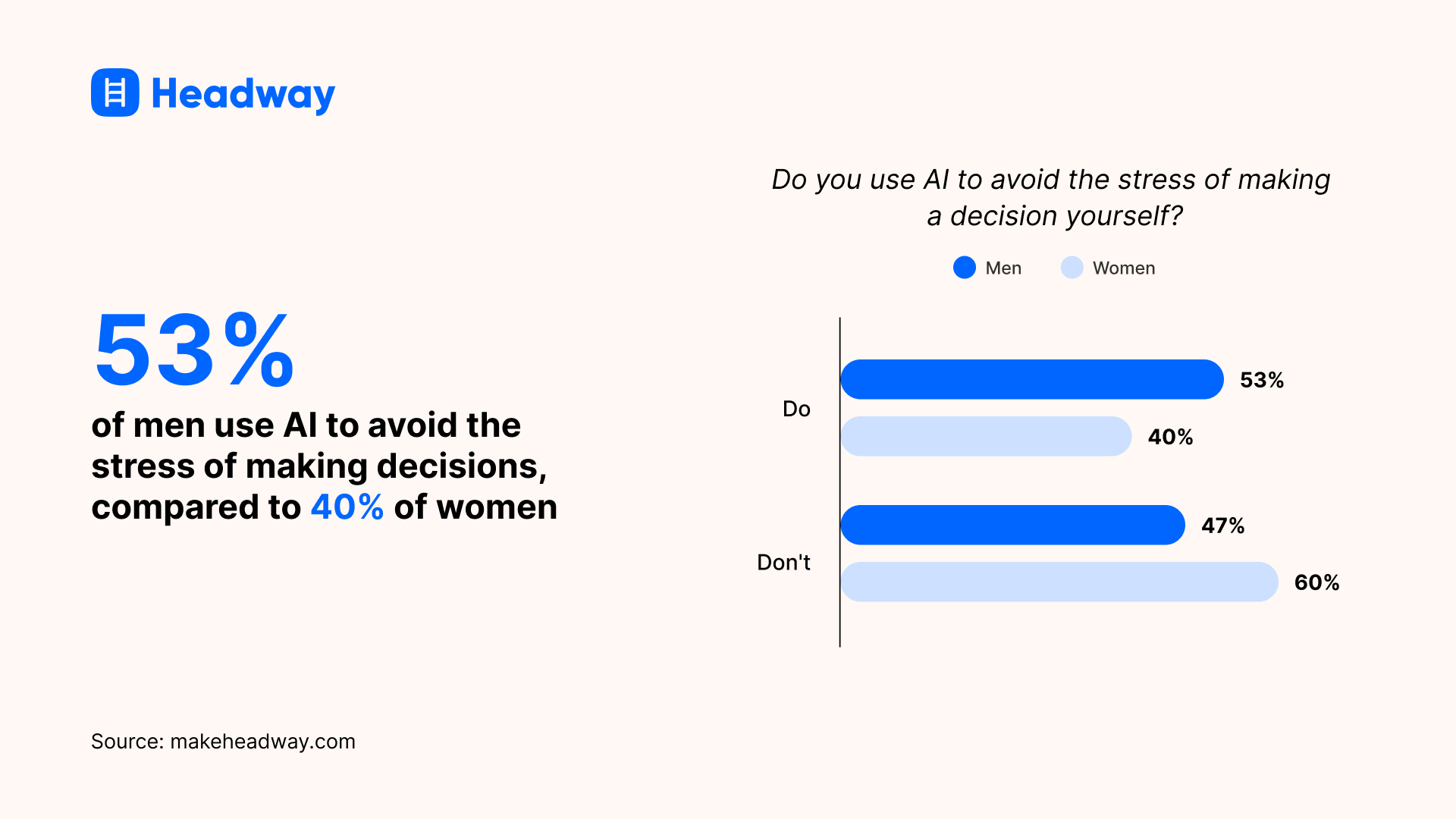
Men, in particular, are happy to let AI take charge, with 53% using the technology to sidestep decision-making, compared to 40% of women.
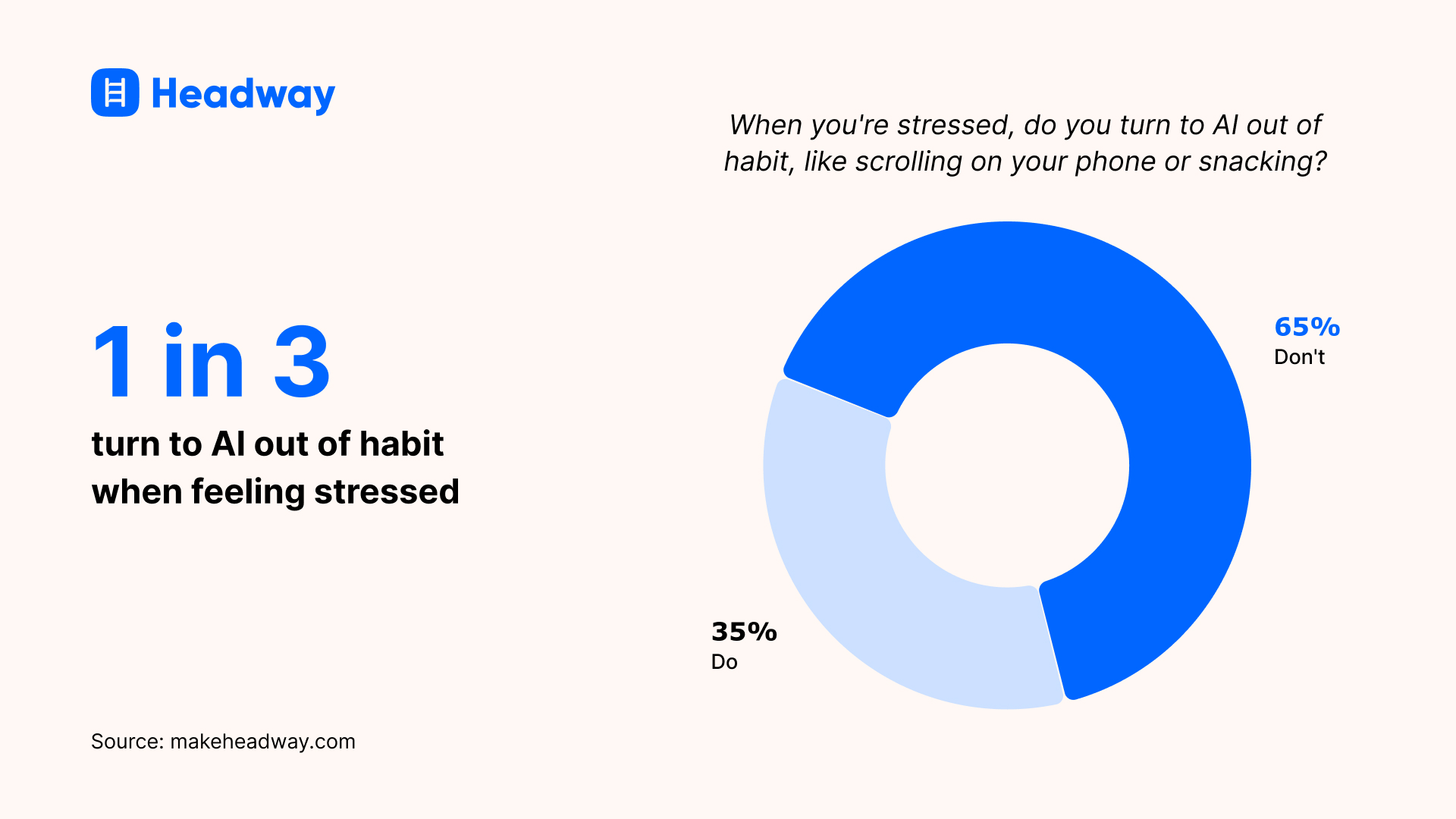
So much so that it’s become a habit. During stressful moments, 35% instinctively reach for their phones and ask AI to solve their struggles.
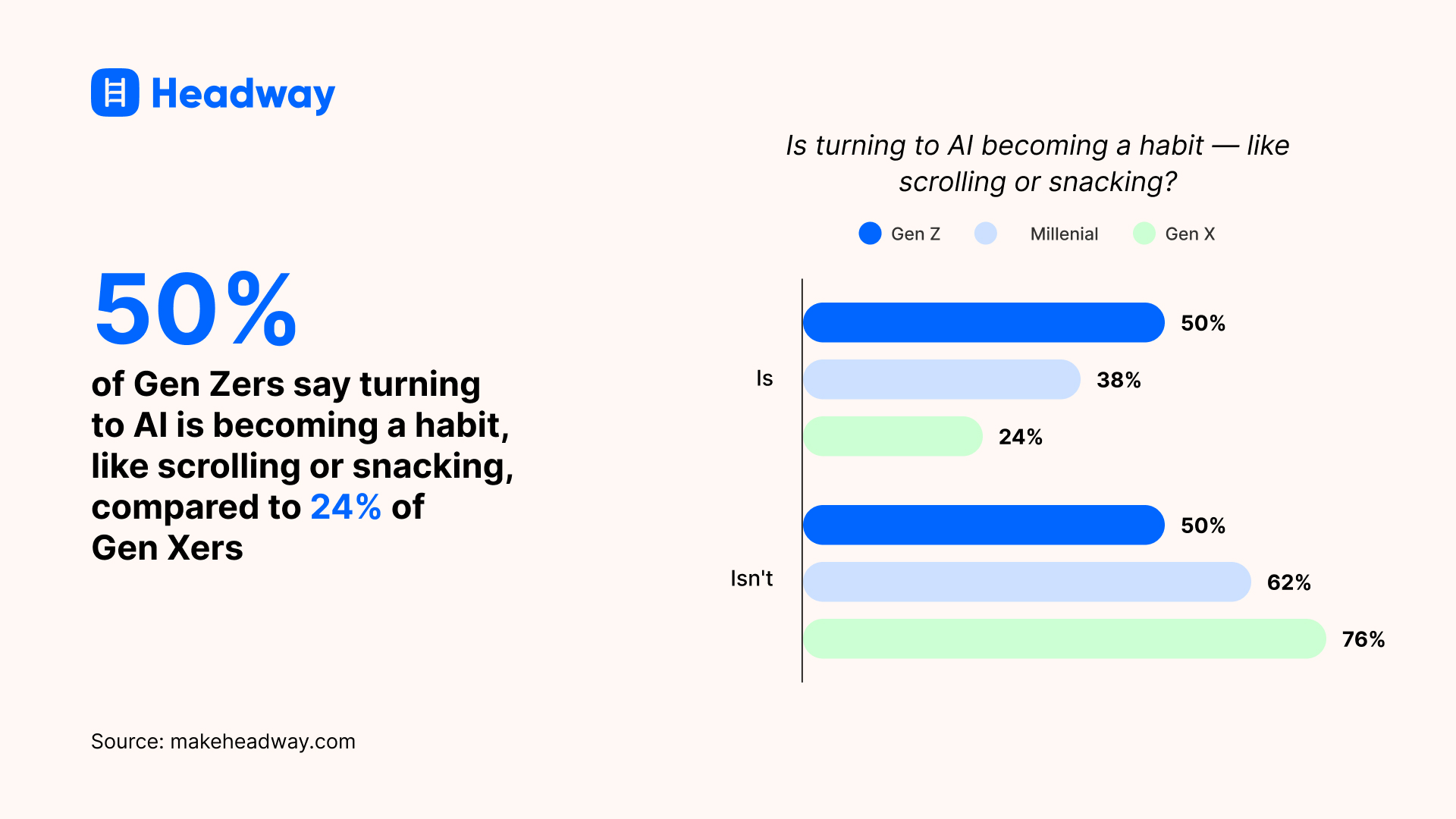
For 50% of Gen Zers, turning to ChatGPT, Gemini, or Claude is now as automatic as scrolling social media or reaching for a snack – more so than millennials (38%) and Gen Xers (24%).
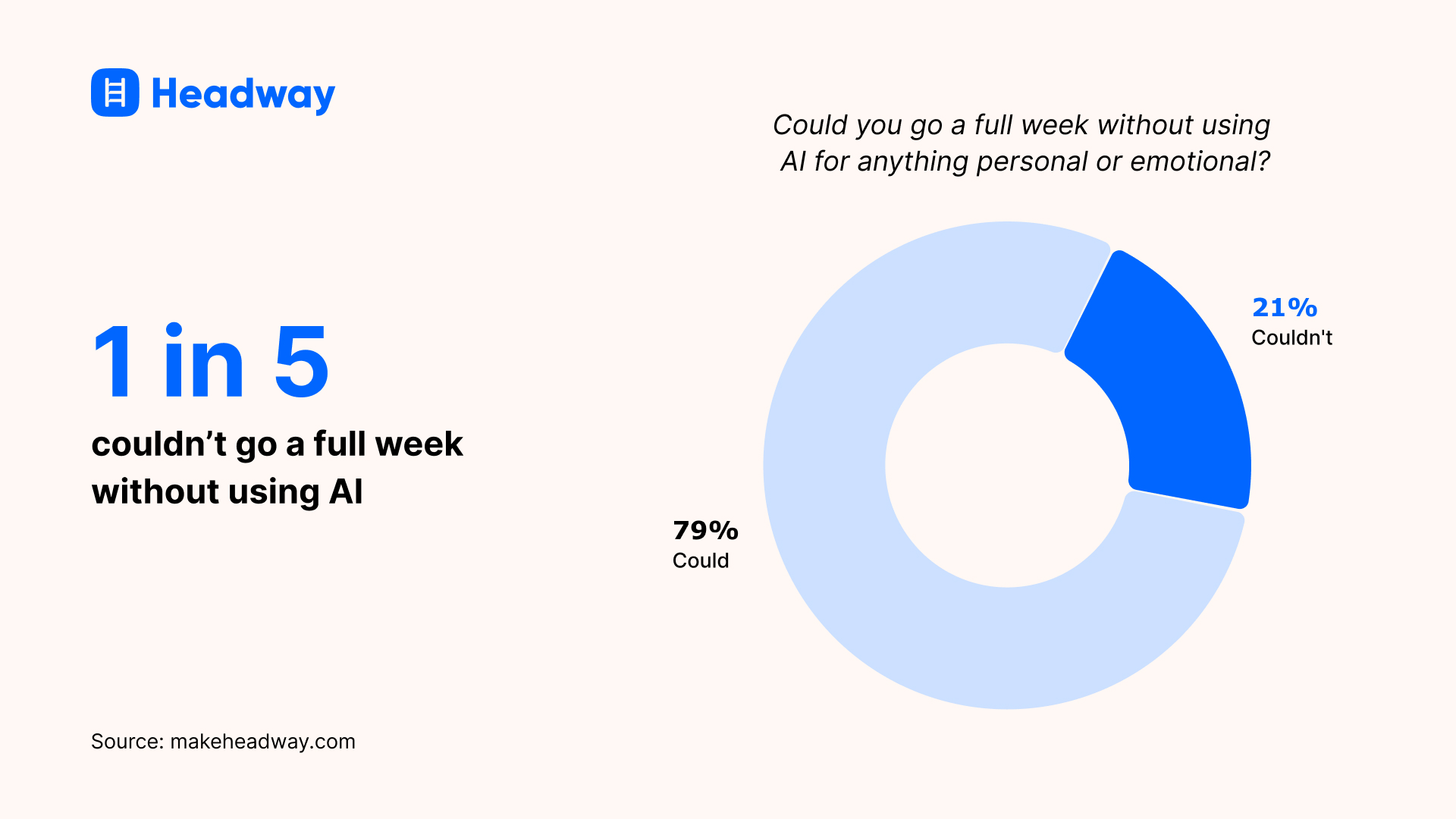
There’s comfort in having someone to offer advice during stressful times and convenience in getting immediate, in-depth answers to any doubts. AI offers an easy escape from the stress and uncertainty of figuring things out alone, and 21% now say they couldn’t go a full week without it.
Creatures of habit: Why we stop seeking new experiences
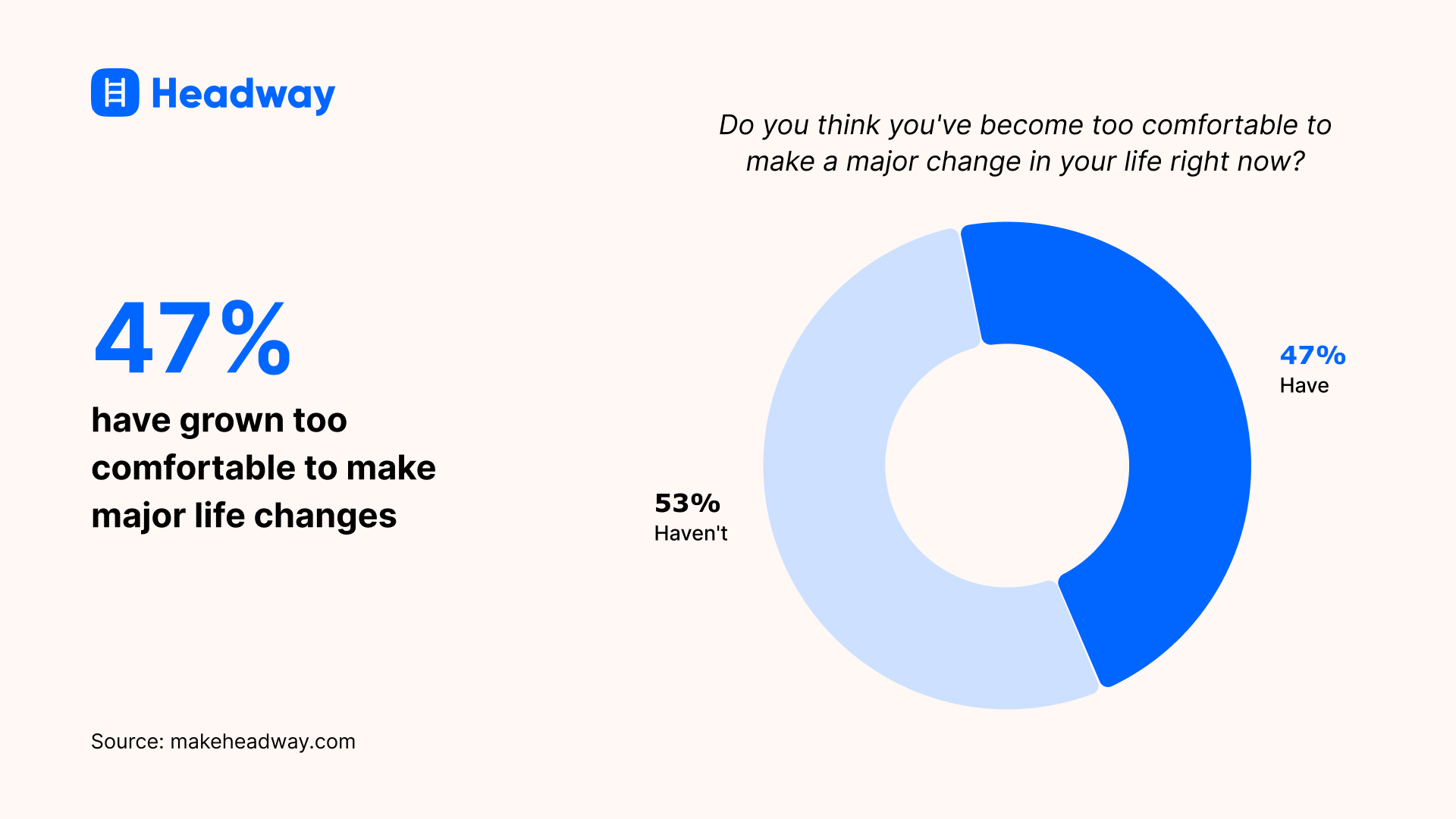
Some 47% admit they’ve grown too comfortable to make major life changes. Nobody wakes up and decides, “Today’s the day I start living on a loop.” But somewhere along the way, life gets comfortable – and the potential reward of pursuing change no longer feels worth the risk.
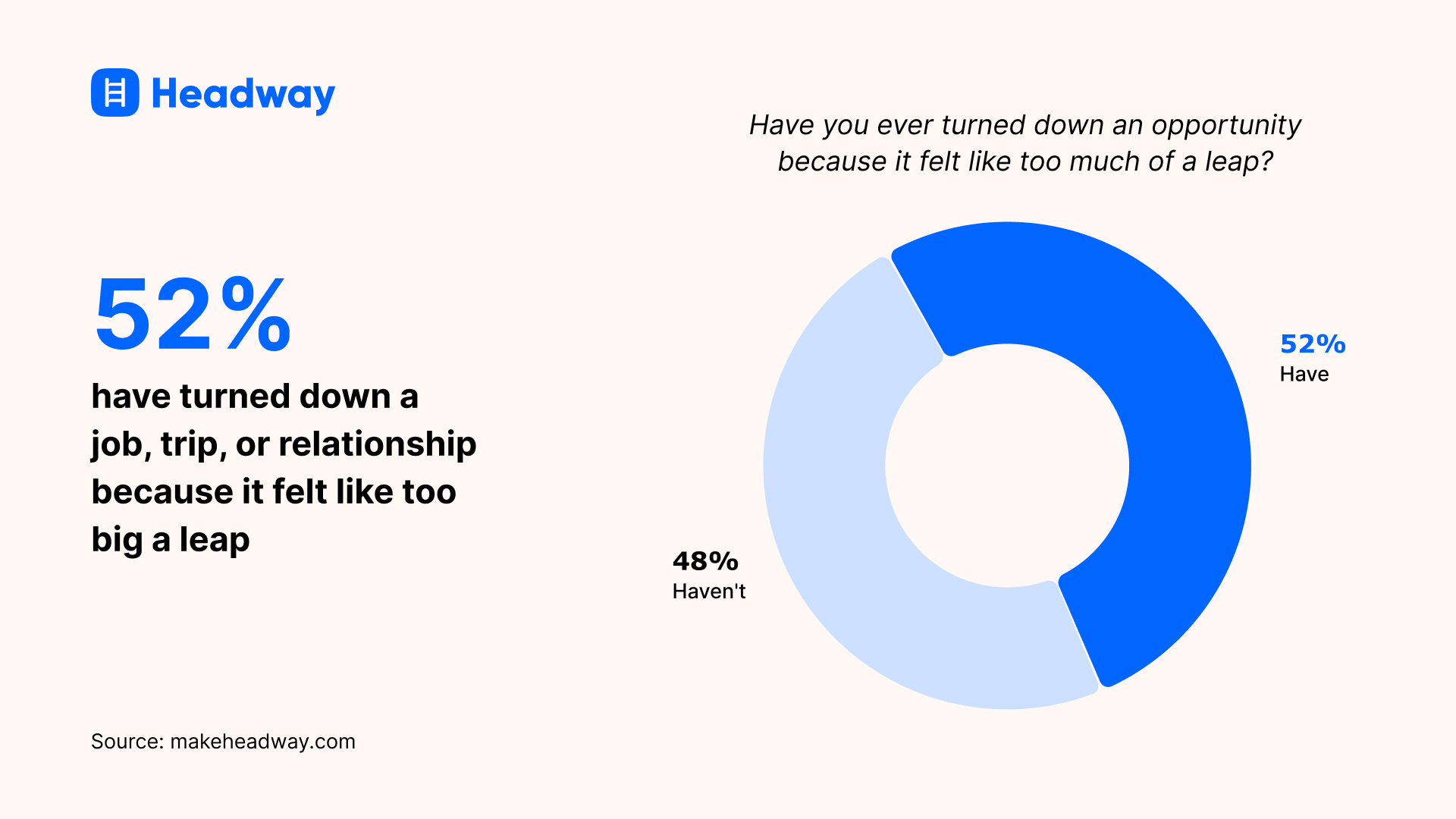
That comfort can be costly, with 52% admitting that they’ve turned down a job opportunity, trip, or potential relationship simply because it felt like too big a leap to take on.
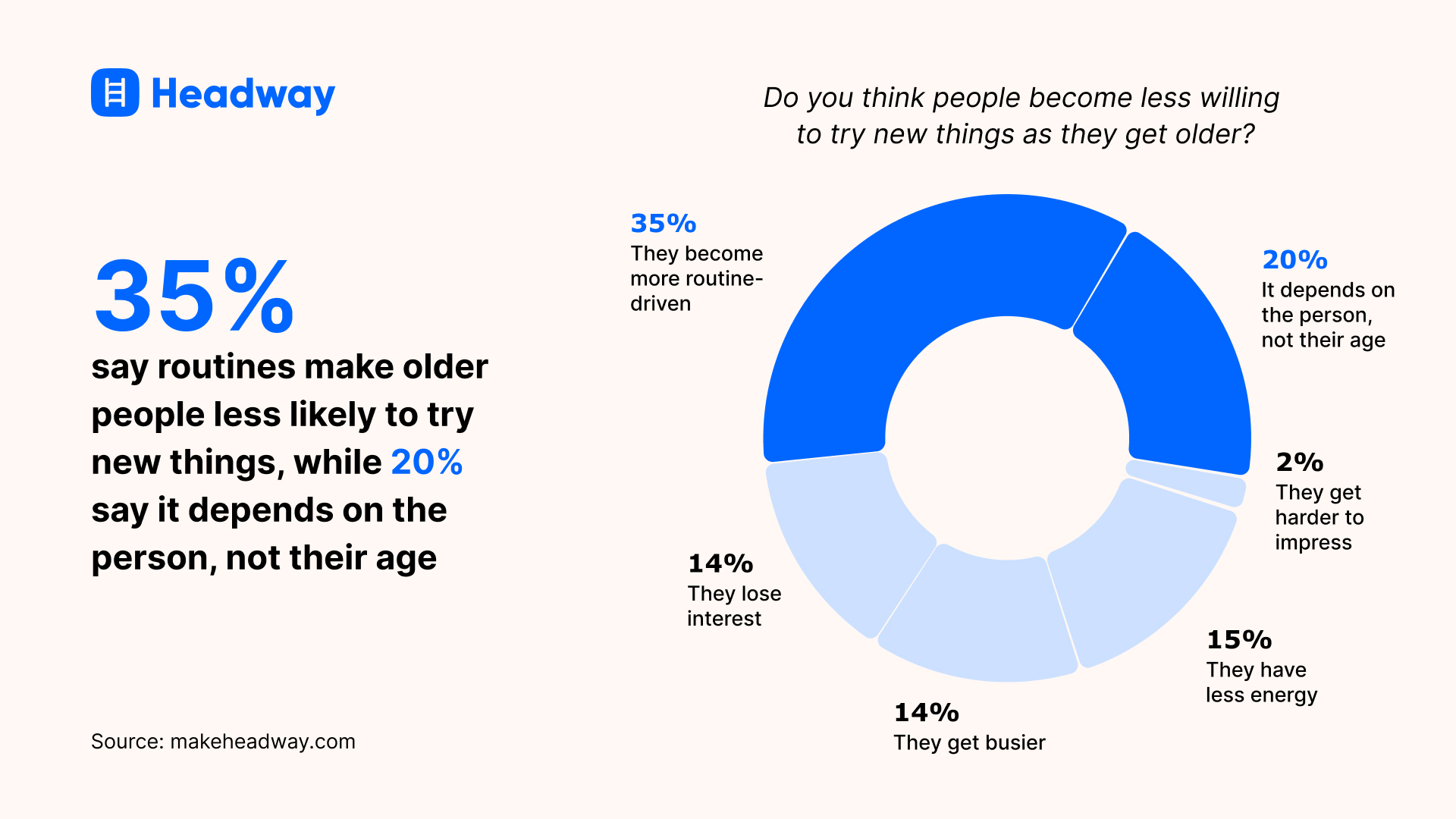
We tend to become less open to new experiences with age – not because we’ve been there and done it all, but because routine takes over (35%), energy levels drop (15%), life gets busier (14%), and interest fades (14%).However, 20% insist that age is just a number, and that drive to continue exploring, learning, and growing comes down to the person, not the years.
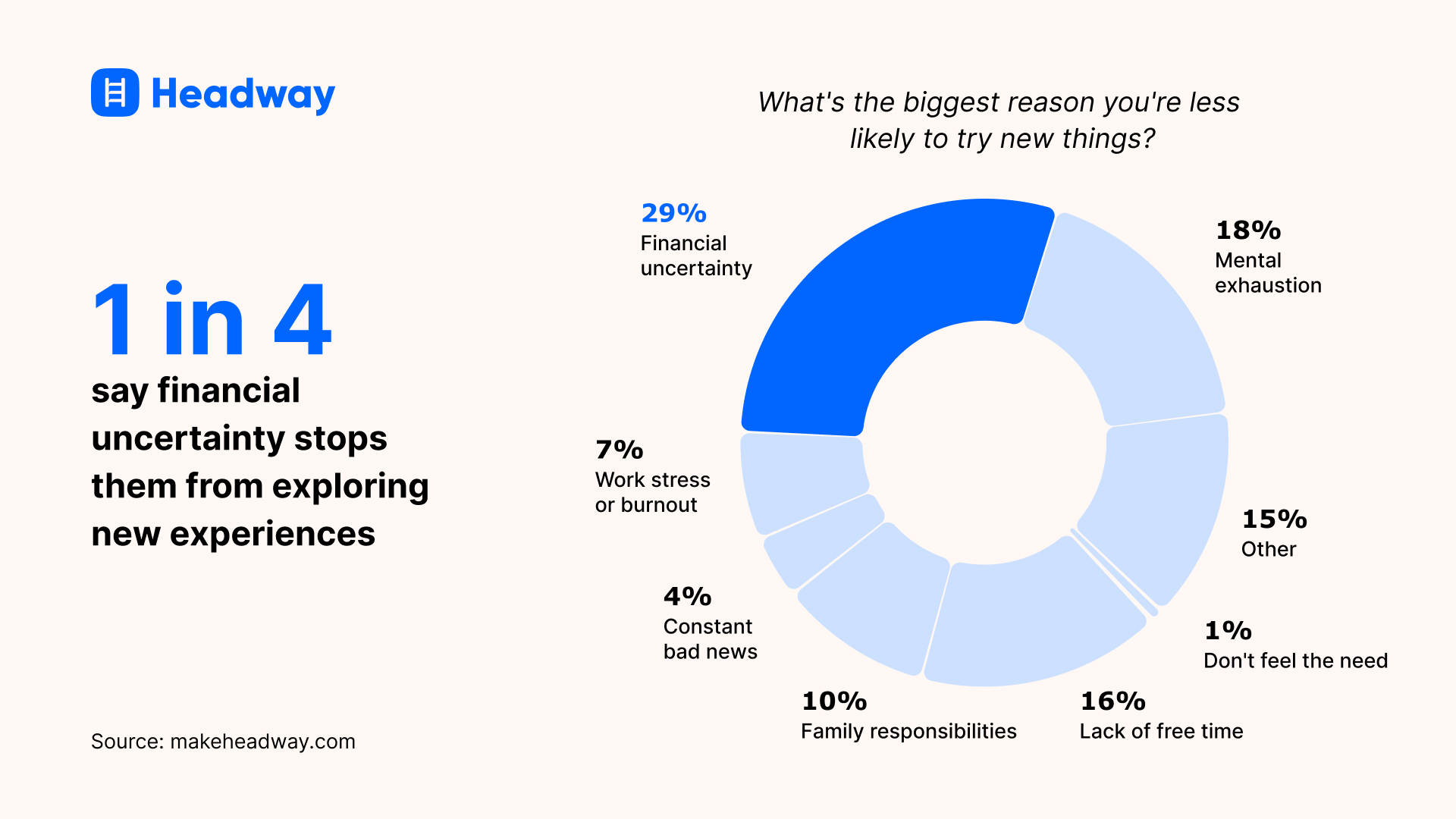
However, it often isn’t a choice. From financial uncertainty (29%) to a lack of free time (16%), and mental exhaustion (18%), to family commitments (10%), life simply forces us to slow down and do less.
Settled, but not satisfied: The consequence of seeking familiarity
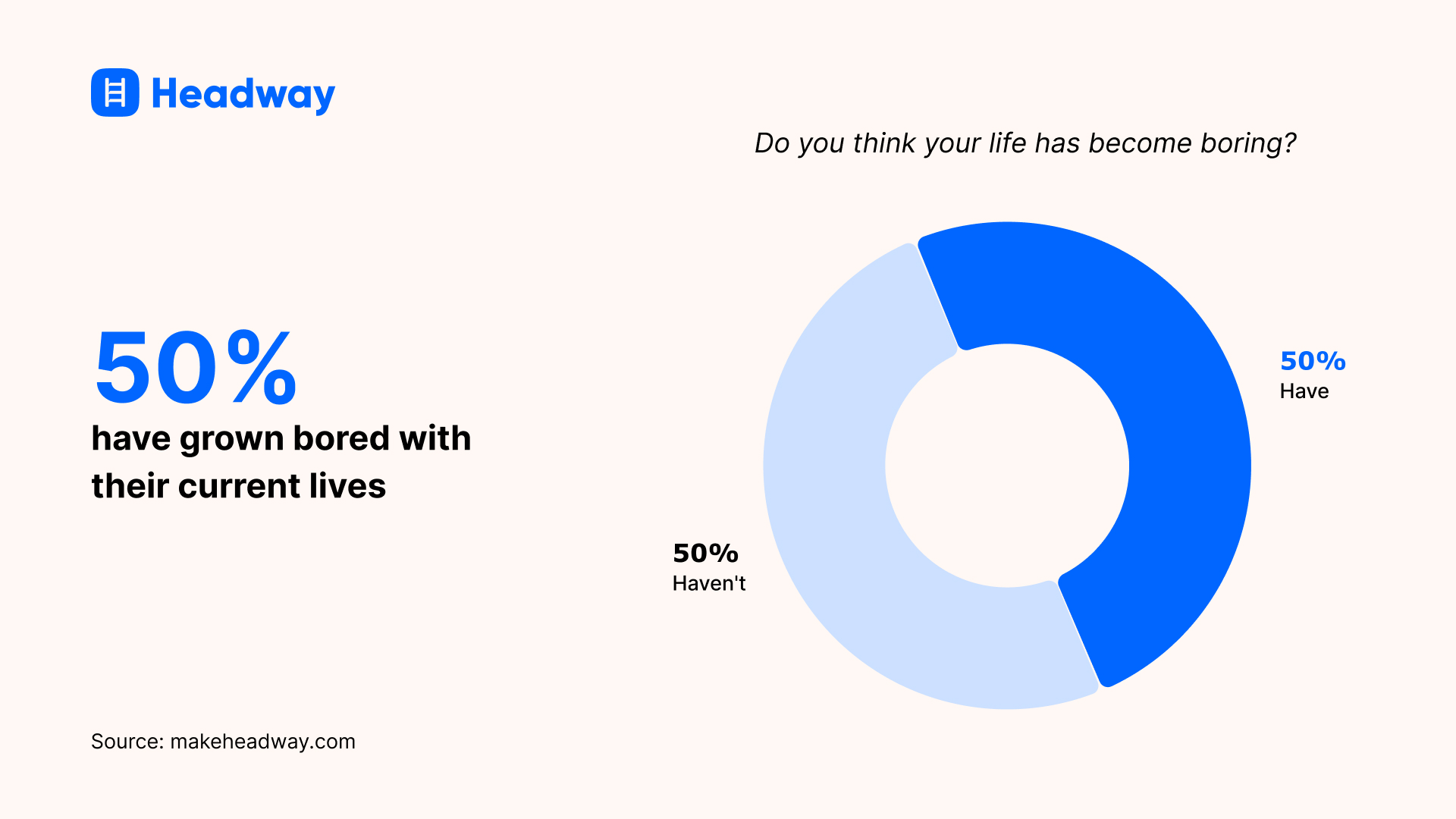
However, if you play it safe and stick to routine for long enough, ‘safe’ begins to feel a lot like ‘stuck’. Having chased familiarity for the sense of security and stability it offers, 50% admit they’ve grown bored with their current lives.
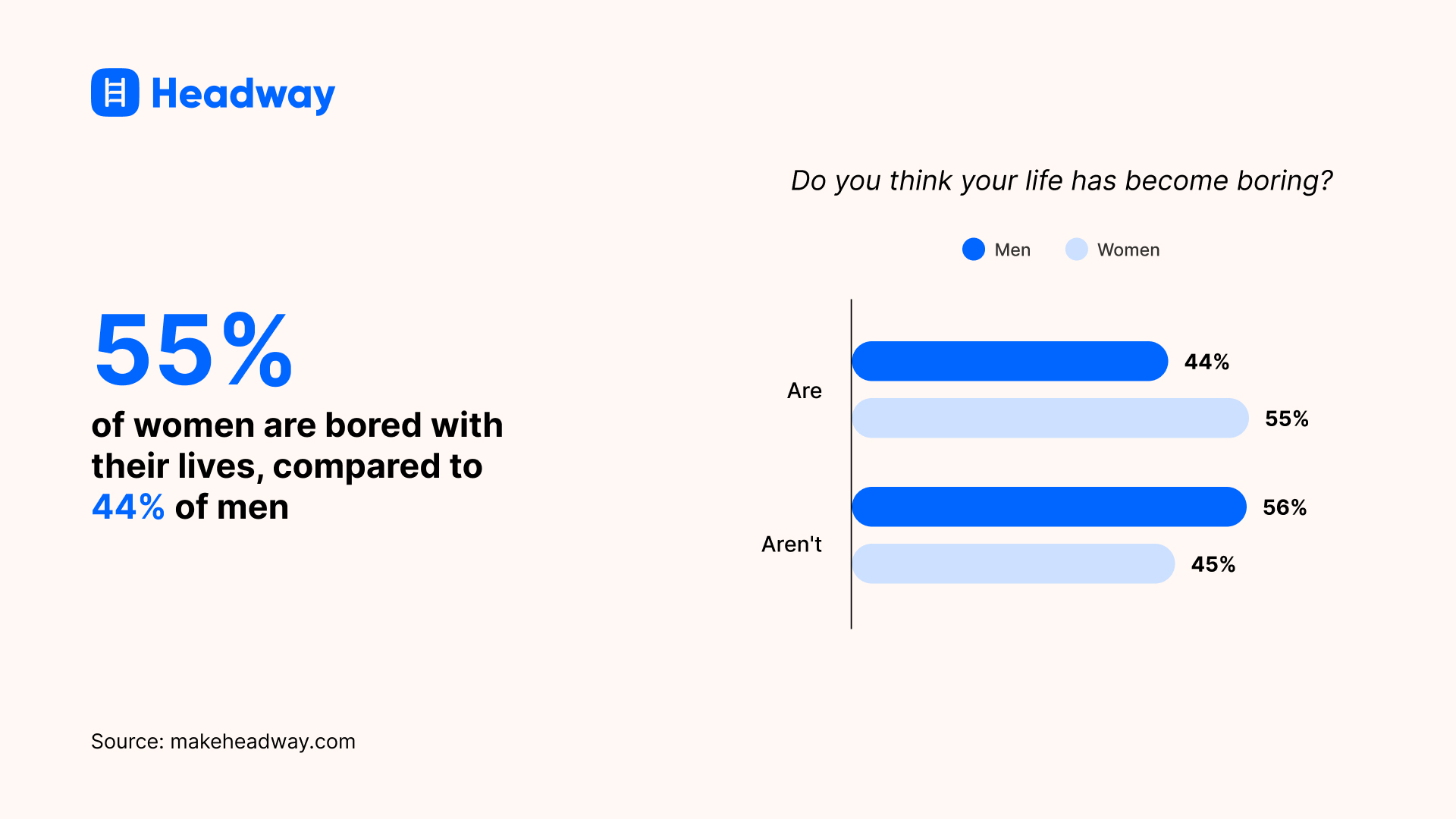
For women, in particular, the same old loses its appeal faster, with 55% admitting they’re bored with their lives, compared to 44% of men.
Yet, regardless of gender, the effects of getting stuck in your ways are the same. Without new challenges, your brain has nothing to learn and grow from. And the longer you stay in your comfort zone, the scarier stepping out of it feels – filling you with anxiety, knocking your confidence, and making you less likely to leap when exciting opportunities arise.
Methodology: To create this study, researchers from the Headway app surveyed 2,000 adults of all genders, aged 18 and over. The survey was conducted in July 2026.