Self-growth
 Apps & Digital Tools
 Business & Career
 Success
 Growth Tools
 Psychology
 Communication
 Relationships

When did you last finish a book you started?
If the honest answer is "sometime last spring," you have plenty of company. Most of us stall halfway through the textbook, tune out around minute 20 of a three-hour workshop, and quietly give up on the training programs we signed up for with good intentions.
So what is microlearning, and why is it the format that finally sticks? It delivers one idea at a time in short bursts you can finish on a coffee break, which is exactly what learners need when attention spans are already stretched thin.
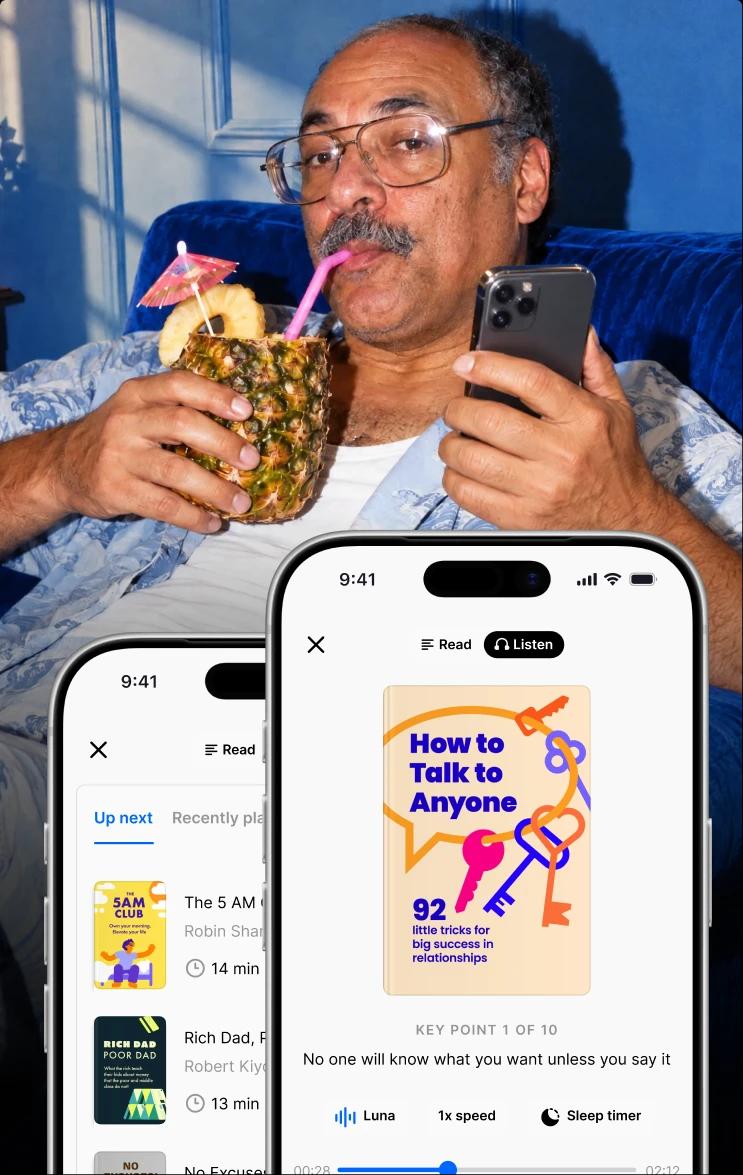
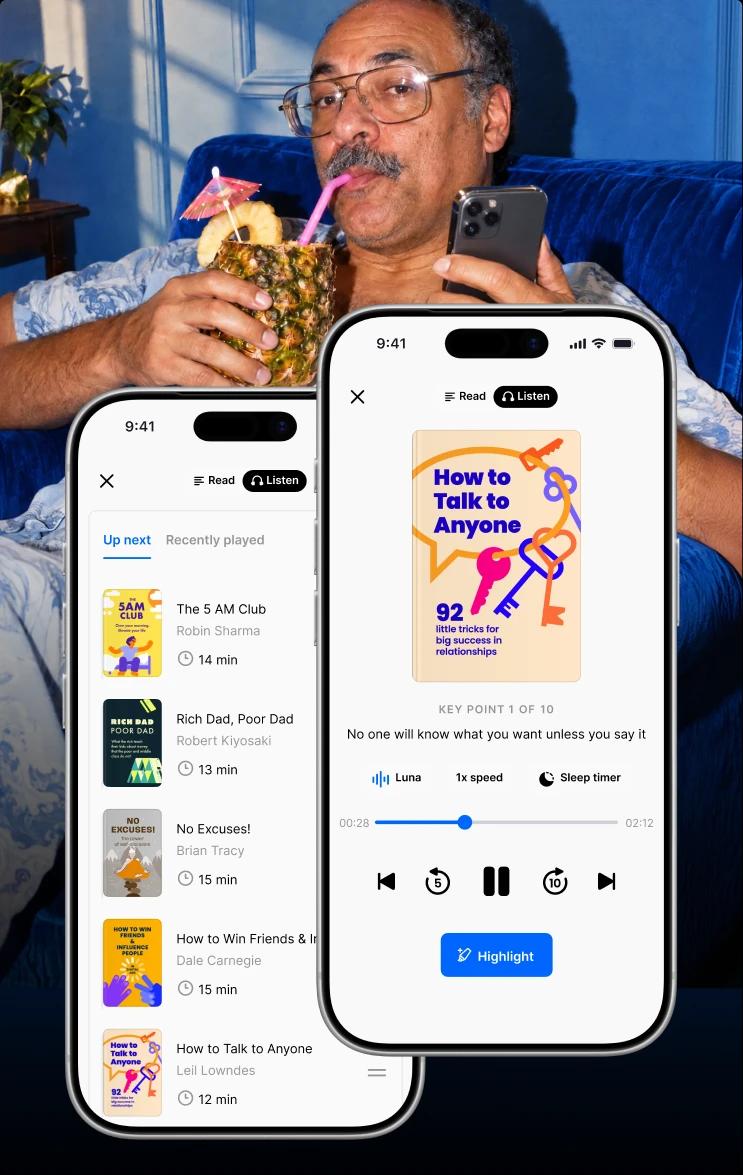
📘 Download the Headway app and turn 15 spare minutes into a finished idea today.

In this article, you'll learn:
What microlearning is, how long a lesson should run, and what separates it from a shortened lecture.
The science behind it, from Hermann Ebbinghaus and the forgetting curve to cognitive load and spaced repetition.
Nine formats you already use, including quizzes, infographics, podcasts, simulations, and short videos.
How companies apply it to onboarding, compliance training, and everyday employee training.
How to build a microlearning strategy in five steps and measure whether it actually works.
What is microlearning? A definition that fits a busy schedule
Before you can use microlearning well, it helps to pin down what counts as microlearning content and what is just a shorter version of the same old lecture.
Microlearning is an approach that delivers content in short, focused segments, each one built around a single learning objective. A lesson usually runs between two and 15 minutes and covers one specific topic: how to give feedback, how to read a balance sheet, how to write a subject line people open. You finish it, you use it, you move on.




The length is not arbitrary. Research from the Association for Talent Development found that most talent development professionals cap a microlearning segment at roughly 13 minutes, with 10 minutes viewed as the sweet spot and two to five minutes rated the most effective. Anything longer starts behaving like a course again.
For a broader academic overview of microlearning, EBSCO's research summary traces how the format grew out of cognitive psychology and mobile technology rather than out of marketing.

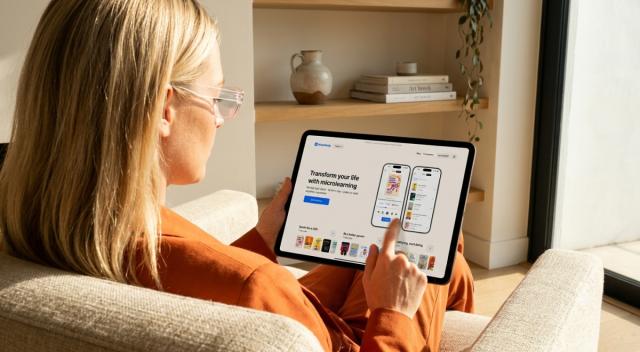

Key characteristics of microlearning content
Not every short lesson qualifies. Four traits show up in nearly every good example of microlearning.
One goal per lesson. Each module teaches a single skill or concept instead of surveying a whole subject.
Self-paced and standalone. A learner can finish a lesson on its own without watching four others first.
Just-in-time and on-demand. The content is there at the moment of need, not scheduled for next quarter.
Format-flexible. The same idea might arrive as a two-minute video, a quiz, or an infographic, depending on where the learner is.
That last point matters more than people expect. Bite-sized learning is a design decision about scope, not a video-editing decision about runtime.
How does microlearning work in practice?
Microlearning works by shrinking the unit of instruction, then repeating that unit on a schedule your memory can use.
Instructional design teams start with one measurable outcome, strip out everything that does not serve it, and build a module a learner can finish in a single sitting. Those microlearning modules then get spaced out over days or weeks rather than stacked into one long session. Repetition does the heavy lifting that cramming never could.
The delivery side is just as deliberate. A module drops into an existing workflow through a phone notification, a Slack message, a learning management system dashboard, or an app the learner already opens on the bus. Nobody has to block out an afternoon.
Because each piece is self-contained, learners can also skip what they already know. That flexibility is why the same microlearning approach works for a nurse reviewing a protocol and a new manager preparing for a difficult conversation.
One thing worth clearing up: microlearning is not the same as chopping an existing course into slices. A 60-minute elearning module cut into six 10-minute parts is still a 60-minute course with more loading screens.
A real microlearning experience rebuilds each part around its own objective, so finishing one lesson leaves the learner with something they can use before they open the next one.
Why is microlearning effective? Five science-backed reasons small lessons stick
The case for short lessons is not a productivity trend. It comes from more than a century of memory research, and each finding explains a different piece of the puzzle.
Reason 1. The forgetting curve and spaced repetition

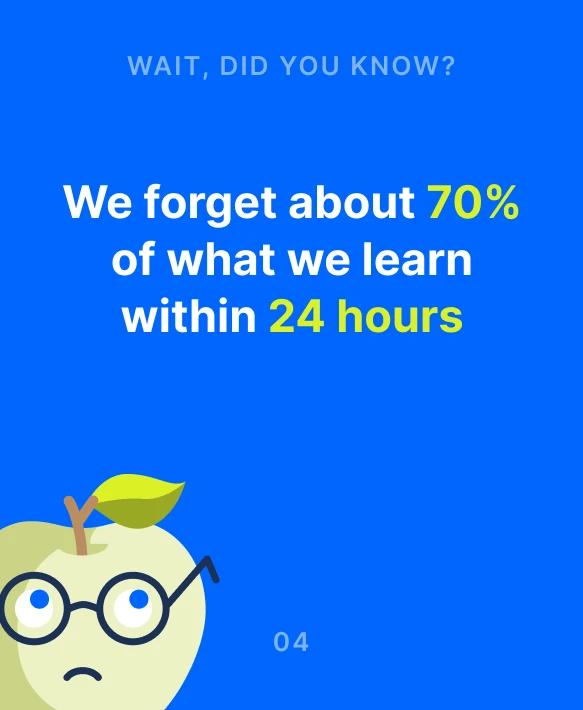
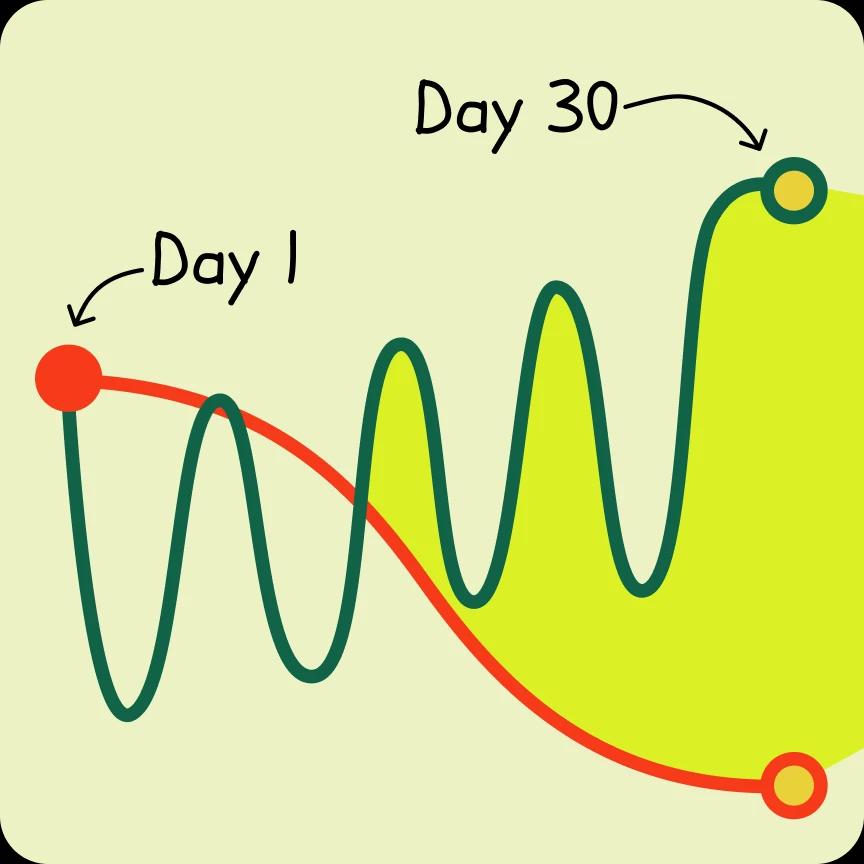
In the 1880s, German psychologist Hermann Ebbinghaus mapped what he called the forgetting curve: memory of new material drops off sharply within hours unless something interrupts the decline. Studies built on his work suggest we lose roughly 70% of new information within 24 hours without review.
Spaced repetition interrupts that decline. Reviewing a small piece of information three times across a week beats reading it three times in one night, and microlearning is built to make those return visits short enough that people actually make them.
Reason 2. Cognitive load stays inside your working memory
Working memory holds only a handful of items at once. Push past that limit and comprehension drops, no matter how well-written the material is.
A two-minute lesson on one specific topic stays comfortably inside that limit. A 90-minute session on six topics does not, which is why people leave long training sessions with a full notebook and an empty head.
Reason 3. Short bursts match real attention spans
Most learning now happens on mobile devices, in the gaps between other tasks. Smartphones make learning available everywhere, but they also mean every lesson competes with a group chat and a delivery notification.
Mobile learning designed in short bursts wins that competition. A lesson that fits a five-minute wait gets finished; a 40-minute video gets bookmarked and forgotten.
Reason 4. Variety keeps learner engagement high
Brains respond to novelty. Rotating between short videos, quizzes, podcasts, and simulations keeps the material from blurring into background noise.
Gamification adds another layer. Streaks, points, and leaderboards give people a reason to come back tomorrow, which is the only thing that makes continuous learning continuous.
Reason 5. Immediate application makes knowledge stick
You can learn something at 9 a.m. and use it at 11. That gap between learning and doing is where most knowledge quietly disappears, and microlearning shortens it to almost nothing.
Research published in the Journal of Applied Psychology found that shorter, spaced formats improved the transfer of learning by about 17% compared with longer sessions. Applying an idea the same day is what turns a fact into a skill.
📘 Try Headway for 15-minute lessons drawn from nonfiction bestsellers.
See how far consistent learning can take you
Get actionable insights from your very first 15-minute summary.
Get the planBenefits of microlearning for learners and teams
The benefits of microlearning show up on both sides of the equation: individuals finish more, and organizations spend less to get better learning outcomes.
Stronger knowledge retention. Short lessons paired with spaced review move material from short-term memory into long-term storage. People recall what they learned weeks later, not just until Friday's quiz.
Higher completion rates. A 10-minute module has a much better chance of being finished than a two-hour course. Completion is the metric most L&D teams struggle with, and shortening the unit is the simplest fix available.
Lower cost per learner. Compare a full day of in-person training, including travel and lost productivity, with a subscription to a set of microlearning tools. The math rarely favors the conference room.
Faster progress on knowledge gaps. When someone needs one specific skill, they can take one specific lesson instead of sitting through a course that covers 90% of what they already know.
Better learner engagement. Small wins accumulate. Finishing a lesson feels good, and that feeling is what gets someone to open the app again tomorrow.
Who is microlearning for?
The format adapts to whoever is using it, but four groups get the most out of it for very different reasons.
Individual learners with no spare hours
Parents, commuters, and anyone working long weeks rarely lose interest in learning. They lose the uninterrupted block of time that traditional study assumes they have.
Microlearning removes that requirement. Fifteen minutes on the train covers one idea properly, and five of those add up to more finished material in a month than most people manage in a year of good intentions.
Students supplementing coursework
For students, short lessons work as reinforcement rather than replacement. A five-minute review of a concept the night before class does more for recall than rereading a chapter at midnight.
Self-paced formats also let students move at their own pace through material they find hard and skip past what already landed.
Employees and teams
Inside a company, microlearning fits the gaps between work rather than pulling people out of it. A short module before a client call or after a product update reaches people while the information still matters.
That timing is what makes short lessons outperform an annual workshop, even when the workshop covers more ground.
Instructional designers and L&D teams
For the people building the content, microlearning changes the unit of work. Instead of producing one enormous course a quarter, teams ship small pieces of content continuously and update them when a policy or product changes.
Smaller pieces are also easier to test. If completion drops on one module, you fix that module rather than rebuilding a course.
Examples of microlearning: Nine formats you already use
Microlearning shows up in more places than most people realize. Here are the formats grouped by how the content reaches the learner.
1) Text-based formats
Written microlearning is quick to produce and quick to read, which makes it the default starting point for most teams.
Short articles that answer one question about a specific topic.
Infographics that carry a comparison or a process in a single image.
Job aids and checklists a learner can pull up mid-task instead of memorizing.
2) Video-based formats
Short videos break down anything with steps or visual detail, and they travel well across devices.
Tutorials that walk through one process from start to finish.
Animated explainers that make an abstract idea concrete.
Microlearning videos of two to three minutes embedded directly in a workflow.
3) Interactive formats
Interactive content asks the learner to do something, which is where recall gets built.
Quizzes that check understanding and double as spaced review.
Simulations that let someone practice a decision without real consequences.
Branching scenarios that show how one choice changes the outcome.
4) Audio formats
Audio turns dead time into learning time, which is why commuters and runners take to it fastest.
Mini podcasts on one idea per episode.
Narrated summaries of longer material for people who would rather listen than read.
Guided reflections that prompt a learner to apply an idea to their own work.
5) Gamified formats
Gamification borrows motivation mechanics from games and points them at learning.
Points and badges for finished modules.
Streaks that reward showing up daily.
Leaderboards that add friendly competition inside a team.
Here is how those formats compare in practice:
| Type of microlearning | Example | How it works | Time required |
|---|---|---|---|
Book summaries | Headway's 15-minute insights | Key ideas from a nonfiction bestseller, condensed and narrated | 15 minutes |
Daily quizzes | Duolingo lessons | Gamified quizzes that reinforce vocabulary through spaced repetition | 5–10 minutes |
Video snippets | TED-Ed | Animated explanations of complex topics in a visual format | 3–5 minutes |
Podcasts | NPR's Up First | Bite-sized audio built for commutes | 10–15 minutes |
E-learning courses | LinkedIn Learning quick tips | Focused microlearning courses on narrow skills like Excel formulas | 5–20 minutes |
Simulations | Healthcare training modules | Virtual practice with feedback on decisions | 5–15 minutes |
Infographics | Internal process guides | One visual carrying a full comparison or workflow | 1–2 minutes |
Interactive challenges | Headway daily insights | Progress tracking and streaks that build the habit | 5–15 minutes |
Social media learning | Expert threads and clips | Short-form content discovered where people already scroll | 1–5 minutes |
Each format follows the same rule: one idea, delivered in a piece small enough to finish.
📘 Get the Headway app and see what a book summary format feels like.
Microlearning use cases at work: Onboarding, compliance, and daily training
Corporate training was the first place microlearning proved itself at scale, mostly because long training sessions are expensive and hard to schedule. These use cases show up in almost every company that has tried it.
Onboarding. New hires get a sequence of short modules across their first month instead of a two-day firehose in week one. Information arrives when it becomes relevant, so less of it evaporates.
Compliance training. Annual compliance courses are the least loved thing in any calendar. Splitting them into monthly refreshers of five minutes each improves both recall and completion rates, and it keeps records current year-round.
Employee training and upskilling. Product updates, safety procedures, and new software all fit the format. When Walmart rolled out short daily safety lessons, it reported measurable improvements in safety compliance within months of launch.
Just-in-time support. A salesperson checks a two-minute objection-handling clip in the parking lot before a meeting. That is training that happens at the moment of use, not six weeks earlier.
Most of these initiatives run through an LMS. A learning management system handles assignment, tracking, and reporting, and its functionality determines how much of a microlearning strategy a company can realistically support.
Microlearning for soft skills development
Technical skills are the obvious use case, but soft skills may be the better fit, since they improve through repeated small practice rather than one long lecture.
Feedback, listening, delegation, and conflict resolution all reward a five-minute prompt followed by a real conversation that afternoon. That pattern is hard to build into a workshop and easy to build into a daily habit.
If you want a fuller breakdown of that approach, our guide to soft skills microlearning covers how to structure practice over weeks instead of days.
Microlearning tools, apps, and platforms
The tooling ranges from enterprise systems to a single app on your phone, and the right choice depends on who the learning is for.
Learning management systems suit organizations that need to assign, track, and report on training. They handle compliance records and completion data that individual apps do not.
Authoring tools let instructional design teams build microlearning modules and push them into an existing LMS or e-learning environment.
Consumer apps cover individual learners who simply want to keep growing. Headway condenses nonfiction books into 15-minute summaries you can read or listen to, Duolingo handles languages, and Blinkist works in a similar space to Headway.
If you are comparing options, our roundup of the best microlearning apps covers consumer tools, while our guide to platforms for microlearning looks at what teams need from a system.
📘 Explore Headway and start with one summary tonight.
Microlearning vs traditional learning: What each format does best
Short lessons are not a replacement for every classroom, and pretending otherwise sets learners up to be disappointed.
| Microlearning | Traditional learning | |
|---|---|---|
Session length | 2–15 minutes | 45 minutes to full days |
Best for | Single skills, refreshers, just-in-time needs | Complex topics needing sustained argument |
Pacing | Self-paced, on-demand | Scheduled, instructor-led |
Retention driver | Spaced repetition | Depth and discussion |
Cost per learner | Low | High, especially in-person |
A full comparison lives in our piece on microlearning vs traditional learning, but the short version is this: use microlearning for skills and reinforcement, and keep longer formats for material that needs an in-depth argument to make sense.
Where microlearning falls short
Short formats struggle with complex topics that depend on how ideas connect. Strip out the connective tissue, and learners end up with a pile of facts and no framework.
There is also a risk of oversimplification. If a subject genuinely requires 40 hours, a series of five-minute lessons will produce confidence without competence. The fix is to pair short modules with occasional longer study, and to be honest about which subjects need it.
Content sprawl is the third problem. Small modules are easy to produce, so libraries grow fast and go stale quietly. Someone has to own the review cycle, or learners end up finding a two-year-old policy clip and following it.
How to build a microlearning strategy in five steps
A learning strategy fails less often for lack of content than for lack of a plan. These five steps work for one person or one department.
Step 1. Define a specific learning objective. "Get better at business" is not a goal. "Learn three negotiation techniques this week" is. A narrow objective tells you exactly which content to pick and when you can stop.
Step 2. Choose the right microlearning tools. Match the tool to the goal. Books and frameworks point toward summary apps, languages point toward practice apps, and compliance points toward your LMS. The best platform is the one that removes the friction between wanting to learn and starting.
Step 3. Attach it to something you already do. Habits stick when they ride on existing routines: the commute, the coffee, the ten minutes before bed. Start with five minutes a day rather than a schedule you will abandon by Thursday.
Step 4. Space the review. Revisit each idea a day later, then a week later. Most microlearning tools handle this automatically through quizzes and reminders, and it is the step that turns a finished lesson into retained knowledge.
Step 5. Use it within 24 hours. After every lesson, ask what you can try today. Applying one negotiation technique in one real conversation beats reading about six of them.
How to measure microlearning results
Measurement is what separates a real microlearning strategy from a pile of content nobody opens.
Track completion rates first, since they tell you whether the format fits people's schedules. Then look at knowledge retention through short quizzes a week or a month after the lesson, not immediately after.
The numbers that matter most sit outside the platform: fewer safety incidents, faster ramp time for new hires, better call outcomes. Learner feedback fills in the rest by showing which modules were clear and which ones missed.
Watch time-to-competence too. If a new hire handles their first solo task in three weeks instead of six, the learning experience is doing its job, whatever the dashboard says about engagement.
One warning about vanity metrics: a high open rate on a two-minute video proves people tapped it, nothing more. Pair every engagement number with a recall check or an on-the-job outcome before deciding a module works.
Real stories: What microlearning looks like day to day
These three Headway users came to microlearning from different directions, and each of them solved a different problem with it.
Herbert S. Burt, leadership expert. He knew reading mattered for leading people, and he still could not find time for it. Daily short sessions turned reading into something that happened without negotiation, and summaries often sent him back to the full book.
"It's not just about reading more. It's about actually using what I learn."
Melissa Sierra, EVP. Struggling with focus at work, she gave 15 minutes each morning to short summaries and found it steadied both her communication and her leadership.
"Growth isn't about avoiding difficulty — it's about how you define it."
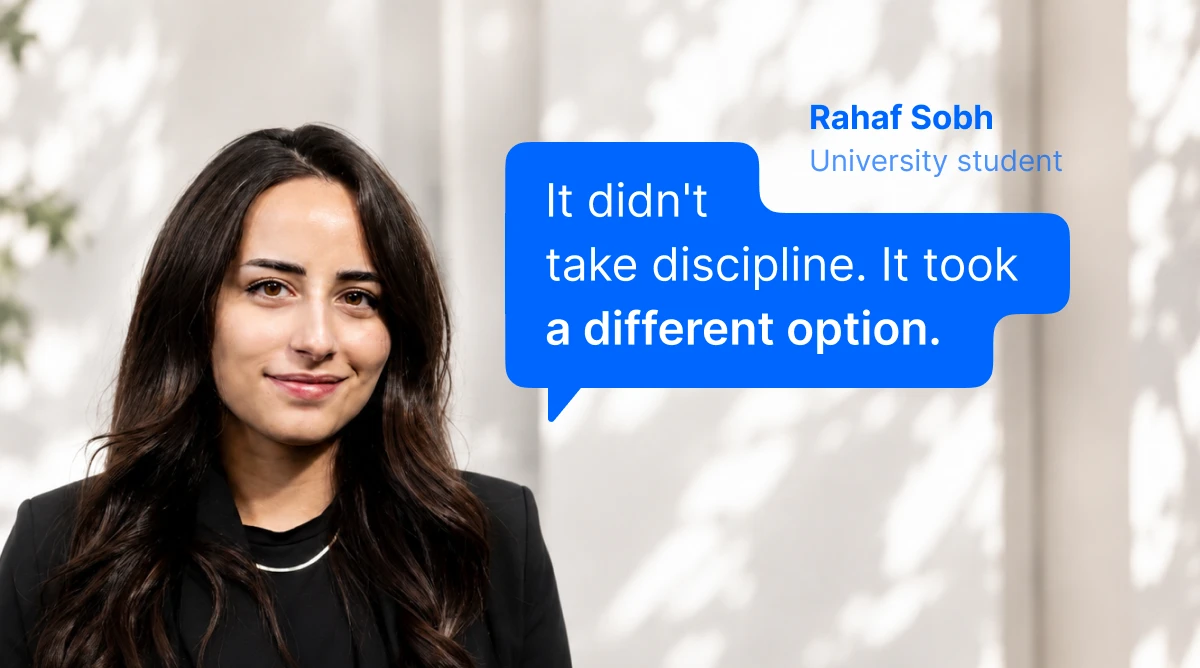
Rahaf Sobh, student. A packed class schedule left no room for books, so she swapped her scrolling time for short summaries and applied ideas from 'Atomic Habits' and 'It Begins With You' to her own routine.
"It didn't take discipline. It took a different option."
Quiz: Is microlearning right for you?
Let's find out if microlearning matches your learning style and goals. Answer these questions honestly:
Ready to learn in 15 minutes a day? Start with Headway
Now that you know what microlearning is, the only thing left is picking one thing to learn this week and a place to learn it.
Headway is microlearning built for the books you keep meaning to read. Each nonfiction bestseller becomes a 15-minute summary you can read or listen to, with daily insights and progress tracking that make the habit hold. It fits the commute, the lunch break, and the ten minutes before bed, so growing does not require finding time you do not have.
You do not need a free weekend to get smarter. You need one good idea and a way to use it before you forget it.
📘 Download Headway and finish your first book summary tonight.
FAQs on microlearning
What is microlearning?
Microlearning is an approach that delivers content in short, focused segments built around a single learning objective. Lessons usually run between two and 15 minutes and cover one specific topic instead of a whole subject. The format suits people with a busy schedule because each lesson is standalone, self-paced, and short enough to actually finish.
What is an example of microlearning?
Headway's 15-minute book summaries are one example. Instead of spending 10 hours on a business book, you get the core ideas in a single sitting. Other examples of microlearning include Duolingo quizzes, TED-Ed videos, infographics, mini podcasts, workplace safety clips, and simulations that let someone practice a decision before facing it for real.
How long should a microlearning lesson be?
Most microlearning modules run between two and 15 minutes. Research from the Association for Talent Development points to about 10 minutes as the practical ideal, with two to five minutes rated most effective. A complete course might string together many of these micro-sessions across weeks, but each segment stays short enough to hold attention.
What are the disadvantages of microlearning?
Short formats handle complex topics poorly when understanding depends on how ideas connect. Breaking everything into small pieces can flatten context and leave learners with facts but no framework. There is also a risk of oversimplification, where confidence outpaces skill. The fix is pairing microlearning with occasional in-depth study on subjects that genuinely require it.
Is microlearning better than traditional learning?
Neither one wins outright. Microlearning is stronger for single skills, refreshers, and just-in-time needs, and it beats traditional learning badly on completion rates and cost. Longer formats hold the advantage for subjects that need sustained argument, discussion, and depth. Most effective learning programs now combine both rather than choosing one.
What industries use microlearning?
Nearly all of them. Healthcare uses simulations for clinical decisions, retail uses short videos for product and safety updates, and IT uses brief modules for cybersecurity awareness. Corporate training teams apply it to onboarding and compliance training, while schools use it for exam prep and skill practice. Any field needing fast, repeatable learning fits.
Does microlearning actually work?
Yes, and the evidence goes back to Hermann Ebbinghaus and the forgetting curve. Spacing short lessons over time counteracts the memory decline that follows a single long session. Organizations that adopt microlearning consistently report higher completion rates and better knowledge retention, and individual learners report finishing far more material than they did before.
How do I start using microlearning?
Pick one narrow learning objective, choose a tool that matches it, and attach the habit to something you already do daily. Ten minutes with your morning coffee works better than an ambitious hour you skip by Wednesday. Review each idea again a day later, then a week later, and try applying at least one of them within 24 hours of learning it.
Do I need an LMS to use microlearning?
Only if you are running training for other people. A learning management system handles assignment, tracking, and compliance records that individual learners do not need. If you are learning on your own, a single app on your phone covers everything: content, spaced review, and progress tracking, without any administration on your end.
Is Headway microlearning?
Yes. Headway condenses full-length nonfiction books into 15-minute summaries you can read or listen to, which is microlearning applied to book knowledge. Each summary is standalone and self-paced, so you can finish one during a commute or a lunch break. Daily insights and progress tracking add the spaced repetition that makes ideas stay put.
Are there any good alternatives to flashcard-only study apps?
Yes, try microlearning platforms that combine brief book summaries with quick interactive quizzes. Apps like Headway or Nibble break massive concepts down into five-minute text chunks. This gives your brain actual context instead of boring, raw memorization, so you won't get completely sick of flipping through standard virtual index cards.