Self-growth
 Apps & Digital Tools
 Business & Career
 Success
 Growth Tools
 Psychology
 Communication
 Relationships

A study on reading habits reveals that just six minutes of silent reading can reduce stress levels by up to 68%. Many people wonder: does reading make you smarter? The short answer is yes. Reading acts as an active workout for your mind, stimulating neural pathways and strengthening cognitive function far more than passive media consumption ever could.
When you engage with text, your brain builds both fluid intelligence and crystallized intelligence. Authors like Daniel Kahneman, James Clear, and Joshua Foer have highlighted how deliberate learning expands our mental capacity. You do not need hours of free time every single day to gain these mental rewards.
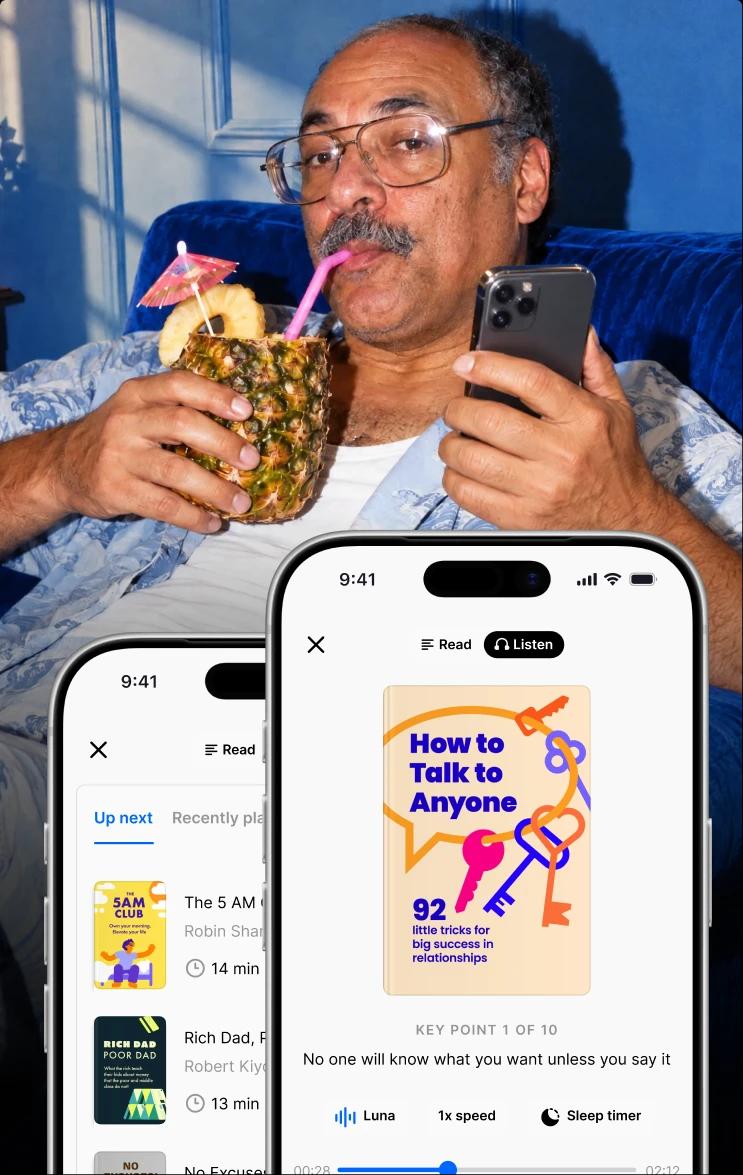
If a tight schedule gets in the way of full books, try Headway — 15-minute summaries that turn a commute or lunch break into a consistent reading habit.
Disclaimer: Individual results may vary. Headway is a microlearning and daily growth app, not a medical or diagnostic tool. The cognitive benefits mentioned in this article are based on general scientific research and personal habits.
Quick answer: Does reading make you smarter?
Reading offers proven mental rewards that help you think faster, remember facts better, and solve complex problems in daily life.
Reading builds brain connectivity by creating new neural pathways across both hemispheres.
Engaging with books expands vocabulary growth, general knowledge, and verbal intelligence.
Reading fiction strengthens emotional intelligence, empathy, and theory of mind.
Consistent daily microlearning protects your mind against age-related cognitive decline.
Using active learning techniques helps you remember what you read and store key facts long-term.
Keep reading for the complete guide on how books transform your mental edge!
Go deeper into the ideas that fascinate you.
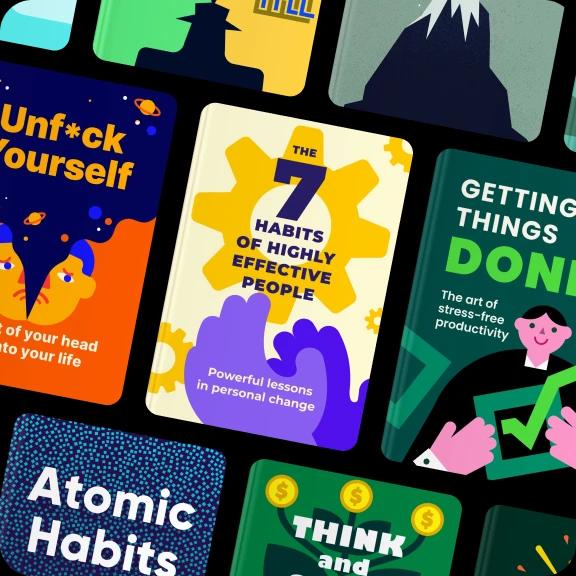
Explore thousands of book insights across any topic. A library built for lifelong learners.
Start exploringWhat reading does to your brain: The neuroscience of literacy
Examining your brain under an MRI during reading reveals complex neural activity similar to physical exercise in your muscles. When you read, multiple brain areas communicate simultaneously to translate visual symbols into meaningful concepts.
Reading strengthens the somatosensory cortex and white matter tracts that route communication across different regions. This process enhances brain connectivity, allowing signals to travel faster across neural networks. Regular text processing trains your attention span to resist digital distractions.
A core benefit involves mental health and relaxation. Silent reading slows your heart rate, relaxes muscle tension, and lowers cortisol levels. This quiet focus protects brain health and supports long-term mental resilience.
Key neural benefits of daily reading
Enhanced neural pathways: Regular reading creates strong synaptic connections across both hemispheres.
Sharper attention span: Processing complex text trains your brain to focus on single tasks longer.
Slower cognitive decline: Active reading builds cognitive reserve, protecting against memory loss as you age.
📘 Test your daily focus with bite-sized insights on Headway!
Does reading increase IQ and intelligence?
Understanding how reading affects your test scores requires looking at the two main types of human intelligence recognized by psychologists. Can reading make you smarter in measurable ways? The evidence points to clear gains in both categories.
Crystallized intelligence represents your accumulated storehouse of facts, general knowledge, and reading comprehension. Reading nonfiction directly expands this mental library. Every new concept you absorb gives you better tools for reasoning and communication.
Fluid intelligence involves your ability to solve novel problems, spot underlying patterns, and make connections between abstract ideas. While baseline genetic potential remains stable, reading improves problem-solving skills and verbal intelligence. This allows you to process information quickly and score higher on cognitive assessments.
| Intelligence type | Primary focus | How reading helps |
|---|---|---|
Crystallized Intelligence | Accumulated facts, vocabulary, and general knowledge | Expands vocabulary growth and deepens reading comprehension |
Fluid Intelligence | Abstract reasoning and pattern recognition | Sharpens problem-solving skills and helps you make connections |
📘 Build your crystallized intelligence every day on Headway!
Does reading fiction make you smarter?
While nonfiction delivers hard facts and strategic frameworks, reading fiction trains a completely different set of mental muscles. Scholars have found that reading fiction directly enhances social cognition and emotional processing.
Literary fiction requires you to step inside a character's mind, navigate subtle social motives, and understand complex emotions. This practice builds theory of mind, which is the psychological ability to understand mental states different from your own. As a result, readers often show higher emotional intelligence in real-world relationships.
Popular fiction offers engaging plots that keep your brain active, while character-driven literary fiction challenges your assumptions. Both forms exercise critical thinking by requiring you to evaluate character choices, predict plot developments, and draw logical conclusions.
📘 Expand your perspective and social awareness with Headway!
Audiobooks vs. text: Are audiobooks as beneficial as reading books?
Modern technology allows us to process books through our ears, leading many people to ask if audiobooks offer the same mental rewards as physical text.
Brain imaging studies show that processing narrative content engages identical semantic areas whether you read text or listen to audio. Both formats stimulate language comprehension, critical thinking, and background knowledge. Audiobooks allow busy professionals to absorb critical concepts during commutes, workouts, or household chores.
While physical text provides slightly better visual-spatial orientation for complex academic papers, audiobooks excel at verbal processing and auditory retention. Choosing between them depends on your lifestyle and personal learning preferences.
| Feature | Physical text reading | Audiobooks |
|---|---|---|
Primary Cognitive Gain | Focus, spatial orientation, writing skills | Auditory comprehension, multitasking flexibility |
Active Brain Region | Visual cortex and language centers | Auditory cortex and language centers |
Ideal Use Case | Deep analytical study and quiet desk time | Commutes, workouts, and daily household chores |
📘 Listen to key book insights on the go with Headway!
How much should you read every day to improve your brain?
You do not need to spend hours buried in dense textbooks to unlock the cognitive benefits of reading. Long reading sessions can cause mental fatigue, especially if you juggle demanding work and family schedules.
Research shows that setting aside 15 to 20 minutes each day is enough to stimulate cognition and build sustainable reading habits. Consistency matters far more than volume. Reading a small amount every day keeps your neural pathways active and prevents knowledge decay.
Using a microlearning app makes this daily goal realistic. By focusing on key takeaways, you absorb high-value ideas without feeling overwhelmed by long chapters.
📘 Turn spare minutes into meaningful growth with Headway!



How to remember what you read: Four proven retention strategies
Gaining intelligence from books depends heavily on your ability to store and recall key insights when you need them in real life. Without a system for retention, most people forget the majority of what they read within a few days.
Use spaced repetition: Reviewing key ideas at expanding time intervals locks facts into long-term memory and prevents memory loss.
Practice active recall: Test yourself on main points instead of passively re-reading pages.
Make connections: Link new ideas to existing memories or practical situations at work to strengthen neural networks.
Take concise notes: Highlight essential passages and summarize core arguments in your own words to polish writing skills.
Comparing a reading tracker vs summary app shows that dedicated summary platforms with flashcards offer faster memory reinforcement for busy readers.
What books make you smarter? Recommended reads on Headway
Selecting the right reading material helps you target specific growth areas, from decision-making to daily habit creation.
'Atomic Habits' by James Clear: Delivers practical strategies to build sustainable daily routines and eliminate bad habits.
'Moonwalking with Einstein' by Joshua Foer: Unlocks the science of memory enhancement and mental performance.
'Thinking, Fast and Slow' by Daniel Kahneman: Explores cognitive biases and sharpens decision-making skills under uncertainty.
Reading these titles helps you build practical frameworks for problem-solving skills and long-term personal achievement.
📘 Explore key summaries of these bestselling titles on Headway!
What readers say about growing with Headway
Millions of adults use short reading sessions to build knowledge, sharpen focus, and upgrade their mental performance every day. The Headway science approach helps people stay consistent without feeling overwhelmed.
Here is what real users share about their daily growth experience:
"Headway is my favorite way to continue reading and learn from books due to my tight work schedule. It is very much worth it for me to have subscribed."
"This app gives me the feeling of constant growth and learning without overwhelming me. The bite-sized summaries of books are brilliant. They're concise yet packed with insightful ideas, allowing me to grasp the essence of a book in just a few minutes."
"If you are like me then this app is awesome to quickly upgrade our IQs. I have listened to numerous book summaries here that has improved my Growth Mindset."
"Easy does it! Thanks for making reading and learning easy."
Build a sharper mind every day with Headway
The question of whether reading makes you smarter has a research-backed answer: yes. Brain structure changes, vocabulary grows, and reasoning sharpens — even with as little as 20 minutes a day. The difference between readers who see results and those who don't usually comes down to how consistently they show up and how actively they engage with what they read.
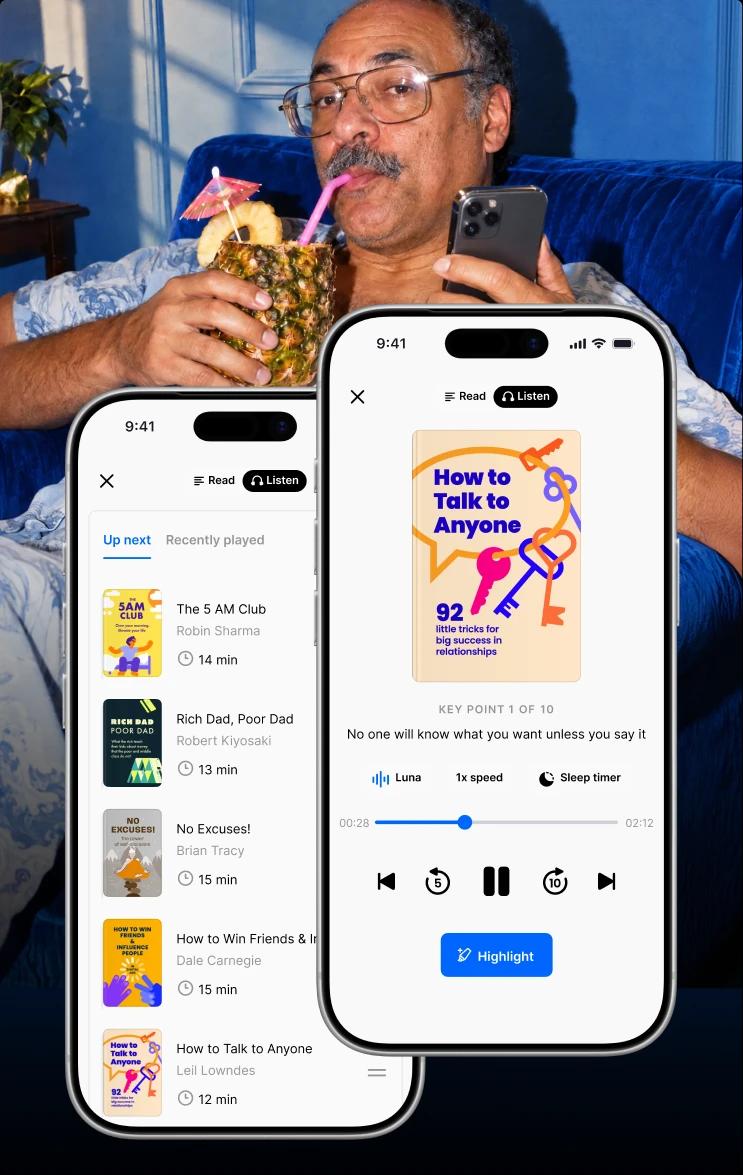
The Headway app simplifies self-development by turning full-length nonfiction bestsellers into 15-minute bite-sized summaries. You can choose between text or audio formats, switch seamlessly between devices, and use Apple CarPlay or Android Auto during your morning commute. Interactive features like spaced repetition flashcards and saved highlights help you retain crucial ideas without extra effort.
By replacing idle phone time with microlearning sessions, you build lasting habits that move you closer to your goals. You can track your daily streaks, follow personalized growth plans, and gain confidence every single day.
📘 Download the Headway app now to start your personal growth journey with 15-minute book summaries!
FAQs about does reading make you smarter
Does reading really make you smarter?
Yes — but not in vague, feel-good terms. Research shows reading physically changes your brain's white matter tracts, improving how quickly different regions communicate. Over time, this builds crystallized intelligence (your knowledge base) and fluid intelligence (your capacity for reasoning). Think of it as a low-effort workout your brain runs every time you turn a page
Can reading increase your IQ?
Reading won't rewrite your DNA, but it does sharpen the skills IQ tests actually measure — verbal reasoning, pattern recognition, and vocabulary range. People who read consistently tend to score higher on assessments of working memory and comprehension. The gains are real; they just take months of regular reading to show up clearly.
What type of reading makes you smarter?
Both nonfiction and literary fiction build different cognitive muscles, and neither is optional if you want full mental range. Nonfiction gives you factual frameworks and sharper reasoning — useful when making decisions or solving problems at work. Literary fiction trains something harder to measure: your ability to read other people's emotional states accurately. Reading across both formats tends to produce the widest range of cognitive gains.
Does reading fiction make you smarter?
Yes, though not in the ways most people expect. When you read literary fiction, your brain actively models other people's inner lives — their motivations, contradictions, and emotional logic. Psychologists call this theory of mind. Readers who practice it regularly tend to be more accurate at predicting how real people behave in social situations, which shows up as stronger empathy.
How much should you read each day to improve your brain?
15 to 20 minutes daily is the figure most research points to for sustainable cognitive gains — not because shorter sessions don't count, but because consistency is what compounds. Someone who reads 20 minutes every morning for six months will see more measurable results than someone who reads for two hours every Sunday. The brain responds to frequency, not volume.
Does reading improve memory and concentration?
Yes. Reading is one of the few activities that forces you to hold information in working memory while simultaneously processing new content — a dual demand that trains sustained attention over time. Done consistently, this also builds what researchers call cognitive reserve: a mental buffer that makes your brain more resilient against age-related decline. Passive scrolling does the opposite.
Are audiobooks as beneficial as reading books?
For most learning purposes, yes. Brain imaging research shows both formats activate the same core language-processing regions, so audiobooks aren't a shortcut — they're a legitimate alternative. Where they differ: physical text offers better visual anchoring for dense, complex material; audio handles narrative and conceptual content well. If your choice is between audiobooks and not reading at all, audio wins.
How can you remember more of what you read?
The biggest factor is how you engage during reading, not what you do after. Asking yourself questions as you go — 'Why does this work? Where have I seen this before?' — forces deeper processing. Spaced repetition flashcards help with raw retention. Writing a one-paragraph summary in your own words after each chapter is more effective than re-reading the same pages twice.