Self-growth
 Apps & Digital Tools
 Business & Career
 Success
 Growth Tools
 Psychology
 Communication
 Relationships

You want a career change: maybe it's a creative project or a tough conversation. Something stands between you and the action. It isn't logistics – it's the voice in your head. It asks, "Who do you think you are?"
That is self-doubt. Learning how to believe in yourself is not a lucky birth trait. It is a capacity that you build through evidence and action. You need the right mental inputs. The good news is that you can build it. But affirmations and faking it usually fail. They don't work like TikTok claims.
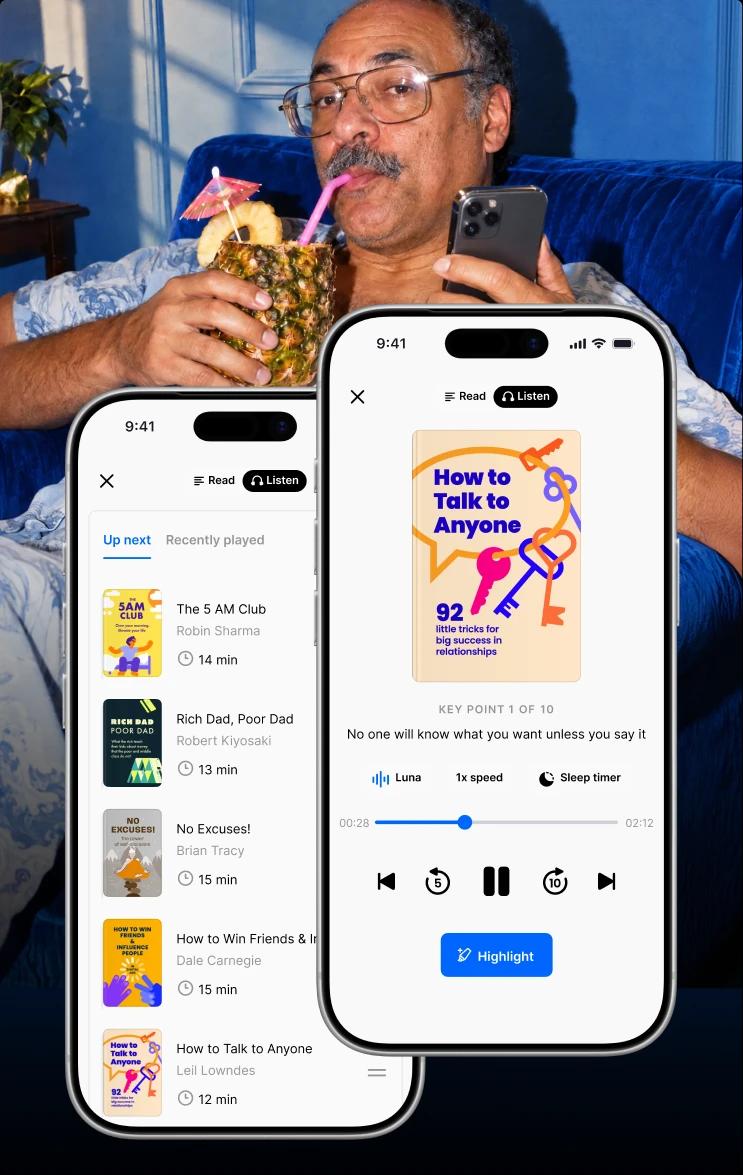
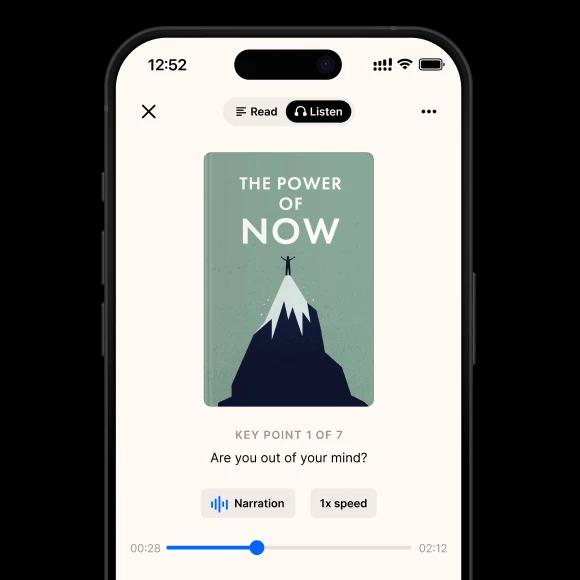
📘 At Headway, we offer the world's best book summaries on confidence and identity into 15-minute reads. Download Headway and start feeding your mind the kind of evidence that belief is actually built on!
Real self-belief takes minutes, not years
Skip the "fake it" advice. Absorb proven, actionable insights on authentic confidence in one short read.
Get the proven insightsHow to believe in yourself: TL;DR
Self-belief is the quiet sense that you can handle whatever comes next, even if you can't yet. Here are some of the main points:
It is built backward: you act first, gather proof, and then you believe in yourself.
The four pillars are small wins, your identity story, your mental inputs, and your environment.
Durable self-belief comes from repeated proof in your actual life, not just repeating positive phrases.
What does it mean to believe in yourself?
To believe in yourself is to have a quiet trust in your ability to grow. It means you believe you can handle the demands of a task, even if you feel shaky. This is different from self-confidence. You feel confident about things you have already mastered. You feel confident driving a car because you have years of practice.

Self-esteem is more about your overall sense of worth as a person. But self-belief is the conviction that you can bridge the gap. It is the trust that you can develop skills you don't have yet. This foundation is vital for your mental health and well-being. It carries you when you are starting something new and difficult.
Self-belief gets you across the bridge, while self-confidence is what you feel once you reach the other side.
Why it's so hard to believe in yourself
There are real reasons self-doubt feels like your default setting.
Your brain is a historian of failures. We have something called negativity bias. Negative thoughts stick like glue while wins slide off. This is an evolutionary safety feature. It is not a character flaw.
Comparison is now a full-time job. Social media and TikTok make this much worse. You see entrepreneurs in New York winning and feel behind. You compare your "behind the scenes" to their highlight reel.
You are waiting to feel ready. Most people think belief is the engine that starts the car. But belief is actually the exhaust. You have to drive first to create it. Feeling uncertain is a normal part of life. You don't need to feel ready to begin.
How to believe in yourself: Five steps that are worth trying
Not sure where to start? Here's a 5-step process on how to start believing in yourself more:
1. Build evidence before you build belief
Stop trying to think your way into a new mindset. It doesn't work because your brain is too smart to be lied to. If you want to know how to believe in yourself more, you have to start collecting actual proof. Pick one tiny action that is just outside your current reach and finish it.
If you need to motivate yourself to clean, don't look at the whole house at once. Just clean the sink. When you finish, your brain registers a win. This builds self-efficacy. Self-belief is really just a stack of completed actions. Every time you beat procrastination on a small task, you're telling your brain that you are a person who gets things done. Five days of doing something hard teach you more than five hundred repetitions of a phrase.
2. Change the story before you change the behavior
What you tell yourself about who you are drives everything you do. These are your limiting beliefs. If you think "I'm not the type of person who can be more efficient," then you won't even try. But every action you take is a vote for the person you want to become.
Start using positive self-talk that focuses on your identity, not just your results. Instead of "I hope I don't fail," try "I am someone who tries new things even when they are scary." Once you change the label, the actions start to follow because the brain likes to stay consistent with its own story.
📘 Stop fighting your self-doubt and start feeding your potential on Headway.
3. Replace affirmations with questions
Standard affirmations can actually backfire. If you feel insecure and tell yourself, "I am powerful," your brain immediately argues with you. Questions are different. They bypass that inner critic. Instead of a statement, ask: "What would I do right now if I were more confident?"
Your brain is a problem-solving machine. It will automatically find an answer, and that answer becomes a plan you can act on. This is how you stay motivated when things get tough. The answer to that question gives you a specific step to take, which builds the evidence we talked about in step one.
4. Curate your inputs
What you feed your mind matters as much as what you feed your body. If you spend three hours a day on a TikTok loop, you are feeding a dopamine addiction that kills your focus. You have to stop scrolling and start choosing better material. Read books or listen to podcasts about people who have overcome massive hurdles.
When you see entrepreneurs who lost everything and started over, it expands your imagination. It makes your own goals feel possible. You start to see that struggle is just a part of life, not a sign that you should quit.
5. Surround yourself with people who already see you
You are a social creature. You absorb the beliefs of the people you spend the most time with. If your circle is full of people who doubt you or play small, you will do the same. Find a loved one or a mentor who sees your potential as fact.

Spending time in an environment where you are treated as capable makes you feel capable. This is the foundation of true self-love. It's much easier to believe in yourself when you aren't constantly fighting the negative energy of those around you.
📘 Your brain needs better evidence to believe in itself — find it on Headway.


The one mindset shift that changes how you believe in yourself
Self-belief isn't a feeling you can just summon out of thin air. It is the natural result of becoming someone you actually trust. Think about how you build trust with a friend. If they show up when they say they will, you trust them. If they flake every time, you don't. You build trust with yourself the exact same way — by keeping small promises.
Every time you keep a promise to yourself, like actually going to the gym when you said you would or deciding to motivate yourself to clean even when you're tired, you add to your "belief account." This is the core of building confidence.
Every broken promise is a withdrawal. Over time, that quiet history of just showing up becomes the actual basis of your self-belief. It isn't about giant successes or living a flashy life in New York. It is just a long, quiet track record of doing what you said you'd do. This is why some people seem unshakeable — they have years of deposits in that account.
When you start to look at it this way, the pressure to feel confident disappears. You don't need to feel good to keep a promise. You just need to do the thing. Whether you decide to disappear for 6 months to focus on a goal or just commit to a better daily routine, your trust in yourself will grow as long as you stay consistent.
This is the only real way to believe in yourself again after you've let yourself down. You start small, you keep the promise, and you let the belief take care of itself.
Feed your self-belief with better books — Try Headway!
How to believe in yourself is a question that constantly pops into your mind, but the most reliable way to do so is to expand your sense of what is possible. You need to see the proof that others have walked the same path you are on. Books are basically the cheapest mentorship available.
Authors like James Clear, Carol Dweck, Brené Brown, and Mel Robbins have spent their entire careers mapping out the territory between self-doubt and unshakeable belief.
Here is a quick disclaimer: you don't have to read every single page of every book to get the benefits. Headway condenses these major ideas into 15-minute reads so you can absorb the lessons that matter and stay motivated throughout your day.
You've spent enough time stuck in negative thoughts. It's time to start feeding your mind the evidence that underlies belief. Whether you want to overcome procrastination, improve your mental health, or just find more self-love, the answers are already out there in the pages of the world's best books.
📘 Join Headway to build confidence, focus, and self-belief to become the best version of yourself!
FAQs about how to believe in yourself
Why do I struggle to believe in myself?
Your brain is naturally wired to remember your failures more vividly than your wins. It is an evolutionary safety feature called negativity bias, not a personal flaw. You also might be waiting to feel ready before taking action. But belief doesn't come first; it follows action. When you wait to feel confident before starting, you stay stuck.
How to believe in yourself at work?
Start by keeping small promises to yourself throughout your shift. When you say you will finish a task by noon and you actually do it, you build a track record of reliability. This evidence is what eventually silences your inner critic. Don't worry about being the best — just focus on being someone who shows up and follows through.
How to believe in yourself when nobody else does?
It starts with realizing that others only see your past, while you are the only one who sees your potential. You have to become your own source of evidence. Keep a quiet log of your wins and stop seeking outside permission to move forward. When you act in spite of their doubt, you create a reality they must recognize.
How can I be 100% confident in myself?
Honestly, 100% confidence is a myth. Even high-performing entrepreneurs feel self-doubt sometimes. Real confidence is just the knowledge that you can handle things when they go wrong. It is about trusting your ability to learn and recover, not knowing every answer. Aim for unshakeable self-trust rather than a total absence of fear; that is where real power lies.
What causes a lack of self-belief?
A lack of belief usually stems from broken promises to yourself or toxic inputs like social media comparison. Low self-esteem often comes from a warped story you tell about your failures. You don't reach 100% confidence by wishing for it; you get there by stacking evidence through micro-wins and choosing better books or podcasts that expand your sense of possibility.