Self-growth
 Apps & Digital Tools
 Business & Career
 Success
 Growth Tools
 Psychology
 Communication
 Relationships

Have you ever felt like you were just "born" without a talent for math, or that you'd never be a "natural" leader?
That's what Carol Dweck, a standout Stanford psychologist, calls a fixed mindset. It's that nagging voice telling you that your intelligence and talents are carved in stone. But you can actually train your brain to believe the opposite.
This is where growth mindset activities come into play, practical habits designed to help you view challenges as opportunities and grow your abilities through hard work, reflection, and constant learning.
In this guide, we'll walk through 27 activities you can bake into your daily routine to shift how you handle setbacks. Whether you're looking for ways to teach a growth mindset to a team or you're on a solo mission for personal growth, these strategies will help you break out of your comfort zone.
While a single activity can change your perspective for the day, consistent learning through Headway builds the resilient habits that actually last.
📘Use Headway to turn 15 minutes of downtime into a daily growth ritual.
Quick answer: Growth mindset activities at a glance
To stop a fixed mindset in its tracks, you need action, not just theory. This guide is packed with specific growth mindset activities that fit into any schedule — from a busy workday to a middle school classroom. Here's a quick scan of what you'll find:
Daily brain training: Start using the power of yet to reframe self-doubt and set a daily routine with morning reflection prompts.
Reflective practice: Use self-reflection logs to track your learning process and turn errors into data for problem-solving.
Collaborative growth: Engage in feedback circles or brainstorm with a peer to push each other out of your respective comfort zones.
Creative resilience: Try new things through low-stakes play, like using worksheets for affirmations or putting up a visual growth mindset poster for daily inspiration.
Educational support: Deepen your thinking by reading growth mindset books or watching a TED Talk on neuroplasticity to understand how your brain works.

Pick one or two growth mindset activities that feel manageable today. Consistency in these small habits is what builds a lasting positive attitude and stronger self-esteem over time.
Top 27 daily growth mindset activities to try
If you want to change how your brain works, you can't just read a TED Talk transcript once and hope for the best. It's the small, consistent habits you build every morning that actually move things forward.
Think of your mindset like a muscle. If you don't use it, you won't have the strength to break those old, fixed mindset habits. Here are some ways to build growth into your daily routine without it feeling like a chore.
1. Morning reflection prompt
Before you touch your phone or check social media, grab a notebook. Write down one thing you're worried about today — maybe a tough meeting or a skill you're still working on. Then, write one specific way you're going to tackle it. This practice isn't about being perfect; it's about deciding to walk into the fire instead of running away.
Outcome: Stops you from shutting down when things get hard.
2. "Yet" language practice
This exercise is one of the simplest but most powerful habits in this list. Every time you catch yourself saying something like "I'm not good at public speaking," just add the word "yet." It sounds small, but it completely changes the sentence. It turns a dead end into a work in progress.
Outcome: Stops you from shutting down when things get hard.
3. Growth Journaling
At the end of the day, don't just list what you did. Write down one mistake you made. We usually try to hide our slip-ups, but in a growth mindset, those are our best teachers. Ask yourself: "What did this error teach me about my learning process?"
Outcome: Turns embarrassing moments into actual wisdom.
4. Daily questioning habit
Ask yourself: "What did I try today that actually challenged me?" If the answer is "nothing," you probably stayed in your comfort zone all day. Growth doesn't happen when things are easy. This habit pushes you to look for the hard stuff because that's where the real learning is.
Outcome: Builds a hunger for new, difficult experiences.
5. End-of-day feedback review
Most people hate feedback because it feels like an attack on their self-esteem. Try reframing it. Pick one piece of critique you got today — even if it stung — and make a small plan to get 1% better at it tomorrow. This method is how you teach yourself a growth mindset.
Outcome: Stops you from fearing criticism and turns it into fuel.
6. 30-day growth challenge
Pick one skill — maybe it's a new phrase in a language you're learning or a coding trick — and set a goal-setting target for 30 days. Don't aim for mastery; aim for consistency. It's the hard work of showing up that actually rewires your habits.
Outcome: Proves to yourself that you can learn new things.
7. Micro-learning ritual (with Headway)
Consistency is the hardest part of personal growth. Make a deal with yourself. Every morning while you have your coffee, listen to one Headway summary. Pick topics like resilience, social-emotional learning, or productivity. It keeps your head in the right space before the world starts demanding things from you.
Outcome: Keeps your growth mindset front and center all day.
📘 Don't spend years learning the hard way. Get the 15-minute shortcut to the world's best mindset books with Headway.
Reflective and learning growth mindset activities
Deep down, most of us have fixed mindset phrases playing on a loop. Breaking them takes a bit of self-investigation, essentially stepping back to look at the bigger picture of how you actually think.
8. Failure reframing exercise
Take a piece of paper and draw a line down the middle. On the left, write a recent failure. On the right, reframe it as a lesson. If you lost a client, maybe the lesson is that your pitch needs a sharper problem-solving focus. Seeing it in black and white makes it less scary.
Outcome: Strips the shame away from making mistakes.
9. Growth mindset questions
Ask yourself the big ones: "What would I try if I knew I couldn't fail?" or "Who can I learn from today?" These reflective questions pull you out of your current limitations and remind you that your potential isn't a fixed number.
Outcome: Opens up your mind to possibilities you usually ignore.
10. Identify fixed and growth triggers
We all have triggers that send us spiraling into a fixed mindset. Maybe it's seeing someone else's success on Instagram or getting a "we need to talk" email. Start a log. When do you start feeling "not good enough"? Once you know the triggers, you can plan your response.
Outcome: Gives you control over your emotional reactions.
11. Read growth mindset books and articles

Value the effort of daily learning and get practical insights.
You don't have to reinvent the wheel here. People like Carol Dweck have already done the hard work. Spend some time with growth mindset books, or even just a quick TED talk, during your lunch break. It's about feeding your brain better input than the usual doom-scrolling. When you read about how others handled their own fixed mindset moments, your struggles start to feel a lot more normal.
Outcome: Stops you from feeling like you're the only one struggling.



12. Teach-back exercise
The best way to see if you actually understand something is to explain it to someone else. Take a concept you just learned, maybe it's something about neuroscience or a productivity idea, and tell a friend about it. If you stumble, that's fine. It just shows you where the gaps are in your learning process.
Outcome: Solidifies what you know and highlights what you don't.
13. Neuroplasticity research summary
It's a lot easier to believe you can change when you understand how your brain works. Look up a quick summary of neuroplasticity. Basically, every time you try new things, your brain physically builds new connections.
It's like a path through a forest; the more you walk it, the clearer it gets. This concept is the scientific proof that a growth mindset means you aren't stuck with the abilities you were born with.
Outcome: Gives you the logic to shut down self-doubt.
14. Learning goals tracker
Stop setting vague goals like "get better at my job." Use a tracker for incremental goal setting. Break it down into tiny wins. If you're using Headway, look at the learning plans they offer. Checking off a small box every day feels a lot better than staring at a giant, scary mountain.
Outcome: Keeps you moving forward when motivation dips.
📘 Your brain physically changes when you learn new things. Feed it the right data with Headway's science-backed book summaries.
Social and team growth mindset activities
Growth doesn't have to be a solo mission. In fact, it's usually way faster when you involve other people. Whether you're in an office or a 6th-grade classroom, these growth mindset activities for students, adults, and teams help normalize the struggle part of learning.
15. Feedback circle
Get a group together and practice giving and taking feedback. The key is not to take anything said personally. Use the feedback as problem-solving data. If someone tells you that your report was confusing, don't let it tank your self-esteem. Instead, ask a few reflective questions to figure out how to make it clearer next time.
Outcome: Toughens your skin and improves your work.
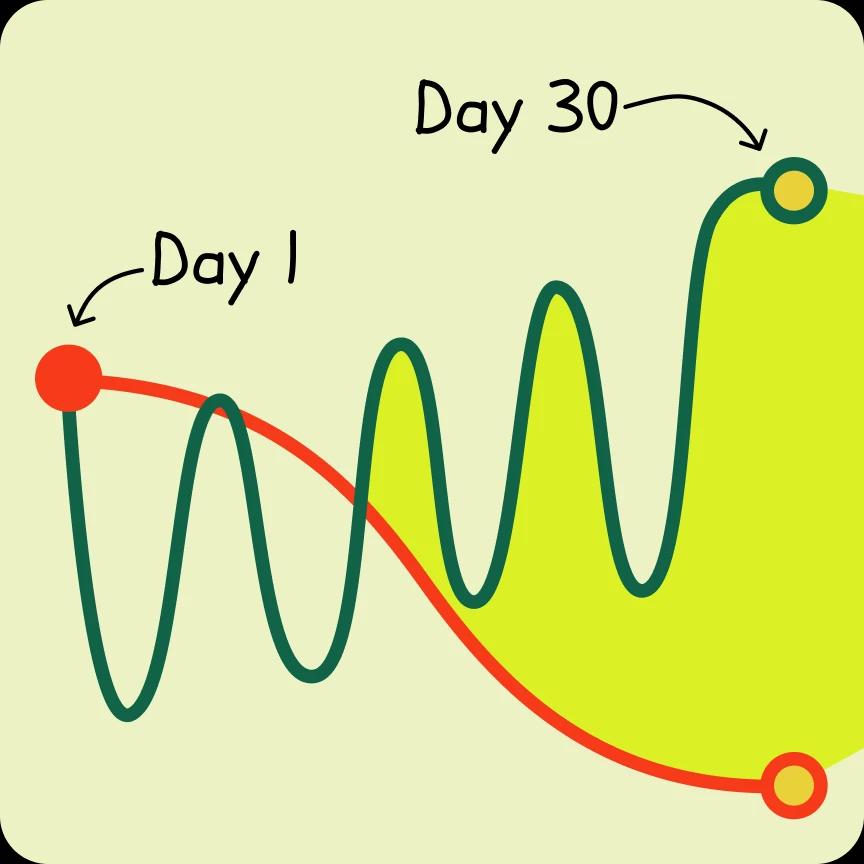
See how far consistent learning can take you
Get actionable insights from your very first 15-minute summary.
Get the plan16. Growth story sharing
Next time you're at lunch or in a meeting, share a story about a time you totally failed. Talk about what you learned and how you moved past it. When leaders or parents share their own missteps, it gives everyone else permission to be a work in progress too.
Outcome: Builds trust and lowers the fear of failure.
17. Peer accountability partners
Find someone who also wants to break out of their comfort zone. Meet once a week for coffee. Ask each other: "What did you fail at this week?" or "What's one fixed mindset thought you caught yourself having?" Having a partner makes the hard work of changing your habits feel a lot less heavy.
Outcome: Makes you much more likely to stick to your goals.
18. Group "try and fail" games
If you're a teacher or a manager, run some icebreakers that are designed to be impossible to win on the first try. Use an escape room-style challenge or a complex word search. The goal isn't to win; it's the brainstorm that happens when the team gets stuck.
Outcome: Teaches the team that getting stuck is just part of the process.
19. Brainstorming walks
Sitting in a conference room is a fast way to stay stuck. Get outside. Go for a walk while you talk through a project. Moving your body helps your brain find new angles for problem-solving.
Outcome: Sparks creativity when you're feeling stuck.
20. Pair learning sessions
Pick something neither of you knows how to do — maybe a bit of ELA (English Language Arts) analysis or a new coding language — and try to learn it together. Seeing someone else struggle with the same thing makes your own frustration feel a lot more manageable.
Outcome: Makes the learning process feel like a team sport.
21. Growth "debrief" meetings
At the end of every big project, don't just talk about the results. Talk about the learning process. What was the hardest part? Where did the team almost give up? These are the moments that matter most for growth.
Outcome: Ensures you don't make the same mistakes twice.
📘 If you're a lifelong learner, your reading list is probably a mile long. Shrink it down and master the big ideas today with Headway.
Playful and creative growth mindset activities
Sometimes, the best way to get out of a fixed mindset is to stop taking yourself so seriously. When we're playing, our brains are naturally more open to making mistakes because the stakes feel lower.
That's why growth mindset activities for kids often involve games — but honestly, growth mindset activities for adults should look pretty similar. If you're too scared to look stupid while learning new things, you're never going to grow.
22. Creative skill exploration
Pick up something you're not good at. Maybe it's drawing, playing a three-chord song on a guitar, or trying a new recipe. The goal isn't to be good; it's to enjoy the learning process. When you mess up a sketch, don't throw it away. Look at it and ask: "What does this line tell me about how to do the next one?" This practice works for elementary school kids and adults alike because it builds a positive attitude toward the messy middle part of learning.
Outcome: Teaches you to value effort over immediate results.

Find rhythm in your personal growth and get science-backed ideas.
23. Mindset affirmations and visuals
We all have those fixed mindset phrases that pop up when we're tired. To push back, surround yourself with growth mindset statements. If you're a teacher, put up a growth mindset poster or a bulletin board in your classroom.
If you're working from home, stick some affirmations near your monitor. Phrases like "Challenges make me stronger" or "I can learn anything I want" act as a constant reframe for your brain.
Outcome: Replaces negative internal chatter with positive self-talk.
24. "What if" brainstorming
When you're stuck on a problem, your brain tends to lock up. Try a "what if" brainstorm. Ask the wildest, most unconventional questions you can think of: "What if we did the exact opposite of what the boss said?" or "What if this problem was actually a gift?" This kind of thinking is a huge part of social-emotional learning, as it keeps you flexible and creative under pressure.
Outcome: Breaks the "one right answer" trap of a fixed mindset.
25. Role-playing failure scenarios
This option is a terrific addition to growth mindset activities for teens or even corporate teams. Act out a situation where things go totally wrong, like struggling through a presentation or failing an ELA test.
Then, practice the growth response. Use growth mindset quotes or the power of yet in your dialogue. "I haven't mastered this pitch... yet." It sounds silly, but it builds the muscle memory for resilience.
Outcome: Makes real-life failure feel a lot less scary because you've already "rehearsed" it.
26. Reward growth wins
Stop only celebrating the big wins. Start rewarding the growth wins. Did you stick to your daily routine even when you were tired? Did you try a new approach to a problem? Mark that progress. In a school year, a teacher might use a sticker chart; for yourself, maybe it's an extra 15 minutes of your favorite podcast.
Outcome: Reinforces that hard work and persistence are just as valuable as the final result.
27. Visual growth boards
Instead of a vision board that just shows things you want, make a growth board. Include famous failures (like how Walt Disney was told he had no imagination), your favorite growth mindset books, and milestones of things you've actually learned this year. It's a physical reminder that your brain works like a muscle — the more you use it, the stronger it gets.
Outcome: Provides a tangible record of your personal growth.
📘 You haven't mastered your mindset... yet. Take the first step toward a more resilient version of yourself by trying Headway.
How to track your growth mindset progress
You can't manage what you don't measure. But since mindset is internal, you need to get a little creative with your tracking. You don't need fancy lesson plans to see if you're getting better; you just need to be honest with yourself during self-reflection.
Here's a simple way to track your shifts:
Effort log: Instead of a to-do list, keep a to-learn list. Check off things based on the effort you put in, not just whether you finished.
Mindset journal: Spend two minutes before bed answering reflective questions. "When did I feel a fixed mindset statement today?" and "How did I move past it?"
"Yet" count: Keep a tally in your notes app. How many times did you catch yourself and add "yet" to a sentence?
Weekly review: Every Sunday, look back at your week. Did you step out of your comfort zone? Did you use any free resources, like word search games or free printables, to challenge yourself?
Use Headway to keep the momentum. If you're feeling a bit "fixed" in your thinking, search for a summary on neuroplasticity or habit-building. It's a good way to pair your growth mindset lessons with real-world evidence that you're capable of change.
Don't just think it, do it with the Headway app!
At the end of the day, a growth mindset means you've decided that you aren't a finished product. You're a work in progress. Hard work, a positive attitude, and the willingness to look a bit messy while you learn are the only things that actually matter.
Doing these activities for a growth mindset isn't a one-time thing; it's a lifestyle. It's about choosing to believe that your "limitations" are actually just starting points. When you combine these habits with a steady stream of new ideas, like the ones you get from Headway, you become pretty much unstoppable. You start to see that mental health and self-esteem aren't things you simply have; they're things you build through action.
📘 Ready to change the way you think? Download Headway and start your first growth mindset learning plan today.
FAQs about the growth mindset activities
What are the best growth mindset activities?
The best ones force you to confront discomfort directly. Instead of just reading theory, try "Yet" language practice or reframing a recent failure on paper. These exercises turn abstract ideas into tangible habits. Pairing them with Headway summaries builds a mental framework that treats every setback as a chance to learn rather than a reason to stop.
What are some examples of growth mindset activities?
Practical examples include keeping a mistake log to learn from errors or starting a 30-day challenge to gain a new skill. You could also try explaining a concept you've just learned to someone else. These tasks push you out of your comfort zone. Using Headway to explore neuroplasticity can reinforce why these activities actually rewire your brain.
What are some growth mindset activities for elementary students?
For younger learners, focus on playful engagement, such as "famous failures" storytelling or using classroom bulletin boards to celebrate effort over grades. Encouraging kids to add "yet" to frustrated statements helps build early resilience. These simple shifts create a foundation for lifelong learning. Supplementing these lessons with age-appropriate stories from Headway keeps growth feeling like a fun, daily habit rather than a lesson.
Are growth mindset classroom activities effective?
Absolutely, but they work best when integrated into the daily curriculum rather than treated as a one-off lesson. When students see teachers modeling "try and fail" games or sharing their own learning hurdles, it normalizes the difficult parts of growing. This environment boosts self-esteem and participation. Reinforcing these habits through varied resources, including Headway's growth plans, helps cement these habits in the long term.
How can I apply a growth mindset in my daily life?
Start by noticing the fixed mindset phrases in your internal monologue and replacing them with positive self-talk. Make a habit of seeking feedback instead of avoiding it. Adding a micro-learning ritual, like a quick Headway summary with your morning coffee, keeps you focused on progress. Small, intentional shifts in how you view daily challenges add up faster than you might expect.