Protect the world’s peace. Donate to support Ukraine

51 Best Science Books

Are you interested in climate change, space exploration, modern technology, health, and genetic engineering? Or do you want to understand how your brain works and how to stay healthy in a plastic-filled world of fast food? Science books can turn complex ideas into clear insights. Our curated collection includes 51 engaging reads that make science accessible and easy. You'll find books by noted researchers, award-winning authors, and thought leaders who've shaped our understanding of the natural world.

Books about science that make life better

Books about science bridge the gap between laboratory discoveries and everyday understanding. They transform abstract concepts into relatable stories showing how scientific principles shape daily life. When you read books about science, you're not just learning facts — you're developing critical thinking skills and gaining tools to navigate a world driven by technology and innovation.

Understanding human biology, nutrition, and health through scientific literature empowers you to make informed decisions about your well-being. 

  • In 'Why We Sleep,' Matthew Walker shows how sleep deprivation shortens your lifespan and harms your memory. 

  • In 'Immunity,' Dr. Jenna Macciochi explains how the immune system functions as a complex and thoughtful defense network that can be strengthened through lifestyle choices, diet, and stress management.

These books demystify your body's functions, helping you recognize warning signs and optimize your health.

Quality books about science also tackle pregnancy (see 'Expecting Better' by Emily Oster, PhD), longevity ('Outlive' by Peter Attia, MD), and disease prevention (for example, 'The Obesity Code' by Dr. Jason Fung) with evidence-based insights. The science books and research debunk myths about a healthy lifestyle and marketing hype, instead providing objective information for critical evaluation of medical advice.

Science books for making sense of our era

Whether you are a scientist, a student seeking to grow your knowledge, or a lifelong learner seeking to explore the world, science books for adults will provide new ideas for reflection and discussion with other like-minded people.

Climate change and technological innovation define our era, so understanding them is crucial to navigating the future. 

  • 'The Climate Book' by Greta Thunberg compiles insights from over 100 leading scientists, activists, historians, economists, and journalists worldwide to explain the climate crisis from the science behind it to practical solutions and policy action. 

  • 'The Future We Choose' by Christiana Figueres and Tom Rivett-Carnac presents two possible futures and actionable steps to avoid a climate catastrophe. 

  • 'How to Spend a Trillion Dollars' by Rowan Hooper explores how massive scientific investment could solve humanity's biggest challenges — from climate change, deforestation, and poverty to fighting disease, exploring space, and creating clean energy.

Technology's transformative power comes alive through the stories of innovators pushing boundaries. 

  • Ashlee Vance's 'Elon Musk' chronicles how one entrepreneur revolutionized electric vehicles, space travel, and renewable energy — showing how audacious thinking turns science fiction into reality. 

  • Mark Miodownik's 'Stuff Matters' reveals the hidden science behind materials that power modern technology, from smartphone screens to rocket fuel. 

Books about science provide a deep understanding of the world. They allow us to think logically, critically, and structurally. Science books enrich knowledge and help us become more critical, aware, and effective people.

Find your next read with a short quiz

What is A Brief History of Everything about?

This book offers a comprehensive overview of the evolution of consciousness, weaving together insights from science, philosophy, and spirituality. It explores the interconnectedness of all aspects of existence, tracing the development of human understanding from primitive beliefs to modern theories. Wilber presents a holistic perspective that encourages readers to consider how various elements of existence, including culture and biology, shape our reality and inner lives.

Who should read A Brief History of Everything

  • Philosophy enthusiasts seeking a comprehensive worldview.
  • Spiritual seekers interested in integral theory and consciousness.
  • Students of science exploring the connection between disciplines.
book

What is A Brief History of Time about?

This groundbreaking work explores the fundamental concepts of cosmology, from the Big Bang to black holes, using accessible language for the general reader. It delves into complex subjects like time, space, and the universe's origins, aiming to reveal the intricate workings of nature. The author combines scientific insight with philosophical questions, offering readers a deeper understanding of reality and humanity's place within the cosmos.

Who should read A Brief History of Time

  • Science enthusiasts curious about the universe.
  • Students seeking knowledge in physics and cosmology.
  • Anyone interested in the nature of time and space.
book

A Mind for Numbers

by Barbara Oakley, PhD

What is A Mind for Numbers about?

This insightful guide empowers readers to enhance their mathematical and scientific skills through effective learning techniques. By blending cognitive science with practical strategies, it reveals how to tackle challenging concepts, overcome procrastination, and develop a growth mindset. With engaging anecdotes and exercises, it provides tools to help students and professionals alike excel in STEM fields, fostering a deeper understanding and appreciation for numbers and analytical thinking.

Who should read A Mind for Numbers

  • Students struggling with math and science subjects.
  • Educators seeking innovative teaching methods in STEM.
  • Lifelong learners wanting to improve analytical skills.
book

Apollo's Arrow

by Nicholas A. Christakis, PhD

What is Apollo's Arrow about?

This insightful exploration delves into the far-reaching effects of the coronavirus pandemic on society, culture, and human behavior. Drawing on history, sociology, and epidemiology, it examines how the virus reshapes social interactions, governance, and our collective psyche. Through compelling analysis, it reveals the enduring changes that may redefine our lives long after the pandemic subsides, urging readers to reconsider the future of human connection and community.

Who should read Apollo's Arrow

  • Public health professionals seeking deeper insights.
  • Students of sociology and public health.
  • General readers interested in pandemic effects.
book

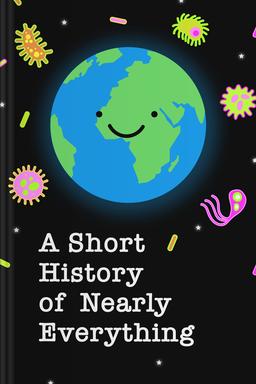
What is A Short History of Nearly Everything about?

This engaging exploration of science takes readers on a journey through the history of the universe, from the Big Bang to modern times. With wit and humor, it simplifies complex concepts in physics, chemistry, biology, and geology, revealing the intriguing stories behind groundbreaking discoveries and the scientists behind them. The narrative highlights the wonders and absurdities of life, making science accessible and entertaining for all.

Who should read A Short History of Nearly Everything

  • Curious minds seeking scientific knowledge and humor.
  • Lifelong learners interested in earth and universe history.
  • Science enthusiasts who enjoy engaging narrative styles.
book

Frequently asked questions on science books

What are some good science books to read?

Good science books to read include 'A Brief History of Time' by Stephen Hawking, PhD, 'The Sixth Extinction' by Elizabeth Kolbert, and 'Deadliest Enemy' by Michael T. Osterholm and Mark Olshaker. Also, you should check out 'The Uninhabitable Earth' by David Wallace-Wells for more information on rising ocean levels, stronger hurricanes and droughts, water shortages, hunger, and migration crises.

What's the best book about the science of reading?

One of the best-known books on the science of reading is 'Essentials of Assessing, Preventing, and Overcoming Reading Difficulties' by David A. Kilpatrick. This well-researched guide is for educators, psychologists, and parents interested in learning how reading develops and how to effectively help children struggling with reading. It covers topics such as phonemic awareness, orthographic mapping, and interventions for dyslexia.

What's the most famous science book?

One of the most famous books today is 'If Anyone Builds It, Everyone Dies' by Eliezer Yudkowsky and Nate Soares. This book analyzes the potential threats that superintelligent artificial intelligence could pose to humanity. It attracted attention due to its relevance and deep analysis of the risks connected with the development of AI.

What are five books everyone should read?

Here are five books you should add to your reading list:

'1984' by George Orwell explores the value of freedom.

'The Catcher in the Rye' by Salinger examines self-discovery.

'To Kill a Mockingbird' by Harper Lee addresses justice and moral choices.

'Sapiens' by Yuval Noah Harari covers human evolution.

'Meditations' by Marcus Aurelius presents wisdom from a Stoic lens.

What's the most famous scientific book?

One of the most famous scientific books today is Masud Husain's 'Our Brains, Our Selves: What a Neurologist's Patients Taught Him About the Brain.' This book was shortlisted for the Royal Society Award for Best Non-fiction Book 2025. It makes complex neurobiological topics accessible to a wide range of readers.

What's the meaning of a scientific book?

A scientific book is a type of literature based on objective research, facts, and verified data. It's created to explain certain phenomena, processes, or laws in various fields of knowledge, from physics, biology, and chemistry to psychology, economics, or sociology.