Self-growth
 Business & Career
 Success
 Communication
 Healing
 Relationships
 Psychology
 Happiness
Have you ever stopped and asked yourself why feeling okay with your own life doesn't always mean feeling okay with yourself?
Many people invest time in well-being, self-improvement, or different forms of self-help, yet still struggle with a basic issue: how to be happy with yourself. In the US, fewer than half of adults say they feel happy most of the time, which suggests the problem often isn't circumstances but self-esteem, expectations, and the habit of staying inside a familiar comfort zone.
When most decisions are shaped by outside standards, personal clarity tends to slip. This article focuses on practical ways to regain it. Headway can be useful in moments like this. Our app offers book summaries focused on self-esteem, well-being, and self-improvement, available to read or listen to. They work well when you want structure without pressure or overcommitment.
📘 Download the Headway app and explore ideas that help you feel more comfortable with yourself.
Quick answer: How to be happy with yourself
Accept that you won't fully fix yourself. Letting imperfections exist instead of constantly correcting them makes a big difference. You spend less energy fighting yourself and more time actually living, which is usually worth it.
Stop postponing contentment. If happiness is always tied to future progress, it never arrives. Staying with the present version of yourself, even when it feels unfinished, makes daily life easier to handle.
Keep a few simple habits going. Writing things down, slowing your pace, or checking in with yourself won't feel dramatic. Over time, though, that consistency makes a big difference — and it's worth it.
The path to happiness starts with self-acceptance
Accepting yourself, along with your imperfections, is a transformative process that lays the groundwork for true self-worth and a long-lasting, happy life. Self-acceptance is recognizing and embracing your true self, including both strengths and flaws, without undue self-criticism or denial. It isn't about complacency or ignoring areas for growth, but rather accepting yourself as you are while striving to improve.
Brené Brown highlights the significance of self-acceptance in her book ‘The Gifts of Imperfection,' by stating:
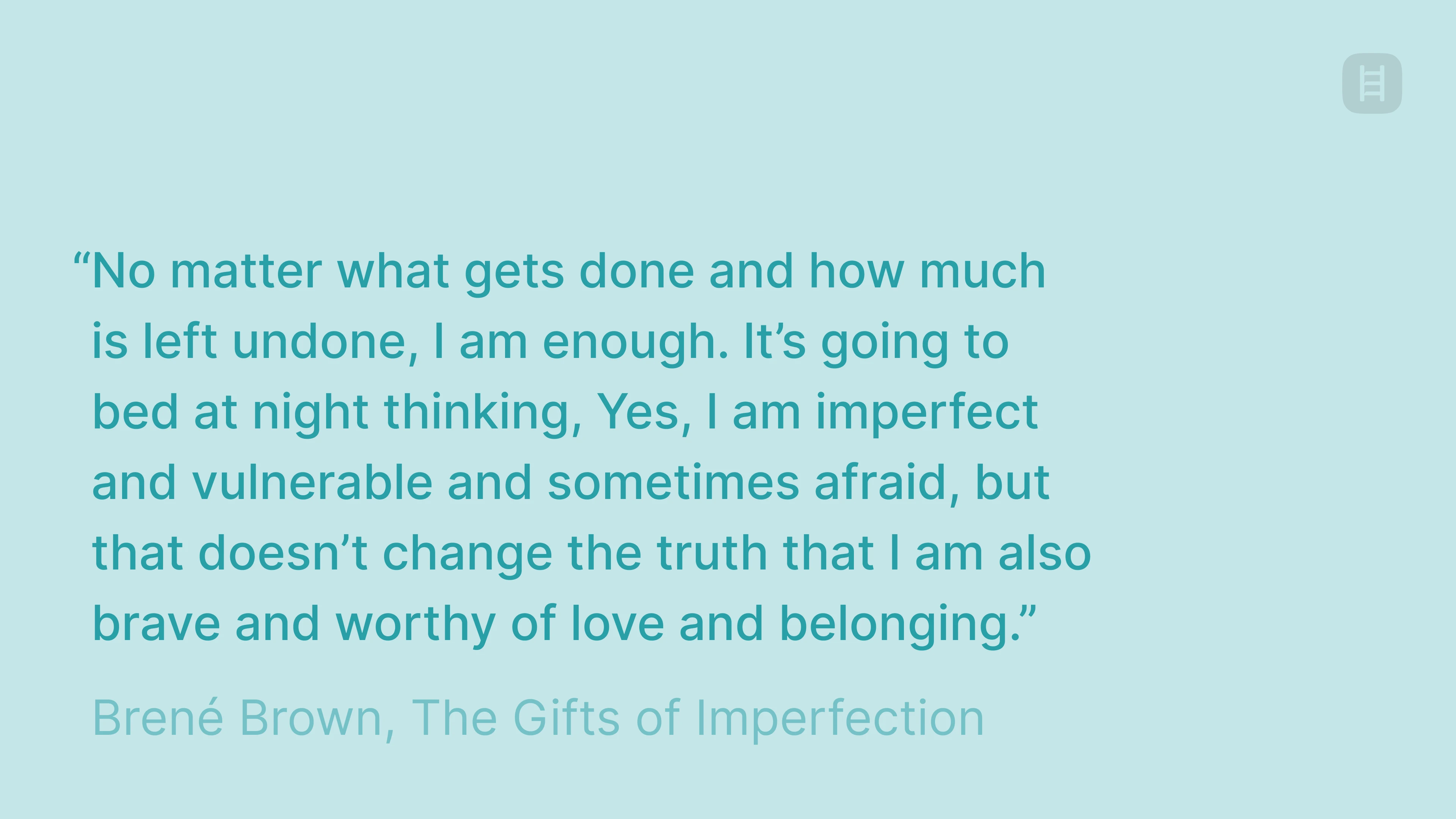
“No matter what gets done and how much is left undone, I am enough. It’s going to bed at night thinking, Yes, I am imperfect and vulnerable and sometimes afraid, but that doesn’t change the truth that I am also brave and worthy of love and belonging.”
This perspective underscores how crucial it is to embrace ourselves fully for personal growth and wellness.
When you fully embrace who you are, you let go of the need to constantly seek approval from others or live up to unrealistic expectations. This self-acceptance allows you to stop being overly critical of your flaws and to see them as natural aspects of being human rather than sources of shame or inadequacy.
By acknowledging your imperfections, you shift your focus away from perfectionism and instead toward growth and learning, allowing you to approach challenges with more confidence and resilience.
Self-acceptance as the key to inner peace
Self-acceptance also opens the door to greater self-compassion, where you treat yourself with kindness even when you fall short of your goals. This mindset fosters emotional well-being and reduces feelings of anxiety or weakness, as you learn to give yourself the grace to make mistakes without harsh judgment. It also allows you to build more authentic relationships with others, as you no longer feel the need to hide or mask parts of yourself to fit in or be accepted. Instead, you can connect with others from a place of honesty and vulnerability, which leads to deeper, more meaningful social connections.
It is important to be happy in the present moment. Don Miguel Ruiz emphasizes this in his book 'The Four Agreements,' stating,
“If you live in a past dream, you don't enjoy what is happening right now because you will always wish it to be different than it is. There is no time to miss anyone or anything because you are alive. Not enjoying what is happening right now is living in the past and being only half alive. This leads to self-pity, suffering, and tears.”
This insight reminds us of the value of finding joy and contentment in our current circumstances rather than waiting for future changes.
Ultimately, accepting yourself as you are not only leads to inner peace but also empowers you to pursue your passions and goals with greater confidence and clarity. By embracing self-acceptance, you can break free from self-doubt and lead a more balanced and fulfilling life.
📘 Try Headway when you want something thoughtful, not noisy.
Daily practices to boost your happiness
Daily habits play a crucial role in cultivating happiness, as they establish a solid foundation for mental well-being and contentment. Incorporating these practices into your everyday routine helps build a more positive and fulfilling life.
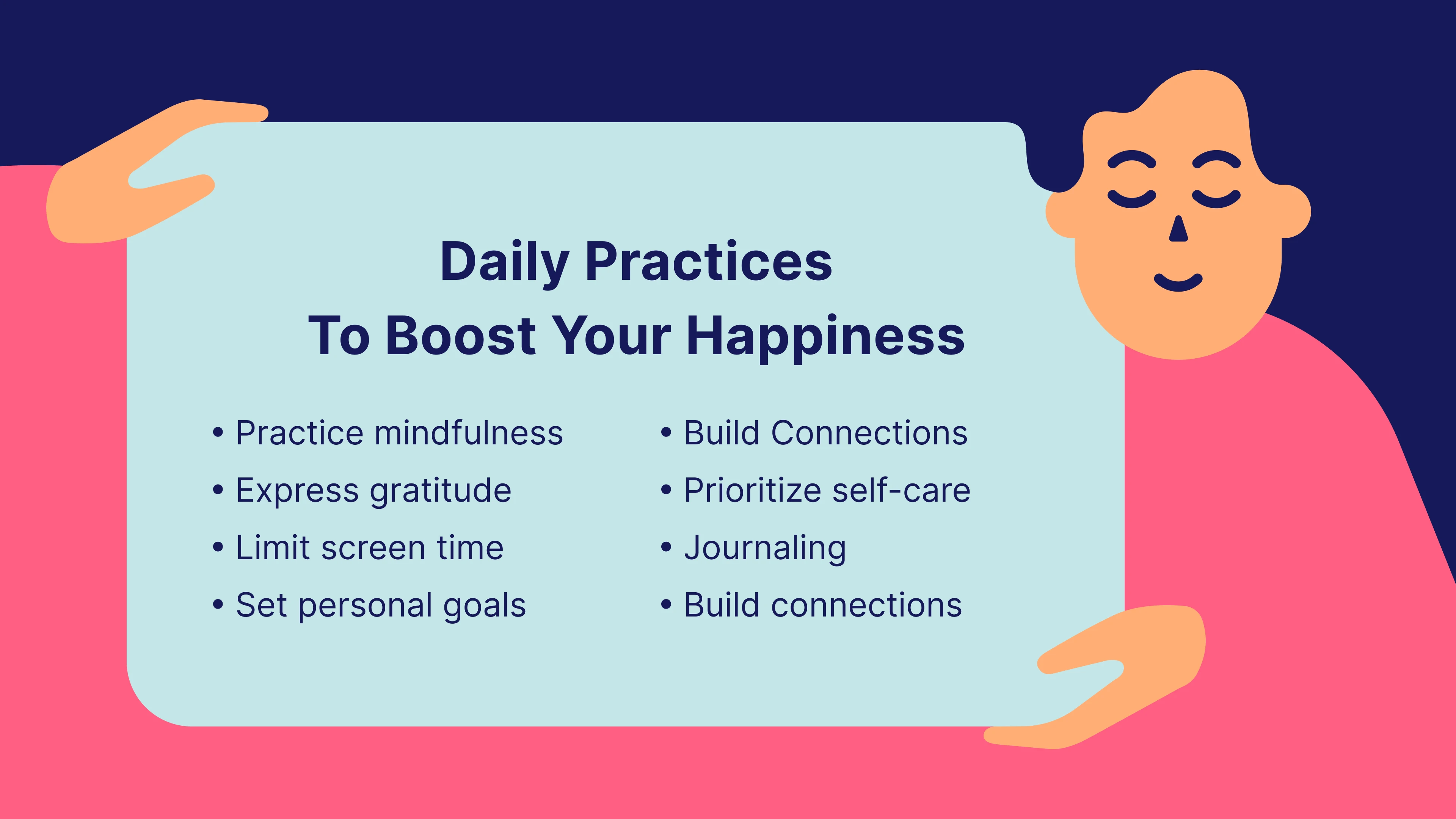
Here's a list of things that will lead to lasting happiness:
Practice mindfulness: Spend a few minutes each day focusing on the present moment through mindful breathing or meditation. This routine can help reduce stress, increase your awareness of positive experiences, and normalize your blood pressure.
Gretchen Rubin wrote in her book 'The Happiness Project', describing her point of view on happiness as
"It's about living in the moment and appreciating the simple things. Surround yourself with the little things that inspire you and letting go of the obsessions that want to take over your mind. It is a daily struggle sometimes and hard work, but happiness begins with your own attitude and how you look at the world."
So, slow down and appreciate this moment.
Express gratitude: Keep a gratitude journal where you write down things you’re thankful for each day. Recognizing and appreciating the good aspects of your life can shift your perspective and enhance your own happiness.
Journaling: Write regularly about your thoughts, feelings, and experiences. This can help you process emotions, reflect on personal growth, and gain clarity on what brings you joy.
Stay active: Incorporate regular exercise into your routine, even if it's just a short walk. Physical activity releases endorphins and dopamines, which can boost your mood and energy levels and be a huge health benefit.
Build connections: Spend quality time with best friends, loved ones, and family members, and happy people overall. Building and maintaining strong relationships can provide support, increase feelings of belonging, and contribute to your overall happiness.
Set and pursue personal goals: Identify what matters to you and set achievable goals. Working towards these goals can give you a sense of purpose and accomplishment.
Prioritize self-care: Make time for activities that nourish your mind and body, such as reading, taking relaxing baths, or pursuing hobbies you enjoy to express self-love. Taking care of yourself can improve your overall well-being.
Limit screen time: Reduce time spent on scrolling social media and screens to avoid comparison and negativity. Instead, engage in activities that foster real-life connections and personal growth.
Why small steps and consistency matter
Taking immediate action, even in small steps, and maintaining consistency are essential to achieving long-term success. As Eckhart Tolle puts it in 'The Power of Now,'
"Any action is often better than no action, especially if you have been stuck in an unhappy situation for a long time. If it is a mistake, at least you learn something, in which case it's no longer a mistake. If you remain stuck, you learn nothing."
The science behind happiness
Cultivating a positive mindset and optimism is crucial for enhancing happiness and overall well-being. To begin with, focusing on the positive aspects of your own life and actively reframing challenges as opportunities for growth can shift your perspective from negativity to hope. Doing so reinforces a more optimistic outlook and improves.
In her book 'You Are a Badass,' Jen Sincero emphasizes the value of time, stating,
"Follow what feels good in the moment, every moment, and it will lead you through a most excellent life."
She highlights the importance of using every moment wisely to achieve meaningful goals.

Setting realistic goals and celebrating small victories can further build self-confidence and maintain a positive mindset. No matter how minor, each accomplishment provides a sense of progress and reinforces the belief that positive outcomes are possible. Additionally, engaging in positive self-talk and actively challenging negative thoughts are key strategies for sustaining optimism.
By addressing and countering self-doubt, you strengthen your ability to maintain a hopeful perspective. Incorporating these practices into your daily routine creates a solid foundation for sustained happiness.
📘 Download Headway for quiet time that actually helps!
The power of managing time and mindset for a fulfilling life
Effective management of free time has been shown to significantly impact our overall quality of life. As Eric Barker highlights in his book, 'Barking Up the Wrong Tree',
"A study of 403 people in the Journal of Happiness Studies showed that managing your free time is associated with higher quality of life."
This insight underscores the importance of not only how we spend our time but also how it affects our happiness and well-being.
Embracing a mindset of continuous growth and learning allows you to remain adaptable and open to new experiences. This openness enriches your journey toward happiness, ensuring that you remain resilient in the face of challenges. Ultimately, by nurturing a positive mindset and practicing optimism regularly, you pave the way for a more fulfilling and joyful life.
Eckhart Tolle wrote in 'The Power of Now,'
"Once you have identified with some form of negativity, you do not want to let it go, and on a deeply unconscious level, you do not want positive change. It would threaten your identity as a depressed, angry or hard-done-by person. You will then ignore, deny or sabotage the positive in your life. This is a common phenomenon. It is also insane."
Facing imperfection and failure
Embracing imperfection and failure is essential for achieving true happiness. When we accept that mistakes are a natural part of life, we free ourselves from the unrealistic expectation of perfection. This acceptance helps reduce anxiety and self-doubt by shifting our focus from fear of failure to opportunities for growth.
Vulnerability allows us to face challenges with greater courage, making it easier to learn and improve. Being open about our struggles fosters deeper connections with others, enhancing our sense of community and support.

In 2006, Carol S. Dweck, a psychologist and Stanford University professor, published 'Mindset: The New Psychology of Success'. She is widely recognized for her research, 'Students' Mindsets for Learning and Their Neural Underpinning,' on motivation, personality, and developmental psychology. In this influential book, Dweck explores how our beliefs about our abilities can shape our success and personal growth.
"It has been shown that individuals with a growth mindset for learning see mistakes as opportunities to learn and improve, whereas for fixed-minded individuals mistakes indicate lack of ability… More growth-minded individuals also show superior accuracy after mistakes compared to those endorsing more of a fixed mindset. These results suggest that neural activity indexing online awareness of and attention to mistakes is intimately involved in growth-minded individuals' ability to rebound from mistakes."
By normalizing setbacks and viewing them as learning experiences, we build resilience and self-compassion. This approach leads to a more balanced and fulfilling life, where we can appreciate our journey and find greater happiness in the process.
Brené Brown's book, 'The Gifts of Imperfection,' explores the transformative power of embracing vulnerability. She asserts that true growth and fulfillment come from accepting our imperfections and learning from our setbacks.
"For many of us, our first response to vulnerability and pain of these sharp points is not to lean into the discomfort and feel our way through but rather to make it go away."
📘 Try Headway when you want structure, not pressure.
Exercises for immediate happiness
Exploring creative outlets such as drawing, writing, or playing a musical instrument over the course of a week could be a great starting point for enhancing your happiness. Engaging in creative activities can help you express yourself and bring a sense of joy and accomplishment.
Another approach is to create a "happiness jar" where you jot down moments of joy or achievements throughout the week. Reviewing these notes can serve as a reminder of positive experiences and progress.
Connect with nature by spending time outdoors, whether it's a walk in the park, simply sitting in your garden, or biking. Nature can provide a refreshing change of pace and promote relaxation.
Experiment with new routines, such as altering your daily schedule or trying different simple ways to organize your day. This can introduce novelty and excitement into your routine.
Dedicate time to learning about a subject that fascinates you, which can provide a sense of purpose and intellectual stimulation. You might also explore volunteer opportunities to give back to your community, which can enhance your sense of fulfillment and purpose.

As Gretchen Rubin wrote in her book 'The Happiness Project,'
"Of course it's not enough to sit around wanting to be happy; you must make the effort to take steps toward happier life by acting with more love, finding work you enjoy."
Unlock happiness through meaningful conversations and personal reflection
Engage in deep, meaningful conversations with loved ones or mentors. Sharing your thoughts and experiences with others can foster a sense of connection and understanding.
Consider making time for personal reflection by writing in a journal about your experiences, emotions, and aspirations. This can help you process your thoughts and identify what truly matters to you, and improve your mental health.
Lastly, practice self-compassion by treating yourself with kindness and understanding, especially during hard times. Recognize your efforts and achievements, no matter how small, and acknowledge the progress you're making on your journey to greater happiness.
Your path to happiness starts with Headway
Learning how to be happy with yourself often comes down to a few key things: accepting what won't change, paying attention to the present, and maintaining habits that are simple enough to stick with. Progress here is rarely dramatic, but it tends to last.
Headway fits into that kind of work without asking for much. Our app offers book summaries on self-esteem, self-help, and self-improvement that you can read or listen to when motivation dips. It's easy to pick up, pause, and return to.
📘 Download Headway and keep working on how to be happy with yourself in a way that feels manageable!
FAQs about how to be happy with yourself
Why do I struggle to let myself be happy?
Many people struggle with feeling happiness because of their own barriers and insecurities. For some reason, we think we have to deserve happiness when it's actually a much-needed state of feeling for everyone. In fact, when one doesn't feel happy for a long time, their mental health can suffer; for example, one may experience burnout, fatigue, or even depression.
What is the golden rule of happiness?
One of the main golden rules is "Treat others as you'd wish to be treated." This way, everyone gets what they deserve. When you focus on gratitude and forgiveness, it's much easier to be happy with yourself. It helps you build stronger bonds with family, friends, and loved ones.
Why is Gen Z not happy?
Each new generation meets challenges based on the modern problems that appear. In the case of Gen Z, the feeling of unhappiness rises because of economic struggles (debts, cars, housing) — the modern state of the economy makes it much harder for Gen Z to get what previous generations already owned in their age. Also, the social media impact is undeniable too: many still compare themselves and their lifestyles to so-called 'ideally looking influencers.'