Protect the world’s peace. Donate to support Ukraine

528 Best Self-Help Books to Empower Your Journey

Self-help books do more than give recommendations. They provide real-world tactics for changing your thinking style and creating better habits. You want those changes to last, right? No matter your quest for purpose, if you want to think more objectively or want more peace and calm, a good self-help book can be the spark for growth.

Our carefully selected list of best self-help books suggestions goes beyond surface-level tips and offers deep insights from specialists who've studied human behavior, learning styles, and personal transformation. Start your journey toward a more fulfilling life today.

Why self-help books matter

Reading self-help books allows you to develop flexibility of thinking, emotional intelligence, and productivity, all qualities that make a person more successful and satisfied with life in today's fast-paced world.

These books bridge the gap between where you are and where you want to be, offering proven frameworks and real-world wisdom. They help you think differently, learn to study more effectively, and even find meaning in your daily life.

Reading self-help books regularly builds self-awareness and gives you tools to navigate life's challenges confidently. You'll discover strategies successful people use to overcome obstacles, make better decisions, and cultivate resilience. The most important thing is finding books and authors that resonate with your present goals and challenges.

Self-improvement through reading isn't about quick fixes. It's about understanding yourself better, questioning your assumptions, and gradually implementing changes that stick. Each book on this list approaches personal development from a unique angle, giving you multiple perspectives on growth.

Best self-help books that work everywhere

Today, reading the best self-help books is more important than ever. The world is changing rapidly, and success and harmony depend not only on knowledge but also on the ability to think, adapt, and manage yourself.

Did you know that R.H. Jarrett's 'It Works' has a simple but highly effective 3-step formula for achieving your goals? It includes:

  1. Write down your desires — clearly state what you want.

  2. Repeat them daily, using affirmations, so that your subconscious mind gradually accepts these goals as real.

  3. Don't discuss them with others. Keep your intentions confidential to avoid doubts and the negative influence of outside opinions.

Millions of people have achieved significant results using this simple formula, and even after almost a century, the book remains popular as a guide to practical self-help and visualization of desires.

Find more self-help books for your growth:

Henri Junttila’s book 'Find Your Passion' helps you understand that true passion is not something you have to “find,” but something you develop through action. Junttila shows you how to listen to yourself, overcome fears and doubts.

For example, Junttila gives the example of a young woman who had always been interested in drawing, but worked in an office for stability. Through self-discovery exercises and small experiments, she began taking commissions for illustrations in the evenings. Over time, the hobby turned into a full-fledged career, and the work became a source of joy and meaning.

'The 5 Elements of Effective Thinking' by Edward B. Burger and Michael Starbird teaches you how to think smarter, not harder. These mathematicians present five practical principles that improve your problem-solving abilities and help you learn from mistakes. You'll learn how to ask better questions and see challenges from fresh angles.

'Make It Stick' by Peter C. Brown explains how memory really works and why most traditional learning methods are ineffective. Brown shows that repetition is not the main thing – active recall, alternating topics and making mistakes in the process are more important. This book teaches you how to learn knowledge deeply and for a long time.

'The Art of Stillness' by Pico Iyer explores the power of slow living in our fast-paced world. Iyer makes a compelling case for intentional quiet time, showing how stillness can sharpen your focus and creativity. This book offers a new outlook on finding clarity through less in your life, but maybe more quality.

'The Road Less Traveled' by M. Scott Peck, MD, remains a classic. Peck combines psychology and spirituality to address life's fundamental challenges. He tackles discipline, love, and personal responsibility with honesty and depth, offering insights that resonate decades after publication.

What all these books have in common is that they help people develop their inner potential and mindset for a better life. They teach mindfulness, deep analysis, effective learning strategies, and the search for meaning. They also help you understand yourself and your priorities better. Each offers tools for self-knowledge, critical thinking development, and habit formation, which makes them valuable for personal and intellectual growth.

Find your next read with a short quiz

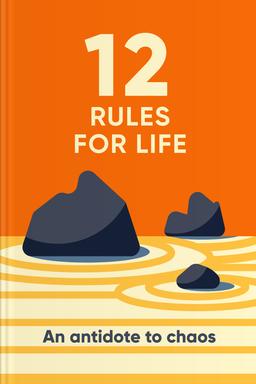
12 Rules For Life

by Jordan B. Peterson

What is 12 Rules For Life about?

This thought-provoking guide offers practical and philosophical insights on how to navigate life's complexities. Drawing on psychology, mythology, and personal anecdotes, it presents twelve essential rules that promote responsibility, order, and meaning. Each rule serves as a step towards overcoming chaos and fostering a more purposeful existence, encouraging readers to confront challenges and embrace personal growth.

Who should read 12 Rules For Life

  • Individuals seeking personal development and self-improvement.
  • Students exploring psychology and philosophy concepts.
  • Professionals navigating life challenges and seeking order.
book

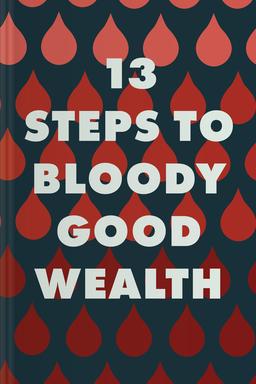
What is 13 Steps to Bloody Good Wealth about?

This guide offers a practical approach to achieving financial success through thirteen actionable steps. Combining personal anecdotes, expert insights, and financial strategies, it encourages readers to adopt a mindset geared towards wealth-building. Covering essential concepts like investment, risk management, and financial independence, the book serves as a motivational roadmap for anyone looking to enhance their financial literacy and create lasting wealth.

Who should read 13 Steps to Bloody Good Wealth

  • Aspiring entrepreneurs seeking financial independence.
  • Investors aiming to enhance their wealth strategies.
  • Readers interested in practical money management tips.
book

What is 13 Things Mentally Strong People Don’t Do about?

This book explores the habits and mindsets that mentally strong individuals avoid to achieve resilience and success. It outlines key behaviors that can hinder potential, such as dwelling on the past and resenting others. Through actionable strategies and insights, readers learn how to embrace change, confront fears, and cultivate mental strength, ultimately empowering them to lead happier and more successful lives.

Who should read 13 Things Mentally Strong People Don’t Do

  • Individuals seeking personal development and resilience.
  • Readers aiming to overcome anxiety and fear.
  • Professionals wanting to improve mental strength and focus.
book

What is 15 Secrets Successful People Know About Time Management about?

This book unveils powerful time management secrets practiced by highly successful individuals across various fields. Through insights from billionaires, athletes, scholars, and entrepreneurs, it illustrates practical habits and strategies that enhance productivity and efficiency. Readers will discover how to prioritize tasks, eliminate distractions, and maximize their time to achieve personal and professional goals, ultimately transforming their approach to managing the most valuable resource of all: time.

Who should read 15 Secrets Successful People Know About Time Management

  • Busy professionals seeking better time management strategies.
  • Students aiming for academic excellence and productivity skills.
  • Entrepreneurs looking to optimize their daily routines.
book

168 Hours

by Laura Vanderkam

What is 168 Hours about?

This insightful guide explores how individuals can maximize their time by prioritizing what truly matters. Through real-life examples and practical strategies, it encourages readers to assess their current habits, eliminate time-wasting activities, and focus on meaningful pursuits. By rethinking the 168 hours in a week, it reveals that with intentional planning and decision-making, anyone can create a more fulfilling and productive life.

Who should read 168 Hours

  • Busy professionals seeking better time management strategies.
  • Parents juggling multiple responsibilities and time constraints.
  • Students wanting to maximize productivity and study time.
book

Frequently asked questions on self-help books

What's the best self-help book of all time?

'Feeling Good' by David D. Burns, MD, is one of the most well-known and effective self-help books, especially in ​​emotional health and thinking. Burns bases his teaching on the principles of cognitive behavioral therapy (CBT) and helps readers understand how their thoughts affect their feelings.

Which book is best to read for self-improvement?

One of the most famous books in the self-improvement genre is 'How to Win Friends and Influence People' by Dale Carnegie. In it, Carnegie explains how to build successful relationships and influence others through sincerity and understanding, not manipulation. That's why the book has been popular for decades and is often mentioned as a must-read for personal development.

What's the most life-changing book?

'Be Fearless' by Jean Case can be life-changing, especially for those who seek to take responsibility for their lives, careers, or societal influence. The book inspires them to become active agents of change, take risks, and seize opportunities rather than waiting for circumstances to unfold on their own.

Which self-help book is best for beginners?

'Eat That Frog!' by self-development author Brian Tracy is a compass to time management and productivity, handy for those just starting in work or business. The book's title is metaphorical: "Eat that frog" means doing the most critical and challenging tasks first to avoid procrastination.

What's the highest-rated self-help book?

'Atomic Habits' by James Clear has become a world-renowned and top-rated self-help book due to its combination of scientific basis, simplicity of presentation, and practicality. Clear illustrates how big changes begin with tiny, consistent actions. He draws on neuropsychology, behavioral economics, and habit psychology to explain why some actions stick and others don't — making the book accessible to anyone.