Self-growth
 Apps & Digital Tools
 Business & Career
 Success
 Growth Tools
 Psychology
 Communication
 Relationships
You’ll learn
- How Hitler charmed top British officials
- Why we think we're told the truth
- When transparency is a lie
- The sad truth about Sylvia Plath
first KEY POINT
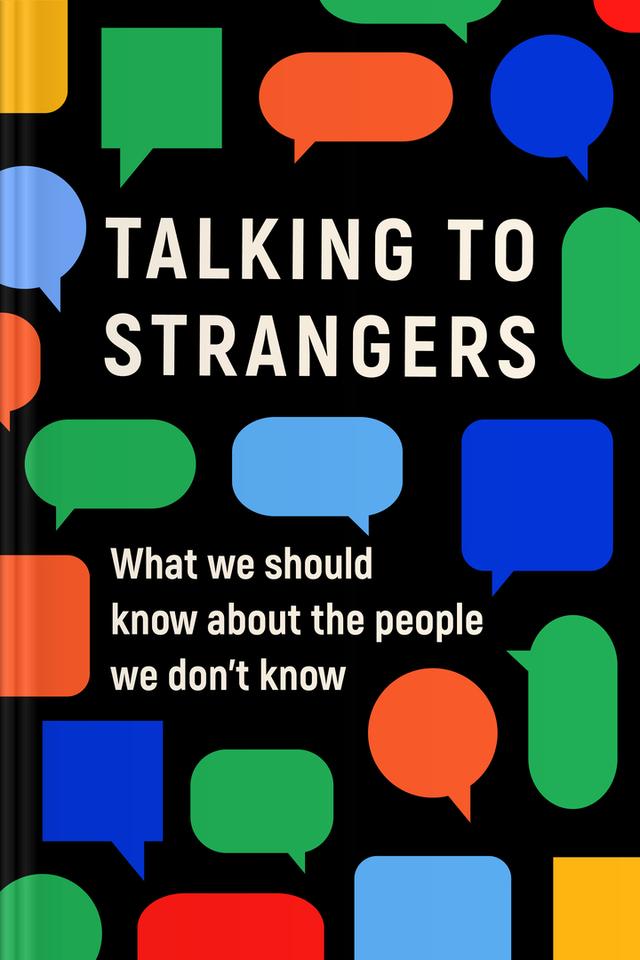
Imagine meeting someone for the first time and immediately clicking with them. They're easy to talk to, you seem to have a lot in common, and nothing feels off. You probably think you've read them pretty well. But six months later, you discover that some of what they told you wasn't true at all. And here a question arises: How good are we, really, at reading people we barely know?We often assume we can get a good read on someone after a conversation or two. We notice their expressions, listen to how they speak, and start filling in the gaps ourselves. The problem is that the other person is doing exactly the same thing with us.
And even with people we've known for years, there's no guarantee we understand everything about them. Sometimes we can misread intentions or become suspicious of people who have done nothing wrong. Malcolm Gladwell uses stories like these to examine why we're so confident in our ability to judge others and why that confidence can sometimes lead us badly astray.
In the next few minutes, we'll explore some of the mistakes we make when trying to understand people we don't know well, and the real stories Gladwell uses to show how easily those mistakes happen.With that in mind, let's take a closer look at how we deal with strangers.
second KEY POINT
The clouds over Europe darkened in the late 1930s as Adolf Hitler threatened to occupy the Sudetenland, a part of then Czechoslovakia, and Britain was trying to prevent another war. The German dictator covered the whole continent in fear. However, it didn't stop British Prime Minister Neville Chamberlain or Foreign Secretary Lord Halifax from meeting him in person.Surprisingly, both came away with a positive impression of him. They saw his behavior as friendly and believed his assurances that Germany would go no further. In less than six months, Hitler did precisely the opposite and started World War II.But before we dismiss them as naive politicians, think about how easily first impressions shape our own judgment. Maybe you've trusted that new colleague because they seemed open and friendly, only to find out later that their friendly face was hiding something else. Or perhaps someone made a bad first impression and turned out to be nothing as you expected. So, what happened? Were the seasoned politicians really naive? Yes and no.A study led by American psychologist Emily Pronin offers one possible explanation. Participants had to fill in blanks, forming different words like "touch" or "tough," "treat" or "defeat," and so on. They believed the words they came up with revealed nothing about their own personality. But when they saw other people's answers, they were happy to draw conclusions about them.In other words, we tend to believe that other people are easier to read than we are. Psychologists call this the illusion of asymmetric insight: the belief that we understand others better than they understand us.That confidence can become a problem when we stop paying attention to what we don't know about someone. Instead of assuming we've figured them out, sometimes the better thing to do is simply listen.
Continue reading with Headway app
Continue readingfirst KEY POINT
second KEY POINT
third KEY POINT
fourth KEY POINT
fifth KEY POINT
Related blog articles

Elevate the way you learn with Headway — the smart, streamlin...

Discover top apps that help you learn in just 10 minutes a da...

Curious about the Deepstash app? Find out if this app offers ...

The answer to the question "Is Blinkist worth it?" depends on...

Discover practical tips, expert insights, and book-powered to...