Self-growth
 Apps & Digital Tools
 Business & Career
 Success
 Growth Tools
 Psychology
 Communication
 Relationships

How many self-improvement apps are sitting on your phone right now, untouched since the week you installed them?
You're not lazy, and the apps aren't all bad. Downloading one feels like progress on its own. Your brain collects the reward before you've finished a single session, and two weeks later, the icon is just another square you scroll past.
This guide cuts the usual directory of 30-plus tools down to 16 apps worth keeping, grouped by what you're actually trying to fix: learning, habits, stress, focus, and physical health. Each pick includes what it does well and where it falls short, so you can choose one and start tomorrow instead of collecting five more icons.
📘 Want the shortest path from "I should read more" to actually learning something? Try the Headway app and turn 15 minutes into a book's worth of ideas.
Quick answer: The 16 best self-improvement apps by goal
If you only have a minute, find your goal below and skip straight to that pick.
Best overall for daily personal growth: Headway
Best for curiosity across many subjects: Nibble
Best for language learning: Duolingo
Best for spaced repetition and active recall: Anki
Best for gamified habit tracking: Habitica
Best for morning and evening routines: Fabulous
Best for focus sessions: Forest
Best for guided meditations: Headspace
Best for sleep stories and nighttime anxiety: Calm
Best journaling app for mood tracking: Daylio
Best for building your own planning system: Notion
Best for task management: Todoist
Best for food tracking: MyFitnessPal
| # | App | Category | Best for | Free plan |
|---|---|---|---|---|
1 | Headway | Learning | Daily nonfiction learning with retention built in | 1 summary a day |
2 | Nibble | Learning | Bite-sized lessons across 35+ subjects | Limited |
3 | Blinkist | Learning | The largest summary library | Limited |
4 | Duolingo | Learning | Daily language practice | Full core content |
5 | Anki | Learning | Memorizing anything long-term | Free on Android and desktop |
6 | Habitica | Habits | Turning habits into a role-playing game | Full habit tracking |
7 | Fabulous | Habits | Building a whole routine, not single habits | Limited |
8 | Forest | Habits | Staying off your phone during work | Paid, one-time |
9 | Loop Habit Tracker | Habits | Free, ad-free habit analytics | Fully free |
10 | Headspace | Wellness | Structured meditation for beginners | Trial only |
11 | Calm | Wellness | Sleep and racing thoughts at night | Limited |
12 | Daylio | Wellness | Mood tracking without writing | Generous |
13 | Notion | Productivity | Custom goal and planning systems | Generous |
14 | Todoist | Productivity | Getting tasks out of your head | Generous |
15 | TickTick | Productivity | Tasks and habits in one place | Limited |
16 | MyFitnessPal | Health | Food database and calorie awareness | Solid |


*Prices and features listed throughout this article are accurate as of September 2026 and may vary by region, promotion, and platform.
Why most personal growth apps get deleted in two weeks
The tool is rarely the reason someone quits. The install itself creates a small hit of satisfaction, and that feeling does the job that motivation was supposed to do later.
Friction finishes what the dopamine started. If opening the app and logging something takes longer than about 30 seconds, it competes directly with checking your phone for anything else — and doomscrolling always wins that race, because it asks nothing of you. The apps people still use after a month share one trait: they're faster to open than the habit they're replacing.
There's a second pattern worth naming. Most people download four tools at once, spread their attention across all four, and build consistency in none. One app used daily beats four used sporadically, every time.
Tool-hopping does the same damage more slowly. Switching trackers every few weeks resets your streak, your data, and whatever momentum you'd built, while still feeling productive. It's procrastination wearing a productivity badge, and it's the single most common reason people who genuinely want to change end up a year later with nothing to show for it.
How we picked these self-improvement apps
We narrowed a much longer list using five filters, weighted toward what keeps people coming back rather than what looks good on a feature page.
Day-one clarity mattered first: can a new user get real value without reading documentation? Then free plan depth, because a tool you can't test for 30 days is a tool you'll abandon after paying for it. We also looked at whether the app builds routines or just interest, whether its reminders are the kind people respond to rather than mute, and whether it shows progress in a way that survives a plateau.
*Headway and Nibble are our own products, so treat those two sections as informed rather than neutral. Everything else here is independent, and we've included the drawbacks alongside the strengths.
Best self-improvement apps for learning and personal growth
Learning is the category where small daily sessions compound fastest, which is why these apps sit at the top of the list.
1. Headway: best for a daily learning habit that sticks
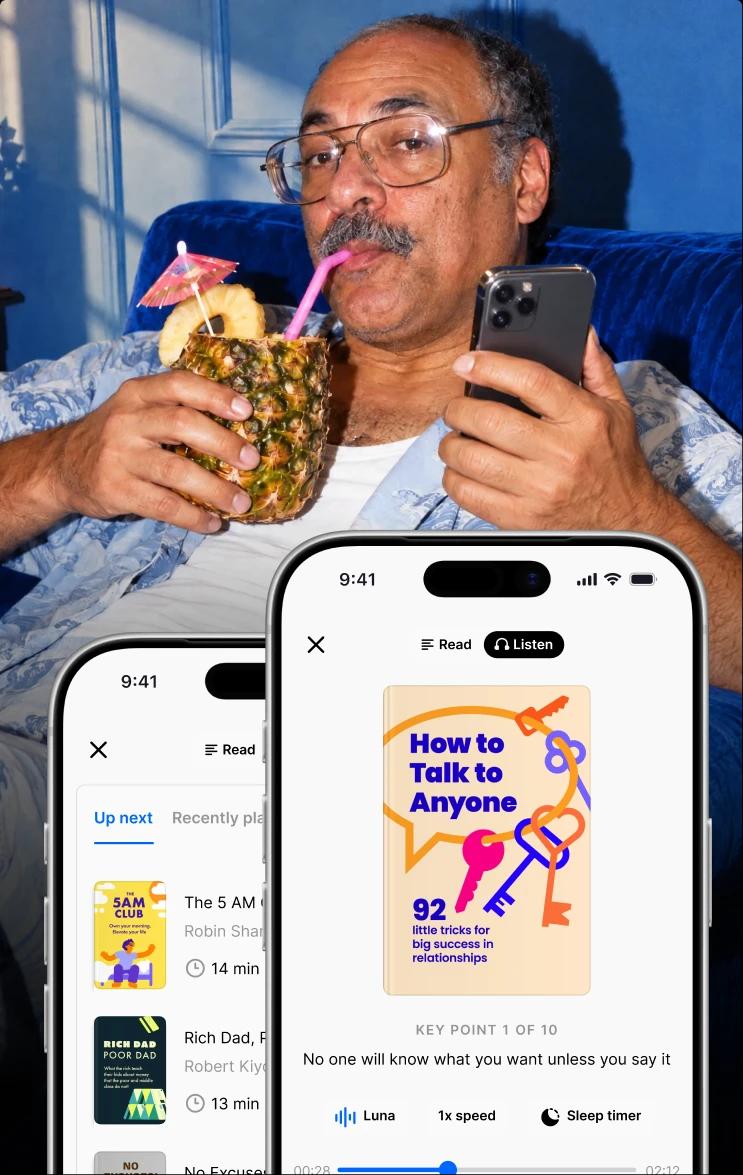
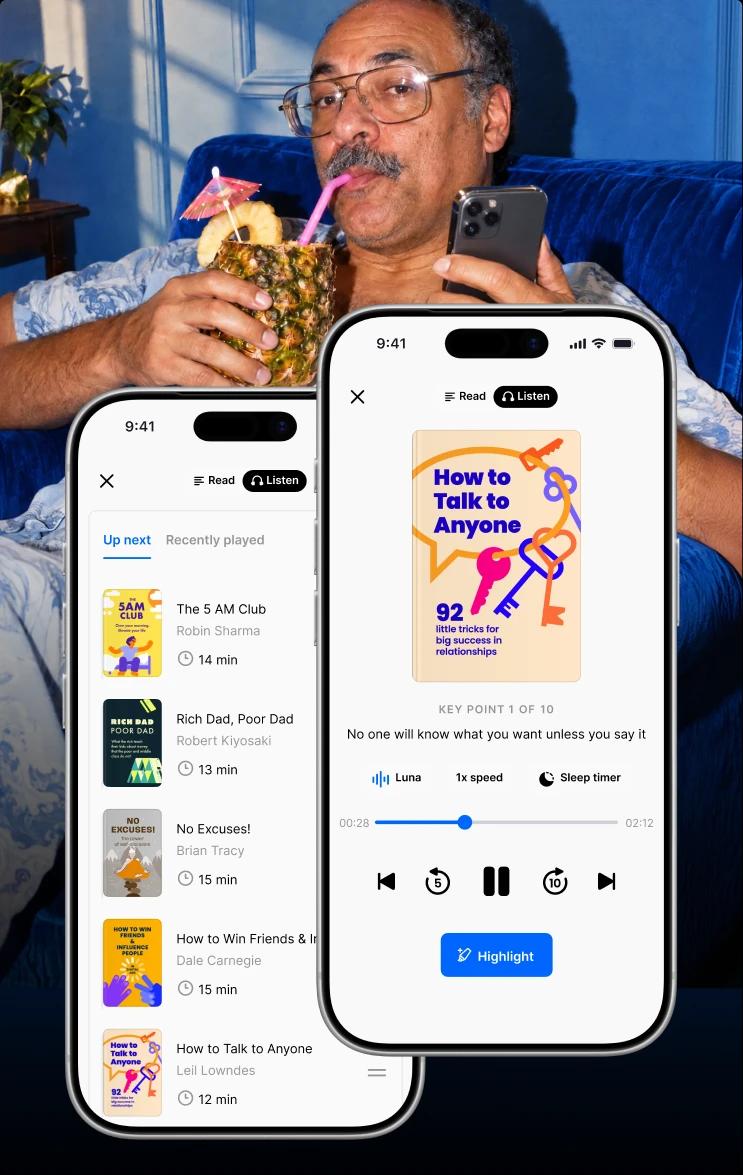
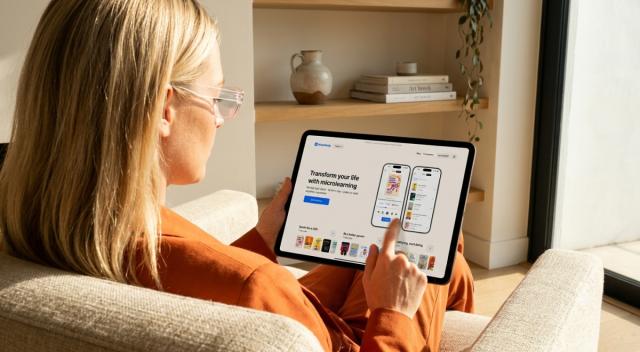
Headway condenses more than 2,500 nonfiction titles into 15-minute text and audio summaries, then builds a personalized plan around the goals you pick during onboarding. Where it differs from a standard summary app is what happens after you finish reading.
Spaced repetition cards and saved highlights bring key ideas back at intervals designed around how memory fades, which addresses the biggest weakness of passive listening — you forget most of it within days. Interactive Shorts add a second format: short branching stories that react to your choices, useful for working through a difficult conversation or a habit you keep breaking, rather than only absorbing information about them.
A single session can run as short as three minutes, which keeps the streak realistic on days when nothing goes to plan. Offline downloads plus CarPlay and Android Auto support mean a commute without signal doesn't break the chain either.
Best for: Busy readers who want ideas from nonfiction books without committing to 300 pages.
Where it falls short: The library is smaller than Blinkist's, and most retention features sit behind the paid plan.
When I first downloaded this I kind of knew from the jump it would help me to become a better person but I didn't expect such growth in such little time. If you're looking for an app to keep busy and stop your overthinking I would definitely recommend.

2. Nibble: best for learning widely without getting bored
Nibble goes wide where most learning apps go deep on one subject. Lessons cover Personal Finance, Art History, Philosophy, Psychology, Criminology, and Math, among 35-plus topics, each built to finish inside a coffee break.
Format variety is the real differentiator. The same subject can arrive as a short text lesson, a video, an audio episode, a quiz game, or a simulated conversation with a historical figure tied to the period. Switching input types keeps attention from flattening the way it does in apps that only offer one format, which helps a lot if you lose focus easily.
A "For You" feed suggests topics based on what you've already finished, and daily streaks handle the habit side. If you like the format, our roundup of free microlearning apps covers more options in the same category.
Best for: Curious adults who want general knowledge rather than one specific skill.
Where it falls short: No search function yet, so finding a past lesson means scrolling.
3. Blinkist: best for library size
Blinkist has been in the book summary category longer than almost anyone and carries roughly 9,000 titles, including a large business and management selection. If you want a specific older title, the odds are better here.
The trade-off is that Blinkist mostly stops at the summary. There's less scaffolding around retention, so what you take away depends on how deliberately you take notes yourself. That's fine if you already have a note system you trust, and a problem if you don't — most people finish a summary, feel informed, and remember almost none of it a week later.
Pricing sits in the same range as Headway's, so the choice comes down to what you want from the app: a bigger catalog to browse, or fewer titles with more built around making them stick.
Best for: Readers who value breadth of catalog over retention features.
Where it falls short: Fewer tools for remembering what you read, and no free daily summary.
4. Duolingo: best for language learning
Duolingo's strength is behavioral rather than academic. The streak counter, XP rewards, and leaderboards create a real cost to skipping a day, and five minutes daily beats an hour once a week because repetition spaced across days is what moves vocabulary into long-term memory.
It covers 40-plus languages, plus math and music courses. The free tier includes all core lessons, which is unusual at this scale.
Best for: Anyone building conversational competence in a new language from scratch.
Where it falls short: The gamification can reward streak maintenance over depth, and it thins out at advanced levels. Our guide to the best learning apps for adults covers stronger options for that stage.
5. Anki: best for spaced repetition and active recall
Anki is a flashcard tool built on the most heavily studied memory technique in cognitive science. It surfaces each card at the moment just before you'd forget it, which is far more efficient than reviewing everything on a fixed schedule.
Medical students, language learners, and bar exam candidates all use it for the same reason: active recall — pulling an answer out of your head rather than rereading it — produces retention that rereading never matches.
Best for: Anyone who needs to memorize a large body of material permanently.
Where it falls short: The interface feels dated, and building your own decks takes real upfront time.
📘 Prefer your learning already structured? Start with Headway and get your first summary today.
Best habit tracking apps for habit formation that survives a bad week
Habit trackers only work if you keep using them after the first missed day, so these picks are judged on what happens when motivation dips.
6. Habitica: best for gamified habit tracking
Habitica turns your routine into a role-playing game. Finished habits earn your character experience points and gold; missed ones cost health. Boss battles require your whole party to contribute, which adds social accountability on top of personal willpower.
The mechanic works because letting a party down during a boss fight feels worse than losing a private streak. People who found plain streak apps easy to ignore often report the opposite experience here.
Best for: Anyone who responds to game-style feedback and stakes.
Where it falls short: The interface overwhelms people who want something simple, and the novelty can fade after several months.
7. Fabulous: best for full morning and evening routines
Fabulous builds rituals rather than isolated habits. Instead of tracking "drink water" on its own, it walks you through a full morning sequence where each step cues the next — which produces stronger habit formation than tracking single behaviors, because the context cue is doing most of the work.
The coaching messages land better than most in-app copy, and the curriculum was developed with behavioral science researchers at Duke University.
Best for: People whose mornings are chaotic and who want structure rather than a checklist.
Where it falls short: The full coaching experience needs the premium plan, and it's less flexible than a blank tracker.
8. Forest: best for focus sessions without your phone
Forest uses loss aversion where willpower usually fails. You plant a virtual tree when a focus session starts. It grows while you stay in the app and dies the moment you leave to check something. Most people would rather finish the session than watch it wither.
Real trees get planted through an NGO partnership based on accumulated focus time, which gives each session a point beyond the game. At under two dollars once, it costs less than a month of almost anything else here.
Best for: Deep work blocks and phone-checking you can't seem to stop.
Where it falls short: Mobile only, with no desktop focus mode.
9. Loop Habit Tracker: best free habit tracker
Loop is free, open source, and has no ads or subscriptions at all. Its habit strength graph shows how deeply a behavior has embedded over time rather than counting consecutive days, which gives a more honest picture than a streak number when you've missed a day but kept the habit alive.
Best for: Android users who want detailed data and no monetization.
Where it falls short: Android only, and the interface is plainer than paid alternatives.
📘 Building a daily learning habit alongside the rest? Add Headway to your routine and keep your streak on 15 minutes a day.

Best mental wellness apps for stress management and self-care
Progress in every other category gets harder when stress and sleep are unmanaged, which makes this the category to fix first if it applies to you.
10. Headspace: best for guided meditations
Headspace runs the most structured beginner curriculum in meditation. The starter courses take you from a first session to a working practice in under four weeks without assuming any prior experience, and most people notice changes in focus after two to three weeks of daily ten-minute sessions.
The catalog now includes focus music, sleep sounds, and movement sessions, which makes it a daily companion rather than something you open only during a hard week.
Best for: Complete beginners who want a curriculum rather than a library to browse.
Where it falls short: Almost everything meaningful sits behind the paid plan, and it can feel repetitive after a year.
11. Calm: best for sleep stories and nighttime anxiety
Calm owns the sleep category. Its sleep stories are paced specifically to slow an anxious nervous system, which is a different job from what a guided meditation does. The breathing exercises come with visual pacing guides, which helps when audio-only instructions are hard to follow because you're already wound up.
If poor sleep is your main barrier, pick Calm over Headspace. If daytime stress management is the bigger problem, Headspace gives you more for less.
Best for: Racing thoughts at 1 a.m. and inconsistent sleep.
Where it falls short: The most expensive meditation app here, with a thin free library.
12. Daylio: best journaling app for mood tracking
Daylio is a journaling app for people who don't want to write. You log your mood and activities with a few taps, and after a few weeks the correlations start showing up on their own: which days consistently score lower, what tends to precede a bad stretch.
That pattern view is what pure writing rarely surfaces. Several of its prompts draw on cognitive behavioral therapy principles, connecting what you did to how you felt rather than just recording the feeling.
Best for: Building emotional self-awareness in under a minute a day.
Where it falls short: Not a replacement for long-form reflection if writing is the part you actually want.
*Self-care apps support mental health but don't replace professional care. If you're dealing with persistent anxiety or depression, speak to a licensed practitioner.
Best productivity apps for focus and task management
Productivity tools solve a different problem than habit trackers: they reduce what you're holding in your head, which is where most procrastination starts.
13. Notion: best for building your own system
Notion is a blank canvas for any planning setup you can imagine — goal tracking, quarterly reviews, reading lists, and project databases all living in one connected workspace. The template library removes the blank-page problem that stops most people on day one.
It works best once your daily routines are already steady. If you're still building basic consistency, start with something lower-friction and bring Notion in later.
Best for: People who want their planning system shaped exactly to how they think.
Where it falls short: Two to three hours of setup before it earns its place, and it can become procrastination with a nice interface.
14. Todoist: best for task management
Todoist gets tasks out of your head faster than anything else in this category. Natural language entry means typing "call dentist Friday 2pm" files it correctly without touching a menu, which matters more than it sounds — capture speed is what separates a list you trust from one you avoid.
Priority levels, recurring tasks, and integrations with 60-plus services cover the rest. Our roundup of productivity apps compares it against heavier project tools if you need more structure.
Best for: Anyone whose mental load is the real bottleneck.
Where it falls short: Light on project management if you're coordinating a team.
15. TickTick: best for tasks and habits together
TickTick is the pick for people who don't want two separate apps. It combines a full task manager with a habit tracker, and the calendar view shows both side by side — which makes it easier to protect time for a habit the same way you'd protect time for a meeting.
At $2.99 a month it's also the cheapest paid plan in this guide.
Best for: Managing your to-do list and daily routine in one place.
Where it falls short: The habit tracking is shallower than a dedicated tracker's.
📘 Tired of your phone costing you hours? Here's how one reader replaced scrolling with daily learning — or start with Headway and do the same this week.
Best health app for food tracking
Physical health sits underneath everything else here, since focus and emotional regulation both get measurably harder on poor sleep and poor nutrition.
16. MyFitnessPal: best for nutrition awareness
MyFitnessPal runs the largest food database available, with over 14 million entries, and barcode scanning drops the time to log a meal to a few seconds. It connects to 50-plus wearables, so activity data flows in without manual entry.
The most useful way to run it isn't hitting a calorie number. It's noticing patterns — what you eat on a stressful day versus a calm one, where protein disappears from your week. Awareness without rigid restriction tends to hold up longer than strict tracking.
Best for: Understanding your eating patterns rather than policing them.
Where it falls short: The premium plan is the priciest here, and strict calorie tracking can trigger food anxiety for some people.
Do the best apps for self-improvement work?
The honest answer is that the evidence is real but narrower than the marketing suggests.
On the clinical side, the case is reasonably strong. A review published in mHealth analyzed meta-analyses of randomized controlled trials and found that smartphone interventions produced measurable reductions in depressive symptoms and anxiety compared with control conditions, with the largest benefits for mild to moderate cases rather than severe ones.
The same review identifies what separates effective apps from the rest: sustained engagement, a simple interface that keeps cognitive load low, and self-monitoring features that build emotional self-awareness.
Those three traits explain why gamification shows up so often in this category. Streak tracking, progress tracking, and social accountability aren't decoration — they're the mechanisms that keep someone opening an app long enough for the content to matter.
On the learning side, spaced repetition and active recall are among the most replicated findings in memory research, which is why they appear in Headway, Anki, and most serious educational apps.
What the research doesn't support is the idea that an app substitutes for treatment, sleep, or human connection. It works as a layer on top of those, not a replacement for them.
How to choose the right self-improvement app for your goal
The right app matches your current bottleneck, not the longest feature list. Five steps narrow it down fast:
Name your single biggest gap. Consistency, stress, learning speed, focus, or physical health. Your honest answer picks the category.
Start with exactly one app. Four downloads at once means four apps used twice. Commit to one for 30 days.
Pick the lowest-friction option in that category. The app you'll open on a tired Tuesday beats the powerful one you only open when motivated.
Test the free plan before paying. Duolingo, Notion, Habitica, Loop, and Daylio all have free tiers deep enough to build the routine first.
Check that it shows progress. Streak graphs and pattern insights are what carry you through the plateau every routine hits around week three.
If motivation is the specific thing that keeps collapsing, our guide to the best apps for motivation goes deeper on that problem alone.
Ready to make your screen time count? Start with Headway
Most of the self-improvement apps in this guide ask you to add something to an already full day. Headway works differently — it takes time you're already spending on your phone and puts something useful in it.

You get 15-minute summaries of more than 2,500 nonfiction titles, including 'Atomic Habits' by James Clear, 'Mini Habits' by Stephen Guise, and 'Think and Grow Rich' by Napoleon Hill, in text or audio.
A short onboarding quiz builds a plan from your goals, and the plan keeps adjusting as you use it. Spaced repetition cards and saved highlights bring the ideas back so they stay with you, and daily streaks keep three minutes a day feeling like enough — because on most days, it is.
If general knowledge is more your thing than nonfiction books, Nibble covers 35-plus subjects in the same bite-sized format, with quizzes and games doing the retention work.
📘 Download the Headway app and read your first summary before your coffee goes cold.
FAQs on the best self-improvement apps
What is the best self-improvement app in 2026?
There's no single winner, because the best app depends on the problem you're solving. For daily personal development and growth through nonfiction books, Headway leads in personalization and retention tools. For habit formation, Habitica works best if you respond to game mechanics. For stress, Headspace has the strongest beginner curriculum. Pick by bottleneck, not by overall ranking.
What app helps build habits?
Habitica is the strongest pick for gamified habit tracking, since RPG rewards and party accountability create real stakes for missing a day. Fabulous suits people who want a full morning routine rather than isolated habits, and Loop Habit Tracker is the best free option on Android. All three handle streak tracking, but they differ in how they treat a missed day.
Are free self-improvement apps worth using?
Yes, and several free tiers are deep enough to build a habit on. Duolingo includes all core lessons free, Loop Habit Tracker is entirely free and open source, and Notion, Daylio, and Todoist all have generous free plans. Headway includes one full summary a day at no cost. Build the routine on free access before you decide anything is worth paying for.
Can apps replace reading full books?
They serve different purposes. A 15-minute summary gives you an author's core argument and lets you decide whether the full book earns your time — useful when you're choosing among a stack of titles. Full books give you the case studies and nuance that a summary compresses out. Most people use summaries for breadth and full books for the few ideas they want to go deeper on.
What is the best app for personal growth on a budget?
Combine a free habit tracker with a free learning app. Loop Habit Tracker plus Duolingo costs nothing and covers consistency and skill-building. Headway's free tier adds a summary a day on top. Forest costs $1.99 once, with no subscription, which makes it the cheapest paid tool here by a wide margin.