Self-growth
 Apps & Digital Tools
 Business & Career
 Success
 Growth Tools
 Psychology
 Communication
 Relationships
You’ll learn
- The importance of early planning
- Why economy and living standards are inseparable
- Reasons for national economic development
- The historical impact of economic prosperity
- The importance of inclusiveness
first KEY POINT
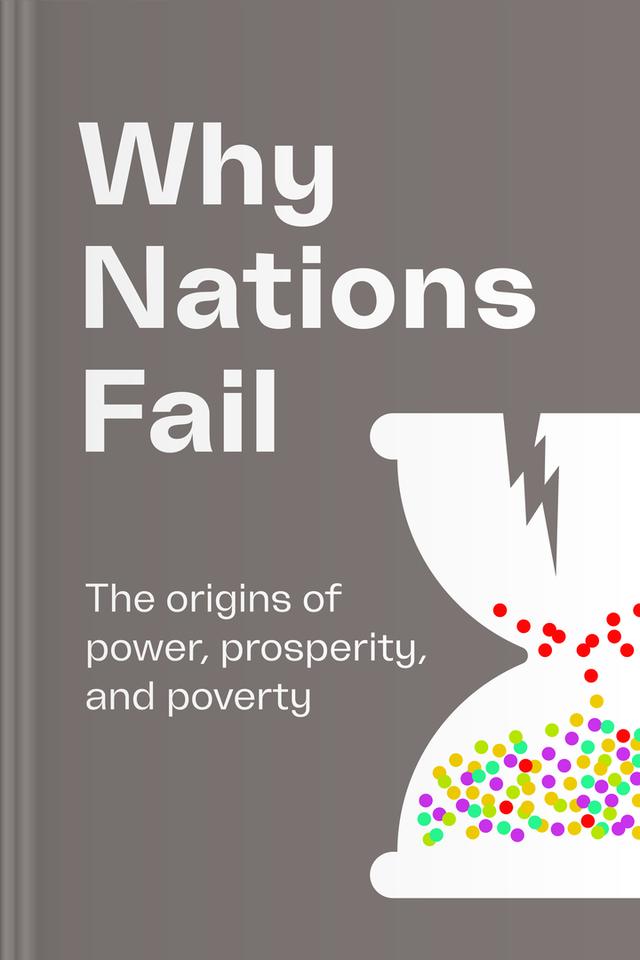
Many resource-rich nations struggle, while others with fewer resources thrive. Many find this baffling since they can't determine why certain countries fail. Economics is the apparent cause of this problem. A nation's prosperity depends on its natural resources and ability to increase riches. Economies flourish when government programs and services are coordinated with public needs and wants via overarching policies.The world's most developed and secure economies are those whose leaders act swiftly following significant events. When there's an existing inclusive structure that benefits the people, it becomes easier to sustain economic growth. Creating a quality economy is easier in a country that makes it difficult for its citizens or corporations to steal money from the national treasury.A good economy requires leaders who see service as a clarion call rather than an avenue to fill their pockets. On the other hand, in nations where only a few people control the nation's wealth, it becomes increasingly difficult to implement sustainable change. Creating the right incentive for leaders and the masses is essential to the growth of any nation. In China, convicted looters are executed according to the laws, while African countries celebrate theirs.
Many developing nations will remain poor due to a lack of early planning. However, nations ready and determined to change for good will see positive results if they remain committed to the cause. The changes needed to turn a nation’s fortunes around are not spontaneous. They take time, and they require continuous execution by intelligent representatives. In this summary, you will find the main reasons for countries’ economic prosperity and why some have yet to achieve it.
second KEY POINT
The city of Nogales stands in Santa Cruz County, on the famous border between the United States and Mexico. A barrier between the two nations divides the city in two. The average yearly income of a family of four in Nogales, Arizona, is roughly $30,000. There is a good quality of living and a long average life span compared to other places. They have access to essential services, including clean water, sewage systems, public health care, a road system that connects them to neighboring cities, and a police force. In addition, democracy is highly promoted. When choosing their mayor, senators, or the next President of the United States, residents in Nogales have the same voting rights as any other American city.But everything changes just a few steps south of the border. Nogales, Sonora, Mexico, has a per capita income of around one-third of the northern states of the US. Many adolescents in Nogales, Sonora, don’t finish school. Poor healthcare and a high infant mortality rate add stress to a difficult situation for mothers. There is a lack of democratic freedom and public services, and people are often physically attacked.
Continue reading with Headway app
Continue readingfirst KEY POINT
second KEY POINT
third KEY POINT
fourth KEY POINT
fifth KEY POINT
sixth KEY POINT
seventh KEY POINT
Related blog articles

Elevate the way you learn with Headway — the smart, streamlin...

Discover top apps that help you learn in just 10 minutes a da...

Curious about the Deepstash app? Find out if this app offers ...

The answer to the question "Is Blinkist worth it?" depends on...

Discover practical tips, expert insights, and book-powered to...