Self-growth
 Business & Career
 Success
 Communication
 Healing
 Relationships
 Psychology
 Happiness
Today, employers seek individuals with a broad range of skills, and acquiring new ones can be a significant advantage. However, constant fatigue and a hectic schedule often hinder you from dedicating time to additional training. Does this look familiar to you?
When you do find a few free minutes, you often resort to scrolling through social media. This constant consumption of superficial content, such as TikTok videos and memes, dulls your curiosity and diminishes your capacity for deep thinking.
Use your smartphone as a useful tool. In this article, let's look at educational apps that help you learn and gain new knowledge in a convenient form and at a convenient time, anywhere.
Whether you're waiting in the coffee line or commuting to work, educational apps turn your waiting time into growth time. This is why offline mode educational apps for commuters matter so much — you can keep learning even without stable internet, on the subway, in a tunnel, or during a flight.
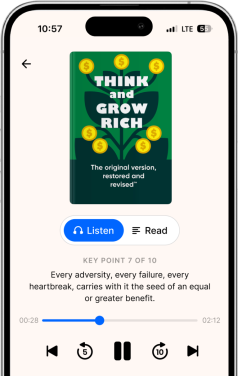
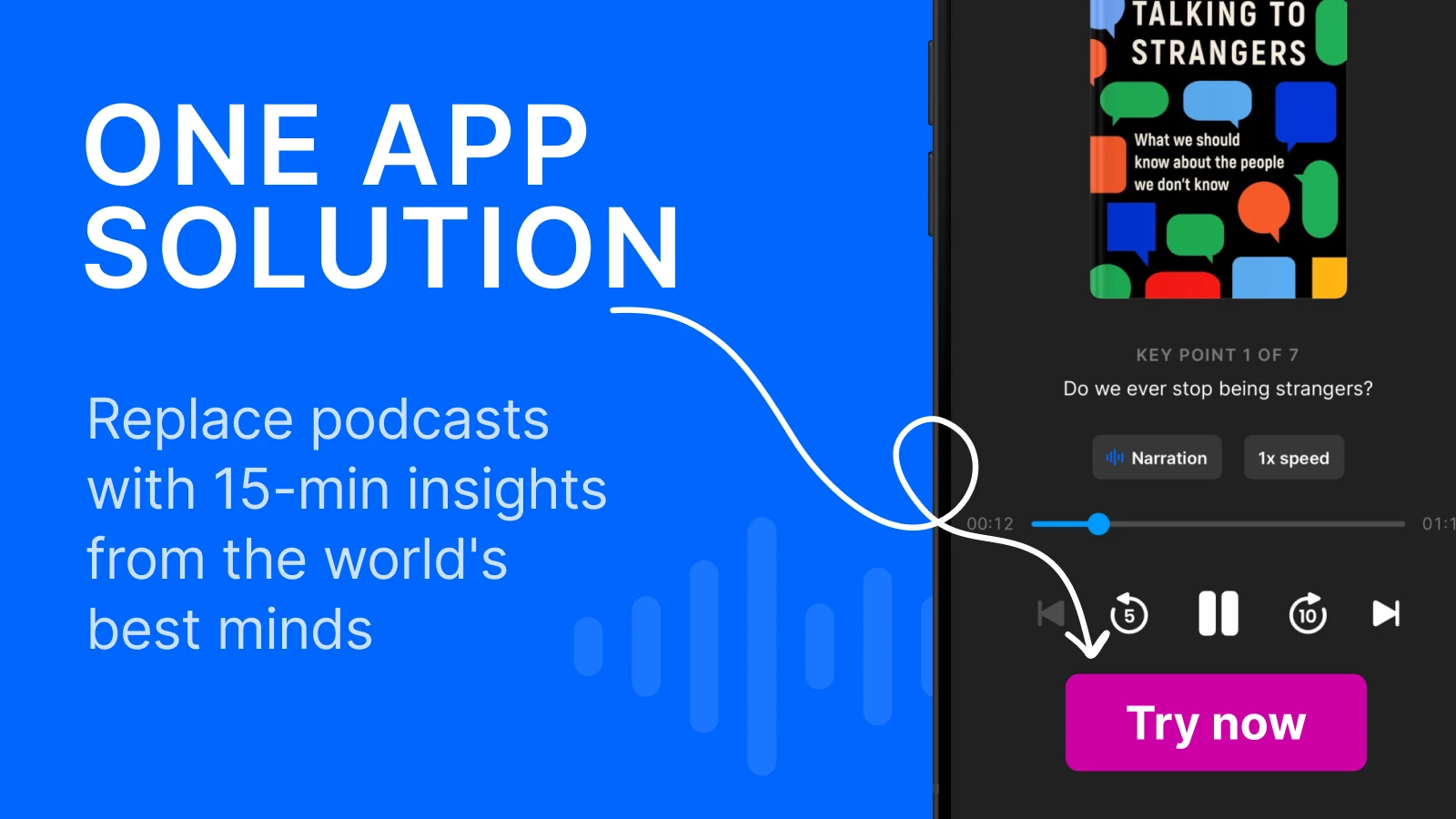
With the Headway app, even 15 minutes of screen time can yield lasting insights. Its quick nonfiction summaries, personal progress tracking, and sleek design make it one of the most useful apps you'll download this year.
📘 Grow smarter, not harder with Headway!
Quick list: Top 5 best educational apps
Headway: Get key insights from bestselling nonfiction books in 15-minute audio and text summaries perfect for daily self-growth. An app has over 50 million users across platforms.
Duolingo: Learning new languages through gamified lessons that adapt to your pace and keep you engaged. The famous app has over 47 million daily active users.
Khan Academy: Complete math, science, and history courses with video lessons and practice exercises. The platform covers over 190 countries and is available in over 55 languages.
Coursera: An educational app for students with university-level courses from top institutions with flexible scheduling and expert instruction. Coursera collaborates with 350+ universities and industry partners such as Google, IBM, Stanford, and Yale.
EdApp: Microlearning platform that delivers professional training through interactive, mobile-first content. Pandora has seen its course completion rate increase from 15% to nearly 90% with this learning platform.
Which educational app fits you best?
| App | Best for | Format | Time сommitment | Strength |
|---|---|---|---|---|
Headway | Daily self-growth and book insights | Audio and text summaries | 15 minutes | Bite-sized wisdom from bestsellers |
Duolingo | Language learning | Interactive lessons | 10–20 minutes | Tracking of progress |
Khan Academy | Academic topics | Video and practice | 20–45 minutes | Comprehensive and structured curriculum |
Coursera | Professional skills | Video lectures and tasks | 2–6 hours per week | University-quality content |
EdApp | Workplace training | Interactive modules | 5–15 minutes | Mobile-first microlearning |
Take a closer look at educational apps by categories
Here's your guide to the best multilingual educational apps worldwide that make learning effortless and rewarding.
Microlearning apps
1. Headway leads the microlearning revolution by transforming lengthy self-development books into digestible 15-minute summaries. This way, you can get the core insights from titles like 'Atomic Habits,' 'Deep Work,' or 'The 80/20 Principle' without spending weeks reading whole books.
What sets Headway apart is its focus on actionable takeaways. Each summary includes practical tips that you can apply immediately to your career, relationships, or personal growth. The app offers audio and text formats for learning while commuting, working out, or during lunch breaks.
2. EdApp delivers workplace training through interactive microlearning modules anywhere, anytime. The app allows for course creation without the need for programming, including converting PowerPoint presentations into mobile lessons. This platform is suitable for companies that have mobile employees or work in different locations.
3. Mimo is a mobile app for learning programming that combines microlearning, gamification, and hands-on projects. It offers short, structured lessons with real-world code examples. It allows you to learn popular programming languages like Python, JavaScript, HTML, CSS, SQL, TypeScript, React, Express, and Node.js.
Language learning apps
4. Duolingo makes language learning addictive through streak counters, achievement badges, and friendly competition with friends. The app breaks languages into themed lessons covering vocabulary, grammar, and pronunciation through listening, speaking, and writing exercises.
5. Babbel focuses on practical conversation skills with lessons designed by language experts. Unlike Duolingo's game-like approach, Babbel emphasizes real-world scenarios when traveling or working in another language.
📘 Want to become a better communicator? Get Headway for language and connection insights!
6. Memrise combines spaced repetition with video clips of native speakers to help you learn authentic pronunciation and cultural context. The app uses memory techniques and humor to make vocabulary stick in your long-term memory.
STEM and problem-solving apps for students
7. GeoGebra turns abstract math concepts into interactive visualizations. It allows users to explore geometry, algebra, and calculus through dynamic graphs and animations that make complex relationships clear and understandable.
8. Swift Playgrounds teaches coding through puzzle-solving games. Apple designed this app to make programming accessible to beginners, while offering challenges for more experienced coders who want to learn Swift programming.
7. Nibble is a mobile microlearning app that offers 10-minute interactive lessons on a variety of topics, including math, logic, history, finance, art, biology, and philosophy. This app is perfect for those who want to replace aimless social media scrolling with meaningful learning throughout the day.
📘 Want to think like a problem-solver? Start Headway for critical thinking strategies!
Comprehensive learning platforms
10. Khan Academy offers complete courses equivalent to high school and early college classes. The platform includes video explanations, practice problems, and progress tracking across subjects like math, science, economics, and art history.
11. Coursera works with companies and universities to offer online certificate programs and complete degrees. You can audit courses for free or pay for certificates that add credibility to your resume and LinkedIn profile.
12. Udemy provides practical skills courses created by industry professionals. Topics range from digital marketing and graphic design to project management and data science, often at affordable one-time purchase prices.
How to structure your routine with educational apps
Building consistent learning habits with educational apps requires strategic planning rather than random browsing. The most successful learners create specific routines that fit naturally into their existing schedules, whether using an iPhone, iPad, or Android device.
Start by identifying your peak learning times and available windows throughout your day. Some people focus better in the morning, while others prefer evening sessions.
Match your most challenging learning goals to your highest energy periods, and save lighter content like flashcards or quizzes for times when your attention might be scattered.
Your environment influences your learning. Learning apps like Headway, with an audio format, work perfectly during other non-rational activities, while visual learning experiences require focused screen time.
How to use educational apps if you are a busy professional
Morning (10 minutes): Listen to a Headway audio summary while doing your morning routine or on your way to work. Choose productivity, leadership, or communication topics to start your day with actionable insights that apply to real-world situations.
Lunch break (15 minutes): Practice Spanish with Duolingo or review material using Quizlet flashcards. These apps provide mental breaks from work while building helpful skills that could benefit your career through personalized learning algorithms.
Evening (20–30 minutes): Explore deeper with Khan Academy videos covering math skills or social studies, or complete online learning modules at your own pace. You can study more profound information or a more complex topic during this session.
📘 Already squeezing in Headway? Open your full learning potential with our Pro features!
How to use educational apps by students and young learners
Before classes (10 minutes): Use educational games to review upcoming concepts. Interactive content helps prepare young minds for abstract concepts while making early learning pleasant.
After school (20 minutes): Support classroom learning with Khan Academy practice or complete worksheets through Google Classroom integration.
Study break (10 minutes): Swap to Headway for motivation and study tips, or try Kahoot quizzes for a fun review session. Educational games provide mental breaks.
Microlearning sessions throughout your day
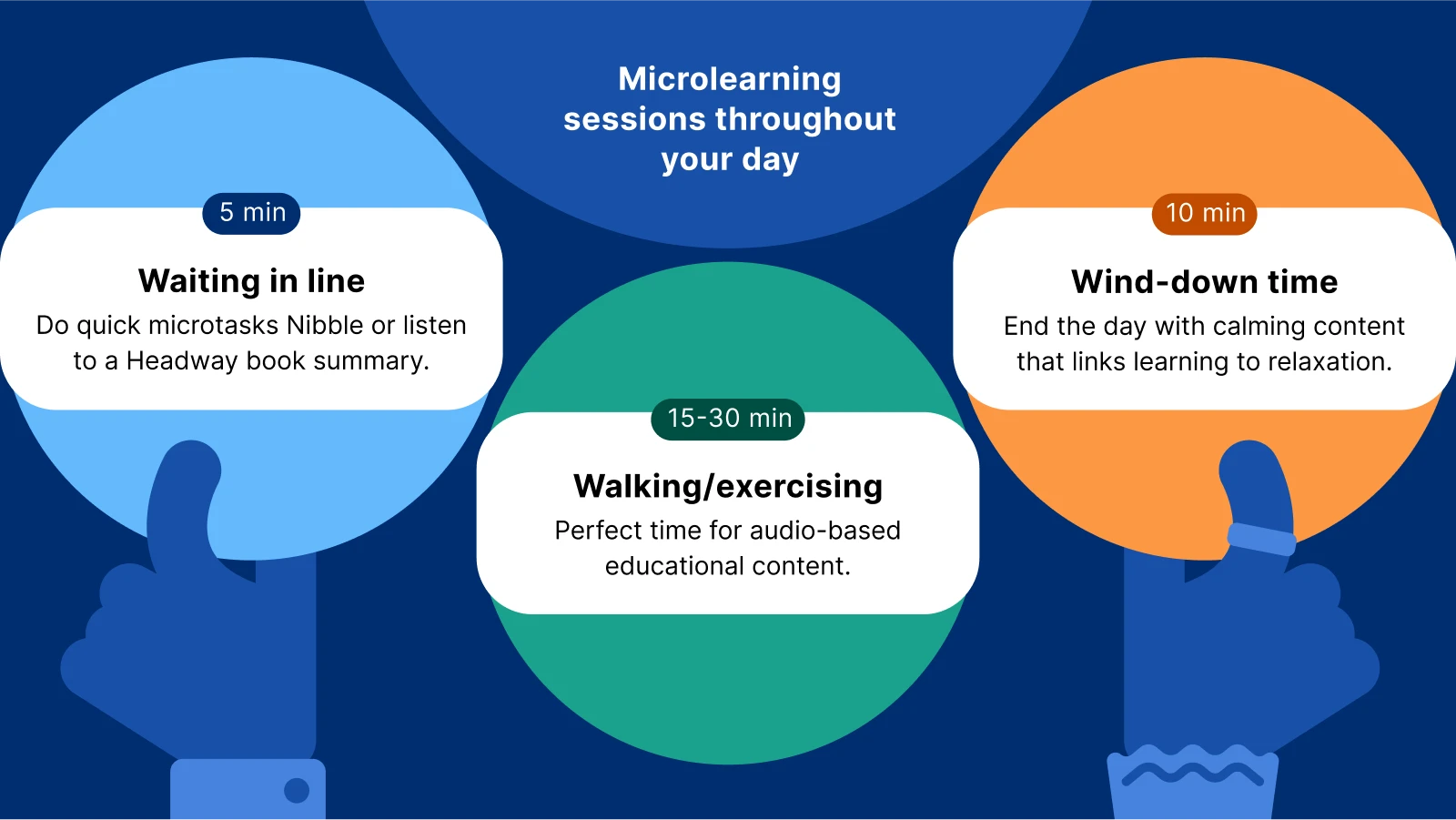
Waiting in line (5 minutes): During this time, you will have time to complete a microlesson on Nibble or listen to part of the book summary on Headway. Because summaries are designed in such a way that they are divided into several sections, you can stop and continue whenever it is convenient for you.
Free educational apps make these micro-moments productive without requiring subscriptions.
Walking or exercising (15–30 minutes): Audio-based educational content works perfectly during physical activity. Listen to podcasts or Headway summaries to make this time more productive.
Wind-down time (10 minutes): Spend your evening with calming content that creates positive associations between learning and relaxation, supporting lifelong learning habits.
The key to success with learning apps is consistency over intensity. Five focused minutes daily with high-quality educational apps beats an hour of distracted learning once a week. Whether you're a 5-year-old using ABCmouse or an adult mastering Spanish through Duolingo, regular engagement produces results!
Use free minutes in your busy routine smartly with the Headway app
The best educational apps seamlessly integrate into your life without adding stress or complexity. Replace mindless scrolling with purposeful learning with the Headway app!
You'll encounter learning opportunities instead of social media distractions when you instinctively reach for your phone. Don't rush to social media if you have a free minute and want to switch things up. Instead, feed your brain with ideas from a self-development book in 15 minutes in the Headway app. This is a valuable investment in yourself!
Frequently asked questions about educational apps
Which educational app is the most popular in 2025?
Headway stands out as a personal development app that has taken the top spot in the App Store and Google Play rankings, thanks to its book summaries. It has also gained global recognition in the EdTech community.
Other apps, such as Duolingo, Khan Academy, Google Classroom, and Brainly, dominate their niches — language learning, academics, school, and student support.
Which educational apps work best for microlearning?
Headway specializes in microlearning with 15-minute book summaries that fit perfectly into people's hectic schedules. EdApp delivers company training in short modules, and Duolingo breaks language learning into handy daily lessons. These apps understand that consistent, small sessions produce better results than infrequent, long study periods.
Are free educational apps as effective as paid versions?
Many free educational apps, such as Khan Academy's courses and Duolingo's language lessons, offer considerable value. Headway's free version includes daily summaries, while the premium subscription unlocks the full library of book insights.
However, paid apps often provide additional features like ad-free experiences and premium content.
What are the best educational apps for kids and young learners?
Choose between these educational kids' apps:
ABCmouse is a complete educational platform for children ages 2 to 8 with over 10,000 interactive math, phonics, art, and science activities.
Prodigy Math Game is an adventure math game with battles and challenges.
Kahoot! is a quiz and interactive test you can take with friends or in class.
Khan Academy Kids is a free educational app for children ages 2 to 8 that offers thousands of interactive games, books, and learning games to help kids develop reading, math, writing, and social-emotional skills, and meet Common Core standards.
These apps cover the basic skills of reading, language, math, and creativity. Thus, they are universally suitable for kids of all ages and different learning styles.
How much time should you spend daily on educational apps?
Start with 15–20 minutes daily, and spread this time across 2–3 short sessions. This approach prevents mental fatigue and builds sustainable learning habits. As your routine develops, you can extend sessions or add new apps based on your goals and available time. Quality focus matters more than quantity of hours.
Are educational apps effective for preparing for exams or career skills?
Educational apps can be practical tools for exam preparation or professional development. Headway is very practical for personal development, with a wide selection of nonfiction books. You can use Quizlet flashcards to prepare for exams, take full-fledged Coursera courses, or use Notion to take notes and organize the process.