Self-growth
 Apps & Digital Tools
 Business & Career
 Success
 Growth Tools
 Psychology
 Communication
 Relationships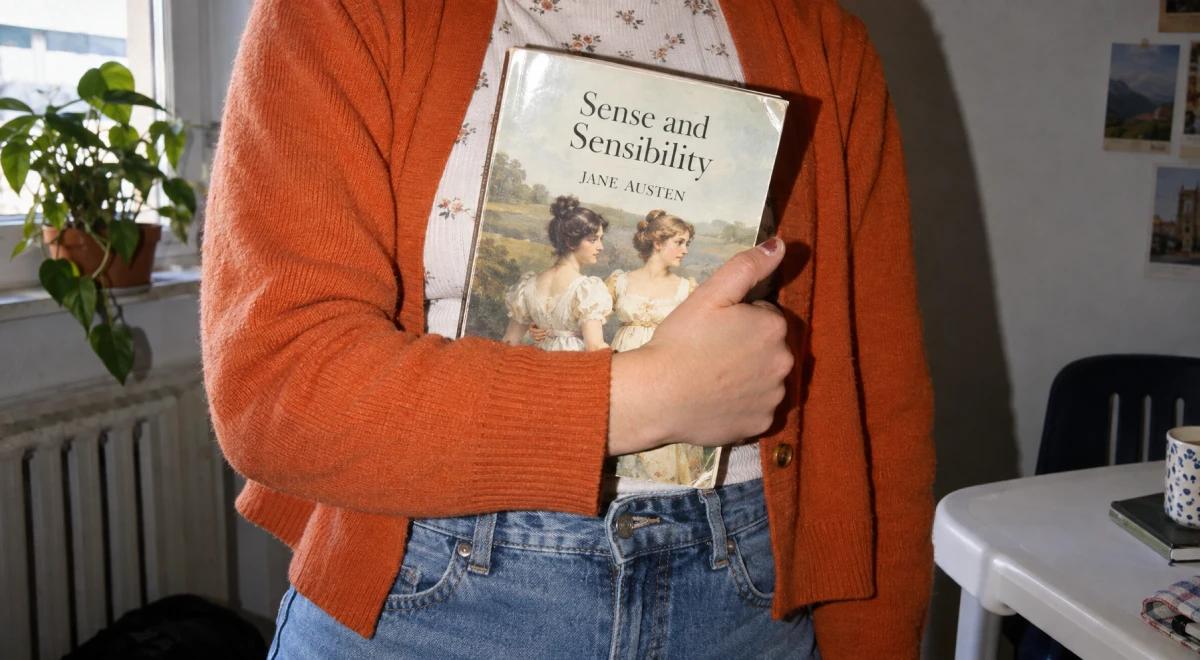

When the 'Sense and Sensibility' book first landed in English bookshops in 1811, nobody but Jane Austen herself was willing to bet on it. She covered the printing costs out of her own pocket, and the modest debut run of 750 to 1,000 copies sold out within two years, earning her £140. More than two centuries later, the story is still relevant.
If Elinor's self-control or Marianne's big feelings sound familiar, you're in good company. Headway's summaries of all-time classics like 'Sense and Sensibility,' 'Pride and Prejudice,' and more dig into that tug-of-war between reason and emotion in a bite-sized, easy-to-grasp format.
Download Headway and start putting those ideas to work today!

Quick summary: What is the 'Sense and Sensibility' book about?
Short on time? Here's the gist before we go deeper.
The 'Sense and Sensibility' book follows the Dashwood sisters after their father's death leaves them without a home.
Elinor represents sense, meaning reason and self-control, while Marianne represents sensibility, meaning open emotion.
Elinor is 19, and Marianne is 16 when the story begins.
Marianne's romance with Willoughby ends in heartbreak, while Elinor hides her own feelings for Edward.
By the novel's end, both sisters have grown, each borrowing a little from the other's approach to life.
Keep reading for the full breakdown of the plot, the sisters, and why the story is still getting adapted in 2026.
Who wrote the 'Sense and Sensibility' book, and when
So, when was 'Sense and Sensibility' written? Jane Austen worked on it, on and off, for roughly fifteen years before it ever reached print. She was the seventh child in a family of eight, born in 1775 in the English village of Steventon.
Austen wrote the first version of this story around 1795. She simply called 'Elinor and Marianne' her working title back then, and she may have told it in epistolary form, meaning the whole thing unfolded through letters between characters.
She reworked the manuscript in 1797 and 1798, then picked it up again around 1809 and 1810 after settling into Chawton. Her brother Henry acted as her literary agent and found her a publisher, Thomas Egerton, who agreed to print it "on commission." That meant Austen covered the costs herself and the publisher took a cut, rather than paying her outright.
The first edition came out in three volumes in October 1811. The title page didn't carry Austen's name at all. It simply read "By A Lady," since publishing under a woman's own name wasn't considered proper then. 'Sense and Sensibility' sold out its entire print run within two years, which was no small feat for a first novel released anonymously.
This was Austen's first published novel, though not her first finished manuscript. She'd already written an early version of what became 'Northanger Abbey' and had drafted 'Lady Susan', a short epistolary story that stayed unpublished until 1871, decades after her death.
'Pride and Prejudice,' 'Mansfield Park,' and 'Emma' all followed once this book found its readers. 'Northanger Abbey' itself wasn't published until 1817, released posthumously alongside 'Persuasion,' only months after Austen died. Today, she's remembered as one of the most-read English novelists of all time.
📘 Feed your love of classic stories with Headway!

What happens in the 'Sense and Sensibility' book: A quick plot walkthrough
'Sense and Sensibility' starts with a death that changes everything. Here's how the story unfolds, broken into the moments that matter most.
A death that changes everything
The pull between sense and sensibility begins the moment Henry Dashwood dies and, under the terms attached to Norland Park, the family estate passes to his son from an earlier marriage, John Dashwood, instead of to his second wife and daughters.
John Dashwood means well enough at first. Then his wife, Fanny Dashwood, talks him out of giving his half-sisters any real support, in one of the sharpest scenes Austen ever wrote.
Settling into Barton Cottage
The family's widowed mother, Mrs. Dashwood, and her three Dashwood sisters, Elinor, Marianne, and young Margaret Dashwood, leave Norland Park behind for modest Barton Cottage on Sir John Middleton's Barton Park estate.
Sir John's mother-in-law, the chatty and warm Mrs. Jennings, and his quieter wife, Lady Middleton, quickly become part of their new social circle. A handful of minor characters round out that circle too, like Charlotte Palmer, Mrs. Jennings' younger daughter, who adds plenty of comic relief.
Marianne and the charming John Willoughby
Marianne Dashwood falls hard and fast for dashing John Willoughby, a charming neighbor who seems made for her. Then he leaves for London without much explanation and, not long after, gets engaged to the wealthy Miss Sophia Grey instead.
Marianne's letters go unanswered, and her heartbreak becomes one of the book's toughest stretches. If you have a soft spot for charming-but-unreliable love interests like Willoughby, the Off Campus book series has plenty of them too, just in a much more modern setting.
Elinor's quiet heartbreak over Edward Ferrars
Elinor Dashwood, meanwhile, keeps her own feelings for Edward Ferrars carefully hidden. She has good reason to: Edward is secretly engaged to Lucy Steele, one of the Steele sisters, a secret engagement Elinor learns about and has to sit with in silence for most of the story.
Colonel Brandon's hidden devotion
Colonel Brandon, older and steadier than Willoughby, has loved Marianne from the start without saying much. His connection to a young woman named Eliza Williams eventually comes out. She isn't a distant relative, but the daughter of a woman he once loved, ruined by the very man Marianne fell for.
How it all comes together
Edward's controlling mother, Mrs. Ferrars, disinherits him the moment his engagement comes to light and hands his fortune to his younger brother, Robert Ferrars. Lucy Steele, ever practical, switches her attention to Robert and marries him instead, which finally frees Edward to propose to Elinor.
Marianne, older and wiser after everything with Willoughby, marries Colonel Brandon. By the final chapter, nearly everyone who deserves it ends up perfectly happy.
Elinor vs Marianne: 'Sense and Sensibility' explained through the Dashwood sisters
So what is the difference between sense and sensibility in the book, exactly? Here's a quick Elinor vs Marianne comparison to break it down. Elinor, the older sister, favors reason. Her younger sister Marianne trusts feeling instead.
| Elinor Dashwood (sense) | Marianne Dashwood (sensibility) | |
|---|---|---|
Age at start | 19 | 16 |
Guiding trait | Self-control, discretion | Open emotion, passion |
Romantic interest | Edward Ferrars | John Willoughby, later Colonel Brandon |
What she learns | To voice her feelings more openly | To temper feeling with judgment |
Why does Elinor represent sense? Because she manages her feelings instead of announcing them. Why does Marianne represent sensibility? Because she says exactly what she feels, the moment she feels it. Neither approach works perfectly on its own, and that's the whole point.
Why readers who love Jane Austen keep returning to 'Sense and Sensibility'
Austen set the story between 1792 and 1797, a stretch of English history when women had almost no legal claim to money or property of their own. The novel's sensibility critically examines what happens when four Dashwood women lose their home simply because inheritance law favored a distant male relative over a widow and her daughters.
That's the real engine behind the plot, not just a backdrop for romance. The Dashwood women's vulnerability after Norland Park passes to John Dashwood stems directly from societal expectations and social norms that left women dependent on marriage to secure their happiness and financial security.
Austen never lectures about any of this. She uses wit instead, letting Fanny Dashwood talk her husband out of helping his sisters in a scene so sharp it still makes readers wince two centuries later. That's how 'Sense and Sensibility' reflects society without ever feeling like a history lesson: sharp social commentary dressed up as a love story.
The book also holds up because it says something true about human nature that hasn't aged. People still swing between too much self-control and too much feeling, and readers still see themselves in Elinor's silence or Marianne's tears.
That's likely part of why so many readers who love English literature keep coming back to this novel, and part of why it's still important reading today.
What 'Sense and Sensibility' really teaches us about balancing reason and emotion
The main themes in 'Sense and Sensibility' come down to a handful of forces: money, marriage, family duty, and the ongoing tension between reason and emotion. If the book has one message, it's that neither pure logic nor pure feeling gets a person through life cleanly on its own.
Reason and emotion were never really opposites
Marianne's sensibility and Elinor's sense aren't actually opposites, even though the title suggests two separate camps. Antonio Damasio's 'Descartes' Error' makes a similar case for real brains: feeling and reasoning work together, and people who lose access to emotion often make worse decisions, not better ones.
Elinor and the cost of holding it all in
Elinor spends most of the book proving that point the hard way. She feels everything Marianne feels, she just doesn't show it. Daniel Goleman's 'Emotional Intelligence' digs into that same skill: managing a strong reaction without shutting the feeling off completely.
Two ways of falling in love
Marianne and Elinor also fall into two recognizable patterns in how they love. Marianne throws herself into Willoughby with almost no caution, while Elinor holds Edward at arm's length even after she knows her own feelings. Amir Levine and Rachel Heller's 'Attached' breaks down similar anxious and avoidant patterns in modern relationships.
For another story about the pull between caution and full-speed romance, our review of 'Heart Bones' covers a lot of the same ground.
Landing somewhere in the middle
By the end, both sisters land somewhere in between: steadier relationships built on honesty rather than pure passion or pure caution. Harville Hendrix and Helen LaKelly Hunt's 'Getting the Love You Want' covers what that middle ground looks like in practice, for anyone building a relationship that honors both partners' emotional journeys.
The money problem behind it all
It's also worth remembering what got the Dashwood women into this mess in the first place: no income of their own and no real legal standing. Virginia Woolf's 'A Room of One's Own' picks up that exact thread more than a century later, arguing that women need financial independence to find personal happiness on their own terms.
The lessons about relationships in 'Sense and Sensibility' still land because Austen never lets either sister off easy.
📘 Turn Elinor and Marianne's lessons into your own with Headway!
Is the 'Sense and Sensibility' book still worth reading in 2026?
Short answer: yes, and the new film only makes the case stronger. Early reviews of Georgia Oakley's 2026 adaptation single out how much attention it pays to the bond between the sisters themselves, not just their romances, a slightly different emphasis than the more romance-forward 1995 version.
Critics have also called the new take more naturalistic than Emma Thompson and Kate Winslet's beloved film, trading some of that earlier polish for something rougher and more lived-in. Either way, both adaptations owe their existence to the same 200-year-old source material.
The book itself holds up for a few clear reasons. The themes around money, marriage, and self-control still land. The social commentary stays sharp without turning into a lecture. And Austen's dialogue is genuinely funny in places, especially anything involving Mrs. Jennings or Fanny Dashwood.
This one's a strong fit for readers who like character-driven romance with some bite, or anyone who wants the full story before or after watching the film. If you're the kind of reader who also likes seeing how a favorite book measures up against its movie version, our breakdown of 'Better Than the Movies' is worth a look too.



Why Headway works for turning classic lessons into daily growth
Reading a full novel takes real time most weeks don't have. Headway takes the same kind of insight Austen packed into 350 pages and turns it into summaries you can read or listen to in about 15 minutes, in both text and audio.
Its growth plans are personalized, so if a topic like emotional intelligence or relationships stands out to you, the app builds a path around it instead of leaving you to guess what to read next.
Spaced repetition and highlights help the ideas that actually matter to you stick, instead of fading the way most book insights do after a week. Offline mode lets you keep going on a plane, on a commute, or anywhere the signal drops, and CarPlay and Android Auto support turns a drive into a learning session.
Daily streaks keep it consistent without feeling like homework. It's a small, steady habit, the same kind of balance Elinor and Marianne spend the whole novel trying to find.
📘Start a daily reading habit that actually sticks with Headway!

Turn the lessons of 'Sense and Sensibility' into daily growth with Headway
Elinor and Marianne spend an entire novel figuring out that reason and feeling work better together than apart. That's not a lesson that stays locked in 1811. It shows up in modern relationships, modern grief, and modern decisions just as often as it did for the Dashwood sisters, which is exactly why the story keeps getting new films and new readers more than 200 years later.
Headway builds on that same idea every day. You get 15-minute summaries of books like the 'Odyssey,' 'Stolen Focus,' and more in both audio and text, a growth plan personalized to whatever you're working through, gamified streaks that keep you consistent, and offline access for whenever life pulls you away from Wi-Fi.
Download Headway and start turning centuries-old wisdom into something you actually use.
FAQs about 'Sense and Sensibility'
What is Sense and Sensibility about?
'Sense and Sensibility' follows the Dashwood sisters, Elinor and Marianne, after their father's death leaves them without a home or much money. Elinor handles the loss with quiet self-control, while Marianne feels everything out loud. Jane Austen follows both sisters through new romances, financial worry, and heartbreak, showing how each one grows by borrowing a little from the other's approach to life.
Who wrote Sense and Sensibility, and when was it published?
Jane Austen wrote 'Sense and Sensibility', and it was published in October 1811 as her first novel. She'd started an early draft years earlier under the title 'Elinor and Marianne', then reworked it multiple times before her brother Henry helped publish it anonymously, credited only as "By A Lady" on the title page.
How does Sense and Sensibility compare to Pride and Prejudice?
'Sense and Sensibility' was Austen's debut, published in 1811, while 'Pride and Prejudice' followed two years later in 1813. Both novels center on sisters navigating love and money, but 'Pride and Prejudice' leans more into wit and courtship. At the same time, 'Sense and Sensibility' spends more time on grief, financial insecurity, and the emotional cost of hiding your feelings.
Is Sense and Sensibility based on a true story?
Not directly. Jane Austen wasn't writing about specific real people, but she drew on the world she knew well: women whose financial security depended entirely on marriage or male relatives. Austen's female relatives faced similar money troubles, and that firsthand knowledge shaped the Dashwood situation, even though the plot is fiction.
How long does it take to read Sense and Sensibility?
Most readers finish 'Sense and Sensibility' in about 8 to 10 hours, depending on pace, since the novel runs close to 350 pages. Spread across a week of evening reading, that's very doable. If you want the core plot and themes without committing to the full novel, a 15-minute Headway summary covers the essentials.
What point of view is Sense and Sensibility written in?
Austen tells the story in third person, but she stays close to Elinor's perspective for most of the book. Readers learn what Elinor observes and feels almost in real time, while Marianne's inner world comes through more from the outside, through her words, her letters, and how other characters describe her. That choice makes Elinor's restraint feel even heavier.
Does Marianne end up marrying Colonel Brandon?
Yes, Marianne marries Colonel Brandon by the end of the novel, though it takes her most of the book to get there. After Willoughby's betrayal nearly breaks her, she comes to value Brandon's steadiness and quiet loyalty in a way she couldn't back when she only wanted passion and excitement. Their marriage marks how much Marianne has grown.
What modern lessons can readers take from Sense and Sensibility?
The biggest one is that reason and emotion work better together than apart. Elinor's story shows the cost of hiding every feeling, while Marianne's shows the risk of trusting every feeling completely. Readers today can borrow a little of both: staying honest about what you feel while still thinking things through before acting on them completely.