Self-growth
 Apps & Digital Tools
 Business & Career
 Success
 Growth Tools
 Psychology
 Communication
 Relationships

You've got 40 minutes of commute, a subscription list 30 shows long, and no idea which one is actually worth pressing play on today.
That's the real problem with finding the best podcasts for women. There's no shortage of options — there's a shortage of shows that earn the hour they ask for. The ones worth keeping are the shows you text to your sister, quote to a coworker, and think about two days later.
This article covers 15 of them, sorted by what you want out of the next episode: career advice, a laugh, a real conversation about mental health, or a story that keeps you in the car after you've parked. Each pick includes who hosts it, how long episodes run, and who it's genuinely for.
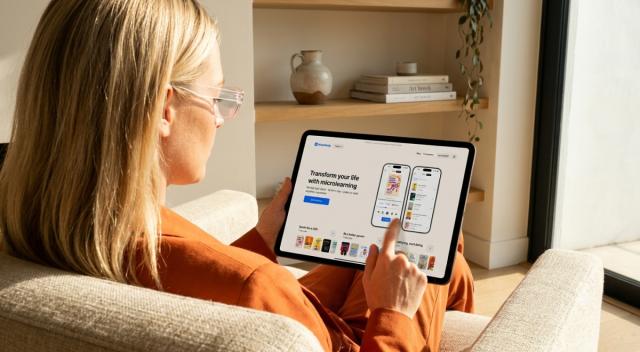
📘 Short on time this week? Try the Headway app and get the ideas from a whole nonfiction book in 15 minutes.
Go beyond podcasts
Grow on the go with Headway:
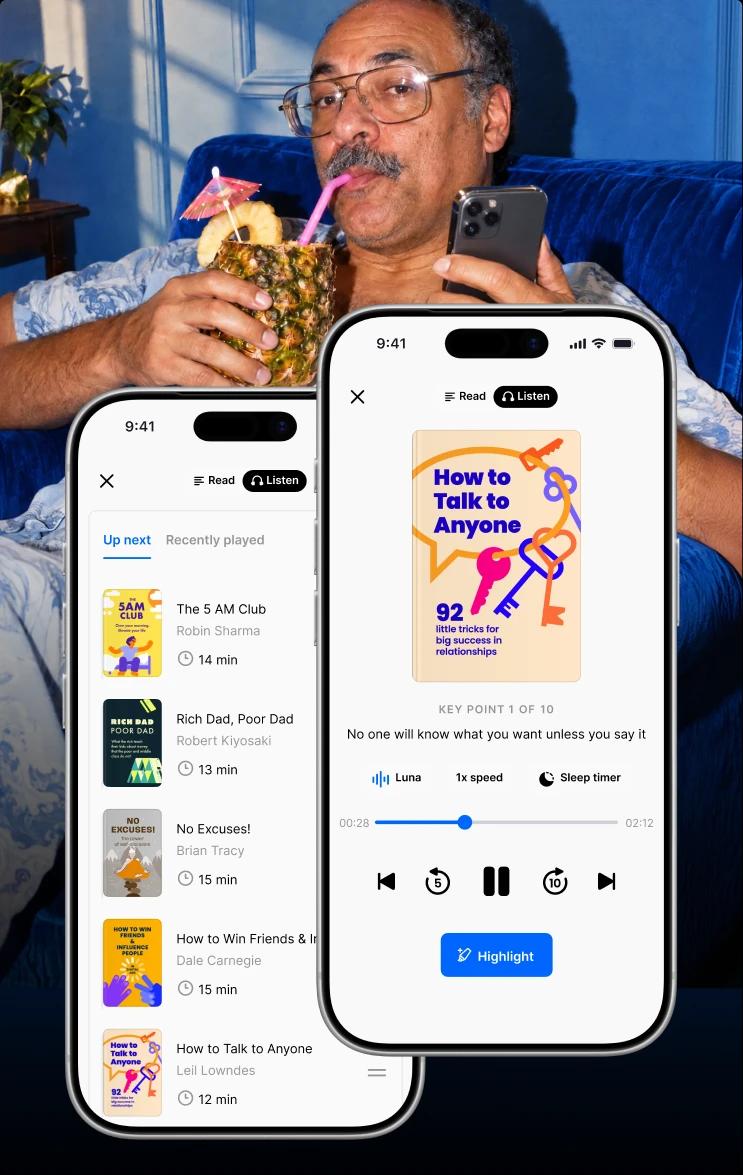
• Save key moments with audio highlights
• Adjust speed to fit your pace
• Learn from book summaries in a clear narrative voice
Quick list: The 15 best podcasts for women by goal
Find your mood or goal below, then jump to the full write-up further down.
💼 For women in business: The Female Founders Network
💸 For money confidence: Her Dinero Matters
🏢 For office politics and career strategy: Women at Work
✊ For feminism with a sense of humor: The Guilty Feminist
🗳️ For women's issues and politics: Our Body Politic
💬 For honest talk about hard things: We Can Do Hard Things
🧘 For spirituality and self-care: Highest Self Podcast
👨👩👧 For warm, practical life advice: IMO with Michelle Obama and Craig Robinson
💔 For grief and mental health: Thanks for Asking
🌿 For women's health and hormones: The Nourished Woman Podcast
📜 For women's history in depth: The History Chicks
⏱️ For history in five minutes: Womanica
🔬 For overlooked women in science: Lost Women of Science
🎤 For pop culture and bold conversation: Call Her Daddy
🔍 For true crime: Crime Junkie
| # | Podcast | Category | Best for | Typical episode |
|---|---|---|---|---|
1 | The Female Founders Network | Business | Women entrepreneurs building something | ~30 min |
2 | Her Dinero Matters | Money | Financial confidence, Latina perspective | ~30 min |
3 | Women at Work | Career | Workplace strategy and office dynamics | ~35 min |
4 | The Guilty Feminist | Feminism | Feminism without the lecture | ~60 min |
5 | Our Body Politic | Women's issues | Politics centered on Black women | ~50 min |
6 | We Can Do Hard Things | Personal growth | Vulnerability and resilience | ~60 min |
7 | Highest Self Podcast | Self-care | Spirituality and purpose | ~45 min |
8 | IMO with Michelle Obama and Craig Robinson | Personal growth | Listener questions, sibling banter | ~50 min |
9 | Thanks for Asking | Mental health | Grief, loss, and honest answers | ~40 min |
10 | The Nourished Woman Podcast | Wellness | Hormones, health, and business | ~35 min |
11 | The History Chicks | History | Women's history, told properly | ~75 min |
12 | Womanica | History | A daily dose of women's history | ~5 min |
13 | Lost Women of Science | Science | Forgotten female scientists | ~30 min |
14 | Call Her Daddy | Pop culture | Sex, dating, celebrity interviews | ~60 min |
15 | Crime Junkie | True crime | Well-researched unsolved cases | ~45 min |
*Hosts, formats, and episode lengths listed here are accurate as of September 2026 and may change as shows release new episodes.
What makes a good podcast for women in 2026
The shows that stay in a rotation tend to do one of three jobs well, and the ones that get deleted usually try to do all of them at once.
Some podcasts give you something to use — a negotiation script, a way to read a room, a question to ask your doctor. Others give you company, which matters more than it sounds when you're doing dishes at 9 pm, and nobody has asked how you're doing all week. And a few give you a story good enough that the errand becomes the excuse to keep listening.
Format matters as much as topic. A show recorded live in front of an audience feels different from two friends in a studio, and a five-minute daily brief serves a different slot in your week than a 90-minute interview. Before you subscribe to anything, it's worth knowing which slot you're actually trying to fill.
One more thing worth saying: the best podcasts for women aren't only the ones about being a woman. Half the shows below are about money, politics, or unsolved cases — they just happen to put women's experiences at the center rather than at the margin.
That framing changes what you get out of a show. A business podcast that assumes its listener has been talked over in meetings asks different questions than one that doesn't. A true crime show hosted by two women covering cases involving women handles the victims differently than a show built for shock. The subject matter might be identical; the angle isn't.
Top podcasts for women in business and entrepreneurship
If you want practical career and business input rather than motivation alone, start here. These three shows go into the specifics that most business content skips.
1. The Female Founders Network
Hosts Nat Brown and Sylvie Hall interview an entrepreneur, small business owner, or industry leader in each episode, and the conversations stay refreshingly concrete — pricing decisions, first hires, the month everything nearly fell apart.
What separates it from most business shows is that guests are asked how things actually went rather than how they'd like them remembered. For anyone building something, that's worth more than another highlight reel of successful women who make it sound effortless.
Best for: Female entrepreneurs in the first few years of a business.
Episode length: Around 30 minutes, which fits a commute without spilling into your morning.
If you want more on the management side specifically, our roundup of the best leadership podcasts covers shows built around running teams rather than starting companies.
2. Her Dinero Matters
Financial counselor Jen Hemphill hosts this award-winning podcast about money confidence, with a bilingual, Latina perspective that's rare in personal finance media.
Hemphill's approach works because she treats money as behavior rather than math. Episodes deal with the emotional side — the guilt around spending, family expectations about who supports whom, and the fear of looking uninformed in a meeting about your own finances. The guests are varied enough that you'll hear from someone whose starting point resembles yours.
Best for: Women who find most financial advice either patronizing or written for someone who already has $50,000 invested.
Episode length: About 30 minutes.
3. Women at Work
Harvard Business Review's show tackles the parts of a career that performance reviews don't cover: being interrupted in meetings, asking for a raise in a bad quarter, managing people who used to be your peers.
The hosts bring in researchers and practitioners, so the advice tends to come with evidence attached rather than anecdote alone. It's less warm than most podcasts on this list and more directly useful if you're trying to solve a specific workplace problem this week.
Best for: Women in business who want strategy rather than encouragement.
Episode length: Roughly 35 minutes.
📘 Want the ideas from the business books everyone quotes, without reading 300 pages? Start with Headway and finish your first summary today.

Podcasts about feminism and women's issues
These two shows approach women's issues from opposite ends — one through comedy, one through reporting — and both hold up over a long listen.
4. The Guilty Feminist
Comedian Deborah Frances-White records this show live in front of an audience, and every episode opens with the signature "I'm a feminist, but…" confession — the small hypocrisies everyone carries and nobody says out loud.
That opening does a lot of work. It sets up a show where you can hold a principle and admit you fell short of it in the same breath, which is why the podcast has lasted where more earnest ones burned out. Guests range from comedians to activists to academics, and the live audience keeps the pace quick. Frances-White also wrote 'The Guilty Feminist', which covers similar ground in print.
Best for: Anyone who wants feminism discussed with humor rather than a raised eyebrow.
Episode length: About an hour, recorded live.
5. Our Body Politic
This show reports on politics, policy, and current events through the experiences of Black women, and it's one of the few podcasts doing that consistently rather than during news cycles.
Coverage spans reproductive rights, economic policy, and elections, with correspondents and analysts who work in the areas being discussed. It's a news show first, which means it rewards regular listening more than dipping in — but if you want women's issues covered with actual reporting behind them, this is the pick.
Best for: Listeners who want political coverage that doesn't treat Black women as a demographic footnote.
Episode length: Around 50 minutes.
Podcasts for personal growth and self-improvement
Self-improvement shows live or die on whether the hosts sound like they've actually been through something. These three do.
6. We Can Do Hard Things
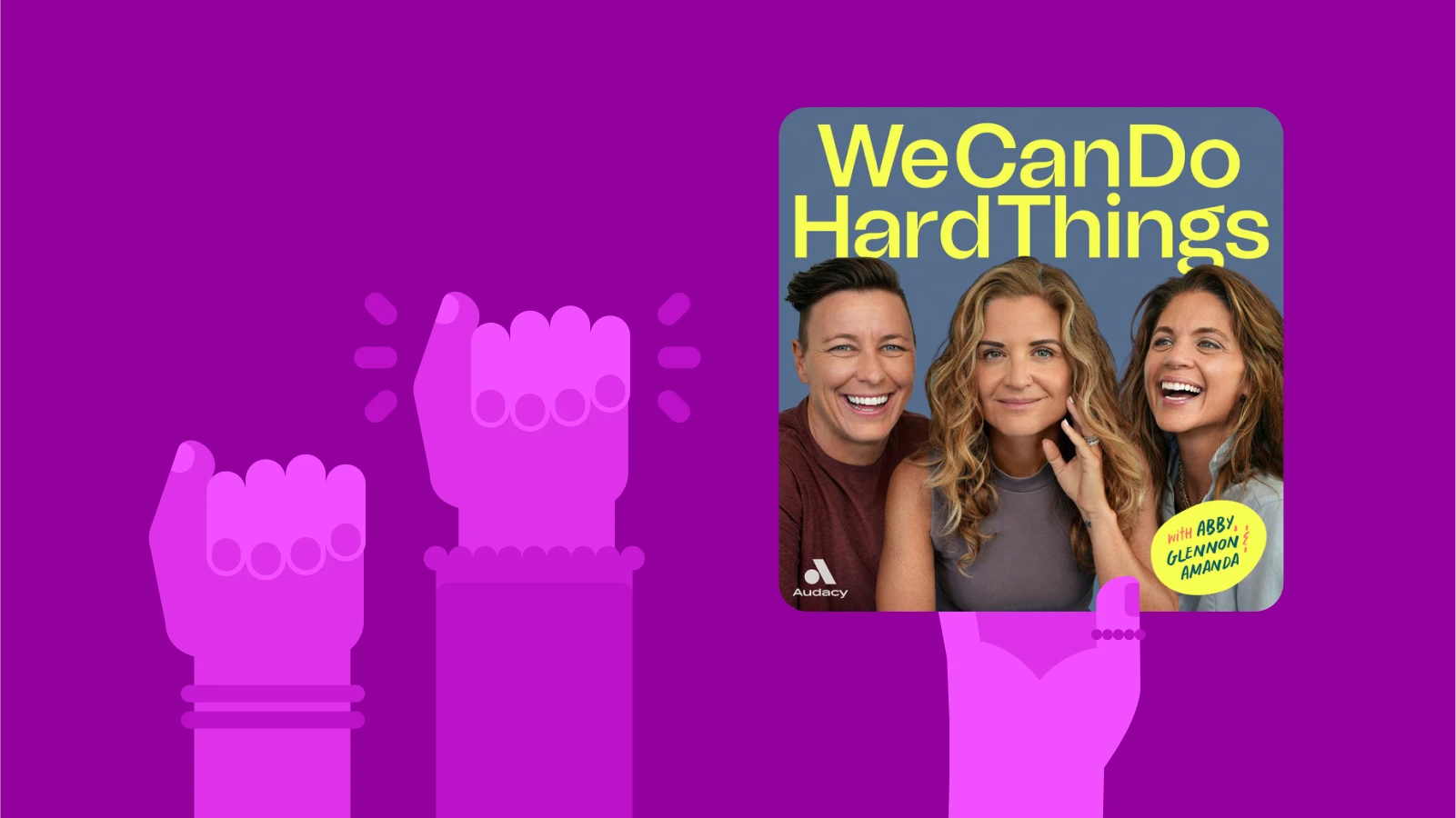
Author Glennon Doyle hosts with her wife, Abby Wambach, and her sister Amanda Doyle, and the format is closer to eavesdropping on three people who trust each other than to an interview show.
Nothing is off-limits: anxiety, divorce, parenting, addiction, faith, bodies. The reason it works is that Doyle talks about her own failures in present tense rather than as things she's resolved, which makes the hard episodes land differently than advice delivered from the far side of a problem. Her book 'Untamed' covers the same territory if you want to read first.
Best for: Women going through something they haven't told many people about.
Episode length: About an hour, usually in two parts for bigger topics.
7. Highest Self Podcast
Sahara Rose has built one of the most consistent spirituality shows in the category, covering purpose, relationships, self-care, and how to make ancient frameworks useful on a Tuesday.
She keeps the practical thread visible, which is what separates this from spiritual content that stays abstract. Episodes alternate between solo reflections and guest conversations, so you can pick based on whether you want a single voice or a debate.
Best for: Listeners looking for personal clarity rather than another productivity system.
Episode length: Around 45 minutes.
8. IMO with Michelle Obama and Craig Robinson
Michelle Obama and her brother Craig Robinson answer questions submitted by listeners, and the sibling dynamic is what makes it. They disagree in public, tease each other, and land somewhere more honest than a solo advice show usually gets.
The questions are ordinary in the best way — a friendship that's drifted, a job that isn't working, a family member who won't change — and the answers stay specific rather than sliding into general life philosophy. Obama's memoir 'Becoming' remains the deeper version of her own story if the personal stories here leave you wanting more.
Best for: Anyone who wants warm, grounded advice from people who've clearly argued about it first.
Episode length: Roughly 50 minutes.
📘 Prefer your personal growth in smaller pieces? Download Headway for 15-minute audio summaries of the books these hosts keep recommending.
Go beyond podcasts
Grow on the go with Headway:
• Save key moments with audio highlights
• Adjust speed to fit your pace
• Learn from book summaries in a clear narrative voice
Mental health and wellness podcasts for women
Wellness is the category where tone matters most, since the wrong register turns a helpful episode into a lecture. These two get it right in different ways.
9. Thanks for Asking
Nora McInerny built this show around a question most people ask without wanting a real answer. Listeners call in and say how they're actually doing — after a death, a diagnosis, a divorce — and McInerny sits with it rather than rushing toward a silver lining.
It's a grief podcast that's frequently funny, which sounds impossible until you hear it. If you've ever felt like you were supposed to be over something by now, this is the show that tells you the timeline was never real. Our list of the best podcasts about life has more shows in this register if it lands for you.
Best for: Anyone carrying something heavy who's tired of being told to stay positive.
Episode length: About 40 minutes.
10. The Nourished Woman Podcast
Holistic nutritionist Gabby Borgerink covers women's health, hormones, relationships, and running a business — an unusual combination that turns out to make sense, since the women listening are usually managing all four at once.
Episodes get specific about symptoms that rarely get airtime: cycle changes, energy crashes, the gap between "your bloodwork is fine" and feeling fine. The wellness advice stays practical rather than prescriptive.
Best for: Women who want health information that accounts for hormones rather than treating them as a footnote.
Episode length: Around 35 minutes.
*Wellness and mental health podcasts offer perspective and community, not medical care. For persistent symptoms or mental health concerns, speak with a licensed professional.
History and storytelling podcasts about successful women
History is where podcasting outperforms almost every other format, because a good host can make a 200-year-old life feel like gossip about someone you know.
11. The History Chicks
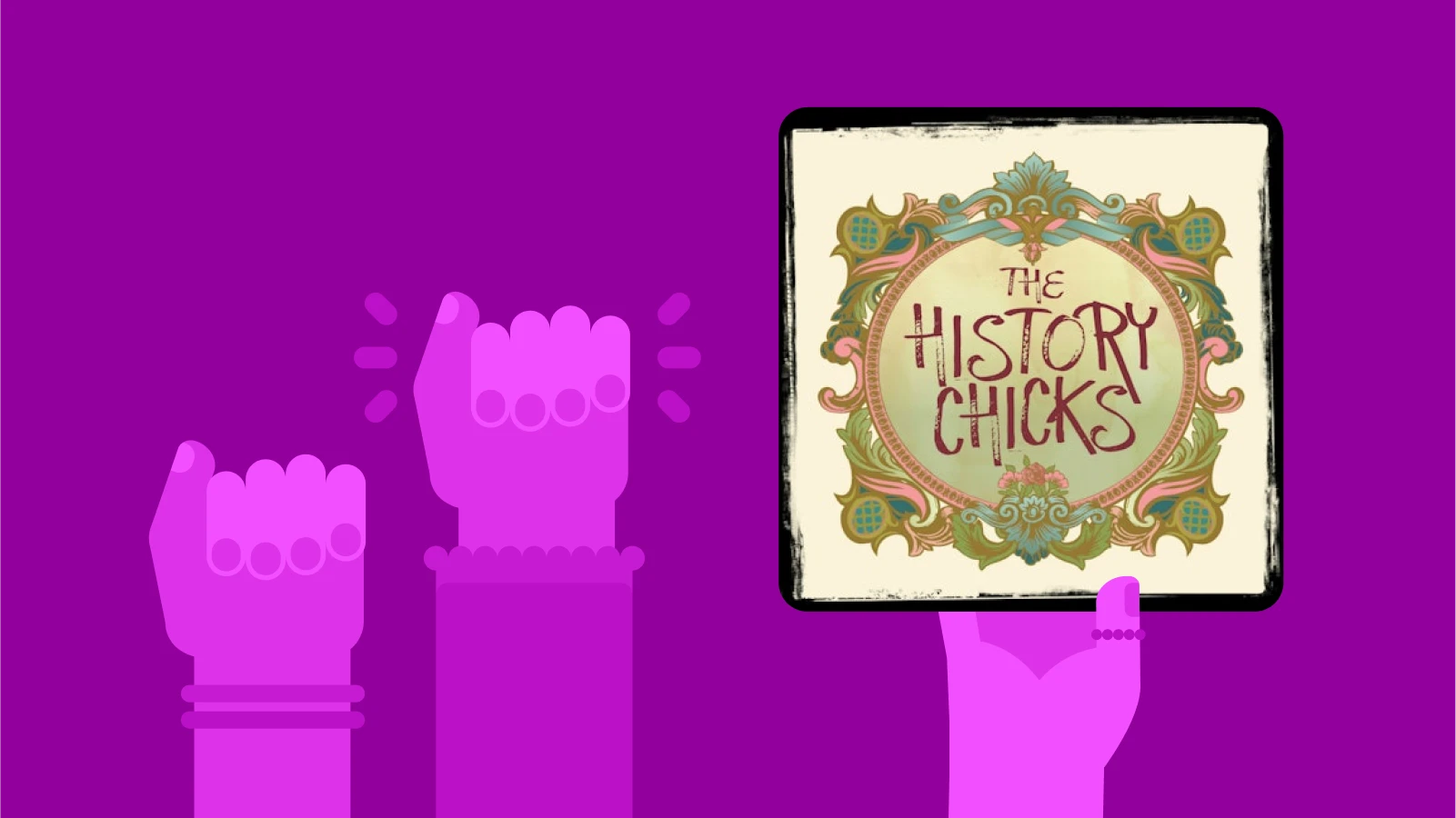
Beckett Graham and Susan Vollenweider have been telling women's history since 2011, and the research depth shows. Each episode takes one woman — a queen, a scientist, a fictional character who shaped how a generation saw itself — and gives her the full biography treatment.
Pop culture references keep it from feeling like a lecture, and the hosts are upfront about where the historical record is thin or contradicts itself. Episodes run long, often past an hour, which is the trade-off for actually covering a life.
Best for: Listeners who want women's history in depth rather than in highlights.
Episode length: 75 minutes and up, sometimes split across parts.
12. Womanica
Womanica does the opposite and does it well: five-minute daily episodes, each on one woman most people have never heard of, organized into monthly themes.
The short format is the whole point. It slots into the walk to the bus or the time your coffee takes to brew, and after a month, you've collected 30 women you can now name. For anyone who likes the idea of history podcasts but never finds a free hour, this is the entry point.
Best for: Building a daily listening habit that costs you almost no time.
Episode length: About five minutes.
13. Lost Women of Science
Produced in partnership with Public Radio Exchange, this show investigates female scientists whose work got absorbed into someone else's reputation.
What makes it more than a correction exercise is that it treats each woman as a person rather than a case study — the lab politics, the marriages, the decisions that cost them credit. The seasons are structured as investigations, so it rewards listening in order. Our roundup of the best science podcasts covers more options if this becomes a category you want to stay in.
Best for: Anyone who suspects the history of science is missing a few names.
Episode length: Around 30 minutes per episode, in seasons.
Comedy, pop culture, and true crime podcasts for women
These two shows sit at the top of the charts on Spotify and Apple Podcasts for a reason — they're built to keep you listening, not to teach you anything.
14. Call Her Daddy
Alexandra Cooper started this as a blunt show about dating and hookup culture with co-host Sofia Franklyn, and it grew into one of the most popular podcasts on Spotify.
The current version leans on celebrity interviews, and Cooper is better at them than most — guests say things they clearly didn't plan to. Underneath the headlines, the show covers relationships, mental health, and confidence with more range than its reputation suggests. If relationships are what brought you here, our list of the best relationship podcasts goes deeper on that theme.
Best for: Listeners who want candid conversation and celebrity interviews that go somewhere unexpected.
Episode length: About an hour, weekly.
15. Crime Junkie
Ashley Flowers and Brit Prawat release a new episode every Monday, and the research is what earns the audience. Cases are laid out cleanly, sources are credited, and the hosts stay with the victims rather than the spectacle.
Many episodes center on cases involving women, and the hosts are direct about how gender shaped both the crime and the investigation that followed. The friendship between the two hosts gives the show the feel of best friends working through a case at a kitchen table, which is a large part of why listeners stay for years.
Best for: True crime fans who want research over reenactment.
Episode length: Around 45 minutes.
📘 Out of episodes on the drive home? Open Headway and finish a book's key ideas before you're home.
How to find a new podcast worth subscribing to
Charts are a weak signal on their own. A popular podcast tells you a lot of people pressed play once; it tells you nothing about whether the show suits the 20 minutes you have on Thursday.
Start with the platform you already use. Spotify and Apple Podcasts both build recommendations from your listening history, and both let you preview a few minutes before committing — which is usually enough to know whether you can stand the hosts.
Apple Podcasts organizes by category more cleanly if you're browsing by topic; Spotify surfaces newer shows faster and mixes podcast recommendations into the music habit you already have.
Word of mouth still beats both. Podcast listeners recommend shows more specifically than algorithms do — "the episode with the ER doctor" rather than "similar to what you liked" — so the best source is usually a person. Social media works the same way when you get past the promotional posts.
TikTok has become a genuine discovery channel because clipped moments show you what a show actually sounds like, and influencers in a niche you follow tend to recommend shows in that niche rather than whatever is charting.
Two habits make the rest easier. Give a new podcast two episodes rather than one, since the first episode you land on is often an outlier, and check whether new episodes still appear regularly — plenty of well-reviewed shows stopped publishing years ago and stay in the charts on reputation alone.
Then tune in on a schedule you'd keep anyway: a commute, a walk, the twenty minutes you spend making dinner.
How to fit podcasts into a week that's already full
Most people don't have a discovery problem. They have a 45-minute problem — a subscription list full of hour-long episodes and about 20 free minutes a day to spend on them.
Two adjustments help. The first is matching episode length to the slot instead of the other way around: a five-minute Womanica episode for the walk to the car, a 30-minute business interview for the commute, the 75-minute history episode saved for a long drive or a Sunday of chores.
The second is treating your queue like a playlist rather than a to-do list. You don't owe any show a full listen, and quitting eight minutes into an episode that isn't landing frees up the rest of the week.
Length isn't only a scheduling question either. Utrecht University's review of podcasts as a learning format notes that around 15 minutes works well for introducing a topic, 30 to 45 minutes suits a fuller discussion, and attention tends to fade past the 45-minute mark.
Podcast listeners already know this instinctively — it's why so many long episodes get abandoned at the halfway point.
If you mostly listen to learn rather than to be entertained, that finding is worth acting on. A shorter, denser format will often leave you with more than an hour-long conversation you only half finished.
Short on time? Get podcast-style insights in 15 minutes with Headway
Every show on this list of the best podcasts for women is worth your time when you have it. On the days you don't, Headway fills the same slot with something shorter.
You get the key ideas from more than 2,500 nonfiction titles in 15-minute text or audio summaries — including the books these hosts return to again and again, like 'Becoming' by Michelle Obama, 'Daring Greatly' by Brené Brown, and 'All About Love' by bell hooks.
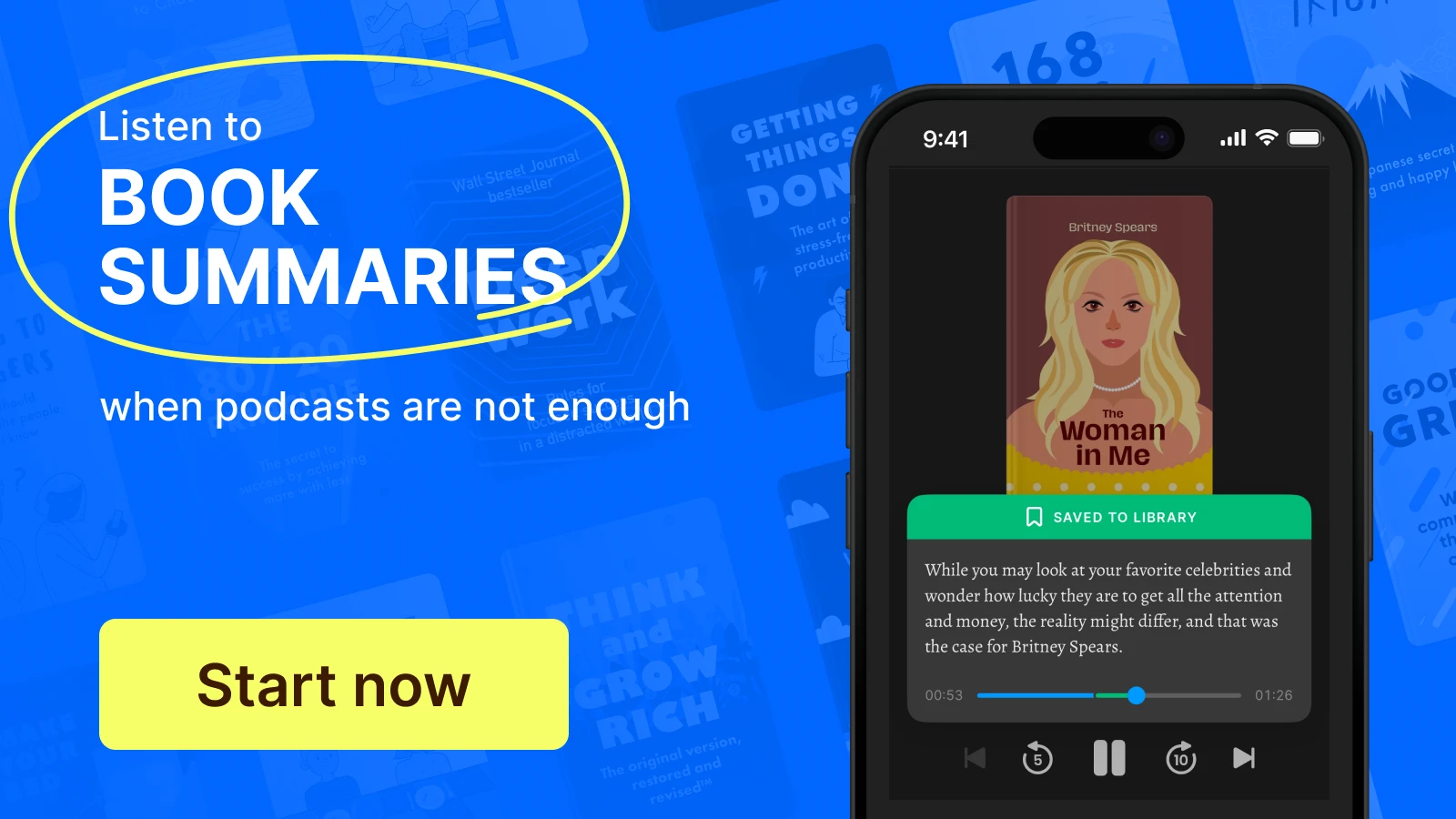
It isn't a replacement for the conversations, the humor, or the hosts you've come to know. It's what you play when you have 15 minutes and want to finish something. If you'd rather stay in audio about reading itself, our roundup of the best podcasts about books is a good next stop.
📘 Download the Headway app and listen to your first summary before your commute ends.
FAQs on the best podcasts for women
What are the best podcasts for women?
The best podcasts for women depend on what you want from the next episode. For business, the Female Founders Network and Women at Work lead. For feminism, The Guilty Feminist. For personal growth, We Can Do Hard Things and IMO with Michelle Obama and Craig Robinson. For true crime, Crime Junkie. Pick by goal rather than by chart position.
What podcasts help women grow professionally?
Women at Work covers workplace strategy — negotiation, visibility, managing former peers — with research behind the advice. The Female Founders Network suits women entrepreneurs building a business rather than climbing a ladder, and Her Dinero Matters handles the money side. Between the three, you get career strategy, entrepreneurship, and financial confidence without much overlap.
What is a good podcast for self-improvement?
We Can Do Hard Things works best if your focus is emotional resilience, since Glennon Doyle and her co-hosts talk about problems they're still in rather than ones they've solved. The Highest Self Podcast suits listeners drawn to purpose and spirituality. Both run about an hour, so save them for a longer drive or a walk.
Are there faster alternatives to hour-long podcasts?
Headway delivers the key ideas from nonfiction books as 15-minute audio summaries, which covers the learning part of podcast listening in a fraction of the time. Womanica does something similar for history with five-minute daily episodes. Neither replaces a favorite show, but both fill the gaps when a full episode isn't realistic.
Can podcasts really support self-care and mental health?
They help with perspective and company, which matters more than it sounds. Hearing someone describe an experience you thought was yours alone reduces the isolation around it, and shows like Thanks for Asking do that consistently. What podcasts can't do is assess your situation or treat it, so use them alongside professional support rather than instead of it.