Self-growth
 Business & Career
 Success
 Communication
 Healing
 Relationships
 Psychology
 Happiness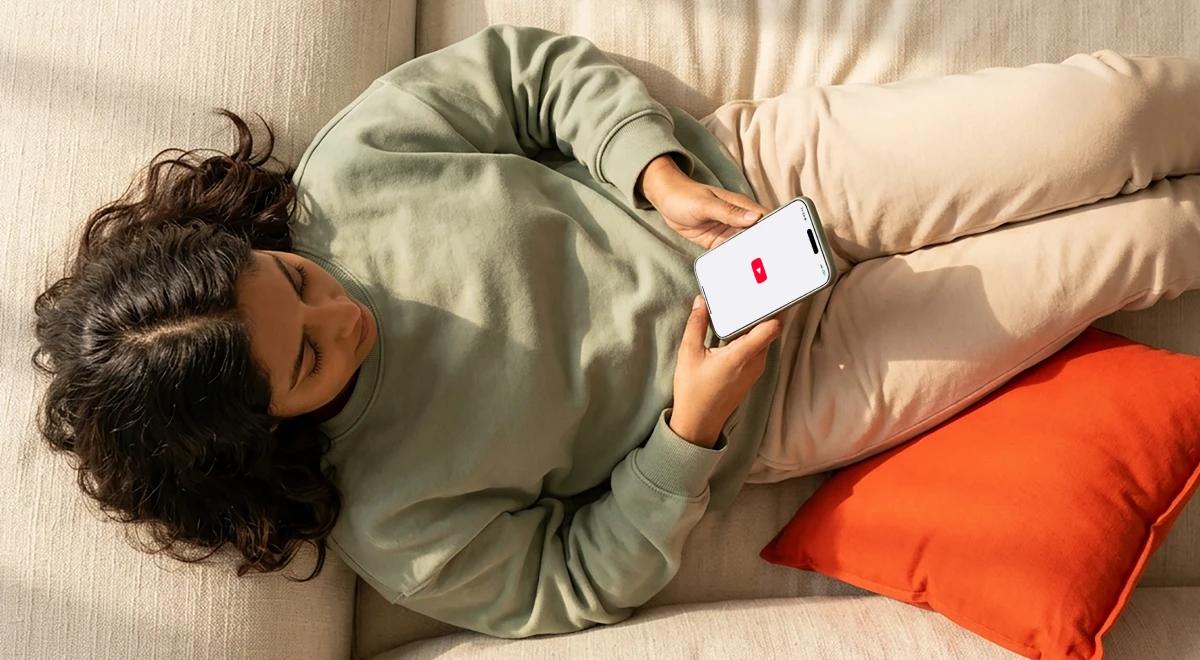
Learning how to stop watching YouTube doesn't mean you should quit the internet. It means replacing passive scrolling with intentional action.
It's frustrating when you open the YouTube app to check a quick tutorial and, next thing you know, it's 11 PM. You feel mentally drained, yet you can't seem to close the tab. This issue isn't just a matter of willpower. The platform is literally designed by world-class engineers to keep you spending as much time on the site as possible.
Between the autoplay feature and a relentless algorithm, the odds are stacked against you. But you can take control and prioritize your mental health over wasting time.
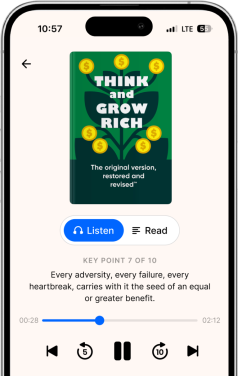
📘 Stop the blue-light binge that ruins your sleep. Close the YouTube app and wind down with a Headway audio summary instead.
Quick guide: How to stop watching YouTube today
To learn how to stop watching YouTube, follow these four steps:
Disable autoplay and notifications to break the dopamine loop.
Use site blockers or time limits on your Android or iOS device to create friction.
Identify your triggers, like boredom or stress, that lead to binge-watching.
Replace the habit with a low-friction alternative, like microlearning on Headway.
Breaking a YouTube habit takes more than just stopping. It requires a plan. Most people fail because they try to go cold turkey without giving their brain a new way to get information. By setting clear time limits and managing your internet use, you can reduce your screen time and improve your overall wellbeing. Taking these small steps helps you move away from endless videos and toward recovery from any internet addiction.
Why it's so hard to stop watching YouTube: The psychology of the rabbit hole
The reason you get stuck in a rabbit hole isn't that you're lazy. It's because of what psychologists call the dopamine loop. Every time you see a new, flashy thumbnail on your homepage, your brain gets a tiny hit of anticipation. When the video from one of your favorite YouTubers is actually entertaining, you get a reward.
Essentially, it's a variable reward schedule, the same psychology used in slot machines. You never know if the next video will be great, so you keep clicking to find out. The algorithm is terrifyingly good at predicting your moods. It tracks your watch history and knows exactly what will keep you engaged for the maximum amount of time.
Then there's the "Shorts" phenomenon. This video-sharing style is like a high-speed dopamine delivery system. Because the clips are so short, your brain never gets a natural break to opt out. You just swipe. Before you know it, you've spent an hour on a single YouTube channel you didn't even mean to visit.
This constant stimulation is a major driver of social media addiction. When you use YouTube as a default response to boredom, your brain stops looking for more challenging activities. Recognizing that you're being played by YouTube's recommendation engine is the first step toward reclaiming your focus and fixing your social media habits.
📘 Skip that two-hour video essay and get the knowledge you need in just 15 minutes with the Headway app.
Five technical ways to limit your watch time
If you want to know how to stop watching YouTube, you have to make it harder to access. Right now, the app is too convenient. It's sitting there on your homepage, waiting for a single tap. To break the habit, you need to create some friction.
Here are five things you can do today:
Kill the feed on Chrome: If you use a computer, install an extension like Unhook. It hides YouTube's recommendation sidebar and comments. You only see what you actually searched for. No more getting distracted by random, endless videos when you just wanted to find a recipe.
Clear your watch history: Go to your YouTube account settings and turn it off. Without your watch history, the algorithm can't easily suggest new content, and your homepage often turns into a blank slate.
Set hard time limits: Use the "Digital Wellbeing" settings on your Android or the "Screen Time" settings on your iPhone. Set a limit for the YouTube app to maybe 30 minutes a day. Once you hit it, the app greys out. It's a physical reminder to stop.
Block sites entirely: If you find yourself reflexively typing "y-o-u..." into your browser, use a tool to block sites during work hours. This method forces you to be intentional about your internet use.
Clean up your notifications: Go into your settings and turn off every single alert. You don't need a ping every time one of your favorite YouTubers uploads a new video. If it's actually important, it can wait until you decide to look for it.
How to replace the YouTube scroll with microlearning
One of the biggest mistakes people make when trying to fix an internet addiction is trying to go cold turkey and leaving a gap in their schedule. If you just sit there staring at a wall, you'll be back on the YouTube app within ten minutes. You have to swap the habit.
Instead of watching YouTube videos that leave you feeling drained and tired, try microlearning. Take that same 15-minute window and fill it with something that actually supports your mental health and career.
On Headway, you're still consuming something interesting, but instead of passive entertainment, you're getting the core ideas from a bestselling book. You spend less time in a scroll hole and more time actually retaining information. It gives your brain the "newness" it craves without the side effects of social media addiction.
📘 Stop letting an algorithm decide what you think about today. Take control of your learning and choose your own path with Headway.
Know your triggers and why you open the app in the first place
To really take control of your YouTube addiction, you have to figure out what starts the cycle. Most of the time, we don't open the app because we want to learn about ancient history or camera gear. We open it because we're bored, stressed, or trying to avoid a complicated task.
Psychologists often call this procrastivity. It's when you do something "productive-adjacent," like watching a video on "how to be more organized," instead of actually being organized. It feels like work, but it's just another way of wasting time.
Next time you reach for your phone, try the three-second rule. Before you click on that YouTube channel, ask yourself: "What do I actually want to learn right now?" If the answer is "nothing, I'm just bored," put the phone down.
Boredom isn't an emergency. It's actually a sign that your brain needs a break from the constant input of social media. When you learn to sit with that boredom instead of feeding it endless videos, your wellbeing improves.
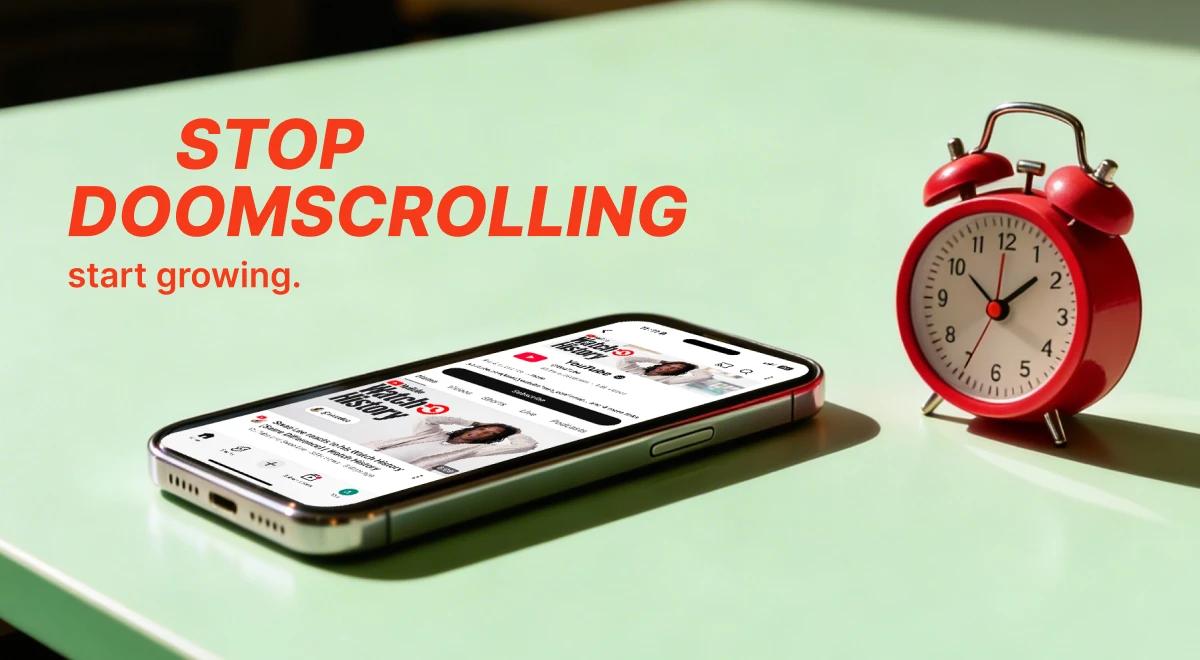
Break free from digital loops and get practical insights for growth.
You start to realize that excessive screen time is often just a shield against the stress of real life. Addressing the root cause, whether it's work anxiety or loneliness, is the only way to make change last.
Invest your reclaimed time into growth with Headway!
One of the biggest traps with YouTube addiction is that it makes you feel smart without actually teaching you much. You watch a 20-minute video on physics or business, and your brain tells you that you've mastered the topic. In reality, it's just passive entertainment. Call it the illusion of knowledge. To break the YouTube habit, you have to move toward active learning.
When you use a structured tool like Headway, you engage your brain in a different way. The summaries are designed for retention, which means you hold on to more of what you read. Over time, that adds up.
This is especially important if you tend to watch videos late at night. Most people watch in bed, which ruins their sleep and mental health. Replacing that blue-light binge with a Headway audio summary is a much gentler way to wind things down.
You get the information you want without the mindless binge-watching that keeps you awake until 2 AM. Spending less time on video-sharing platforms gives your brain the space it needs to grow.
📘 Download the Headway app and swap your next YouTube session for a 15-minute summary that actually sticks.
FAQs about how to stop watching YouTube
How do I stop watching YouTube?
To stop, you first have to break the technical loops the platform uses to trap you. Start by disabling autoplay and turning off all notifications on your Android or iPhone. Use site blockers on Chrome to create friction. Replacing the YouTube habit with microlearning on Headway is the best way to make the change stick.
Why am I so addicted to YouTube shorts?
Shorts are designed as a high-speed dopamine delivery system. They use a variable reward schedule, much like a slot machine, where you keep swiping to find the next wave of entertainment. This creates a YouTube addiction that's hard to break, because the algorithm perfectly predicts your interests, making it almost impossible to stop scrolling.
Does watching too much YouTube affect mental health?
Yes, excessive binge-watching often leads to procrastivity, where you feel productive while actually wasting time. This pattern can cause a cycle of guilt and anxiety that damages your mental health. Constant exposure to endless videos also shrinks your attention span. Setting time limits and choosing active learning over passive viewing are among the most practical ways to protect your wellbeing.
What can I do to limit the time I spend watching YouTube?
The most effective strategy is swapping the scroll for a healthier alternative. Whenever you feel the urge to use YouTube, open Headway and finish a 15-minute book summary instead. You'll satisfy your brain's craving for new information without the social media addiction spiral. Creating this new routine helps you spend less time in a rabbit hole and more on growth.