Self-growth
 Business & Career
 Success
 Communication
 Healing
 Relationships
 Psychology
 Happiness
You don’t need thousands in startup capital to launch something meaningful. Some of the most successful businesses started with nothing but hustle, creativity, and a strategic approach. Whether you’re a future small business owner dreaming of your own venture or someone ready to quit that full-time job, this guide will show you the exact steps to turn your business idea into reality — without touching your savings.
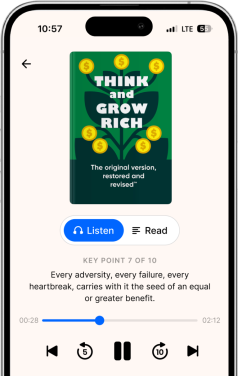
And here’s something that’ll accelerate your journey: Headway gives you access to insights from books like ‘The $100 Startup’ and ‘The Lean Startup’ in just 15 minutes. Instead of spending weeks reading, you’ll get the essential entrepreneurship wisdom you need to move fast. Start learning with Headway today.
Quick answer: Can you really start a business with no money?
Yes — and far more people do it than you’d think.
Starting from zero usually means leaning on what you already have: your skills, your network, and the free tools available online. Most founders begin with simple, low-cost models like freelancing, consulting, dropshipping, or managing social media for small businesses.
Instead of spending upfront, you build momentum by offering a service, making your first small profit, and reinvesting it back into the business. That’s essentially what bootstrapping is — growing step by step, without outside funding.
You don’t need a big budget to get started. You need clarity, consistency, and the willingness to learn as you go.
Find your money-making idea (That soesn’t cost a dime to start)
First up, you need an idea that’s going to make bank but doesn’t need bank to start. This is your business model. Think about what you’re good at and what problems you can solve. Maybe it’s a service you can offer or some digital product you can create. The key is it’s got to be something you can kick off without a huge cash injection. So, will you be a service-based business or a product-based one?
‘The $100 Startup’ by Chris Guillebeau is full of ideas that don’t need much cash to get going. It’ll spark some ideas for sure. However, it’s vital to feel excited about the idea you have. Otherwise, you’ll feel discouraged at the first slightly difficult hurdle you face.
"To succeed in a business project, especially one you’re excited about, it helps to think carefully about all the skills you have that could be helpful to others and particularly about the combination of those skills."
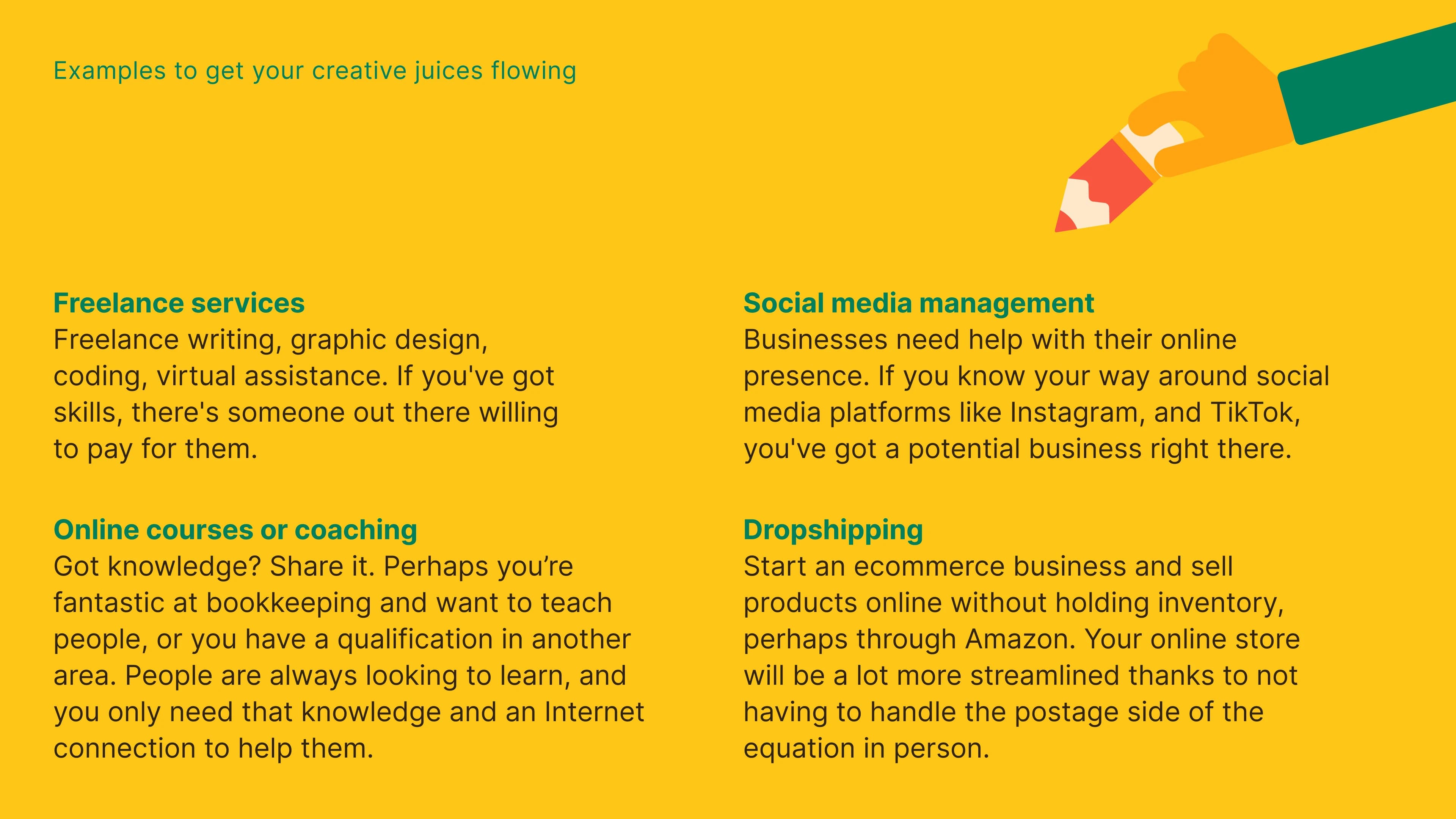
Here are some examples to get your creative juices flowing:
Freelance services: Freelance writing, graphic design, coding, and virtual assistant work. If you’ve got skills, there’s someone out there willing to pay for them. These low-cost options let you start earning immediately.
Online courses or coaching: Got knowledge? Share it. Perhaps you’re fantastic at bookkeeping and want to teach people, or you have a qualification in another area. People are always looking to learn, and you only need that knowledge and an internet connection to help them.
Dropshipping: Start an e-commerce business and sell products online without holding inventory, perhaps through Amazon. Your online store will be a lot more streamlined thanks to not having to handle the postage side of the equation in person.
Social media management: Businesses need help with their online presence. If you know your way around social media platforms like Facebook, Instagram, LinkedIn, and TikTok, you’ve got a potential business right there.
Remember, the key is to start with what you know or what you’re passionate about. That passion will keep you going when things get tough — and trust me, they will at some point.
📘 Build your expertise with Headway.
Create your no-frills business plan
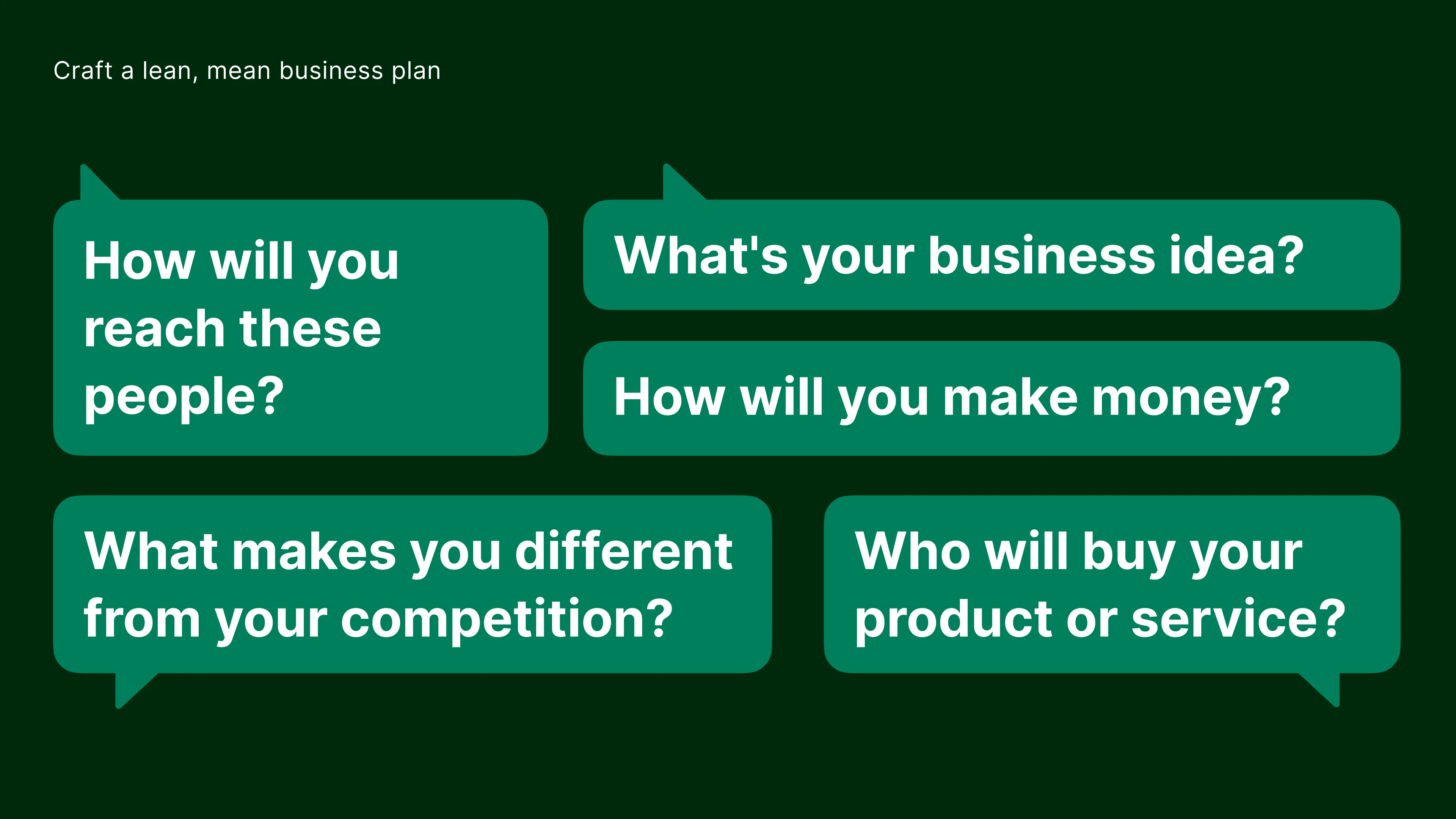
When I say business plan, I don’t mean a 50-page document that’s going to collect dust. Instead, we’re talking concise, detailed, and packed with market research results.
Here’s what you need to cover:
What’s your business idea?
Who are your potential customers?
How will you reach these people?
What makes you different from your competition?
How will you make money?
Keep it simple, but make sure it’s solid. This plan is your roadmap for your own business journey. It will keep you focused when you’re tempted to chase every shiny object that comes your way. While it may be confusing at first and seem like a lot of work, it’s something that all small business owners need.
For more inspiration, check out 'The Lean Startup' by Eric Ries. It's all about starting small, testing your ideas, and adapting fast. It's a game-changer, for real.
"This is one of the most important lessons of the scientific method: if you cannot fail, you cannot learn."



Think of your business plan as a living document. As you learn what works and what doesn’t, you’ll adjust. Maybe your target market shifts, or you discover a better way to reach them. That’s not failure — that’s smart entrepreneurship.
Build your brand without breaking the bank

Your brand is your promise to your customers. It’s what makes you stand out in a crowded market. And here’s the good news — building a strong brand doesn’t have to cost a fortune. The first step is to know what type of business you are. A strong identity will be your anchor in any storm.
Then, leverage free resources without maxing out your credit cards on subscriptions. You can use things like Canva for graphic design. It’s like having a professional designer in your pocket and takes you through the process step-by-step with handy templates. Create a logo, design some social media posts, and make your business cards. It’s all possible without spending a dime.
Next up, social media. This is your megaphone to the world. Choose the platforms where your target audience hangs out. Maybe it’s Instagram, TikTok, LinkedIn, or Twitter. Whatever it is, be consistent. Post regularly, engage with your followers, and provide value.
Remember, your brand isn’t just visuals. It’s the voice you use in every email, the way you handle complaints, the values you stand by when no one’s watching. Successful entrepreneurs know that authenticity beats perfection every single time.
📘 Discover branding secrets with Headway.
However, there may be a point where you need to look for extra funding from lenders, and there are plenty of ways to do that. Crowdfunding platforms like Kickstarter are useful options, along with contacting angel investors and venture capitalists.
These are ways to boost your financial plan and cover any unavoidable startup costs. You could also look at small business grants, check with the Small Business Administration (SBA), or explore small business loans to give you some money upfront and boost your cash flow.
Master free marketing that actually works

Who needs a big marketing budget when you’ve got hustle? You just need a strong marketing strategy. There are so many ways to get the word out about your new business without spending money. Let me break it down for you:
Content marketing: This is about creating valuable content that attracts your target market. It could be blog posts, YouTube videos, or a podcast — whatever. The key is to provide information that your potential customers are looking for. This builds trust and positions you as an expert in your field. You can also use affiliate marketing within this to generate passive income.
Social media marketing: We talked about this before, but it’s worth repeating. Social media is a powerful tool for reaching your audience. Post consistently, use relevant hashtags, and engage with your followers. The beauty? It costs nothing but your time.
Email marketing: Start building an email list from day one. Offer something valuable in exchange for email addresses — maybe a free guide or a discount on your services. Then, nurture those leads with regular, valuable content. This is how you turn browsers into buyers.
Networking: Get out there and meet people. Attend industry events, join online forums, and participate in local business groups. You never know where your next big opportunity might come from. Sometimes, a conversation at a coffee shop leads to your first major client.
Partnerships: Find businesses that complement yours but aren’t direct competitors. See if you can cross-promote each other. It’s a win-win.
Remember, marketing is not just about promoting your online business. It’s about building relationships and providing value from your business venture. Do that consistently, and customers will come.
📘 Get marketing insights with Headway.
Work smart, not just hard
Starting a business with no money means you will have to put in some serious work. But here’s the thing — working hard isn’t enough. You must work smart, too.
Time is your most valuable resource when you’re starting out, so use it wisely. Prioritize tasks that directly contribute to growing your business or making money. Everything else can wait. However, if you’re still working your day job or even maintaining a full-time job alongside your side hustle, you need to manage your time carefully.
It’s important to learn to say no to things that don’t align with your goals. It’s tempting to say yes to every opportunity that comes your way, but not all opportunities are created equal. Focus on the ones that move you closer to your goals.
And here’s something crucial — take care of yourself. I know, when you’re in the grind, it’s easy to forget about everything else. But burnout is real, and it can derail your business before it even gets off the ground. Make time for rest, exercise, and the people who matter to you.
Think about it: would you rather work 80 hours a week for a year and crash, or work 50 strategic hours a week and build something sustainable? The answer should be obvious.
Use free tools like a pro

We’re living in the golden age of technology, and that’s good news for entrepreneurs starting with no money. There are so many free and low-cost tools out there that can help you run your business like a pro.
Here are some of my favorites:
Trello or Asana for project management
Google Workspace for email, documents, and storage
Mailchimp for email marketing (free up to a certain number of subscribers)
Canva for design (includes templates for social media posts, logos, and more)
Wave for accounting and invoicing
Zoom or Google Meet for video conferencing
These tools can help you stay organized, professional, and efficient without breaking the bank. The best part? Most of them have tutorials and online courses that teach you how to maximize their potential.
📘 Learn tool strategies with Headway.
Start small, scale smart
When you’re starting with no money, you’ve got to start small. However, that doesn’t mean you can’t think big. In fact, you need to think big to stay motivated and keep pushing forward.
Start with what you can manage right now, but always keep your long-term vision in mind. Maybe you’re starting as a freelancer, but your goal is to build an agency. Or maybe you’re doing landscaping as a sole proprietorship, but you dream of having a full-service company. Perhaps you’re reselling products, but you see yourself running a successful online store someday.
Whatever your big vision is, keep it in front of you. It’ll guide your decisions and keep you going when challenges arise.
Here’s a reality check: every massive business you admire started somewhere small. Amazon began as an online bookstore operating from a garage. Facebook launched in a college dorm room. Your humble beginnings aren’t a weakness — they’re your origin story.
Never stop learning

Knowledge is power, especially when you’re starting a business with no money. The more you know, the more you can do yourself instead of paying others to do it for you.
Read books, listen to podcasts, and take free online courses. There’s so much information out there, and a lot of it is free. Take advantage of it. You don’t need to drop thousands on an MBA when you have access to resources that teach you practical skills.
And it’s not just about business skills. Learn about your industry, your target market, and new technologies that could impact your business. The more you know, the better positioned you’ll be to spot opportunities and overcome challenges.
Stay curious. Ask questions. Find mentors. Join communities of small business owners who are on the same journey. Their experiences — both successes and failures — will save you time and money.
Stay flexible and ready to pivot
Here’s something I learned the hard way — your first idea might not be your best idea. And that’s okay. The key is to be flexible and ready to pivot when necessary.
Pay attention to feedback from your customers, and look at your data. If something’s not working, don’t be afraid to change it up. Maybe you need to tweak your product, or maybe you need to target a different market. Whatever it is, be open to change.
Some of the biggest companies out there started as something completely different. Instagram was originally a check-in app called Burbn. Twitter started as a podcast platform. The point is, don’t get so attached to your original idea that you miss out on something even better.
Your business model should be firm enough to guide you but flexible enough to adapt. Market research isn’t a one-time thing — it’s an ongoing conversation with your customers about what they actually need.
📘 Master adaptability with Headway.
Reinvest profits strategically
Once you start making some cash, be smart about reinvesting. Focus on what’s working and scale gradually. Remember, slow and steady wins the race.
Think about what’s going to give you the biggest return on investment. Maybe it’s investing in better equipment to improve your product quality. Maybe it’s spending money on ads to reach more customers. Or maybe it’s hiring a virtual assistant to free up your time so you can focus on growing the business.
Whatever it is, make sure every dollar you spend is moving your business forward. Track your cash flow religiously. Understand where money comes from and where it goes. This isn’t just good practice — it’s survival.
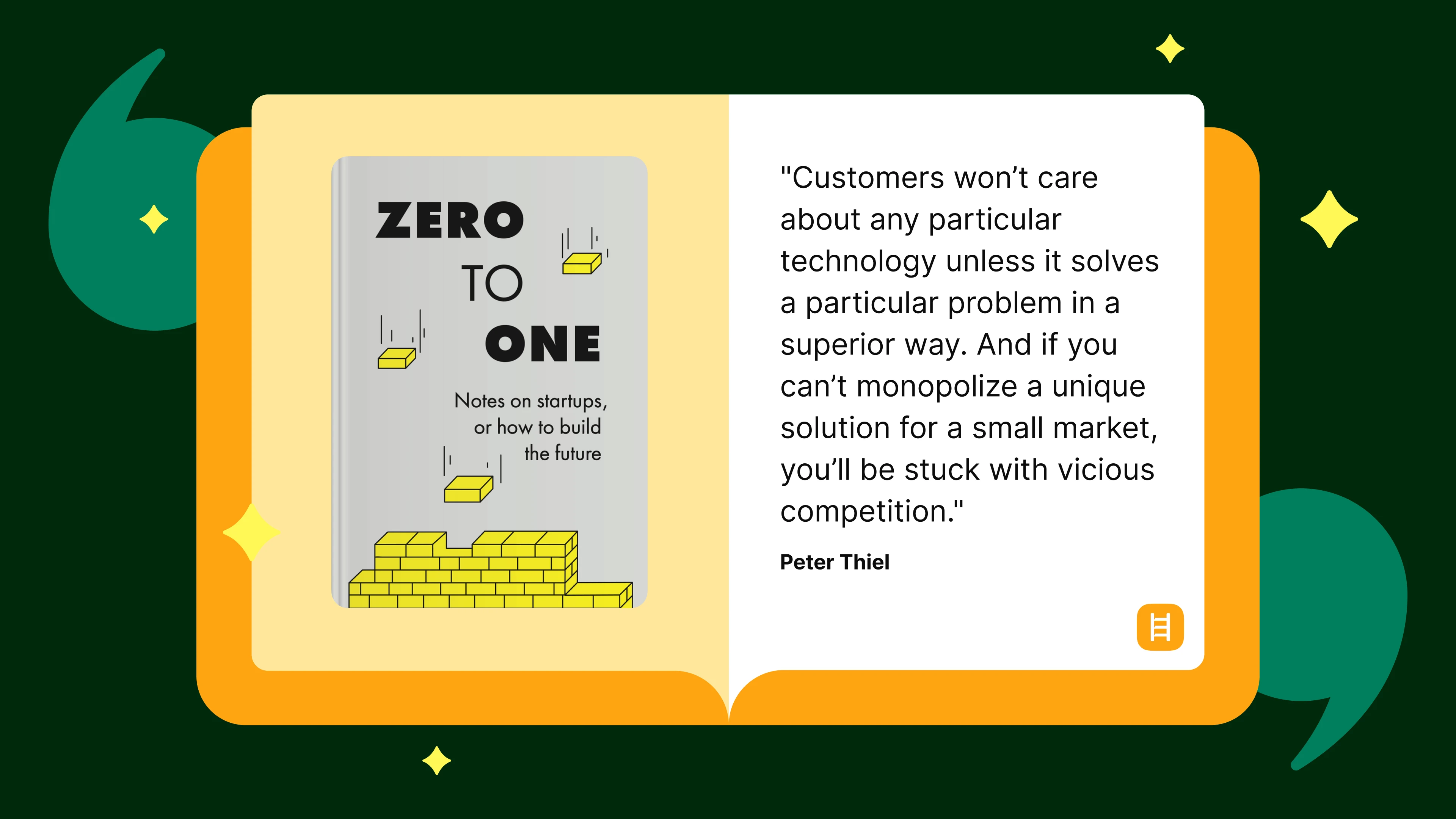
For more on scaling, ‘Zero to One’ by Peter Thiel is a valuable source. It’s packed with insights on building a business that stands out and can scale effectively.
"Customers won’t care about any particular technology unless it solves a particular problem in a superior way. And if you can’t monopolize a unique solution for a small market, you’ll be stuck with vicious competition."
Now, I know what you’re thinking, “This all sounds great, but how do I actually get this show on the road?”
Your no-money startup action plan
Ultimately, starting a business with no money is all about working with what you’ve got. Your skills, your time, your hustle. It might mean starting small, maybe a side gig while you’re still working your 9-to-5. Test things out, learn from your mistakes when you mess up, and keep pushing.
And let me tell you something — not having money to start is actually your secret weapon. It makes you creative. It makes you hustle harder. It makes you focus on what really matters. When you can’t throw money at problems, you develop skills that money can’t buy.
Remember, this entrepreneurship game isn’t just about the money. It’s a mindset. It’s about seeing the chance when everyone else is seeing the problem. It’s about having the guts to try, fail, and get back up again.
Starting a business with no money isn’t easy, but it’s possible. I’ve done it, and I’ve seen countless others do it too. It’s about being resourceful, being willing to learn, and being persistent.
You’re going to face challenges, and there’ll be times when you want to give up. But remember why you started. Remember that dream you have of building something of your own, of creating value, of making an impact.
And remember, you don’t have to do it alone. There’s a whole community of entrepreneurs out there who’ve been where you are. Connect with them. Learn from them. Support each other.
Launch your business with Headway’s expert guidance
As you can see, starting a business without huge amounts of startup capital is entirely possible. Bootstrapping is very common these days, and with plenty of hard work and strategic thinking, it can lead to amazing places, whether you leverage crowdfunding platforms or take another route.
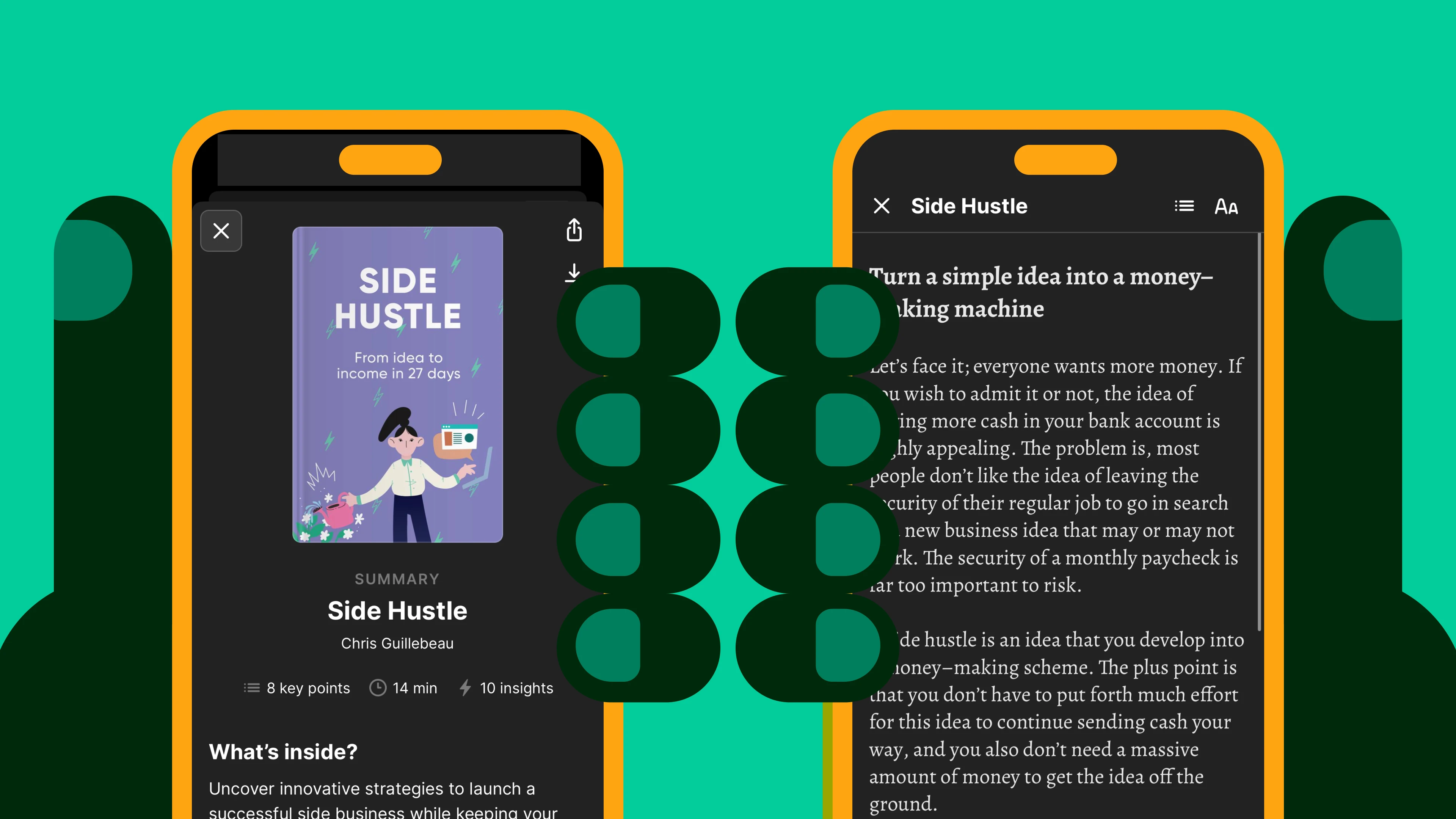
If you’re ready to dive deeper into this, I’ve got something for you. Head over to the Headway app. We have summaries of game-changing books like ‘Side Hustle’ by Chris Guillebeau, ‘The $100 Startup,’ ‘The Lean Startup,’ and ‘Zero to One’ — all the books I mentioned and more. It’s like a cheat code for success. You can get years of entrepreneurial wisdom condensed into bite-sized chunks that you can actually use in just 15 minutes of reading or listening.
With all these insights in your pocket, you’ll learn proven strategies from successful business owners who started exactly where you are. Whether you’re exploring e-commerce, considering a service-based business, or planning your marketing strategy, Headway gives you the knowledge you need without the time commitment.
The only thing holding you back is you. Download Headway now and transform your business idea into reality. Your startup journey starts today — no money required, just action.
Frequently asked questions on starting a business with no money
How to start a business with no money or experience
Start by leveraging skills you already have — freelance writing, virtual assistance, or social media management require zero capital. Learn as you go through free online resources and podcasts. Begin with a simple business plan, use free tools like Canva and Google Workspace, and test your idea small before scaling. Experience comes from doing.
What is the easiest business to start with no money?
Service-based businesses are your best bet — freelance writing, virtual assistance, social media management, or online tutoring. You only need your skills and an internet connection. No inventory, no overhead, no startup costs. You can literally start today by reaching out to potential clients on LinkedIn or joining freelance platforms like Upwork.
What is the 6-month rule in business?
The 6-month rule suggests keeping enough savings to cover six months of living expenses before quitting your day job to pursue your business full-time. It's your financial safety net that lets you focus on growing your startup without panic. However, many entrepreneurs build their businesses as side hustles first.
Is $5000 enough to start a business?
Absolutely. $5,000 can comfortably launch most service-based or online businesses. You could invest in branding, a website, initial marketing, and tools while keeping a cushion for unexpected expenses. Many successful businesses started with far less. The key is to spend strategically on activities that directly generate revenue, not on fancy offices.
What is the cheapest successful business to start?
Freelance services — writing, graphic design, bookkeeping, or virtual assistance — cost virtually nothing to start. You need your existing skills, a laptop, and an internet connection. Other low-cost winners include dropshipping, affiliate marketing, social media management, and online coaching. All can be profitable with minimal investment, just serious hustle and smart marketing.