Self-growth
 Business & Career
 Success
 Communication
 Healing
 Relationships
 Psychology
 Happiness
Ever feel like your parents still treat you like you're twelve, even though you pay your own bills?
There is no question whether you love your parents, and obviously, you want to have a good relationship with them. However, they sometimes tend to overstep: showing up unannounced or giving advice you didn't ask for.
Most of us hit this as we grow from adolescence to adulthood, and the dynamic shifts. You're not a kid anymore, but they haven't adjusted. Learning how to set boundaries with parents protects your wellness and the relationship. Without healthy boundaries, you end up resenting them while they have no clue why you're distant.
In this article, you'll learn the principles of boundary-setting with parents without wrecking things. It takes practice recognizing that your own needs matter as much as keeping the peace. But surely guilt hits different when it's the people who raised you.
In the Headway app, you can find 15-minute summaries on communication for every possible life scenario and growth plans like "Build long-term relationships." Use this knowledge to avoid awkwardness when it comes to the people you love.
📘 Download Headway and start setting boundaries that your parents will actually respect.
Quick answer: How to set boundaries with parents
Figure out what bothers you — Reflect on specific actions making you uncomfortable. Constant unsolicited advice? Showing up unannounced? Making decisions for you? Identify what needs to change before you talk to them about it.
Say it clearly and respectfully — Pick a calm moment when everyone's relaxed. Use "I" statements like "I feel overwhelmed when you make decisions without asking me." Be specific about your boundaries so there's no confusion about what you mean.
Stand firm when they push back — Change is hard, and they'll probably resist or guilt trip you. Stay patient, but don't backtrack. Gently remind them of what you said. It might take several conversations before they actually adjust to the new dynamic.
What does it mean to set boundaries with your parents?
The first thing to mention is what it actually means to set boundaries. By definition, setting boundaries with your parents means laying out what you will and won't accept in various situations. Basically, boundary-setting is about communicating your needs, limits, and expectations clearly and respectfully.
This practice helps to ensure that everyone's personal space, values, and emotions are acknowledged and honored. It's the ultimate act of self-care and will certainly boost your self-esteem.
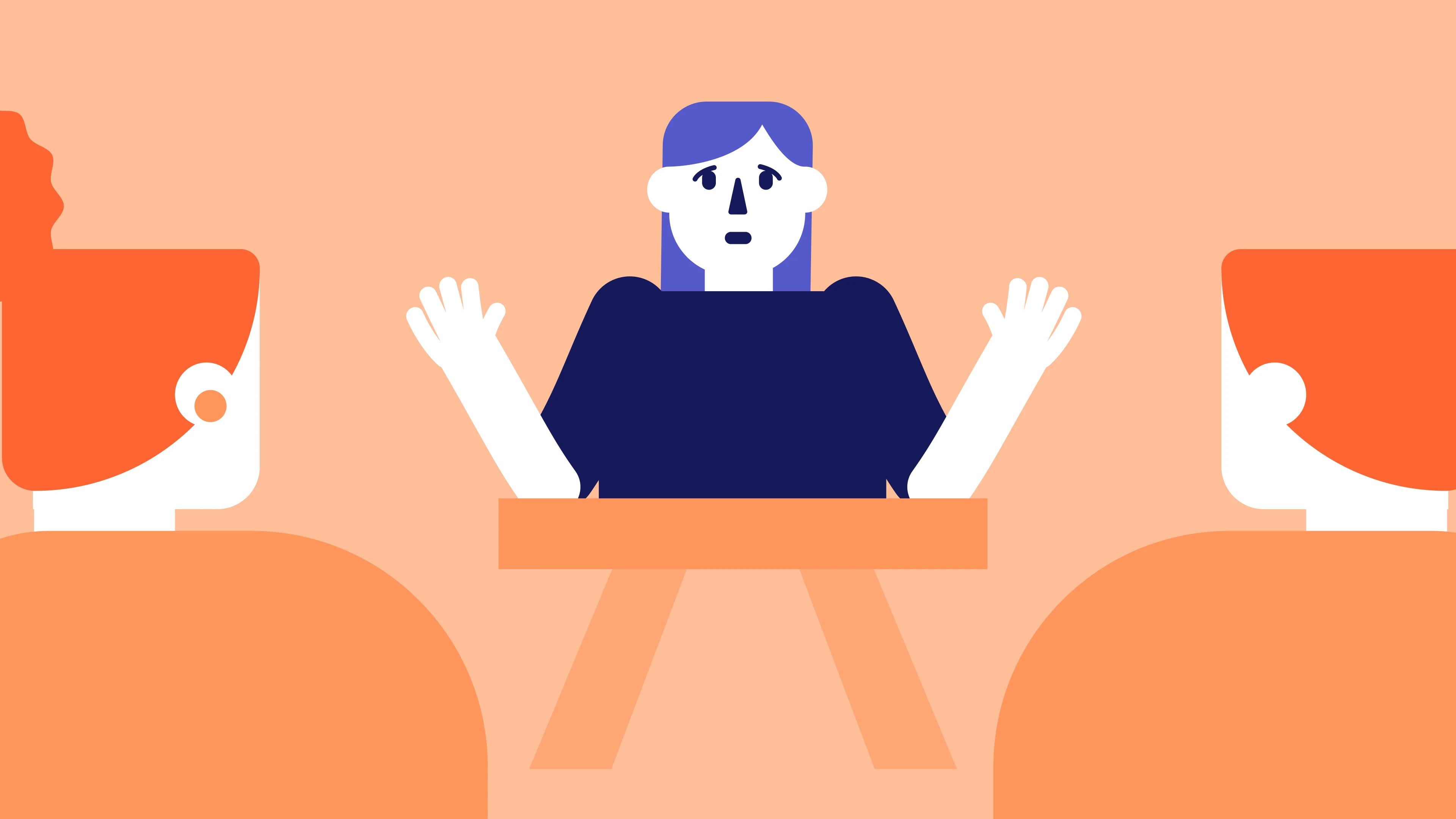
For example, you might set boundaries around your privacy. You might choose to ask them to knock before entering your room. You could also set boundaries around your communication preferences, such as preferring texts over phone calls during busy workdays.
It can also involve setting emotional boundaries, asking that conversations about sensitive topics be approached with care or, in certain contexts, avoided. If you have controlling parents, setting boundaries is even more vital.
The key to setting boundaries effectively with a family member is to be assertive but loving, making it clear that your intention is to strengthen your relationship rather than create distance. Preparing what you want to say in advance and choosing a good time to talk when everyone is calm and attentive is also helpful.
Remember, it's normal for this process to involve a bit of negotiation and ongoing communication as both you and your parents or caregivers adapt to the new boundaries. You can even take it further, perhaps to your extended family.
Why is setting boundaries with parents important?
We love our parents, and we know they want us to be happy, but sometimes their idea of how that works differs from ours. Setting boundaries might seem too awkward, but it plays a crucial role in maintaining healthy relationships with parents.
In her book, 'Adult Children of Emotionally Immature Parents,' Lindsay C. Gibson talks about how some parents can be emotionally immature and can often respond to their children's needs in a superficial, self-involved, or dismissive way.
This approach is damaging as it can lead to emotional detachment in adulthood and codependency. For that reason, boundaries are vital, whether you believe your parents fall into the category of toxic parents or not.
"Remember, your goodness as a person isn't based on how much you give in relationships, and it isn't selfish to set limits on people who keep on taking."
📘 Start setting boundaries today — Download Headway for practical advice.
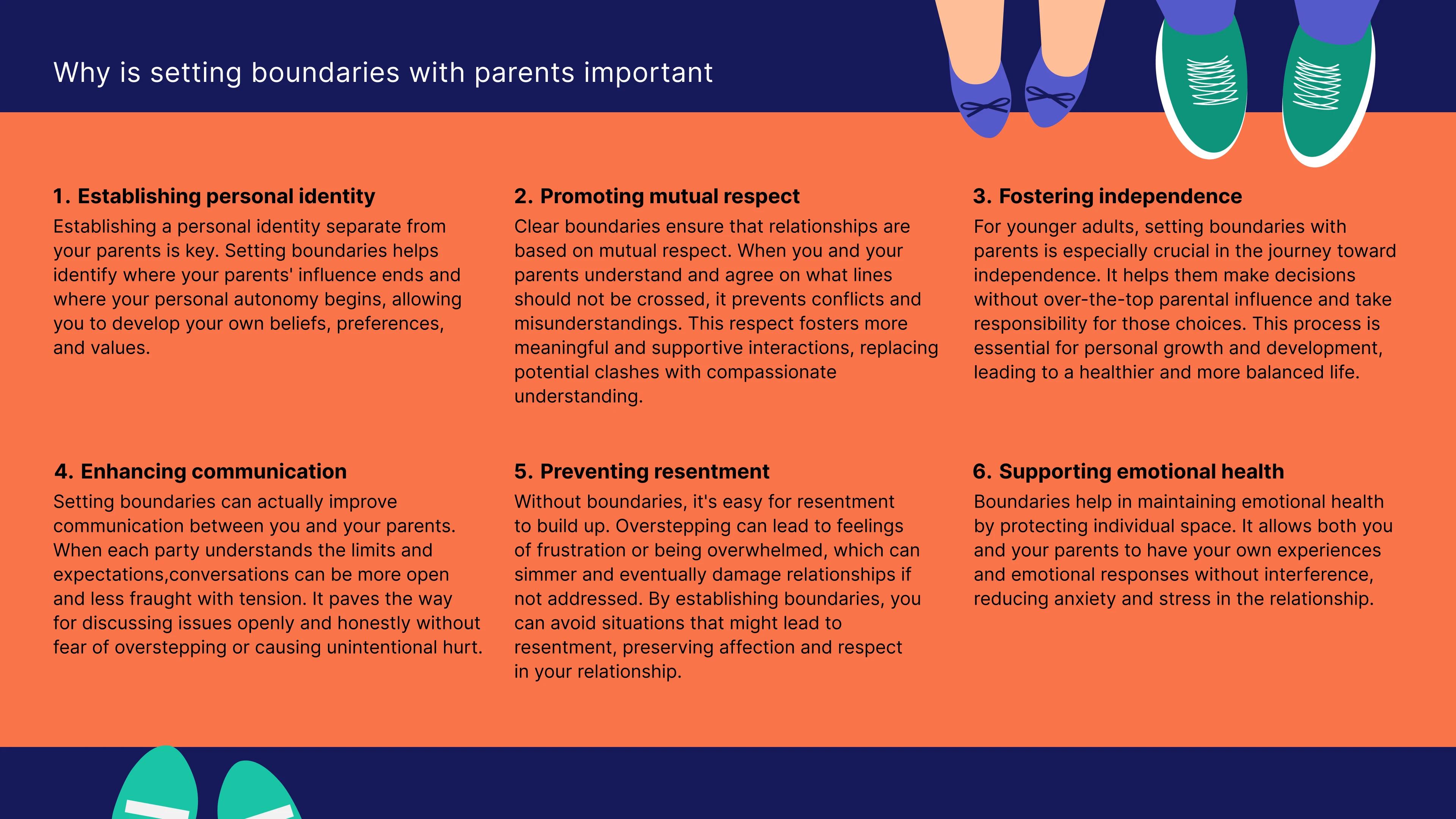
1. Establishing personal identity
Establishing a personal identity separate from your parents is key. Setting boundaries helps identify where your parents' influence ends and where your personal autonomy begins, allowing you to develop your own beliefs, preferences, and values.
2. Promoting mutual respect
Clear boundaries ensure that relationships are based on mutual respect. When you and your parents understand and agree on what lines should not be crossed, it prevents conflicts and misunderstandings. This respect fosters more meaningful and supportive interactions, replacing potential clashes with compassionate understanding.
3. Fostering independence
For younger adults, setting boundaries with parents is especially crucial in the journey toward independence. It helps them make decisions without over-the-top parental influence and take responsibility for those choices. This process is essential for personal growth and development, leading to a healthier and more balanced life.
In her book 'Set Boundaries, Find Peace,' Nedra Glover Tawwab talks about how parental relationships often carry old patterns and expectations that may not align with your current needs as an adult. Identifying and setting boundaries lets you reclaim your power as a unique and independent person.
"The hardest thing about implementing boundaries is accepting that some people won’t like, understand, or agree with yours. Once you grow beyond pleasing others, setting your standards becomes easier. Not being liked by everyone is a small consequence when you consider the overall reward of healthier relationships."
4. Enhancing communication
Setting boundaries can actually improve communication between you and your parents. When each party understands the limits and expectations, conversations can be more open and less fraught with tension. It paves the way for discussing issues openly and honestly, without fear of overstepping or unintentionally causing hurt.
5. Preventing resentment
Without boundaries, resentment can build easily. Overstepping can lead to feelings of frustration or overwhelm, which can simmer and eventually damage relationships if left unaddressed. By establishing boundaries, you can avoid situations that might lead to resentment, preserving affection and respect in your relationship.
📘 Learn how to communicate with your parents in a way that sticks. Get Headway now.
6. Supporting emotional health
Boundaries help in maintaining emotional health by protecting individual space. It allows both you and your parents to have your own experiences and emotional responses without interference, reducing anxiety and stress in the relationship.
Lindsay C. Gibson also mentions the two types of boundaries you should set with your parents: internal and external boundaries. Internal boundaries involve recognizing and adhering to your emotional and mental health needs. It includes acknowledging and validating your feelings rather than expecting recognition from your parents.
On the other hand, external boundaries involve physical or communicative limits that you set with your parents, like limiting visits or phone calls to a comfortable frequency or choosing not to discuss emotionally charged topics.
When to set boundaries with your parents
Setting boundaries can be crucial for your mental health, autonomy, and the development of your own identity. Here are some scenarios where setting boundaries with your parents might be necessary.



1) Privacy needs
As an adult, your need for privacy increases. This necessity could be related to your living situation, personal relationships, or financial matters. If, for example, your parents have a habit of dropping by your home unannounced, it might be time to kindly let them know that you prefer they call or text before visiting. This respects your space and helps cultivate a respectful mutual understanding.
You could say: "Mom, Dad, I love your visits, but I would really appreciate it if you could give me a quick call beforehand to check I'm not busy. That way, I can give you my full attention."
2) Life choices
Parents often have expectations and objective opinions about significant life decisions — be it career paths, partners, or lifestyle choices. If you feel pressured or overwhelmed by their input, this is a crucial area in which to set boundaries. Communicate openly about your need to make these choices independently, affirming that while you value their advice, the final decision must be yours.
A good example is: "I really value your advice, but I need to make decisions that feel right for me. I'll take your input into account, but please understand that the final decision will be mine."
3) Emotional independence
It's natural for parents to be emotionally involved in their children's lives, but it can sometimes become overbearing. Setting boundaries around emotional dependence is vital for your well-being. These boundaries should include communicating your need to handle some struggles on your own and assuring them that seeking their advice when needed isn't off the table.
Perhaps you could say: "I appreciate your concern and know you mean well, but I need to handle this situation on my own to learn and grow. I promise to reach out if I need some guidance."
📘 Start building better communication with your parents — Download Headway for more.
4) Communication styles
Sometimes, we need to adjust how we talk with our parents as adults. If conversations frequently lead to arguments or stress, setting boundaries around communication can help manage them more effectively. Express your desire for respectful, calm discussions and agree to take a break if the conversation heats up.
Something like: "I think we both get heated quickly when we discuss this topic. Maybe we can try to only discuss one aspect at a time and take a break if we feel it’s getting too intense. That way, we can keep our conversations constructive."
5) Financial independence
Many young adults strive for financial independence from their parents. If your parents are used to managing or commenting on your financial decisions, it might be time to set firm boundaries in this area. Make it clear that while you appreciate past support, you are now taking full responsibility for your financial matters.
Say: "I'm really grateful for your help, but I think it's time I try handling it on my own. I'll reach out for advice if I need some guidance."
Is it disrespectful to set boundaries with parents?

This question is common, and feeling awkward or even worried about setting boundaries is entirely normal. The first time, you might worry that your parents will misunderstand and take it as disrespect.
They might even try to guilt trip you afterward, causing you to wish you'd never said anything. But you're a grown-up now, and it's time to set your own lines in the sand. It's normal to have a hard time with this process, but it's vital to work through it.
However, it's important to remember that setting boundaries with parents is not disrespectful. In fact, establishing clear, healthy boundaries can be a sign of maturity and respect for yourself and your parents. It acknowledges that both parties have needs, preferences, and personal spaces.
Respectful boundary-setting involves clear communication and sensitivity to each other's feelings, and can lead to healthier, more fulfilling relationships. It is an important step in the journey towards mutual respect and understanding in any familial relationship.
"The hardest thing about implementing boundaries is accepting that some people won't like, understand, or agree with yours. Once you grow beyond pleasing others, setting your standards becomes easier. Not being liked by everyone is a small consequence when you consider the overall reward of healthier relationships." — Nedra Glover Tawwa
How do I set boundaries? A step-by-step guide
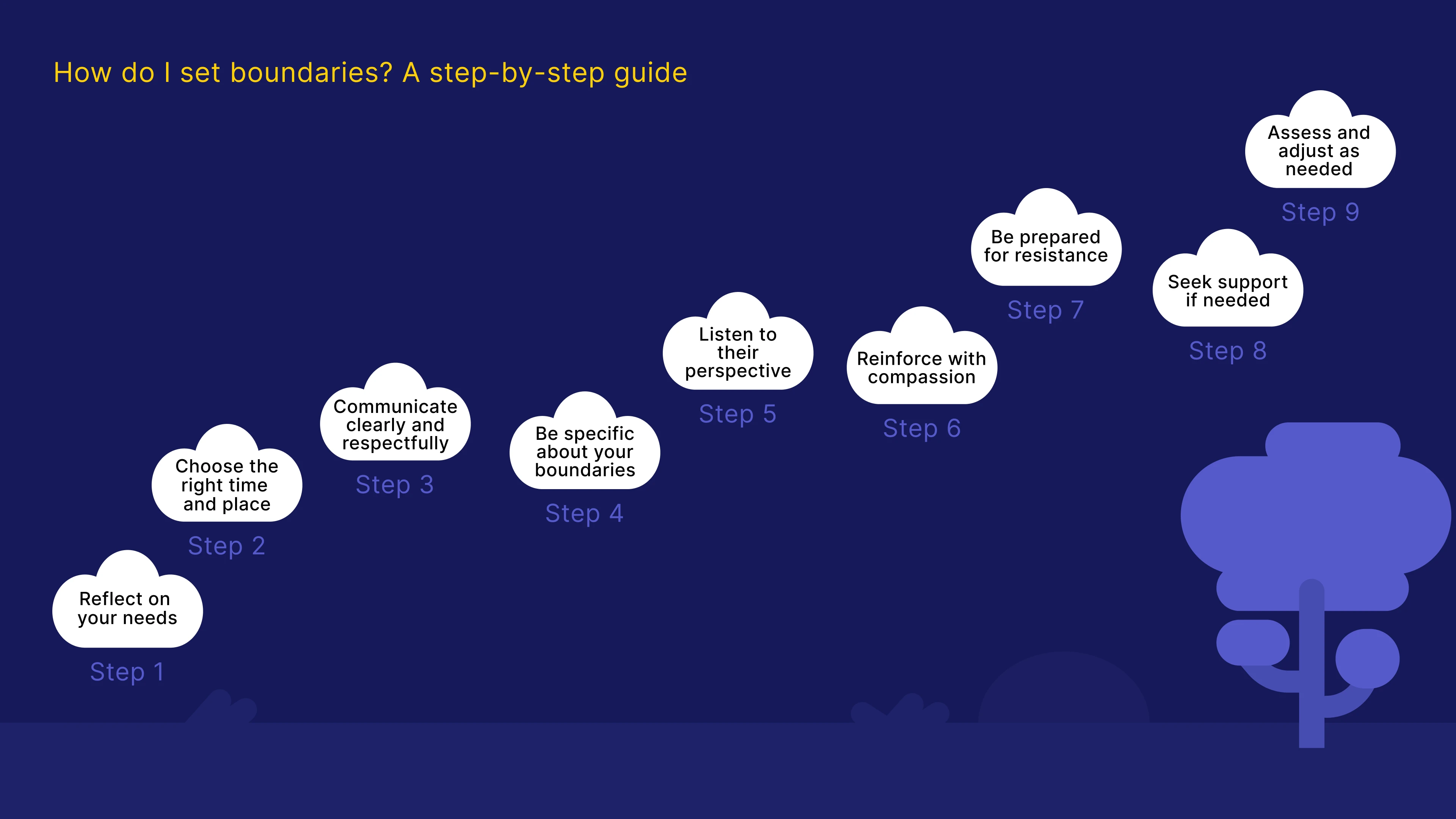
Establishing personal boundaries with your parents can seem daunting, but you’ll be so glad you did it. Whether you're an adult moving forward in your own life or a teenager beginning to assert your independence in your personal life, clear boundaries help maintain balance and understanding while giving you a stronger sense of self.
Here's a step-by-step guide to help you through the process:
Step 1: Reflect on your needs
Before initiating a conversation, take some time to reflect on what aspects of your relationship with your parents you would like to change. Identify specific actions or behaviors that make you uncomfortable or hinder your independence.
Understanding your feelings and needs is the first critical step in setting boundaries. It could be that you don't like constant unsolicited advice or that you need independence with your finances. Whatever it is, identify it clearly.
In his book, 'Boundaries,' Dr. Henry Cloud talks about the importance of knowing which areas bother you the most. It may be that some areas don't need work, but others require strong boundaries to ensure happiness and independence. Common boundary-setting areas include emotional space, financial independence, and decision-making autonomy.
"Boundaries define us. They define what is me and what is not me. A boundary shows me where I end and someone else begins, leading me to a sense of ownership. Knowing what I am to own and take responsibility for gives me freedom. Taking responsibility for my life opens up many different options. Boundaries help us keep the good in and the bad out. Setting boundaries inevitably involves taking responsibility for your choices. You are the one who makes them. You are the one who must live with their consequences."
Step 2: Choose the right time and place
Find a suitable time when you and your parents are relaxed, and there's enough time to have a thorough discussion without interruptions. A quiet, private setting is ideal as it allows everyone to be more open and less defensive.
Step 3: Communicate clearly and respectfully
Begin the conversation with appreciation, acknowledging your parents' love and care. Use "I" statements to express your feelings and needs without sounding accusatory. For example, say, "I feel overwhelmed when you make decisions for me without asking. I need to feel more independent in making my choices."
Step 4: Be specific about your boundaries
Clearly define what your boundaries are. For instance, if you need more privacy, be specific about what that means — perhaps not entering your room without knocking or not looking through your personal items. Clarity prevents misunderstandings.
Step 5: Listen to their perspective
Allow your parents to share their feelings and thoughts. They might have concerns or fears about your independence that they need to address. Listening and acknowledging their feelings can help them understand why setting these boundaries is important to you.
📘 Want to improve your family relationships? Headway has the tools you need.
Step 6: Reinforce with compassion
Reiterate that setting boundaries is not a rejection but a step toward a healthier relationship. Emphasize that these boundaries will help you grow and maintain a loving and respectful relationship.
Step 7: Be prepared for resistance
Change can be hard, and not all boundaries may be accepted immediately. Stay calm and patient, and gently remind your parents of the agreed boundaries if they overstep. It may take several conversations and adjustments to find a middle ground.
Dr. Henry Cloud also mentions that it's important to be compassionate, but equally necessary to stand your ground. You may notice that your parents start to guilt trip you, and it can be easy to backtrack on your boundaries. It's vital to stand firm in your convictions.
"When we begin to set boundaries with people we love, a really hard thing happens: they hurt. They may feel a hole where you used to plug up their aloneness, their disorganization, or their financial irresponsibility. Whatever it is, they will feel a loss. If you love them, this will be difficult for you to watch. But, when you are dealing with someone who is hurting, remember that your boundaries are both necessary for you and helpful for them. If you have been enabling them to be irresponsible, your limit setting may nudge them toward responsibility."
Check out the '7 Red Flags in Relationships' article to spot the alarming behaviors.
Step 8: Seek support if needed
Consider seeking support if you find it challenging to communicate or if your boundaries meet significant resistance. A family counselor in any format (face-to-face or online therapy) can provide guidance and help mediate discussions to ensure everyone's feelings and needs are addressed.
Step 9: Assess and adjust as needed
Over time, reassess how the boundaries are working for your relationship. As life changes, so too might your needs; it's alright to adjust boundaries as necessary, keeping the lines of communication open.
By taking these steps, you can build a nurturing and respectful relationship with your parents that acknowledges your growing autonomy. Remember, setting boundaries is not just about asserting what you don't want but also about fostering an environment where all parties feel valued and understood.
Use Headway for setting better boundaries with parents!
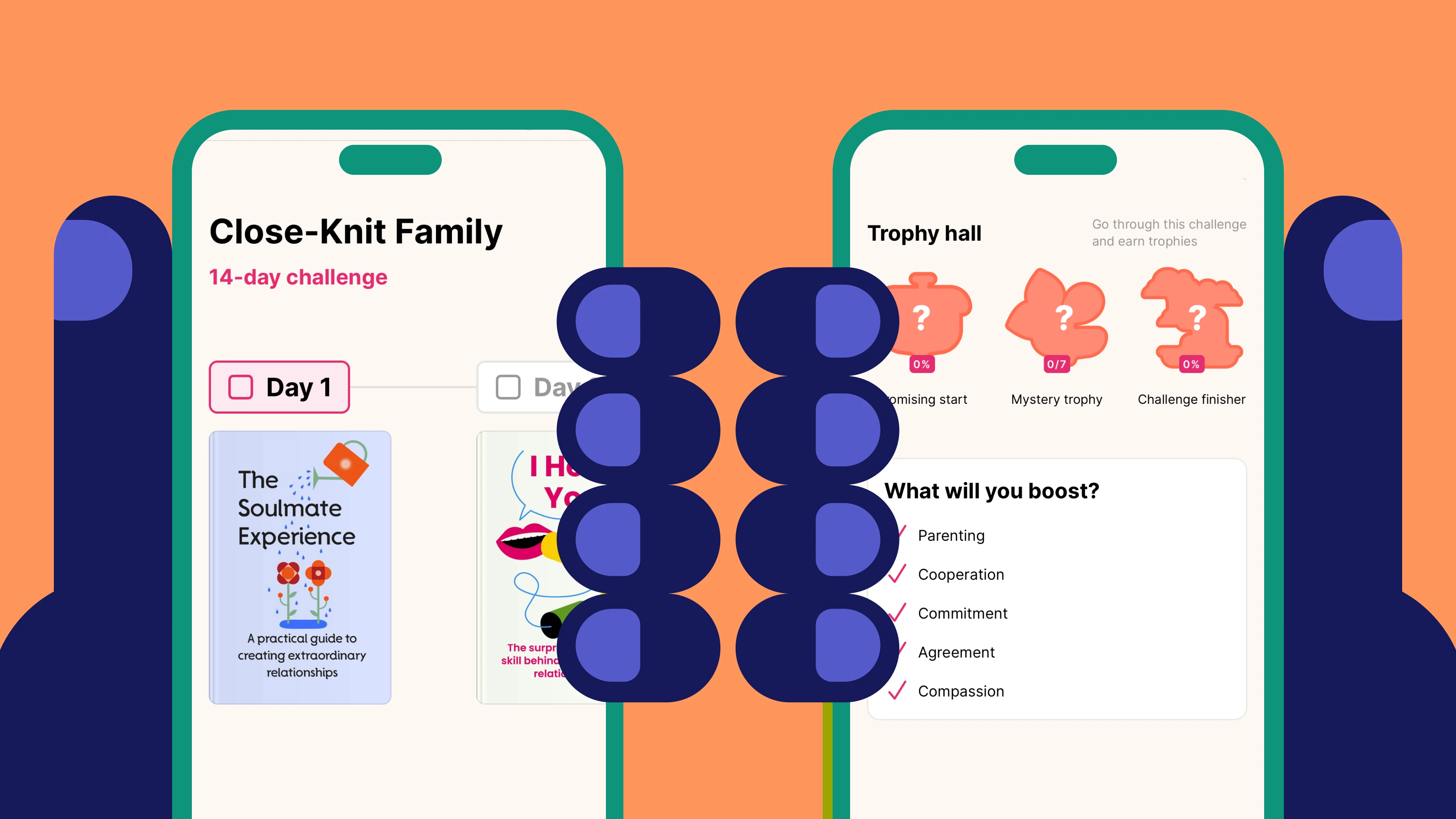
Learning how to set boundaries with parents protects the relationship and your independence. Setting boundaries feels hard because you worry about hurting their feelings. But without this step, you'll keep resenting them while they have no clue what's wrong.
Headway has book summaries on family dynamics and setting boundaries in a 15-minute format. You get expert advice and strategies you can use when guilt tries to talk you out of it.
📘 Ready to create healthier boundaries? Get Headway and start learning.
FAQs about how to set boundaries with parents
What are examples of parental boundaries?
Setting boundaries with parents can be as simple as asking them to call before visiting or telling them you need some space to think. It could also be about not accepting unsolicited advice all the time. It's about finding ways to protect your own space while still respecting them.
How to gentle parent with boundaries?
Gentle parenting with boundaries is about being clear but still kind. You can say things like, "I need some quiet time now," or "Please talk to me calmly." You set limits, but in a way that helps them understand without feeling rejected. It's about balance and respect for both sides.
How to set boundaries with a toxic parent?
When dealing with a toxic parent, it's important to be straightforward. You might say, "I can't tolerate being yelled at" or "Please don't talk to me that way." It's about standing firm and not letting guilt get in the way. It might be tough, but it's essential for your own peace.