Self-growth
 Apps & Digital Tools
 Business & Career
 Success
 Growth Tools
 Psychology
 Communication
 Relationships

The recent study by the Gottman Institute says it's possible to predict a divorce from the first three minutes of conflict. But does it always involve shouting? In reality, most fights start small: an eye roll that landed wrong, a silence after an argument nobody meant to start.
Learning how to communicate effectively in a relationship usually comes down to fixing these tiny moments before they pile up. This guide will give you essential problem-solving tips and communication hacks from relationship books like 'Nonviolent Communication, 'Hold Me Tight,' and more.
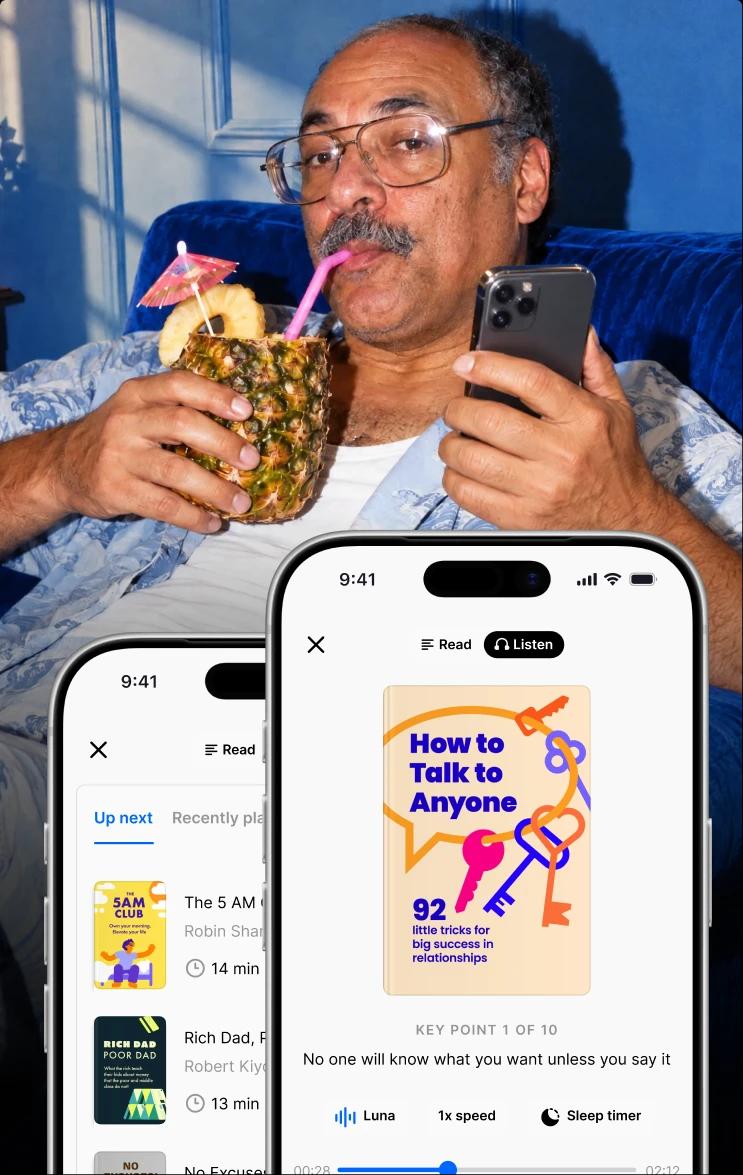
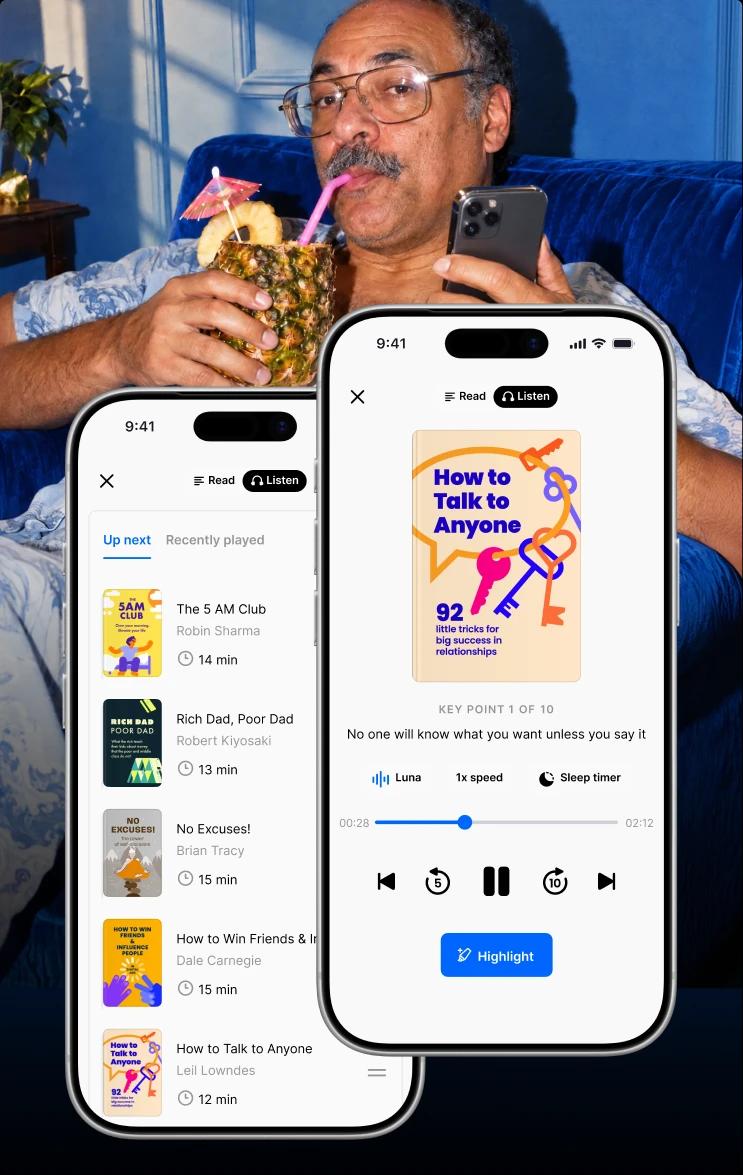
If you want a faster way to get these ideas into your daily life, the Headway app breaks books like these into 15-minute summaries you can listen to on your commute.
Download Headway and start building a stronger communication habit today.
Quick summary: How to communicate effectively in a healthy relationship
Here's the short version before we get into the details.
Effective communication in a relationship means both partners feel heard, not just informed, which is as much about active listening as it is about talking.
The most damaging communication patterns, like criticism, defensiveness, contempt, and stonewalling, can be unlearned with small, consistent changes.
Body language, eye contact, and tone of voice carry more emotional weight than your actual words most of the time.
Understanding your partner's feelings and communication style stops a lot of communication issues before they even start.
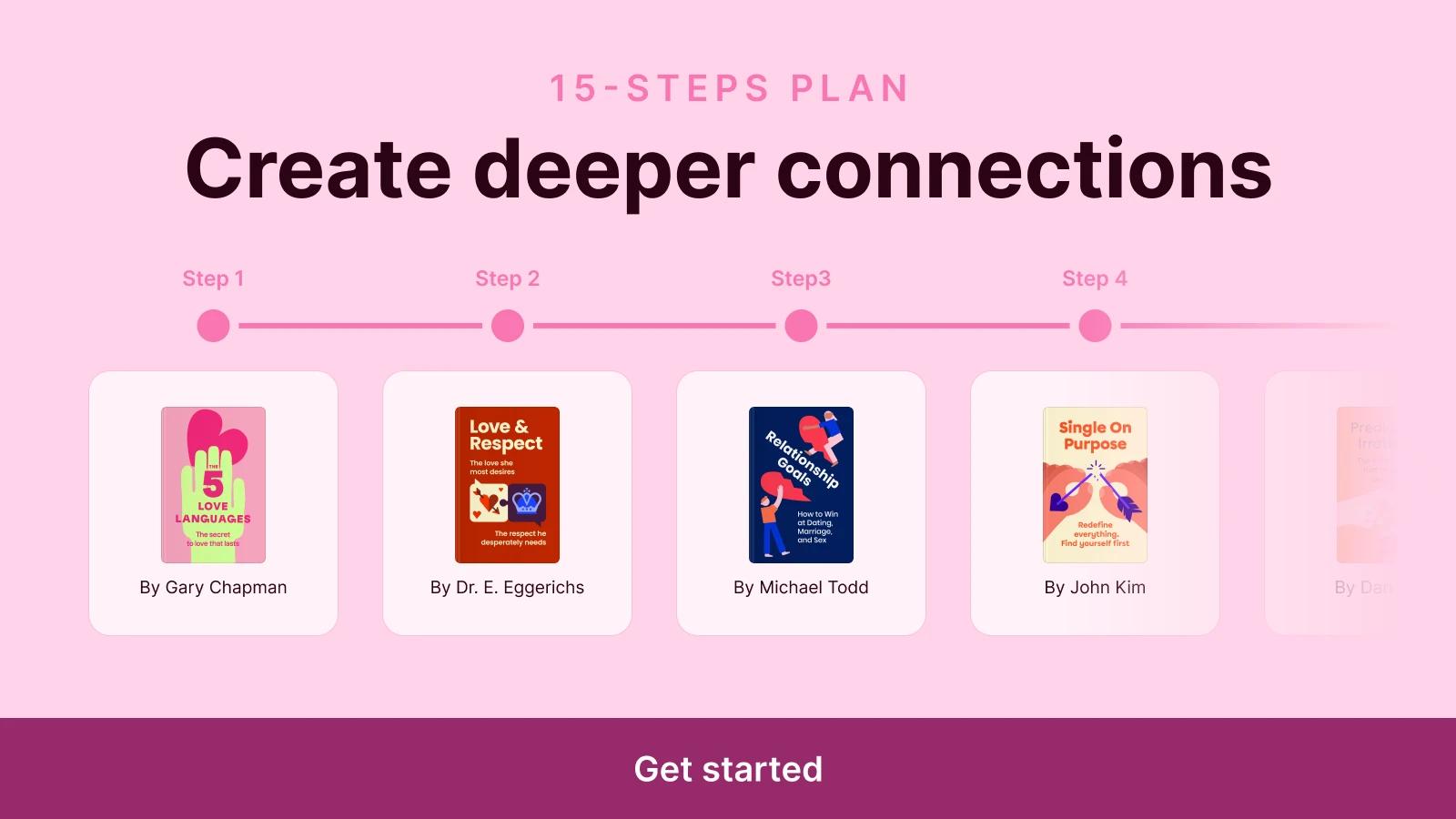
Books like 'The 5 Love Languages' by Gary Chapman and 'Crucial Conversations' offer frameworks you can borrow instead of guessing your way through hard talks.
Keep reading for the full breakdown, including a practice plan you can actually stick to.
How to communicate better during conflict: Before, during, and after
Most communication advice focuses on calm conversations. Conflict is where those skills actually get tested, and staying positive under pressure makes a real difference in how these moments play out.
Before:
Notice when your body starts signaling that things are escalating, like a tighter chest or a faster voice. Take a few deep breaths; that's the moment to slow down, not push through.
Agree on a pause signal with your partner ahead of time, one that means "I need a few minutes" rather than "I'm done with this conversation."
During:
3. Stay on one topic. When several grievances surface at once, nothing actually gets resolved.
4. Ask a question instead of making a statement. "What did you mean by that?" tends to de-escalate faster than "well, what I meant was."
5. Watch for contempt. Sarcasm and mockery cause damage that takes far longer to repair than the argument itself.
After:
6. Repair matters just as much as the conversation. A short acknowledgment, like "I got too heated; I'm sorry for what I said," goes further than pretending it didn't happen.
7. Come back to the original topic once you're both regulated enough to actually work through it.
Five practical tips from top books on relationship communication
Improving communication isn't a one-time fix. It's a set of habits built over time, and these five books each offer a different framework worth knowing before you commit hours to a full read.
When it comes to communication in marriage and how to build a strong marriage, the small details often matter as much as the big moments.
If you are looking for the best relationship books to guide your journey, or specifically need the best relationship books for couples, we have curated a list to help you grow.
Whether you’re learning how to be a better girlfriend or finding new ways to show love to your wife, these resources offer actionable steps.
1. Learn the language of interpersonal relationships
People don't always feel love and connection through the same channel. If one partner shows care through acts of service and the other through words of affirmation, they can both be trying hard and still leave each other feeling unseen. That mismatch is a communication problem, not a love problem.
Try this: ask your partner, "When do you feel most valued in our relationship?" Don't answer first. Just listen, write down what they say, and compare it to what you assumed the answer would be.

2. Say what you need without blame
Nonviolent communication is built on four parts: observation, feeling, need, and request. Instead of "you're always ignoring me," it becomes "When I'm talking and you look at your phone, I feel dismissed because connection matters to me. Could we put phones down during dinner?"
Try this: take a complaint you've raised more than three times and rewrite it using that four-part structure. Notice which part is hardest to name. It's usually the need.
3. Create emotional safety before you make your point
When people feel unsafe in a conversation, judged, criticized, or cornered, they stop listening and start defending. Better communication promotes emotional wellness, and the most effective communicators build safety before the actual content of the conversation ever comes up.
Try this: before your next hard conversation, ask yourself if your partner knows you care about their well-being even during this disagreement. If not, say that out loud first.

4. Understand why certain conversations feel like threats
What looks like poor communication often has avoidant attachment styles underneath it. When a partner withdraws or reacts strongly, they're usually responding to a perceived emotional threat, not a logic problem.
Try this: set aside time the next time a conversation escalates to pause and ask yourself, not your partner yet, "What am I afraid of losing right now?" Write it down. That answer is usually closer to the real relationship issues than whatever you were technically arguing about.
5. Give your full attention and let them feel it
Active listening is a skill, not a personality trait. The key technique is to listen fully, then reflect back before you respond: "so what I'm hearing is..." It slows the conversation down in a useful way and shows you were actually paying attention.
Try this: in one conversation this week, set yourself a rule not to respond until you can restate what your partner said in your own words, and they confirm you got it right.
📘 Get these frameworks in minutes with Headway!
What effective communication means in a relationship
Effective communication isn't the same thing as talking more. Plenty of couples talk constantly and still feel unheard. It's the difference between expressing yourself and actually being understood.
Healthy communication means both people feel safe saying what they mean, and both people feel genuinely heard in return. That's different from just trading information about schedules or chores.
There's also a difference between functional communication (logistics, calendars, who's picking up the kids) and connective communication (feelings, fears, hopes, needs). A lot of communication problems show up when couples only ever talk about the first kind.

Effective communication in a relationship is the ability to express your thoughts, needs, and emotions clearly while actively understanding your partner's point of view, in a way that builds trust, reduces miscommunication, and helps both people feel seen.
📘 Build stronger daily habits and better mental health with Headway!
Four communication patterns that quietly wreck relationships over time
Most people can spot a bad argument. Fewer notice the slow, everyday habits that make a relationship feel a little quieter and a little more distant every month. These four patterns are the ones relationship researchers watch for most closely, and left unchecked, they're often early red flags in relationships worth paying attention to.
Pattern | What it sounds like | What's usually underneath | A healthier alternative |
Criticism | "You never follow through on anything." | Frustration about one specific behavior. | "When plans change last-minute, I feel stressed." |
Defensiveness | "That's not fair, you do the same thing." | Fear of being blamed or seen as wrong. | "I hear that. Let me think about what you said." |
Contempt | Eye-rolling, sarcasm, mockery. | Resentment that's built up over time. | Naming a need directly before it turns into a grievance. |
Stonewalling | Going silent, shutting down, walking away. | Emotional overwhelm, not indifference. | "I need 20 minutes before we keep talking." |
Contempt is the single strongest predictor of relationship breakdown. It has a lot in common with how you'd describe dealing with toxic people outside a relationship too, which is worth keeping in mind if the pattern feels familiar.
Make your relationships work (from any stage)
Get practical tips for improving your communication with your significant other.
Start a quizHow to listen so your partner feels heard
Most people spend more time planning their response than listening to what's actually being said. That's the opposite of active listening, and it's one of the biggest sources of communication issues in relationships.
Active listening isn't passive. It takes real attention, some reflection, and the discipline not to jump in halfway through. Three things make listening feel real to the person talking: facing them and keeping eye contact, verbally acknowledging what they said ("I hear you," "tell me more"), and reflecting back before you respond.
There's a real difference between listening to understand and listening to respond. The second one usually leads to two people talking over each other without either one actually landing their point.
It is also about knowing how to have deeper conversations with your partner, moving beyond daily logistics to foster a true emotional connection.
Try this rule: listen for the feeling first. Before you respond to the content of what your partner says, try to name the emotion underneath it. If they say "you're always on your phone during dinner," the content is about the phone. The feeling underneath is probably "I don't feel like a priority right now."
📘 Practice active listening with Headway!
Body language, tone of voice, and the half of the conversation nobody talks about
Two people can both say "I'm fine" and mean completely different things. That gap between the words and nonverbal communication is where a lot of miscommunication actually lives.
Nonverbal cues and tone of voice carry more emotional information than the words themselves. This has held up across decades of research on couples and communication styles.
A few signals worth paying attention to: posture during a hard conversation, a flat tone when something emotional comes up, or avoiding eye contact when a topic gets uncomfortable.
Here's the mismatch problem: when your words say one thing, and your body says another, your partner will trust your body language over your words almost every time.
Signal | Common interpretation | What it might mean |
Avoiding eye contact | Disinterest or dishonesty. | Shame, overwhelm, or just processing. |
Crossed arms | Defensiveness. | Feeling cold, tired, or self-soothing. |
Flat, monotone voice | Indifference. | Emotional shutdown or suppression. |
Checking phone mid-talk | Not taking it seriously. | Habit, anxiety, or discomfort with the topic. |
Before a hard conversation, it helps to pay attention and check in with your own physical state first. Are you tense? Distracted? Already a little closed off? Your partner will pick up on it either way.



How to say what you need without putting your partner on the defensive
There's a real difference between sharing a feeling and launching an accusation, even when you're feeling the exact same thing underneath.
The classic structure looks like this: "I feel [emotion] when [specific situation] because [what I need]." Compare that to "you always" or "you never" or "why do you always do this?" Accusation language tends to trigger defensiveness, which shuts down the exact listening you were hoping to get in the first place.
Timing matters too. Raising a real need in the middle of an already stressful moment usually makes it harder for either of you to hear it clearly. This is also where setting boundaries in a relationship comes in, since a clear need is really just a boundary stated out loud.
Asking also lands differently than demanding. "Could we spend more time together this week?" tends to open a conversation. "You never make time for me" tends to close one. Vague complaints are also just harder to act on than specific, concrete observations.
If you tend to freeze up finding the right words in the moment, working on becoming a well-spoken person can help you get your point across more clearly, even under pressure.
📘 Ask for what you need with Headway!
Why Headway works for building better relationship communication
Headway turns books like these into 15-minute summaries you can read or listen to, so you get the framework without needing to finish five separate books first. Everything's built around a personalized growth plan based on what you actually want to work on.
Spaced repetition and highlights help the ideas stick instead of fading after a week. Offline mode means you can listen even without signal, and CarPlay and Android Auto support turns your commute into practice time.
Daily streaks keep the habit going without turning it into another chore on your to-do list.
Start building your communication toolkit with Headway
Learning how to communicate effectively in a relationship isn't about one big conversation that fixes everything. It's about small, repeatable habits: listening a little better, naming your needs a little more clearly, and catching contempt or stonewalling before they take root.
The books above represent decades of relationship research and clinical practice. Reading all five in full would take months. Headway distills each one into a 15-minute summary, in text or audio, so you can borrow the framework that fits how you and your partner actually think.
If you're ready to stop guessing your way through hard conversations, download the Headway app and start with just one summary today.
Small steps here really do add up.
FAQs about how to communicate effectively in a relationship
What is effective communication in a relationship?
Effective communication in a relationship means both partners can express their thoughts and needs clearly while genuinely understanding their partner's point of view. It's not just about talking more; it's about active listening, honest communication, and making sure both people feel heard instead of just informed.
Why is communication so important in a relationship?
Communication is the foundation of a fulfilling relationship because most conflict traces back to unmet needs, not actual incompatibility. Good communication skills build mutual understanding, reduce communication problems over time, and help both partners feel emotionally safe even when they disagree on something.
What is passive-aggressive communication and why does it hurt intimate relationships?
Passive-aggressive communication happens when someone expresses frustration indirectly, through sarcasm, silence, or subtle digs, instead of saying what's actually bothering them. It avoids direct conflict in the moment, but it usually causes more damage over time than open communication would, since the real issue never gets addressed.
How do you communicate better with a partner who shuts down?
If your partner shuts down, avoid pushing for an immediate response. Try a pause-and-return approach: agree on a short break, then come back to the topic once both of you feel calmer. Stonewalling is often about feeling overwhelmed, not indifference, so patience usually works better than pressure.
How does body language affect communication in a relationship?
Body language, eye contact, and facial expressions often carry more emotional weight than the actual words being said. When your nonverbal cues don't match what you're saying, your partner will usually trust the nonverbal signal, which is why paying attention to your own tone of voice and posture matters.
What's the difference between how to communicate in a relationship and how to communicate better with your partner specifically?
"How to communicate in a relationship" usually covers general skills like active listening and healthy conflict resolution. "How to communicate better with your partner" gets more personal, since it depends on that person's specific communication style, attachment style, and love language, which is why one-size-fits-all relationship advice only goes so far.
When should couples consider couples therapy or couples counseling to navigate their own feelings?
Couples therapy or counseling is worth considering when communication issues feel stuck despite real effort, when conflict resolution consistently breaks down, or when one or both partners feel emotionally unsafe bringing up hard topics. A trained therapist can offer tools and perspective that are harder to build alone.
How can practicing active listening improve a romantic relationship overall?
Practicing active listening helps partners feel understood instead of just heard in passing. Over time, it builds trust, reduces defensiveness, and makes it easier to resolve disagreements without escalating. Couples who practice active listening regularly tend to report a stronger sense of connection and fewer repeated arguments.