Self-growth
 Business & Career
 Success
 Communication
 Healing
 Relationships
 Psychology
 Happiness
Have you ever walked away from a conversation with a nagging gut feeling that something was off — even though the other person said all the right things? Maybe their words were friendly, but their crossed arms and lack of eye contact told a different story.
The skill of reading people isn't some mysterious talent reserved for FBI profilers or poker champions. It's something anyone can develop with the right knowledge and practice. When you learn to decode body language, facial expressions, and tone of voice, you stop relying on words alone and start understanding what people actually mean.
This guide breaks down the fundamentals of nonverbal communication — from micro-expressions and eye movements to fidgeting and other body language cues. You'll discover how to pick up on people's emotions, recognize your own biases and preconceptions, and become more attuned to human behavior in different situations. Whether you're navigating a job interview, a first date, or a difficult conversation with a friend, these insights will sharpen your social skills and boost your emotional intelligence.
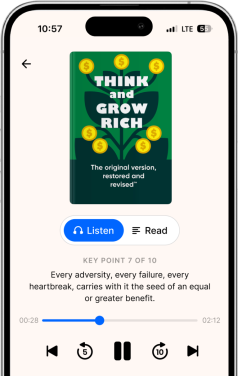
Want to go deeper? The Headway app offers 15-minute summaries of bestselling books on psychology, communication, and human behavior — including titles like 'How to Know a Person' by David Brooks and 'The Art of Reading Minds' by Henrik Fexeus. It's perfect for building your understanding of how to read others, one bite-sized lesson at a time.
📘 Decode people effectively with Headway.
Quick answer: How do you learn to read people?
Watch body language first. Crossed arms, fidgeting, and physical movements often reveal more than words. Notice what someone's posture and gestures communicate about their emotional state.
Pay attention to facial expressions. Micro-expressions — those split-second flashes of emotion — can expose a person's true feelings before they have time to hide them.
Listen to the tone of voice. How someone speaks matters as much as what they say. Changes in pitch, speed, or volume signal shifts in their state of mind.
Make eye contact (and observe theirs). Steady eye contact suggests confidence and honesty, while avoiding your gaze may indicate discomfort or deception.
Check your biases at the door. Your preconceptions and past experiences shape how you interpret others. Keep an open mind to see people as they are — not as you expect them to be.
Build rapport through empathy. Ask open-ended questions and genuinely listen. When people feel understood, they open up — and reading them becomes much easier.
The basics of reading people
You might assume that people will tell you everything you need to know through words. But unfortunately, life is never that easy! Social psychology makes things a little more complicated than that.
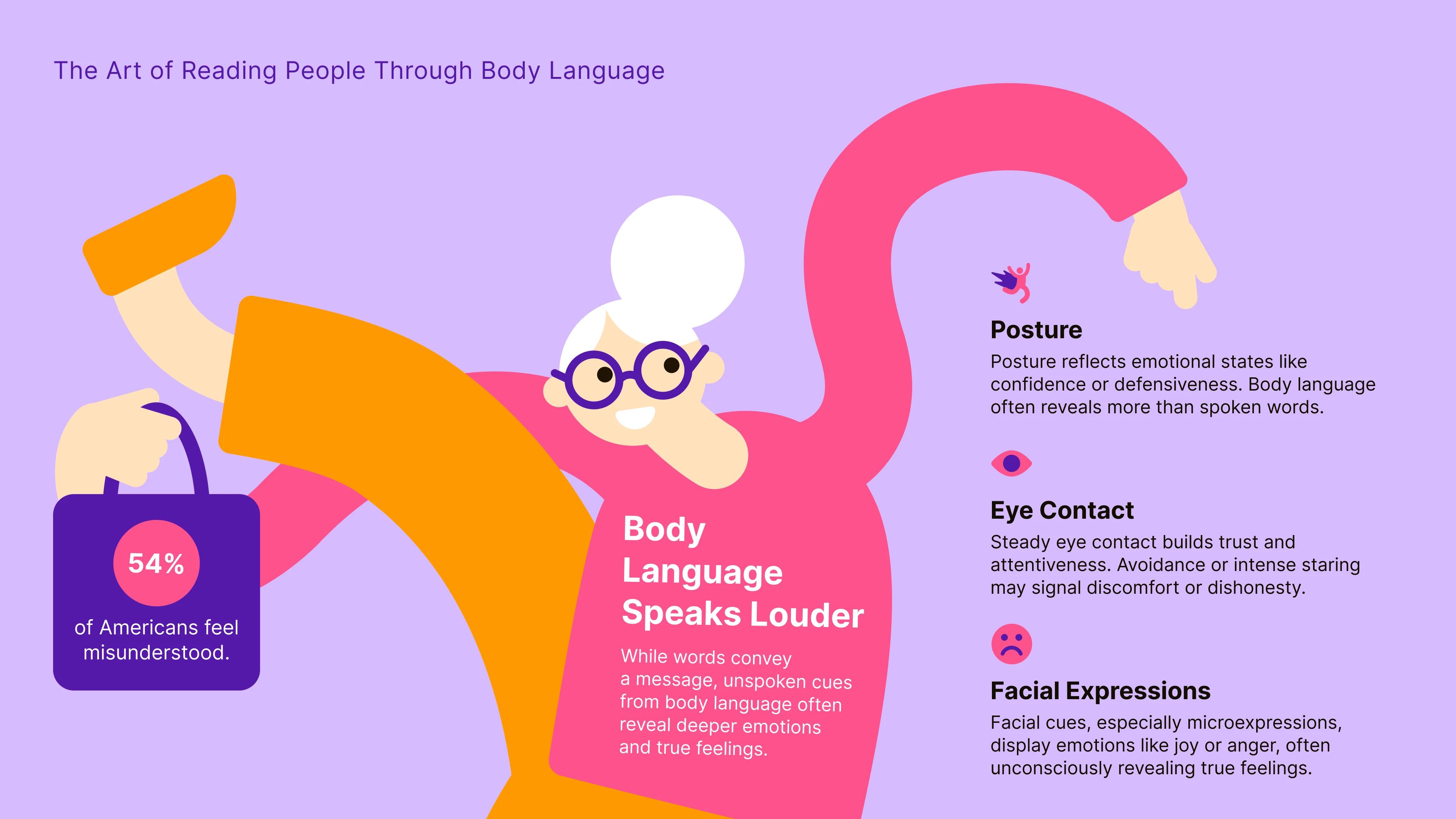
As David Brooks mentions in his book 'How to Know a Person: The Art of Seeing Others Deeply and Being Deeply Seen,' most people don’t feel understood by others. In fact, 54% of Americans feel misunderstood. Brooks says the main reason is that we tend to inflate our communication abilities and assume they’re better than they are. We also struggle with preconceptions about other people and situations and find it hard to shrug them off.
“We do not see things as they are, we see things as we are.” - David Brooks
While spoken words convey a message, it’s often the unspoken cues we receive through body language that reveal more about what a person feels. In fact, it is the essence of learning the skill of reading people.
At the core of this understanding are three fundamental aspects:
Posture
Posture is a powerful indicator of a person's frame of mind or emotional state. It can suggest self-confidence, openness, or defensiveness. Indeed, body language cues overall are some of the most powerful to understand and a critical form of nonverbal communication.
We will talk more about body language a little later, but in many cases, the body can speak far louder than words can.
Eye contact
Eye contact and eye movements play a critical role in interpersonal communication and learning how to read people. It can convey trust, attentiveness, and sincerity. Engaging in steady eye contact can help establish a rapport and indicate that a person is actively listening. However, the absence of eye contact or overly intense staring may reveal discomfort, distraction, or even dishonesty.
📘 Improve nonverbal awareness with Headway.
Facial expressions
Facial expressions can be particularly telling, as they often reflect our emotions more accurately than words might imply. Our faces are incredibly expressive and capable of conveying a range of feelings—from joy and surprise to sadness, anger, and disgust. Each expression can last just a fraction of a second, which leads us to the concept of microexpressions.
Microexpressions are involuntary, quick flashes of emotion that often betray a person's true feelings before they can conceal them. For instance, a fleeting grimace may suggest disdain even if the person tries to maintain a neutral demeanor. Training yourself to recognize these subtle cues can unlock deeper insights into what someone may be experiencing beneath the surface.
The importance of empathy
Empathy is one of those magical qualities that often go unnoticed but is a vital aspect of effective communication and understanding others. When you’re empathetic to those around you, you have a higher level of emotional intelligence. It can also help you make a better first impression.
It’s true that empathy allows us to tune into the feelings, dislikes, and experiences of others. By developing your empathy skills, you can become an emotional detective, piecing together clues from facial expressions, body language, and tone of voice. This awareness helps you move beyond surface-level conversations and truly engage with the emotions bubbling beneath the surface.
Let’s face it: communication isn’t just about exchanging words — it's an art. When you bring empathy into the mix, it takes your conversations to the next level. It helps people trust you and builds rapport.
As Henrik Fexeus tells us in 'The Art of Reading Minds: How to Understand and Influence Others Without Them Noticing,' rapport is a bridge of trust that allows you to get your message across better. When you build rapport with someone, they’re more open to what you have to say, and the whole process of communication is a lot easier.
“Even if you think the other person has completely misunderstood the issue being discussed or is simply out of his mind, you can still always agree that if you were in his position (that is, if you had misunderstood everything, too, but of course you never say this) you would feel the same as he does.” - Henrik Fexeus.
It helps to adapt to how the other person prefers to communicate. You can then adjust your body language and tone of voice to match while encouraging them to talk about themselves via open-ended questions.
📘 Build rapport skills with Headway.
Understanding emotional states
Emotions often peek through the cracks of our behavior in ways we might not even consciously notice. It’s important to keep an open mind and not assume how someone is feeling or how their past experiences are affecting them. However, you can pick up on subtle signals.

Let’s dive into some of these and explore how they can give you a clearer window into someone’s emotional landscape, helping you learn how to read people more effectively.
Fidgeting is one of the most common yet overlooked cues. Picture this: you’re in a conversation, and your friend is tapping their foot incessantly or drumming their fingers on the table. These small physical movements can reveal a lot about their emotional state. Fidgeting often signifies anxiety or restlessness. It can also mean that they have low self-esteem and find the conversation uncomfortable. On the other hand, someone lounging comfortably in their chair with their hands relaxed can indicate calmness or contentment.
Changes in voice tone also play a crucial role in emotional identification and help you to read people. A voice that suddenly gets softer or more tentative might indicate uncertainty or fear. On the other hand, an uptick in volume can suggest excitement, anger, or frustration. Pay attention to whether someone’s speech is rapid or slow. Quick speech can point to enthusiasm or nervousness, while slow speech might convey deep thoughtfulness or sadness. By tuning into these tonal variations, you can gain insightful context for the emotions bubbling beneath the surface and appreciate how someone feels.
Body language is another treasure trove of information. Crossed arms might suggest defensiveness or discomfort, while an open posture typically points to receptiveness and trust. If you notice someone leaning in during a conversation, that’s usually a good sign they’re engaged and interested — perhaps even excited! On the flip side, if a person leans away or maintains a significant physical distance, it can indicate discomfort or a desire to withdraw.
In 'The Art of Reading Minds: How to Understand and Influence Others Without Them Noticing,' Henrik Fexeus tells us that body language is the key to understanding someone’s true motives, such as lying or even flirting. Actions like avoiding eye contact and fidgeting can indicate lies. But touching and dilated pupils might mean they’re flirting with you!
It’s also important to consider the context in which these cues occur. The environment can significantly affect emotional expression. For instance, someone might seem fidgety during a high-stakes meeting but be much more relaxed at a social gathering with friends. Observing the environment and social dynamics adds an essential layer to your analysis.
Cultural and contextual sensitivity
Cultural norms play a fascinating role in shaping body language and behavior, often serving as an invisible guide that dictates what is deemed appropriate or inappropriate in social interactions. It’s important to understand these aspects to find your way through the intricacies of cross-cultural communication.
In his book 'Read People Like a Book: How to Analyze, Understand, and Predict People’s Emotions, Thoughts, Intentions, and Behaviors,' Patrick King highlights the importance of cultural context and being able to read differences.
“Firstly, look for discrepancies between what is said and what is actually demonstrated through facial expressions. For example, someone might be assuring you verbally and making promises but showing quick expressions of fear that betray their real position.”
For instance, consider the use of eye contact. In many Western cultures, maintaining eye contact is viewed as a sign of confidence and honesty. However, in other cultures, particularly in parts of Asia or the Middle East, too much eye contact can be interpreted as disrespectful or confrontational.


Gestures & Touch
Another example is the use of physical touch. In Mediterranean cultures, gestures, hugs, or cheek kisses might accompany a friendly conversation. Yet, in certain cultures, such as in parts of Asia or among many North Americans, personal space is highly valued, and touch can be minimal. If a loud Italian were to greet a reserved Canadian with an exuberant slap on the back, the Canadian might retreat, feeling invaded or anxious about the unexpected physical interaction.
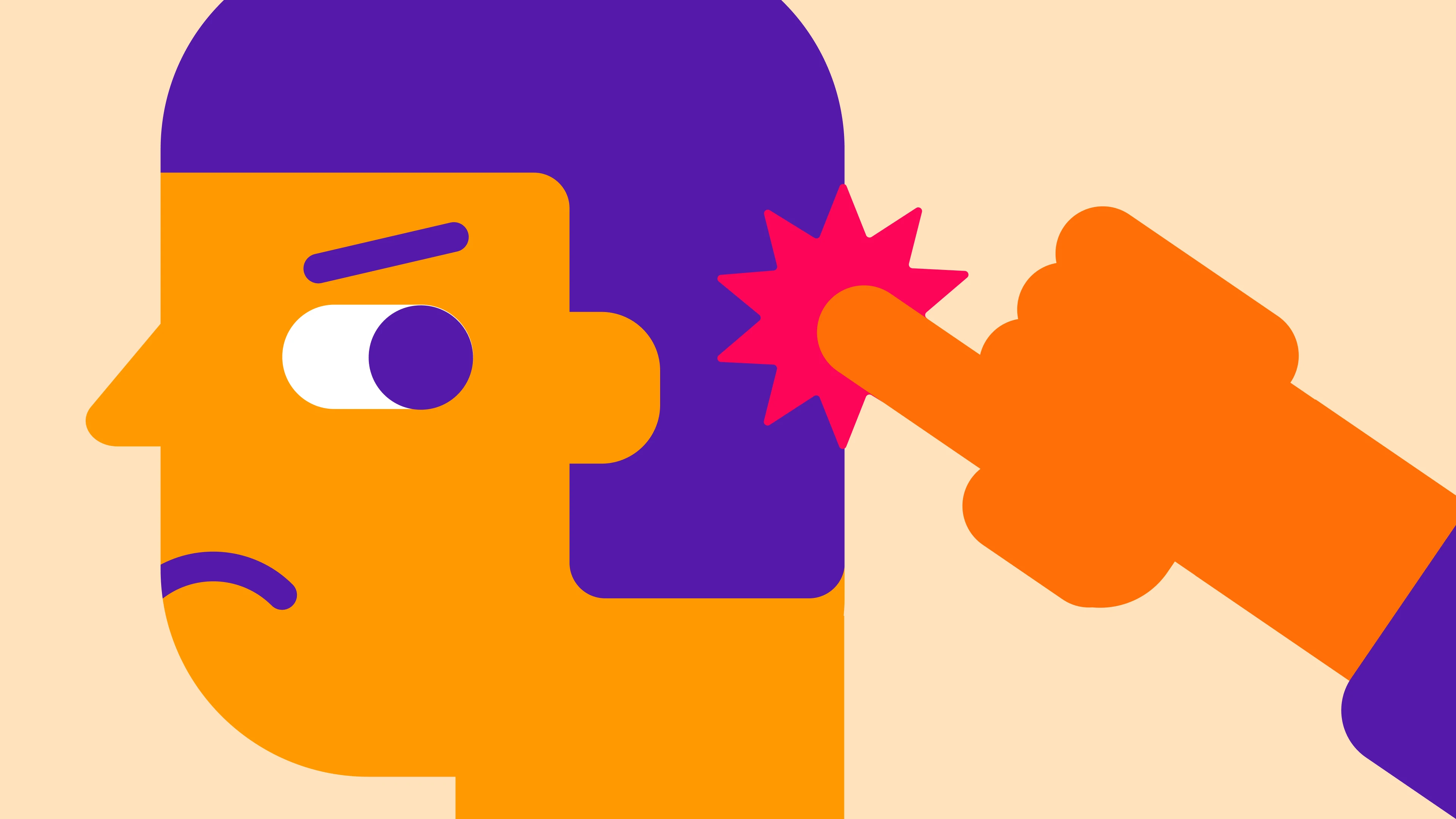
Gestures can also have wildly different meanings across cultures. Take the thumbs-up gesture — it signifies approval in many Western nations but can carry an offensive connotation in some Middle Eastern countries. Picture an enthusiastic businessperson from the US giving a thumbs-up after a successful presentation in Iran, only for it to be perceived as a severe insult.
This kind of misstep showcases just how crucial it is to be aware of the cultural backdrop influencing body language.
📘 Navigate cultural cues with Headway.
Advanced techniques for reading people
We’ve talked about the basics; now, let’s take it up a notch and explore some advanced techniques, especially in high-stakes situations where one wrong move could signal disaster. All too often, we rely on gut feelings, but the truth is often a lot more complex than that.
Mirroring
Mirroring is the practice of subtly mimicking the other person’s body language, speech patterns, and even emotions. It’s an instinctual behavior; people naturally feel more comfortable around those who are like them. While it’s not about caricaturing their movements, a delicate balance is key.
For instance, if your negotiation counterpart leans forward slightly, you might also lean forward, creating an unspoken connection.
In practical terms, if the other party in a negotiation expresses excitement or nods enthusiastically, you can use similar gestures to reinforce that positive energy. It shows you're not just listening but also engaged and invested. On the flip side, if you detect tension or discomfort, subtly pulling back can communicate empathy and awareness.
Understanding ego triggers
We are all driven by our own set of ego triggers. These factors influence how we perceive value, recognition, or identity. Understanding these can be critical in crafting your approach and ensuring a favorable outcome. Ego triggers often fall into categories such as respect, power, and competence. You can tailor your negotiation strategy by identifying what drives the other person.
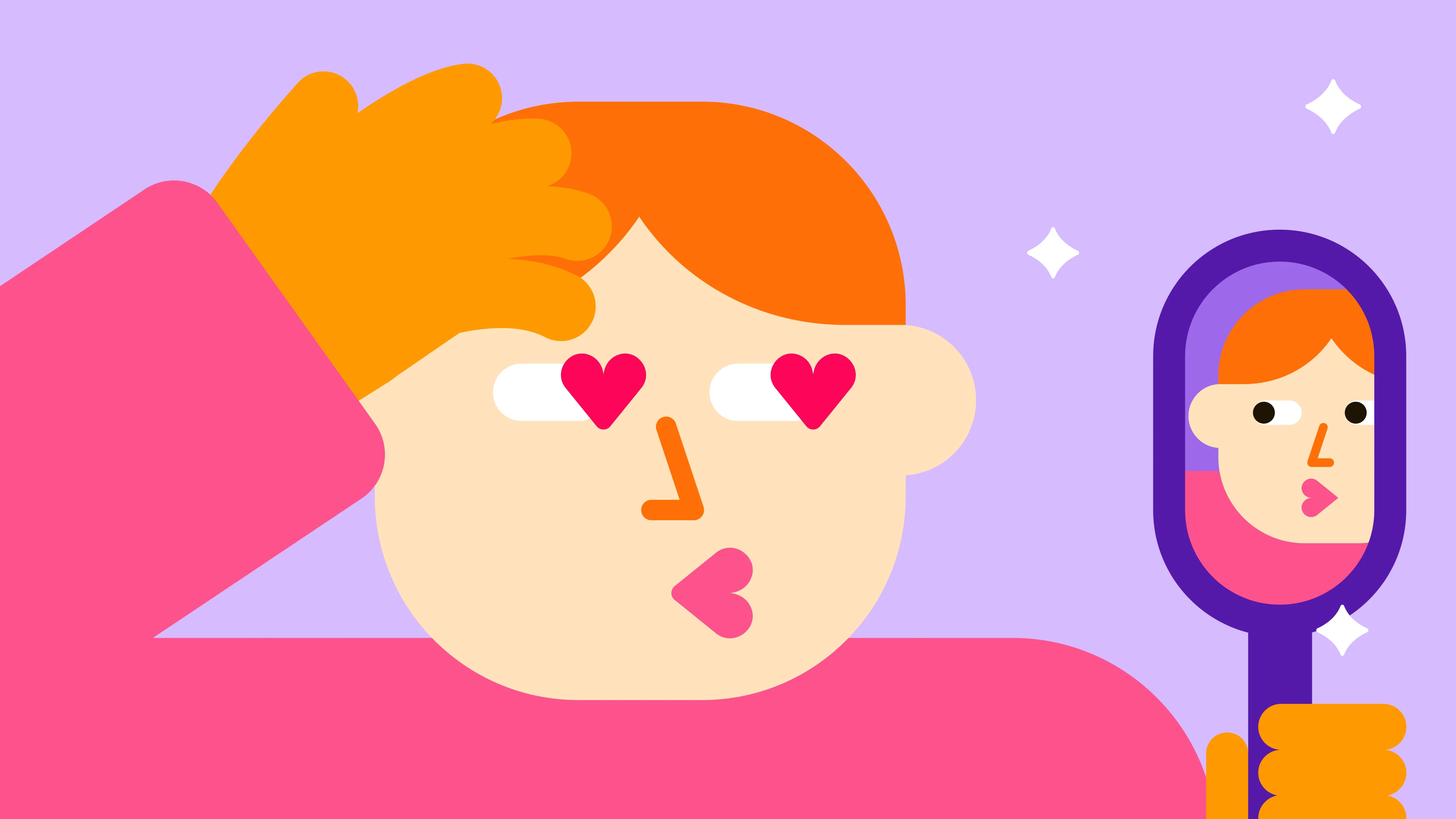
For instance, if it becomes clear that an ego trigger for your counterpart is recognition, you might start by acknowledging their accomplishments or expertise. Phrases like, "I really appreciate your insights on this matter. Your experience lends a lot of credibility to the discussion," can go a long way. This not only puts them in a positive frame of mind but also opens them up to hearing your propositions without defensiveness.
📘 Influence without resistance with Headway.
Power Dynamics
On top of that, addressing power dynamics is crucial. If you sense they value authority, presenting your proposals in a way that positions both parties as integral players can be beneficial. Instead of framing your request as a demand, you might say, “Together, I believe we could achieve something impressive.”
Catherine Stothart, author of 'How to Get On with Anyone: Gain the Confidence and Charisma to Communicate with Any Personality Type,' highlights the fact that we all have our own communication styles. She identifies four main types in her book: mobilizers, navigators, energizers, and synthesizers. By understanding more about these types, you can tailor your communication to each person you speak to. However, it’s important to remember that our types often change over time.
Read people like a book with Headway
Sometimes it’s hard to push aside your biases and focus on what is in front of you. It’s human nature, after all. But reading others doesn’t need to be a mystery. By taking note of a person’s mannerisms and communication style, you can decode what’s going on beneath the surface. In the end, your conversations will be much more productive in all different situations! In addition, improving your communication skills also boosts your emotional intelligence.
Headway’s carefully curated library of book summaries is the perfect place to learn more about communication and reading people. In fact, why not check out our self-help library of summaries about social skills or human nature?
In just 15 minutes, you can read or listen to a summary of a best-selling book and extract all the major insights that will benefit your communication efforts. Ultimately, you’ll feel like an expert in body language and communication, benefiting you in all areas of your life.
📘 Level up communication skills with Headway.
Frequently asked questions on how to read people
What's the best way to read people?
Start by observing their baseline behavior — how they act when relaxed and comfortable. Then watch for deviations. If someone who's usually chatty suddenly goes quiet, that shift matters more than the silence itself. Combine body language cues, tone of voice, and facial expressions for the full picture. No single signal tells the whole story.
How to read someone's personality in 10 seconds?
You can't fully read someone's personality that fast, but first impressions offer clues. Notice their posture (confident or closed off?), eye contact (steady or avoidant?), and how they greet you. Someone who immediately asks about you rather than talking about themselves often signals warmth. Just remember: ten seconds is a starting point, not a conclusion.
How to read someone's mind for real?
Mind-reading is a real psychological skill known as empathic accuracy, in which you decode someone's true thoughts and emotions by observing subtle nonverbal cues such as microexpressions, tone shifts, and body language gaps. It's not fiction but a measurable ability backed by research from Psychology Today and experts like Paul Ekman, with trained individuals achieving 70-90% accuracy in familiar contexts through focused attention.
To practice, scan for fleeting facial flashes (under 0.5 seconds) that contradict words, listen for vocal changes like rising pitch signaling excitement or tension hinting at deception, and note incongruences such as fidgeting during tough topics. Ask open-ended questions while staying present to sync via mirror neurons, enhancing emotional insight used in therapy, negotiations, and everyday interactions.
How to spot a toxic person in the first 5 minutes?
Watch how they treat others and talk about people who aren't in the room. Toxic individuals often badmouth coworkers, play victim, or subtly put you down while smiling. If your gut feeling screams discomfort despite their friendly words, trust it. Protecting your mental health starts with recognizing these early red flags.
How to tell if people are pretending to like you?
Genuine warmth shows in the eyes — fake smiles don't reach them. Notice if their body language contradicts their words: crossed arms during compliments, minimal eye contact, or turning away while talking. Also, pay attention to follow-through. Someone who acts friendly but never initiates plans or remembers details about you may be performing politeness.
How to spot a fake nice person?
Fake nice people are often charming in public but dismissive in private — skilled social liars, essentially. They give compliments that feel hollow or backhanded, like praising your "brave" outfit choice. Watch how they respond when you share good news: genuine friends celebrate, while fake ones change the subject or one-up you. Actions reveal what words hide.
How to read people from body language?
Focus on clusters, not single gestures. Crossed arms alone might just mean someone's cold — but crossed arms plus avoiding eye contact plus a tense jaw? That's discomfort. Establish their baseline first, then look for changes. Fidgeting, physical movements toward the exit, or sudden stillness all communicate what words often won't. Context matters, so read the whole room.