Self-growth
 Apps & Digital Tools
 Business & Career
 Success
 Growth Tools
 Psychology
 Communication
 Relationships

In a 2014 Stanford study involving 176 people, researchers discovered that walking raised creative output by about 60% on average compared with sitting down. This fascinating effect held true even when participants were simply walking on a treadmill while facing a completely blank wall.
While the study specifically tested immediate idea generation rather than long-term recovery from exhaustion, it points to a reality that almost every professional artist already suspects: fresh ideas often come to the surface exactly when you stop forcing them.
If you are experiencing creative burnout, the very concept of generating new ideas likely sounds exhausting. Creative burnout is a profound state of exhaustion that comes from overextending yourself creatively without securing enough active recovery time.
The ideas that used to arrive naturally now stall entirely, and the creative work you once loved suddenly feels incredibly distant and burdensome.
This article covers what this specific type of burnout actually feels like, how it fundamentally differs from a standard creative block, why it happens, and what you can do to bring your creative spark back to life.
📘 Want to know what field experts say about burnout? Try Headway and access themed growth plans and book summaries in audio or text formats.
*Please note: this article is general information, not medical advice.

Quick summary: Creative burnout in brief
Here's what you should know about creative burnout:
Creative burnout occurs from overextending yourself without recovery.
Creative burnout can feel like a fog between ideas and execution.
Creative burnout can stem from perfectionism and external pressures.
Rest is part of the creative process, not a pause from it.
Making tiny low-stakes creative actions can help alleviate burnout.
What creative burnout feels like
Burnout often leads to feelings of disconnection from creative work. When you are in the middle of it, the experience is incredibly disorienting. What was once a sharp, vibrant imagination becomes a watery counterpart to your usual thinking, lacking definition and depth.
There is a dense, heavy fog sitting right between having a concept and actually executing it. Burnout can cause feelings of distance from creative work, making your own projects feel like they belong to a stranger.
This distance breeds deep cynicism. Burnout often leads to negative or cynical feelings about creativity in general. You might experience intense dread waking up in the morning, knowing you have to face a blank page or an unfinished canvas.
Your mood swings become unpredictable, and you struggle to find any joy in making art. Even your basic work requires an immense amount of effort, leaving you with very little energy for your personal life.
Pushing through for too long will eventually drain your physical health as well, leading to poor sleep, chronic headaches, and persistent muscle tension.
Because the mind and body are intricately connected, these symptoms should not be ignored. Many mental health experts note that creative burnout can mimic symptoms of mental health disorders, such as clinical depression and severe anxiety.
Furthermore, creative burnout can worsen symptoms of mental health disorders if you already struggle with them. You might begin to experience intense self-doubt, wondering if you ever had any actual talent to begin with.
To understand how these physical and emotional signs overlap and interact, reviewing the full symptoms of burnout can help you identify exactly where your body is keeping score.
Creative burnout vs. creative block
While they are often used interchangeably in casual conversation, a creative block and a severe creative burnout are entirely different experiences that require completely different solutions.
| Creative block | Creative burnout |
|---|---|
You desperately want to make something but cannot figure out how to start. | You no longer have any desire to make anything at all. |
The friction is usually tied to one specific project or a single structural problem. | The exhaustion spreads across all of your creative work and hobbies. |
It often eases with a change of method, a new tool, or a quick brainstorming session. | It needs deep, real recovery time and a fundamental shift in daily habits. |
It feels highly frustrating and aggravating, but you still care about the outcome. | It feels completely flat, numb, and overwhelmingly cynical. |
Your overall physical and emotional energy is mostly intact. | Your energy is low overall, affecting your entire life. |
These two states can certainly overlap, and the line between them is not always perfectly sharp. However, trying to force your way through total exhaustion using the same brainstorming tricks you would use for a simple block will only deepen your mental exhaustion.
Stop staring at a blank page hoping for a miracle.
📘 Download the Headway app to listen to 15-minute audio summaries of the world's best books on creativity, psychology, and personal growth.
Why creative burnout happens
Creative burnout is rarely the result of a single bad day. Chronic stress and lack of recovery contribute to creative burnout over months or even years. Burnout is linked to overextending oneself mentally and emotionally without ever pausing to refill the creative well.
Historically, high expectations and pressure can exacerbate creative burnout significantly. In today's hyper-connected landscape, creators are expected to be constantly visible, constantly producing, and constantly innovating.
This external pressure demands that you monetize every single passion, turning what was once a joyful escape into a stressful job.
Perfectionism plays a massive role as well. The pressure of perfectionism can inhibit creative enjoyment and output. When your internal standards are incredibly high, you squeeze every ounce of enjoyment out of the creative process.
You spend time agonizing over minor details instead of allowing yourself to experiment and fail safely.
Working environments also dictate your mental health. Working alone for extended periods without collaboration leads to emotional fatigue. If your work environment lacks support systems or you are facing harsh, unconstructive criticism, your intrinsic motivation will inevitably collapse.
Finally, social media acts as an aggressive accelerant. Constantly consuming the highlight reels of other artists is dangerous. Comparison with others can undermine creative motivation, leading you to believe your own work is inadequate before you even finish it.
How creative exhaustion builds over time
The slide into complete creative exhaustion is incredibly slow and deceptive. It rarely arrives overnight. At first, you might just feel a little tired. You might skip your usual breaks to meet a deadline, telling yourself it's just a temporary push. You explain away the early signs as simply having a stressful week or dealing with a difficult project.
However, as the weeks turn into months, the enthusiasm you once had for your creative expression begins to fade. You stop having fresh ideas in the shower. You stop sketching in your free time.
Your to-do list becomes a source of panic rather than a roadmap for success. You might find yourself searching for a quick blog post to fix your mindset, but reading about recovery does not replace actual rest.
In the later stages, especially for someone who makes things for a living, this vicious cycle becomes entirely paralyzing. Creative burnout drains capacity to generate ideas and enjoy creative output. You sit down to write, design, or paint, and absolutely nothing happens.
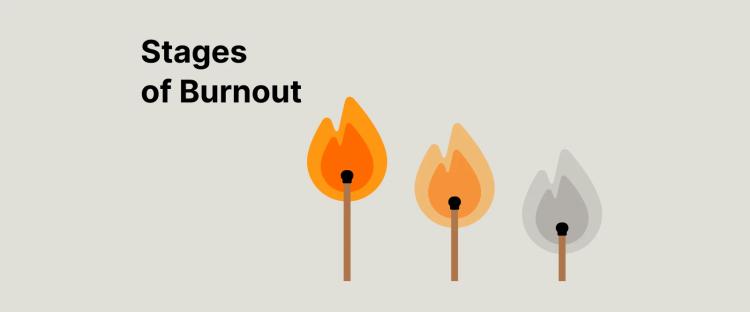
To understand this gradual, devastating decline, the 12 stages of burnout model clearly maps out how a person goes from an enthusiastic overachiever to someone entirely depleted of life.
A quick self-check to evaluate your well-being
Taking a short self-check is a helpful reflection tool, not a clinical diagnosis. Ask yourself the following questions honestly:
Do I feel an overwhelming sense of dread when I sit down in my workspace?
Have I completely stopped doing any creative activities just for fun in my spare time?
Do I feel entirely detached from the success or failure of my current projects?
Is my physical body constantly exhausted, even after a full weekend of sleep?
Has my inner self become entirely cynical about the value of art and creativity?
Mental health professionals suggest that experiencing four or more symptoms may indicate creative burnout. Acknowledging burnout is the first step to prevention and recovery. If you are actively answering yes to these questions, you cannot just push harder.
You need an intervention. Taking a more comprehensive am I burned out assessment can help you articulate exactly what you are experiencing to your loved ones or a professional.
📘 You cannot pour from an empty cup. Try Headway today to learn how top performers protect their energy and build sustainable, lifelong creative habits.
When creative work feels like a chore
Headway offers growth plans built around rest and creativity.
Read about restHow to recover from creative burnout
Recovery is a deliberate, active practice. It requires you to completely shake things up and change how you operate on a fundamental level.
First, acknowledge exactly what is happening. You are not lazy; you are depleted. Identifying sources of creative drain can help regain motivation. Look at your schedule and brutally cut out the commitments that are quietly draining your energy left and right.
When you feel ready to engage with your art again, do not start with a massive, high-stakes project. Making tiny low-stakes creative actions can help alleviate burnout.
Doodle on a scrap of paper, arrange some flowers, or write a single, terrible paragraph. Engaging in non-judgmental creative activities can stimulate joy and curiosity without triggering your perfectionism.
Protect your mind during this fragile period. Avoiding passive stimuli that overload the mind is beneficial for recovery. Doomscrolling on social media only fills your brain with noise. Instead, actively seek out quiet spaces.
You must set aggressive boundaries: define strict working hours, protect your weekends fiercely, and put a hard cap on your screen time.
Find inspiration outside of your usual domain. Inspiration often comes from fresh inputs and diverse experiences. If you are a writer, go look at architecture. If you are a painter, listen to a new genre of music.
Engaging in hobbies outside of work can replenish creativity because it uses a completely different part of your brain.
Do not suffer in silence. Talking to supportive peers can alleviate feelings of burnout. Reach out to other creatives who understand the unique struggle of the creative process.
If you absolutely cannot stop working because of financial realities, learning specific strategies for how to recover from burnout while still working will help you survive the transition while maintaining your basic income.
Why a proper break and rest is part of the work
Hustle culture teaches us that rest is a reward for finishing the work. This is a fundamental misunderstanding of human biology. Downtime is essential for creativity and mental health. Rest is part of the creative process, not a pause from it.
When you step away from a problem, your subconscious mind continues to process the information, making novel connections that your conscious, stressed mind cannot see.
This is why taking breaks can lead to new ideas and creativity. You must learn to rest on purpose, ensuring that your rest does not feel like you are simply falling behind on your tasks. Taking breaks can lead to new creative ideas simply by removing the immediate pressure to perform.
Consider the Stanford walking study again. The simple act of changing your physical state and moving your body alters how your brain generates concepts. Nature experts and psychologists suggest that nature walks help relax and rejuvenate creativity.
While the study proved that walking anywhere helps, getting outside provides the added benefit of separating you entirely from your stressful workspace.
For the professional artist and freelancer
When your passion becomes your job, the dynamic shifts dramatically. Working artists and freelancers face the immense pressure of having to produce brilliant work on a tight schedule while also relying on that exact same work to pay the rent.
This means that success means survival, which adds an incredible layer of stress to the creative process.
When clients, hard deadlines, and money are permanently tied to your creative output, the risk of burnout skyrockets. You have to implement practical, non-negotiable limits. Schedule mandatory off days where you do absolutely no client work.
Accept fewer open-ended commitments that tend to drag on forever. Build a financial and temporal buffer between projects so your creative juices flowing in one job do not immediately get drained by the next. Understanding the specific nuances of occupational burnout is essential for anyone who creates for a living.
Protect your most valuable asset: your mind.
📘 Explore the Headway app to discover proven frameworks for managing freelance stress, setting client boundaries, and avoiding professional collapse.
For art and design students
Students face a unique gauntlet of pressures. You are subjected to constant, often brutal critique from professors, surrounded by incredibly talented peers, and forced to meet relentless academic deadlines. This environment turns creativity into a high-stakes competition.
To survive, you must protect a space where you are making art that is strictly and entirely only for you. Create something that will never be graded, never be posted online, and never be critiqued by a mentor.
Furthermore, know where to find campus support systems before you reach a crisis point. If the pressure of academia is destroying your love for your chosen field, reading about academic burnout can provide targeted strategies for surviving the semester without losing your creative soul.

How to prevent burnout before it starts
Recovery takes months, but prevention only takes daily intention. Creating better working conditions prevents creative burnout. You have to be proactive about your mental environment.
Setting boundaries like weekends helps manage burnout significantly. Treat your time off with the exact same respect you treat a client meeting. Furthermore, limiting social media use reduces burnout risk by cutting off the constant, toxic cycle of comparison.
Constantly vary your inputs. Visit new places, talk to new people, and consume art forms completely unrelated to your own medium. Schedule non-judgmental creative time strictly for enjoyment, with zero expectations of productivity.
Check in with yourself on a regular schedule to monitor your energy levels, and adjust your workload the moment you feel the dreaded fog beginning to roll in.
*If you're feeling low and everyday life seems like a burden, please consider seeking help from mental health professionals.
Get your creative energy back with Headway!
You can rewire how you approach your craft by learning from the masters who have survived the exact same struggles. Here is how insights from top creativity books can help you rebuild your foundation:
'The War of Art' (Steven Pressfield): Tip: Name exactly what is stopping you from starting (he calls it Resistance). Exercise: Sit down in your workspace for ten minutes at the exact same time tomorrow, even if you do nothing.
'The Artist's Way' (Julia Cameron): Tip: Write a short page each morning with absolutely no editing. Exercise: Try it for three consecutive days to clear the mental clutter.
'Big Magic' (Elizabeth Gilbert): Tip: Drop the desperate need for external permission to create. Exercise: Make something incredibly small today just for yourself, and do not show it to anyone.
'Steal Like an Artist' (Austin Kleon): Tip: Actively collect what inspires you from different mediums. Exercise: Save three distinct things this week that catch your eye.
'Creativity' (Mihaly Csikszentmihalyi): Tip: Notice exactly when you lose track of time in a state of flow. Exercise: Write down the specific conditions that were present around your best creative hour this month.
When you are too exhausted to read a full book, Headway provides the perfect solution.
📘 Access 15-minute audio and text summaries of these exact titles to slowly refill your creative well without adding another heavy task to your to-do list.
FAQs about creative burnout
What is creative burnout?
Creative burnout is a profound state of physical, emotional, and mental exhaustion caused by overextending yourself creatively without sufficient periods of active recovery. It completely drains your capacity to generate new ideas, deeply diminishes your intrinsic motivation, and turns the creative work you once genuinely loved into a heavy, dreaded obligation.
What are the signs of creative burnout?
The most common signs include a persistent mental fog between having an idea and executing it, a growing cynicism toward your own work, and intense dread when starting a new project. Physical signs often manifest as chronic tiredness, mood swings, muscle tension, and poor sleep, all pointing toward severe mental and emotional depletion.
How is creative burnout different from a creative block?
A creative block is usually temporary and tied to a specific project or structural problem; you still want to create, but you just feel stuck on the mechanics. Creative burnout, however, is a systemic exhaustion that spreads across your entire life, leaving you with absolutely no desire or physical energy to make anything at all.
How long does creative burnout last?
The duration varies wildly depending on the severity of the exhaustion and how aggressively you pursue recovery. If you catch it early and immediately implement deep rest and firm boundaries, it might clear in a few weeks. If you have been pushing through chronic stress for years, full recovery can easily take several months of dedicated lifestyle changes.
How do you recover from creative burnout?
Recovery requires you to completely step away from high-pressure output. You must set strict boundaries around your work hours, take genuine time off to rest, and limit your exposure to passive stimuli like social media. Eventually, you can slowly re-engage by making tiny, low-stakes creative actions strictly for your own enjoyment with zero expectations.
Can creative burnout affect mental health?
Yes, it has a massive impact on your psychological well-being. Severe burnout can mimic the symptoms of clinical depression and anxiety, causing overwhelming feelings of hopelessness and intense self-doubt. If you already have existing mental health conditions, the prolonged chronic stress of creative burnout can significantly worsen those underlying symptoms.
Does taking a break help creative burnout?
Taking a break is not just helpful; it is an absolute biological requirement for recovery. True downtime allows your nervous system to reset and your subconscious mind to process information without pressure. Rest must be treated as an active, essential part of the ongoing creative process rather than a guilty pause from your professional work.
When should I see a professional about creative burnout?
You should immediately seek out a licensed mental health professional if your feelings of creative exhaustion transition into persistent depression, severe anxiety, or a total inability to function in your daily life. If resting and setting healthy boundaries do not alleviate your intense dread and hopelessness, professional support is the safest and most necessary next step.