Self-growth
 Apps & Digital Tools
 Business & Career
 Success
 Growth Tools
 Psychology
 Communication
 Relationships

Gallup's research has found that managers report higher rates of burnout and disengagement than the people they supervise. Burnout after promotion isn't a fringe experience.
Harvard's Linda Hill, who has spent over four decades studying new managers, says plainly that even capable, well-prepared people can expect a hard first year in leadership. The role that looked like the payoff turns out to carry a very specific kind of weight.
You'd put in the hours. You'd proven yourself. Then the promotion arrived, and the first weeks felt off. More decisions, more pressure, and fewer people to turn to. Something that should have felt like a win was quietly wearing you down.
This article covers the signs of burnout after promotion, why new roles trigger it, how to tell it from ordinary adjustment stress, and what actually helps in the first weeks and beyond.
📘 Seeking more knowledge about burnout? Get Headway and access the summaries of nonfiction books by well-known experts on burnout and career growth.
*Disclaimer: This article addresses general career and mental health topics for informational purposes. Individual results vary. Headway is a microlearning and daily growth app, not a medical or therapeutic tool. It's designed to help you build knowledge and habits, not to replace professional support.

Quick summary: Burnout after promotion in brief
Here's the short version of what this article covers:
Promotions bring sudden changes in demands, ambiguity, and loss of familiar control.
Common signs include fatigue that doesn't go away after sleep, waking at night, and second-guessing your calls.
Remote working often blurs the line between the job and the rest of your life, making it worse.
Boundaries, delegation, and honest check-ins with your boss help most in the early weeks.
If symptoms persist or worsen over several weeks, a mental health professional is the right call.
Keep reading for the full breakdown, a comparison table, five leadership books worth your time, and practical steps for recovery.
What burnout after promotion looks like: mental health warning signs
Burnout after promotion is a state of persistent physical, emotional, and mental depletion brought on by the sudden shift in demands, expectations, and accountability that comes with a new leadership role. The symptoms of burnout in this context tend to cluster in ways that feel relentless rather than temporary.
Physical signals: Your body often signals trouble before your head catches up. Persistent headaches, muscle tension, and fatigue that stick even after a full night's sleep are common early markers.
You're in bed, but you're not resting. You wake at night with your head running through tomorrow's problems. You're paid to perform, but nothing's replenishing.
Emotional and mental signals: Cynicism creeps in. Work that used to feel meaningful starts feeling like a grind. Positive comments from your team barely register, and feeling appreciated becomes something you vaguely remember from past roles.
You notice a reduced sense of accomplishment even on the days things go well. The creative thinking that got you to this point starts to go quiet. Concentration slips. Irritability becomes the baseline, especially with your team and family.
Leadership-specific signals: Imposter syndrome hits hard here. You're second-guessing decisions you'd have made without hesitation before. Your effectiveness as a leader drops, which feeds the guilt, which feeds the exhaustion. The passion that brought you to the role feels distant.
*Note: if any of these have been present for several weeks, speaking to a mental health professional is worth doing sooner than you might think.
📘 Headway puts leadership and self-growth insights in your hands, 15 minutes at a time!
Why a promotion triggers burnout: The remote working factor and beyond
Promotions rarely come with a manual. What most organizations don't tell you is that a new leadership role brings a fundamentally different kind of mental exhaustion, not from doing more tasks, but from managing constant ambiguity.
A few specific things drive it:
The role is vague. Leadership success is harder to measure than individual output. There's no checklist that tells you when you've done enough, and that gap creates stress with no clear endpoint.
You've lost control of your time. Your old job was mostly your work. Your new one is mostly other people's problems, their blockers, their conflicts, their questions. The demands multiply and the hours stretch.
Your peers became your direct reports. That shift is socially awkward for everyone involved. Who do you talk to honestly now? Isolation after a promotion is real, and leaders rarely talk about it.
Remote working amplifies all of it. When your job and your home share the same four walls, the stressful parts of leadership don't stay at the office. They follow you to dinner, to the conversations you're trying to have with your loved ones, to bed. The boundary between job and life collapses in a way it doesn't in an office. For people with kids or family responsibilities at home, that pressure compounds fast.
Expectations pile up from two directions. Your company expects results. You expect yourself to be great at this from the start. Neither is realistic in the first 90 days, and the gap between expectation and reality is where burnout grows.
Burnout or a normal adjustment period?
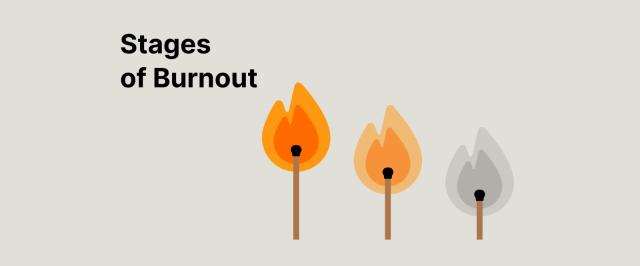
Not everything hard is burnout. New roles are genuinely stressful, and some of that discomfort is ordinary. The difference lies in duration and trajectory. You can read about the stages of burnout to get a clearer sense of where you might fall.
| Normal new-role stress | Burnout after promotion |
|---|
Tired during a big deadline; better after a weekend | Tired even after sleep and time off |
Doubt that eases as you learn the role | Doubt that grows; imposter feelings deepen |
Frustration with a specific hard project | Cynicism and detachment from the work itself |
Focus dips on busy days | Persistent concentration problems, most days |
Improves as the role becomes clearer | Gets worse or stays flat over several weeks |
The line between the two isn't always obvious. What matters most is the pattern. A week of rough days is context. A month trending the wrong direction is a signal worth taking seriously.
📘 Headway turns book insights into daily habits you can actually apply — start with one summary!
What to do in the first weeks of a new role
The first place to start is expectation-setting, and that conversation belongs in writing. If your boss hasn't told you what success looks like in the first 90 days, ask. You'll perform better when you know what you're actually aiming for. It also gives you something concrete to bring back to check-ins rather than guessing at what matters.
A few other things help consistently:
Hold regular check-ins with your boss focused on workload and resources, not just results. If you feel like the demands and the support don't match, say so. Be honest, specific, and early, before you're already burned out. Most decent managers respond better to concrete conversations than to vague signals that something's wrong.
Delegate. This one is hard for people who got promoted because they were strong individual contributors. But trying to keep doing everything yourself is a fast path to depletion. Hand things off. Others will do them differently, and that's fine. Different isn't wrong.
Use the Eisenhower Matrix. Urgent and important tasks get done first. Urgent but not important tasks get delegated. Important but not urgent tasks get scheduled. Everything else waits or gets dropped. It's a simple tool, but it cuts through the noise of a packed week faster than a long to-do list.
Say no to extra commitments. Early in a new role, pressure to prove yourself makes it tempting to say yes to everything. That's how people fall apart in the first 90 days. One well-executed thing matters more than five half-finished ones.
Build a peer support network. If you're a new manager, a co-founder, or a team lead who's just moved into a leadership role, you need people who can give you honest feedback that isn't filtered through your reporting line. A mentor, a colleague at the same level in another department, or a peer group is worth finding early.
If you're working on how to recover from burnout while still working, the steps above apply in the office or at a kitchen table.
Rest, breaks, and a mental reset: Treating rest as a professional requirement
Here's a truth most leadership training skips: rest isn't a reward for productive people. It's a requirement. If your job involves creative thinking and judgment under pressure, your brain needs to switch off regularly to keep doing that well.
Running yourself into the ground costs more time than it saves. A few things that help:
Protect your sleep. Waking at night to ruminate about work is a sign that the cortisol cycle is running too hot. Wind-down routines, no screens before bed, and a consistent bedtime all make a measurable difference. Sleep loss makes every other recovery step harder.
Take real breaks. Not lunch at your desk. Something that actually gives your head a break from the role. Frequent short breaks during the day improve sustained focus and reduce fatigue over the course of a week.
Consider a partial digital detox on weekends. Even a few hours offline can help you come back on Monday with something left in the tank.
Keep hobbies that have nothing to do with work. Activities you do for their own sake give you somewhere to go when the pressure builds, something where the outcome doesn't matter to your company or your career.
Talk to a professional. If you've made genuine changes and you're still exhausted and worried most days, a mental health professional is the right support, not an app, not another self-help resource. A good mental reset plan combines the practical steps above, but professional support is what makes the deeper shift possible.
What recovery looks like over time
The burnout recovery stages describe a process that moves forward, stalls, and moves forward again. A good week doesn't mean you're done. A bad day doesn't mean you're back at zero.
Week to week, improvement tends to show up in small ways: sleeping slightly better, feeling a bit less irritable, getting through a full afternoon without the fog rolling in. The future feels a little less uncertain. You start to feel appreciated occasionally, and that feeling doesn't immediately disappear.
If, after several months, you've genuinely made changes and you're still as burned out as you were at the start, it's fair to ask a harder question: is this role, this company, or this structure the right fit?
Recognizing a wrong fit and acting on it isn't failure. It's using real information to make a better decision for your career and your health.


What employers should fix
Burnout after promotion isn't purely a personal issue. Organizations put new leaders in roles with vague definitions, insufficient training, and no peer support network, then treat the resulting burnout as an individual failure. The systemic issues matter.
The most valuable changes companies can make: clear role definitions for promoted employees from day one, structured training that goes beyond a handbook, and a designated mentor or buddy for the first 90 days.
Regular check-ins from above during the post-promotion period, focused on workload and resources rather than just output, would help most new leaders more than a single piece of advice.

Build leadership habits without burning out, with Headway!
Burnout after promotion is common, and it's not a verdict on your competence. The combination of sudden role change, ambiguous expectations, and the pressure to prove yourself fast can wear down even high-performing leaders.
What changes the trajectory isn't pushing harder. It's structure: realistic expectations, honest conversations with your boss, boundaries around your hours, actual rest, and the right resources.
Headway has text and audio summaries of all five books below, available offline and on CarPlay for commutes. Personalized growth plans, daily streaks, and spaced repetition cards help the ideas stay with you past the first read. Here's one practical tip and one small exercise from each:
1. 'The Effective Executive' by Peter F. Drucker
Tip: Audit where your time actually goes for one full day, not where you think it goes. Drucker found that most leaders are significantly wrong about this.
Exercise: Look at yesterday's calendar. Mark each block as "important" or "merely urgent." The ratio tells you a lot about where the pressure is coming from.
2. 'Turn the Ship Around!' by L. David Marquet
Tip: Replace "what should I do?" with "what do you intend to do?" That single shift moves your team from waiting for direction to taking ownership.
Exercise: Name one decision you can hand off this week. Make that handoff explicit.
3. 'Radical Candor' by Kim Scott
Tip: Pair a direct message with visible care. That combination is what makes hard conversations land rather than damage.
Exercise: Write down one conversation you've been avoiding. Write what you'd actually say if you were being honest.
4. 'Trillion Dollar Coach' by Eric Schmidt, Jonathan Rosenberg, and Alan Eagle
Tip: At your next one-to-one, ask about the person before you ask about the project.
Exercise: Schedule a recurring check-in with your own boss, explicitly focused on how you're doing in the role, not just what you're delivering.
5. 'Dare to Lead' by Brené Brown
Tip: Name the feeling behind the pressure. Fear of not being good enough in your first leadership role is normal. Naming it out loud takes some of its weight away.
Exercise: Tell one trusted peer, a colleague at your level, a mentor, or a friend from school or a past job, what's been hardest about the new role. Speaking it reduces it.
📘 Start with one summary today and see which of these hits closest to where you are right now.
FAQs about burnout after promotion
Why do I feel burned out after a promotion?
Promotions change almost everything at once: your responsibilities, your social dynamics with former peers, how success gets measured, and how much control you have over your own time. Most organizations promote people without providing the training, support, or clear expectations that would make the transition manageable. The result is sustained pressure with low clarity, which is a reliable formula for burnout.
How long does burnout after promotion last?
There's no fixed timeline, but most people notice real improvement within three to six months once they make meaningful changes to their workload, boundaries, and rest habits. Burnout that goes unaddressed can persist far longer. If you're trending better week by week, that's a good sign. If you're at the same level or getting worse after two or three months of genuine effort, professional support is worth pursuing sooner.
Is it burnout or imposter syndrome?
They often show up together, but they're different. Imposter syndrome is the persistent belief that you don't deserve the role and will eventually be found out. Burnout is physical and emotional depletion caused by sustained overload. You can have imposter syndrome without being burned out, and you can be burned out without strong imposter feelings. When you're second-guessing every call AND physically exhausted AND emotionally detached from the work, that's usually both happening at once.
How do I talk to my boss about burnout after a promotion?
Be specific and honest, and frame it around workload and resources rather than how you're feeling. "I'm struggling" is hard for a manager to act on. "The demands of this role currently outpace the support I have — can we look at priorities and resourcing together?" gives them something concrete. Most managers respond better to a direct, practical conversation than to vague signals that something's wrong. Don't wait until you're at the edge to say something.
Should I step down from a role after a promotion?
Rarely, and not without trying the structural changes first: realistic expectations, better support, delegation, and enough time to adapt. That said, if after several months you've made genuine changes and you're still as miserable as day one, stepping back isn't failure. It's using real information to make a better career decision. Some roles are genuinely wrong fits, and recognizing that takes self-awareness.
What are the first signs of burnout in a new management role?
The earliest signs tend to be physical: sleep that doesn't feel restorative, waking in the night with your head full of work, persistent low-level fatigue that a weekend doesn't fix. These often come before the emotional signs, like detachment, cynicism, and a shrinking sense of accomplishment. The physical signs are the body's early warning system. Taking them seriously in the first weeks is much easier than dealing with full burnout months later.
How can I recover from burnout while still working?
Start with what's controllable: protect your sleep, take real breaks during the day, and cut optional commitments. Then address the structural issues: clarify your priorities with your boss, delegate more, and set clearer boundaries around hours. Recovery while still working is slower than recovery with time off, but it's possible if you make real changes. Adding support from a therapist or counselor speeds the process up considerably.
When should I see a mental health professional?
If your symptoms have been present for more than a few weeks, are significantly affecting your ability to function at work or at home, or include persistent low mood, anxiety that won't ease, or a sense of hopelessness about the role, that's the point to seek professional help. Don't wait for a crisis. Many people find that even a handful of sessions helps them identify patterns and build coping strategies faster than any amount of self-directed reading or listening.