Self-growth
 Apps & Digital Tools
 Business & Career
 Success
 Growth Tools
 Psychology
 Communication
 Relationships

Did you know that nearly one in two students experiences academic burnout?
It hits when you stare at a syllabus you cannot bring yourself to open, not because the material is hard, but because you have run out of whatever it takes to care.
Academic burnout is a state of severe physical, mental, and emotional exhaustion caused by prolonged stress in a school environment. It differs entirely from a normal hard week of studying, mostly because a single weekend of rest does not make it go away.
📘 Get the Headway app and read or listen to the expert insights from famous authors.
*This article is for educational purposes only. If you're experiencing these symptoms, consider speaking with a healthcare professional.

Quick answer: What is academic burnout
Here is a fast breakdown of what you are dealing with before jumping into the recovery plan.
Academic burnout is chronic exhaustion caused by prolonged academic pressure, not a single bad week.
It shows up as emotional exhaustion, detachment from coursework, and a drop in academic performance.
Roughly 6 in 10 college students meet the criteria for it at some point in their studies.
It's driven by workload, perfectionism, poor sleep quality, and a lack of recovery time between demands.
Recovery starts with naming the pattern, adjusting workload, and rebuilding a sustainable routine.
What is academic burnout? A definition that goes past "stress"
Academic burnout is a state of emotional, mental, and physical exhaustion caused by prolonged and excessive academic stress.
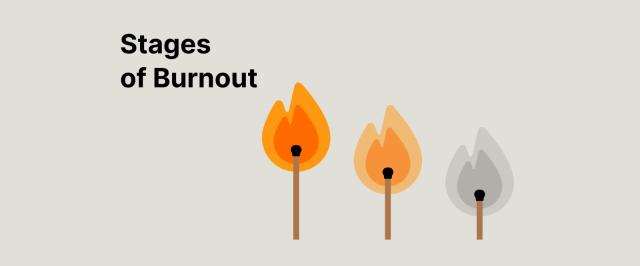
It is completely different from a brief dip in motivation or a difficult finals week. Burnout consists of three recognized components: intense fatigue, deep cynicism or detachment toward your schoolwork, and a significantly reduced sense of personal accomplishment.
It rarely happens overnight; instead, it builds gradually through an accumulation of stressors that exceed your ability to recover.
A cross-sectional study of nearly 23,000 college students found that almost 60 % met the clinical threshold for academic burnout. This data proves it is not just a small subset of overwhelmed students struggling; it is much closer to the academic norm.
Signs of academic burnout: What it looks like in a college student's week
You cannot fix the problem until you recognize the symptoms of academic burnout showing up in your daily routine. The signs of academic burnout often disguise themselves as laziness or a lack of discipline.
Reading the same paragraph five times and retaining absolutely nothing.
Skipping classes you used to care about, not out of rebellion but sheer exhaustion.
Irritability that surprises even you — snapping at a roommate over a dish in the sink.
Procrastinating on work you know matters, then panicking frantically closer to the deadline.
Headaches, tight shoulders, or persistent stomach issues with no clear physical cause.
Feeling nothing — not stressed, not motivated, just flat — about grades that used to matter to you.
The strongest driver of this state is emotional exhaustion, which depletes your capacity to care about academic success or maintain normal social relationships.
📘 Try Headway to listen to quick, actionable insights on overcoming procrastination while you fold laundry or grab a coffee.
Academic burnout vs. a hard semester: How to tell the difference
Students constantly question whether they are actually burned out or just going through a standard rough patch. Use this comparison to identify exactly what you are experiencing.
| Term | Meaning | Common signs | What may help |
|---|---|---|---|
Ordinary school stress | A short-term response to a deadline or exam | Temporary anxiety, tiredness that lifts after the test | Rest, a few easier days, normal sleep |
Academic burnout | A prolonged depletion from sustained academic pressure | Emotional exhaustion, detachment, dropping grades, apathy that doesn't lift | Workload changes, routine rebuilding, sometimes professional support |
Depression | A clinical mood condition that can overlap with burnout | Persistent sadness, loss of interest beyond schoolwork, hopelessness | Professional evaluation and support |
Why academic burnout hits college students especially hard
College students face academic burnout more often than high schoolers because the entire support structure changes overnight. University students have unstructured schedules with absolutely no built-in recovery time.
You combine financial pressure, part-time jobs, and the sudden shift from parental structure to total self-management, and the environment becomes a pressure cooker.
Constant comparison culture thrives on campus, where you constantly see your peers' output and achievements. Students who lack strong self-efficacy or who carry unresolved pressure to perform perfectly are significantly more prone to crashing.
High-stakes majors like nursing, engineering, and pre-med only amplify this perceived stress.
How academic burnout shows up in the body, not just the mind
Physical symptoms frequently appear long before your mind acknowledges how overworked you are. Your stress response directly alters your physiology. You might notice frequent tension headaches, sudden appetite changes, or completely disrupted sleep quality.
This fatigue does not lift after a two-hour nap. When your body sustains high cortisol levels for weeks on end, your immune system tanks. Getting severely sick immediately after finals week is a documented physiological response to burnout, not just bad luck.
📘 Need a quick mental reset between study sessions? Try the Headway app to listen to bite-sized summaries on stress management and personal growth while you walk to class.
What to do the week you realize you're burned out
Figuring out how to deal with academic burnout requires immediate triage, not a long-term philosophical shift. You have to stop the bleeding first.
Name it out loud or in writing — say "I think I am burned out," instead of "I am just being lazy today."
Cut one non-essential commitment this week, even if it is just skipping a club meeting or a social event.
Protect one full night of sleep before attempting to fix anything else in your schedule.
Talk to one professor or advisor about extensions before you hit a crisis point.
Pick one recovery action you can actually do today.
Because you are dealing with chronic stress, recovery will take longer than a single weekend. Your goal right now is simply stabilization.
A plan for how to recover from academic burnout without losing your semester
The fear of falling behind prevents most students from addressing their burnout. However, you can learn how to recover from academic burnout using a staged approach that keeps your academic life intact.
Week 1: Stabilization
Focus entirely on getting eight hours of sleep and cutting one obligation. You cannot outwork a sleep deficit.
Week 2: Workload renegotiation
Talk to your professors. Ask for a 48-hour extension on a specific coursework assignment to give yourself breathing room. Drop one extra-curricular activity.
Week 3: Routine rebuilding
Establish a sustainable study rhythm. Block out a firm cut-off time every evening where schoolwork absolutely ends.
Week 4: Evaluation
Check whether this new baseline is working. If your apathy and emotional exhaustion remain severe, it is time to seek professional support on campus.
📘 Don't have time to read a full book on stress recovery? Try Headway for 15-minute audio summaries you can absorb during your commute.
Practical tips from book summaries
Recovering from student burnout is rarely about pure willpower. It is about understanding the mechanics of stress, procrastination, and self-judgment.
These insights from popular nonfiction books offer actionable ways to interrupt the burnout cycle.
1) Complete the stress cycle before you try to "fix" the workload
Based on 'Burnout: The Secret to Unlocking the Stress Cycle' by Emily Nagoski, PhD, and Amelia Nagoski, DMA.
Stress and stressors are different things. You can remove a stressor by finishing the paper, but your body remains stuck in a stress response. The body needs a physical signal that the danger has passed.
After a hard study session, do one full minute of physical movement — pacing, shaking out your hands, or taking a short walk — before sitting back down.
2) Treat physical symptoms as information, not a separate problem
Based on 'When the Body Says No' by Dr. Gabor Maté.
Recurring headaches, stomach issues, or exhaustion during high-pressure weeks aren't unrelated to your workload — they are often the body registering stress that the mind is minimizing.
The next time a physical symptom shows up during a stressful week, write one sentence naming exactly what you were feeling right before it started.
3) Understand the real mechanics behind your procrastination
Based on 'The Procrastination Equation' by Piers Steel, PhD.
Procrastination on academic work often isn't laziness. It is a response to low confidence in the task or a reward that feels too far away. Naming which one is happening changes what actually helps.
Pick one assignment you are avoiding. Write down whether you are avoiding it because it feels too hard, too boring, or too far from being graded.
4) Separate your worth from your output
Based on 'The Gifts of Imperfection' by Brené Brown, PhD.
Perfectionism often masquerades as high standards, but it is frequently fear of judgment wearing a productive-looking mask — and it is a massive driver of academic burnout.
Before submitting your next homework assignment, write one sentence completing this thought: "This is done, and being done is enough because..."
5) Rebuild recovery through small, repeatable systems
Based on 'Atomic Habits' by James Clear.
Burnout recovery does not hold up on motivation alone. Small, boring, repeatable routines protect you far better than one dramatic schedule overhaul.
Pick one recovery habit — a consistent wake time or a 10-minute wind-down before bed — and attach it to something you already do daily, like brushing your teeth.
A weekly reset for students who can't afford to burn out again
To prevent academic burnout from returning, you need a repeatable, low-effort weekly structure. Trying to maintain a rigid, hour-by-hour schedule usually fails because college weeks vary wildly.
Instead, rely on a simple weekly check-in. Ask yourself: "What drained me the most this week?" Next, use a planner to map out upcoming deadlines so you can visually space out your effort rather than cramming it all into one night.
Finally, schedule one non-negotiable recovery block every single week. You must protect this block of time management with the exact same intensity that you protect an exam time.

Overcoming academic burnout in college without disappearing from your own life
Overcoming academic burnout in college becomes significantly harder if you isolate yourself. Burnout makes students withdraw from friends, clubs, and hobbies, which ultimately strips away the exact things that relieve academic pressure.
You need to stay minimally connected during recovery. Keep one social commitment a week, even if you skip the rest.
You do not need to over-explain your absence to your friends; simply saying, "I am totally drained from classes and need a quiet night to recover," is a complete and valid sentence.
When academic burnout might be something more
If your lack of motivation turns into persistent low mood, deep hopelessness, or thoughts of self-harm, you are likely dealing with something beyond standard burnout. Academic stress can absolutely trigger or worsen depression.
If you cannot function, please reach out to a professional. Most college campuses have a counseling center that provides free or low-cost support for enrolled students. You do not have to fix your mental health entirely on your own.

Find out more about academic burnout on Headway!
Reading a full book on stress management during a burned-out semester feels impossible. You barely have the energy for your assigned coursework. This is exactly where Headway fits into your routine.
Headway provides bite-sized summaries that fit perfectly inside a study break instead of competing with it. The audio format lets you listen and learn while walking between classes or doing laundry.
It offers a low-friction way to explore ideas about habits, focus, self-care, and academic burnout without adding another heavy task to your pile. By rewarding small, consistent effort, Headway mirrors the exact sustainable pace you need to rebuild your energy.
📘 Discover new ideas today with the Headway app!
Frequently asked questions about academic burnout
What is academic burnout?
Academic burnout is a chronic state of mental, physical, and emotional exhaustion caused by prolonged exposure to high levels of school-related stress. It completely drains your energy, leaves you feeling deeply detached or cynical about your coursework, and significantly reduces your overall sense of personal achievement.
What causes academic burnout in college students?
It is primarily caused by an unmanageable workload, chronic lack of sleep, intense perfectionism, and poor time management. The sudden loss of structural support from parents, combined with financial stress and the pressure to maintain a high GPA, creates an environment where students simply cannot recover fast enough.
How long does academic burnout typically last?
There is no fixed timeline, as it depends entirely on how quickly you intervene. If you adjust your workload and prioritize sleep immediately, you can start feeling better within a few weeks. However, if you ignore the signs and keep pushing, academic burnout can easily persist for months or even years.
Is academic burnout the same thing as depression?
No, they are different, though they share overlapping symptoms like extreme fatigue and apathy. Academic burnout is specifically tied to the stress of your educational environment and workload. Depression is a clinical mood disorder that affects every single area of your life, often requiring dedicated medical or therapeutic intervention.
What are the signs of academic burnout in students that get mistaken for laziness?
Students often mistake their own burnout for laziness when they experience chronic procrastination, an inability to focus on simple reading assignments, or a sudden apathy toward previously important grades. When you are burned out, skipping class is a symptom of total nervous system exhaustion, not a lack of moral discipline.
How do you recover from academic burnout without falling behind on coursework?
You recover by aggressively prioritizing your tasks and negotiating your deadlines. Communicate with your professors early to ask for brief extensions, cut out all non-essential extracurricular activities, and lower your standard from "absolute perfection" to "good enough to submit" so you can reclaim time for essential sleep.
Can academic burnout permanently affect academic performance or GPA?
While the immediate effects can certainly tank your grades during a specific semester, academic burnout does not permanently ruin your academic potential. Once you implement a proper recovery plan and adopt sustainable study habits, your cognitive function, focus, and academic performance will gradually return to their normal, healthy baseline.
Is academic burnout more common in certain majors, like pre-med or nursing?
Yes, research consistently shows that students in high-stakes, highly competitive fields like pre-med, nursing, and engineering report higher rates of burnout. The intense volume of coursework, the strict grading curves, and the massive pressure to secure post-graduate placements create a uniquely stressful environment that accelerates emotional and physical exhaustion.