Self-growth
 Apps & Digital Tools
 Business & Career
 Success
 Growth Tools
 Psychology
 Communication
 Relationships


The first time you read the trait described, it can land with a quiet jolt. A highly sensitive person (HSP) is someone whose nervous system takes in the world more deeply than most, so sounds, textures, and other people's moods all register at full volume. The deep thinking, the wrung-out feeling after a packed day, the stranger's bad mood that climbs into your chest: there it is, written down and treated as normal. The best books for highly sensitive people start right there.
There's real science under that feeling, and recent research shows it isn't learned. In the first fMRI study of the highly sensitive brain, a team including Elaine and Arthur Aron found that when highly sensitive people looked at emotional faces, regions tied to awareness and empathy lit up more than they did in everyone else. The depth of processing is built into the trait, not a bad habit you picked up and now have to break.
So this list skips the one-size-fits-all approach. It's for people who feel everything deeply, and it's grouped by what you need right now, whether that's understanding the trait, calming an overstimulated body, protecting your energy, or simply feeling less alone. A few picks come with quick Headway summaries for the days when a whole book feels like a lot. High sensitivity is a normal temperament trait, by the way, a long-standing part of humanity rather than a label to fear.
A quick note before the shelf. High sensitivity is a temperament trait, not a disorder or a diagnosis, and the books here are for understanding yourself and building gentler habits, not for treatment. What steadies one person may do little for another, so results vary. The Headway app is a microlearning app, not a medical service.

Quick picks before the full list: A book for every kind of reader
You don't have to read everything. The quickest way to choose among the books for highly sensitive people below is to name what's loudest for you today. Think of this as a shortlist of the best self-help books for highly sensitive people, sorted so you reach the right answers without guessing.
If the trait itself still feels fuzzy, start with a book that explains it plainly.
If your body is fried from noise and crowds, reach for something that calms the nervous system.
If you keep saying yes when you mean no, pick a read about boundaries.
If you've felt broken or "too much," go for a book built around self-acceptance.
Here's the same idea in one view. Every title gets a fuller look below, so you can see who it suits and who might want to skip it.
| Book | Best for the HSP who… | Approach |
|---|---|---|
'The Highly Sensitive Person' | Wants the trait explained clearly | Clinical |
'The Highly Sensitive Child' | Is raising a sensitive kid | Practical |
'Emotional Agility' | Gets stuck in big, looping feelings | Practical |
'Not Nice' | Over-gives and can't say no | Practical |
'Quiet' | Leans inward and needs quiet | Narrative |
'Divergent Mind' | Feels "too much" and wants acceptance | Narrative |
'Sensitive' | Wants the strengths side of the trait | Gentle |
The books that name the highly sensitive trait
Elaine Aron wrote the two books that named high sensitivity in the first place, one for adults and one for parents, so this is where any honest reading list begins.
'The Highly Sensitive Person: How to Thrive When the World Overwhelms You' by Elaine Aron
If you only read one book about high sensitivity, make it this one. It's the classic that named the highly sensitive trait, the one to lead with. Aron, a research psychologist, coined the term in the 1990s, building on research with her husband Arthur Aron, and defined sensory processing sensitivity as a deeper, slower, innate way of taking in the world, shared by roughly one in five people, though some research puts the figure closer to thirty percent of the population.
The book includes self-tests that show where you land on work, close relationships, and self-care. Aron also names the upside, from a keen imagination and vivid dreams to a sharp sense of intuition.
The book is honest about the cost, too. It looks at how years of being called "too sensitive" as a kid can quietly feed low self-esteem, and it hands that experience back to you as biology rather than a flaw. A national bestseller translated into 32 languages, it remains the steadiest starting point, though a few readers find its 1990s examples dated.
'The Highly Sensitive Child' by Elaine Aron, a guide for parents
For parents, Aron's follow-up matters more. It turns the same research toward raising a sensitive kid, with practical tools for school, discipline, and protecting the self-esteem of sensitive boys and girls.
It's essential reading if you're parenting a deep feeler, or if you were that child and want a kinder look back at your younger self. It won't fix a hard home or a harder school, but it gives you language and a plan.
📘 Preview Elaine Aron's classic in 15 minutes on Headway!
Reads for when everything feels too loud
When people picture an easily overwhelmed highly sensitive person, this is usually the part they mean: the fried, overstimulated feeling after a loud room, a bright store, or a day with no gaps in it. HSP traits like sensory overload and emotional overwhelm show up here first. The reads in this group are less about theory and more about settling an overloaded body.
'The Empath's Survival Guide' by Judith Orloff, a psychiatrist, is the hands-on one, written for empaths and highly sensitive people alike. Shaped by her clients and a lightly spiritual outlook, it reads like a survival strategy for the days that wear you down.
Its chapters cover grounding exercises, quick resets after a draining social stretch, and ways to stop handing your energy away before you notice it's gone. Expect to practice, not just read, since the exercises only work if you try them.
For something gentler and more reflective, 'The Handbook for Highly Sensitive People' by Mel Collins leans on self-kindness and small daily resets rather than drills, and explores how to turn frazzled days into something calmer and more empowering. It asks for less effort upfront and suits a quieter mood. Either one pairs well with a wider shelf of books for stress relief for the evenings when you just need to decompress after a draining day.
For the sensitive overthinker whose feelings run hot
Deep processing has a flip side. When a feeling arrives, it arrives loudly, and it can loop. A short conversation gets replayed for hours. A small worry snowballs by bedtime. None of that makes you fragile, and it doesn't mean you perform poorly. It's the same emotional sensitivity that lets you read a room so well, turned inward.
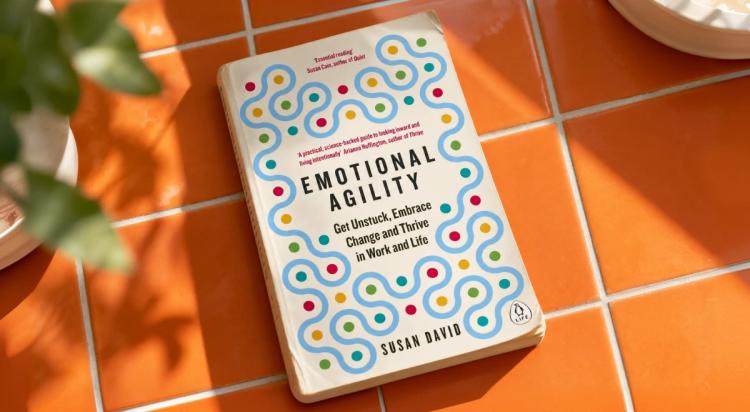
'Emotional Agility' by Susan David, Ph.D., is the steadying read here. David's core idea is that you don't have to believe every thought or obey every feeling. You can notice an emotion, name it, and choose your next move instead of getting hooked. For highly sensitive people whose feelings run hot, that small gap between feeling and reacting is where emotional regulation actually begins.
If the overthinking tips into worry, a focused shelf of books about anxiety can help with the anxious spirals that sensitivity sometimes feeds. And when the issue is the intensity itself, practical guidance on how to control your emotions gives you ways of riding the bigger emotional waves without being swept off your feet.


For the HSP who says yes when they mean no
Sensitive people often feel another person's disappointment before it's even spoken, so "no" can feel physically uncomfortable. The result is a pile of yeses you didn't mean and a slow drift into over-giving that leaves many HSPs resentful and tired.
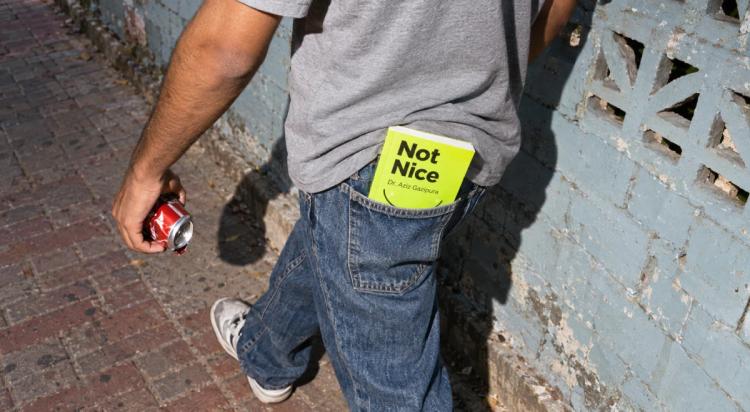
'Not Nice' by Dr. Aziz Gazipura takes that apart. He separates being kind from being compliant, and he hands you actual scripts for holding a line, like a plain "That doesn't work for me, but thanks for thinking of me." The common mistake is reading it, nodding along, and never saying any of it out loud. The scripts only count once they leave your mouth.
It sits naturally beside a wider set of books on people-pleasing if you want more angles on unlearning the habit of over-giving. Start small, with one low-stakes no just outside your comfort zone, and let your nervous system catch up to the idea that disappointing someone is survivable.
Where high sensitivity meets introversion
Here's a mix-up worth clearing up. High sensitivity and introversion overlap a lot, but they aren't the same thing: introversion is about where you draw your energy, while high sensitivity is about how deeply you process what comes in. Plenty of sensitive people are actually extroverts who love company and still need a dark, quiet room afterward.
'Quiet' by Susan Cain is the book that made the case for the inward-facing temperament out loud. It's reporting and story more than a workbook, and it argues that careful, reflective minds deserve room in a culture that rewards whoever talks most. Sensitive introverts, in particular, tend to come away feeling understood rather than lectured, carried by the book's quiet wisdom.
If the introvert side of you is the louder half, a dedicated list of books for introverts goes deeper into the quieter, inward-facing side of the trait. Read Cain for the big reframe, then branch out from there.
📘 Start with Susan Cain's 'Quiet' as a quick summary on Headway!
For anyone who's been told they're "too much"
If you grew up hearing "you're too much" or "why can't you just relax," this is your section. The aim here isn't to sand the trait down. It's to stop treating it as a defect in the first place.
'Divergent Mind' by Jenara Nerenberg widens the frame, drawing on interviews and recent research. She connects high sensitivity to the broader picture of neurodivergence and a society built for louder temperaments, and argues that many people, especially highly sensitive women, waste years assuming something is wrong with them, when the truer problem is a sensitive nervous system wedged into an environment built for someone else.
It reads like long-form journalism, and it's the pick for days when you suspect the setting is the real issue, not your character.
'Sensitive' by Jenn Granneman and Andre Sólo makes the strengths case directly. It gathers the research on sensitivity as a creative advantage in empathy, vulnerability, and depth, then reframes a trait many people apologize for as one worth guarding. There's no Headway summary for it yet, but it's an easy, affirming read that offers real hope for highly sensitive adults ready to drop the apology.
Both sit well beside a shelf of books on self-compassion for the slow work of learning to treat yourself more gently after years of the opposite, even when a book can't hand you all the answers.
Gentle fiction for when nonfiction feels like too much
Sometimes the last thing a tired, sensitive brain wants is another self-help book telling it to do the work. Fiction can do quieter things. It lets you feel deeply on purpose and makes room for reflection, in a world you can close the moment you've had enough. The trick is choosing stories that are warm and slow rather than loud and cruel.
For pure comfort, 'The House in the Cerulean Sea' by TJ Klune is hard to beat. It's a cozy, low-stakes story about a found family of gentle misfits, and almost nothing in it is designed to wound you.
When you want something restorative, 'The Enchanted April' by Elizabeth von Arnim sends four worn-out women to an Italian castle and lets them slowly thaw. It moves at the pace of one long exhale.
For nostalgia and big feelings handled kindly, 'Anne of Green Gables' by L.M. Montgomery still lands, with a heroine who feels everything at full strength and is loved for it anyway. And if you want the lowest-intensity read on the list, 'Legends & Lattes' by Travis Baldree is a quiet fantasy about opening a coffee shop, where the biggest stakes are a good day's work. Pick by the mood you're in, not by what you think you should be reading.
Turn a shelf of sensitive reads into something you'll finish with Headway
A stack of books for highly sensitive people can quietly become one more thing you're behind on, and for a sensitive reader, that unread pile carries its own low hum of guilt. So treat this less like an assignment and more like a menu. Pick the one book that matches where you are this week, give it a little honest reflection, and let the rest wait.
If a full shelf still feels heavy, Headway offers 15-minute text or audio versions of several titles here, plus progress tracking, so you can sample a book in a quiet pocket of your day before committing to the whole thing. It's a low-pressure way to pull the key ideas from the titles it does cover and build a steady reading habit around a nervous system that likes small doses.
One last thing. High sensitivity on its own is a trait to work with, but if overwhelm, anxiety, or low mood starts getting in the way of everyday life, a licensed mental-health professional is the right kind of support, and reaching out is a strength rather than a last resort.
📘 Build a gentle reading habit with Headway!
FAQs about books for highly sensitive people
How do you respond to a highly sensitive person?
Give them a heads-up before plans change, since surprises and rushing tend to hit harder for them. When they react strongly, resist saying they're overreacting, and name what you actually see instead. Build in downtime after busy events, and keep feedback specific and kind. Mostly, treat their depth as useful information, not a problem to manage, and let them recover at their own pace.
What triggers a highly sensitive person?
Common triggers fall into a few buckets: sensory overload from noise, bright light, or crowds; time pressure and back-to-back schedules with no gaps; conflict or tension in a room; absorbing other people's moods; and criticism, which lands hard and tends to linger. Hunger and exhaustion lower the threshold for all of them, so the same event can feel fine one week and unbearable the next.
Why does my body feel so sensitive to everything?
High sensitivity runs deeper than mood, because it's wired into the nervous system. People with the trait appear to have a lower threshold for sensory input and do less automatic filtering, so ordinary sounds, textures, and lights reach full awareness instead of fading into the background. The trait is also linked to stronger activity in brain areas tied to deep processing. It's physiology, not fussiness.
What's a good book for a highly sensitive person with low self-esteem?
If being sensitive has worn down your self-worth, try Elaine Aron's 'The Undervalued Self'. It digs into the inner critic and the love-and-power balance that leaves many HSPs feeling small, and it offers steadier, compassionate ways to value yourself. Pair it with a self-compassion read, and go slowly, since this material can stir up a lot at once.
Is there a Highly Sensitive Person workbook?
If you'd rather do exercises than read straight through, Aron's 'The Highly Sensitive Person's Workbook' walks you through prompts to help you identify your own triggers, strengths, and history. Amanda Cassil's 'The Empowered Highly Sensitive Person Workbook' adds structured self-care and boundary plans. Each is a valuable resource for readers who learn by writing things down and want tools they can return to.
What should you read after 'The Highly Sensitive Person'?
Once Aron's classic clicks, pick by your situation. 'The Highly Sensitive Person in Love' digs into close relationships, including what sensitivity means for a partner or husband. 'The Highly Sensitive Parent' helps if you're raising kids while sensitive yourself. For a clinical angle, 'Psychotherapy and the Highly Sensitive Person' is written for the therapists who treat them.
Are these highly sensitive person books available as audiobooks?
Most of the popular titles, including Aron's and Cain's, come in audio, which helps if screens tire you by evening, though a paperback still suits a slow night in. You can borrow many through free library apps like Libby, or buy them from any major seller. Steer clear of random 'free PDF' sites, since those files are often low quality or pirated, and legitimate copies are easy to find.
Do highly sensitive people and empaths read the same books?
There's a lot of overlap, but they're not identical. An empath mainly absorbs other people's emotions, while a highly sensitive person processes all input more deeply, from noise to subtext. Empath-focused books like Judith Orloff's lean on shielding and boundaries, while HSP books like Aron's explain the wider trait. If you soak up moods most, start with the empath reads.