Self-growth
 Apps & Digital Tools
 Business & Career
 Success
 Growth Tools
 Psychology
 Communication
 Relationships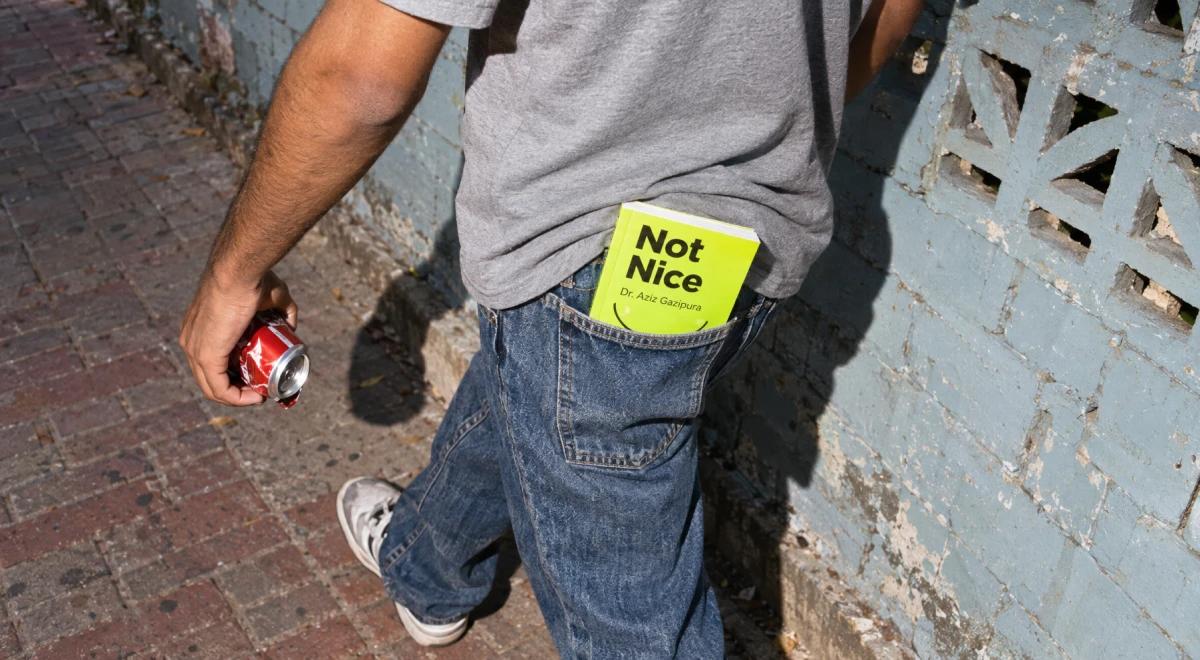

In a 2024 YouGov survey, about half of Americans said they'd describe themselves as people-pleasers — and of those, nearly half admitted it had made their life harder, not easier.
If you saw yourself in that number, you already know the tax it charges: the yes you regret before you've finished saying it, the resentment that leaks out sideways, the quiet sense that your calendar belongs to everyone but you. The right books on people pleasing won't hand you a script. They show you where the habit comes from and give you a concrete way to push back — one boundary, one open and honest sentence at a time.
This isn't a padded list of twenty titles that all say the same thing. Each of the six books below targets one specific reason people-pleasing takes hold, whether that's a fear of conflict, a blank spot where your limits should be, or years spent living by other people's expectations. Match the book to your pattern, and you skip the ones that don't apply to you.
📘 Get the key ideas from these people-pleasing books in about 15 minutes each on Headway.

Quick answer: The six best books on people-pleasing, and the habit each one breaks
Short on time? Here's the whole list at a glance, with the exact pattern each title helps you break.
'Not Nice' by Dr. Aziz Gazipura — breaks the habit of going silent to keep everyone comfortable.
'The Art of Saying NO' by Damon Zahariades — breaks the reflex of agreeing to things you'll resent later.
'Boundaries' by Dr. Henry Cloud and Dr. John Townsend — breaks the confusion about where your limits even are.
'Set Boundaries, Find Peace' by Nedra Glover Tawwab — breaks the stress, anger, and anxiety that pile up when you never say no.
'Untamed' by Glennon Doyle — breaks the pull to live by everyone else's expectations instead of your own.
'Atomic Habits' by James Clear — breaks the gap between knowing you should change and making it stick.
Where people-pleasing comes from
Most people assume people-pleasing is just kindness turned up a little too high. Look closer, and it's usually fear doing the driving: fear of conflict, fear of rejection, fear of disappointing someone whose approval you've quietly made load-bearing in your own mind.
That fear isn't a personal defect — wanting to be liked is part of our humanity, and psychologists have long described the need to belong as a basic human drive, closer to our need for food and safety than to a passing preference. Saying yes can feel completely natural, because on some level your brain still treats approval as survival.
The YouGov data backs this up. Two-thirds of Americans say they go to great lengths to avoid conflict, and 64% say they put other people's needs first at the expense of their own — as if their own needs matter less. In a world that quietly rewards the agreeable, those aren't rare quirks; they're the default setting for a huge share of us, running on autopilot until something forces a pause.
That pause is the whole game. Abdelrahman Mohamed Soliman, a cost control manager, describes training himself to stop and reframe under pressure instead of firing back the instant a request lands — a small change that transformed how his workday felt. His team noticed it before he announced it.
"You don't rush decisions anymore — you frame them."
The same muscle applies to a favor you don't have time for or a plan you don't want to join. The real challenge is catching the reflex before it fires — which gets easier once you see people-pleasing as the product of early conditioning rather than a fixed trait.
If you're interested in the deeper mechanics, psychology books for beginners offer a fascinating look at why approval feels so urgent, and rethinking that single belief changes everything downstream.
📘 Match a book to your pattern with a plan built around your goals on Headway.
The best books for people pleasers — and who each one is for
Pick the title that matches the version of people-pleasing you struggle with most. You don't have to read them in order, and you don't need the complete set to see a change — start with one, then reach for a second book when you want to go deeper.
1. 'Not Nice' by Dr. Aziz Gazipura — for people who go quiet to keep the peace
If you swallow your opinion in meetings, laugh off things that bother you, and only realize how angry you are on the drive home, start here. Dr. Aziz Gazipura draws a sharp line between being kind and being "nice" — the second one, he argues, is a fear response dressed up as a virtue.
The book walks through why staying silent feels safe and how to build the social confidence to speak up, set your limits, and treat the act of saying no as ordinary rather than rude. Unlike a lot of other books on the subject, it's practical, warm, and a little confrontational in the best way — exactly what a chronic peacekeeper needs.
2. 'The Art of Saying NO' by Damon Zahariades — for people who agree first and regret it later
Some of us say yes on reflex, then spend the next week quietly furious at ourselves. Damon Zahariades wrote this one for exactly that loop. The book is short and blunt, focused on the mechanics of refusing a request without torching the relationship — how to turn someone down at work, with family, and with the friend who always needs "just one favor."
He treats saying no as a skill you drill rather than a personality trait you're born with, which means it's learnable even if you've folded a thousand times before. Read it when your calendar has become a monument to other people's priorities.
3. 'Boundaries' by Dr. Henry Cloud and Dr. John Townsend — for people who can't find the line
You can't defend a boundary you've never drawn, and that's the gap this classic closes. Dr. Henry Cloud and Dr. John Townsend give you a framework for figuring out where you end and everyone else begins — what's your responsibility, what isn't, and how to tell the difference when guilt keeps blurring it.
The book leans on relatable examples from work, family, and friendships, so the abstract idea of "boundaries" turns into something you can point at. It's the foundation text for anyone who wants to take back control of their own life without waiting for permission.
4. 'Set Boundaries, Find Peace' by Nedra Glover Tawwab — for people whose people-pleasing has curdled into resentment
When you never say no, the cost doesn't disappear — it shows up as stress, low-grade anger, and anxiety that hums under every relationship. Therapist Nedra Glover Tawwab connects those feelings directly to missing boundaries and then hands you the language to fix it. She's especially good at the guilt spiral that hits at the very thought of disappointing someone, and how to sit with that discomfort instead of caving to it.
If your emotions feel tangled up with everyone else's moods, this is the book that helps you sort out which feelings are yours and improve the relationships that matter most.
5. 'Untamed' by Glennon Doyle — for people who've lost track of what they want
Not every people-pleasing book is a how-to. Glennon Doyle's memoir, released in 2020, is the one to reach for when the habit has gone so deep you're not even sure what you'd choose if approval weren't on the table. Writing as a wife and mother, she holds up a mirror to the expectations — from family, culture, and old versions of herself — that quietly ran her life, and reminds you that you're allowed to build one on your own terms.
It reads fast and hits hard, which is why this widely loved memoir connects with readers who are tired of performing.
That distinction between performing and being grounded came up for Deyvis Bebicaci, an executive coach, who describes an insight on authentic confidence that helped one of his clients shift from proving themselves in every room to simply showing up. For a people-pleaser, that's the whole shift in miniature. If pushing back in person is the hard part for you, pair this with our roundup of books for introverts.
6. 'Atomic Habits' by James Clear — for people who know all this and still can't make it stick
Insight is cheap; changed behavior is expensive. You can finish every book above, nod along, and still cave the next time your boss drops a Friday-afternoon "quick ask." James Clear's bestseller is the bridge. It doesn't target people-pleasing directly, yet its core idea — that you change by building tiny, repeatable systems rather than leaning on willpower — is exactly what turns "I should set boundaries" into something you do without a pep talk.
Stack a small new response onto an existing routine and let it compound into the version of you your future self will thank you for.
Andrea Bagaglia, a copywriter who'd stopped reading at 16, rebuilt the habit this way — not on heroic discipline, but by filling 20 to 30 minutes of dead time he was already wasting. If you want to read books but never seem to finish them, the same logic works for a boundary: small, consistent, unremarkable. For more on that compounding approach, our self-improvement reading list is a solid next stop.
📘 Turn one honest "no" into a routine with a daily plan on Headway.
How to choose the right books for people pleasers
Still deciding? Use this table to map each title to the pattern you're trying to break — no need to read every book mentioned here.
| Book | Best for | Core idea | Format |
|---|---|---|---|
'Not Nice' | Going silent to avoid conflict | "Nice" is fear; kind is a choice | Practical, direct |
'The Art of Saying NO' | Agreeing then resenting it | Refusing is a learnable skill | Short, tactical |
'Boundaries' | Not knowing where your limits are | Name what is and isn't yours | Framework, example-driven |
'Set Boundaries, Find Peace' | Stress, anger, and anxiety in relationships | Missing limits fuel hard emotions | Warm, therapist-led |
'Untamed' | Living by others' expectations | Rebuild life on your own terms | Memoir, narrative |
'Atomic Habits' | Knowing but not doing | Small systems beat willpower | Actionable, habit-based |


Stop pleasing, start choosing — with Headway
Any list of books on people-pleasing runs into the same wall: reading about boundaries and holding one are different skills, and the people who most need the second have the least time for the first. Six full books is roughly 40 hours. Between work, family, and the favors you keep saying yes to, that stack is going to sit there judging you.
That's where Headway earns its place. You answer a few questions about what you're working on, get a personalized plan, and pull the core ideas from each title in about 15 minutes — read or listen in whichever medium fits your day, on your commute, over coffee, or before bed. You can explore topics like psychology, relationships, and communication, and move between them as your goals change. It's the difference between owning the books and using them.
Readers keep describing the same shift. Israel Erick López Andrade, a freelance writer, swapped hours of low-value scrolling for a few focused minutes of personal development. Olena Khodos, a content marketing manager, used quick summaries to test ideas from books like 'Deep Work' in real life instead of letting them gather dust. The pattern holds across dozens of reader stories: the friction drops, so the growth finally happens.
And once you've freed up a few evenings that used to go to other people's plans, spend them on something that's purely yours — a popular book series you want to finish, or the best historical fiction for a long weekend. Putting yourself first can start with the reading you do for no one but you.
A final thought: finishing more books was never the goal. Keep showing up for yourself — one honest no at a time — and continue even on the days guilt makes its case.
📘 See what fits your goals and start your plan on Headway.
FAQs on books on people-pleasing
What is the best book for people pleasers?
It depends on where the habit bites hardest. If you go silent to avoid friction, 'Not Nice' by Dr. Aziz Gazipura is the strongest starting point. If your problem is agreeing to things you later resent, 'The Art of Saying NO' is more direct. The best pick is the one that names the pattern you recognize in yourself.
Do books about people pleasing actually work?
They work when you treat them as practice, not just reading. Insight alone rarely changes behavior — you have to test one boundary in real life and sit through the guilt that follows. Pairing a title like 'Boundaries' with a single concrete action, such as declining one request this week, is what turns a good idea into a new default.
Is people-pleasing a trauma response?
Sometimes. Therapists often link chronic people-pleasing to the "fawn" response — a survival strategy where the act of keeping others happy is how you learned to feel safe, especially if conflict once felt dangerous at home. That doesn't mean everyone who pleases has trauma, but if saying no triggers real fear in your body and mind, it's worth exploring with a professional. The books here help with the habit; deeper wounds may need more support.
How do I stop people-pleasing without feeling guilty?
Expect the guilt — it's a sign you're changing a deep pattern, not proof you did something wrong. On a practical level, the most effective start is small: decline a low-stakes request and notice that the relationship survives. Books like 'Set Boundaries, Find Peace' give you language for the moment, while a habit framework helps you repeat it. Unlearning the reflex is a gradual process, but each no makes the next one easier.
What's the difference between being kind and being a people pleaser?
That distinction is important. Kindness is a choice you make freely; people-pleasing is a fear response you can't easily switch off. A kind person can still say no and mean it, while a people-pleaser says yes to avoid discomfort, then pays for it in resentment. The goal of these books isn't to make you colder — it's to make your yes mean something.
How long does it take to stop being a people pleaser?
There's no fixed timeline, but most people notice a shift within a few weeks of practicing small refusals. Over the course of a couple of months, saying no starts to feel less like a crisis and more like a normal choice. You won't complete the change and never slip again — you continue practicing, and the old reflex simply loses its grip. Progress matters more than perfection here.
Can a book summary teach boundaries as well as the full book?
For practical books, often yes. Titles like 'Boundaries' and 'The Art of Saying NO' are built on a handful of core principles wrapped in examples, and the principles are what you apply. A 15-minute summary on Headway gives you the framework fast, so you can start practicing today and decide later whether a particular book is worth buying in full.
Are these people-pleasing books useful for work situations?
Very. A lot of people-pleasing lives at the office — covering for coworkers, agreeing to unrealistic deadlines, never asking for what you're owed. 'The Art of Saying NO' and 'Boundaries' both address workplace dynamics directly, and 'Atomic Habits' helps you build the small, repeatable responses that hold up when your manager drops a last-minute "quick favor" on a Friday.
Is people-pleasing a sign of low self-esteem?
Often, yes. When your self-worth depends on other people's approval, saying no feels like risking your value in their eyes, so you default to yes. Low self-esteem and people-pleasing tend to feed each other: the more you chase external validation, the less your own opinion seems to matter. Rebuilding the sense that you matter regardless of anyone's reaction is what finally loosens the habit.
Are people pleasers born or made?
Mostly made. Some people are naturally more attuned to others' moods, but people-pleasing is largely learned — in YouGov's survey, about a third of self-identified people-pleasers said they were socialized into it. Early upbringing and the quiet emotional education we absorb at home matter most: a child who wins a mother's or father's warmth by staying agreeable often carries that lesson for decades. A learned habit, though, can be unlearned.