Self-growth
 Apps & Digital Tools
 Business & Career
 Success
 Growth Tools
 Psychology
 Communication
 Relationships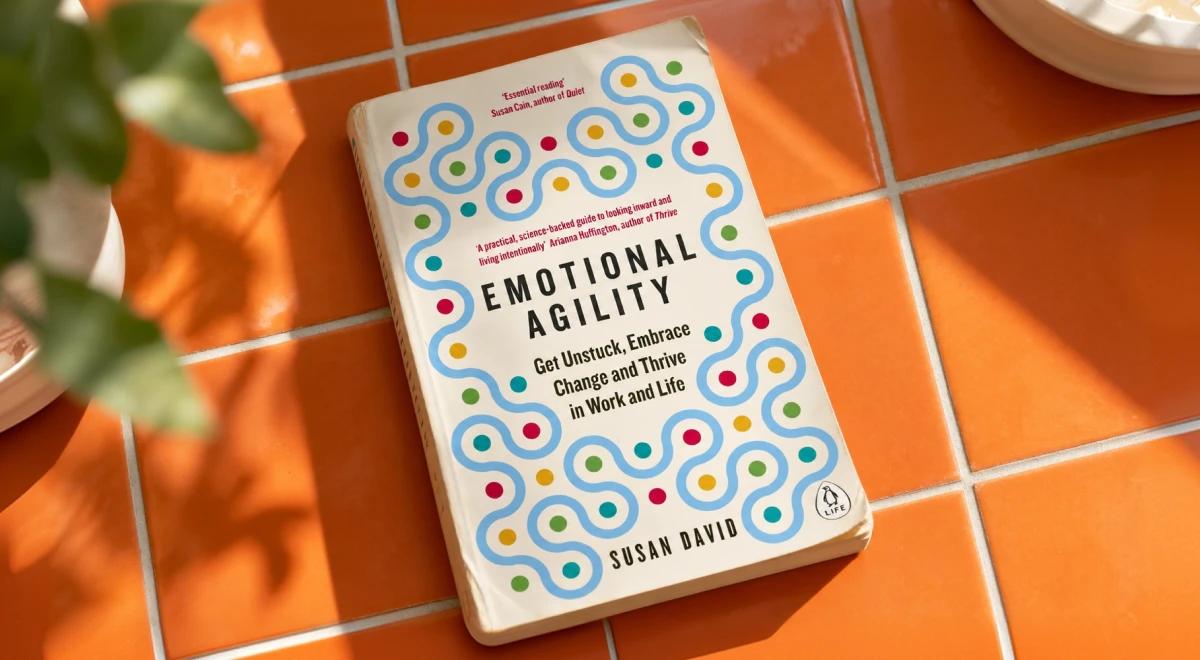

Ever spent a whole evening locked in an argument with a thought you couldn't switch off?
Most of us have been there. And the usual fixes — thinking positive on command, or shoving the thought away — tend to make it louder. That tug-of-war has a name in psychology: rigidity. The opposite skill, the one that lets you feel something uncomfortable and still act like the person you want to be, is psychological flexibility.
The best books on psychological flexibility teach exactly that, and most of them trace back to a research-backed approach called Acceptance and Commitment Therapy, or ACT. A 2020 review of 20 meta-analyses reported that ACT works across a wide range of problems — anxiety, depression, substance use, and chronic pain among them — drawing on data from more than 12,000 people.

Reading about flexibility, of course, is not the same as having it. A concept you understand on Monday won't help much during a tense meeting on Thursday unless you've practiced it. That gap between knowing and doing is why the smartest use of a book like this is to pair it with a system that brings one idea back to you, day after day, until it sticks.
📘 Explore the ideas behind a steadier mind on Headway.
Quick answer: The best books on psychological flexibility at a glance
If you'd rather skip straight to the pick that matches what's stopping you, here's the short list. Each title targets one specific way people get mentally stuck.
'The Happiness Trap' by Russ Harris — for the chronic overthinker who's tired of fighting every thought.
'A Liberated Mind' by Steven C. Hayes — for the full ACT model from the person who built it.
'Get Out of Your Mind and Into Your Life' by Steven C. Hayes — the hands-on ACT workbook for beginners.
'Emotional Agility' by Susan David, PhD — for unhooking from difficult feelings at work and home.
'When Things Fall Apart' by Pema Chödrön — for coping with uncertainty and loss.
'Think Again' by Adam Grant — for rethinking beliefs you've outgrown.
'Mindset' by Carol S. Dweck — for a more adaptable view of your own ability.
'Thinking, Fast and Slow' by Daniel Kahneman — for catching your own cognitive biases.
'Option B' by Sheryl Sandberg and Adam Grant — for rebuilding after a setback.
'The Mental Toughness Handbook' by Damon Zahariades — for a practical, step-by-step routine.
'Wherever You Go, There You Are' by Jon Kabat-Zinn — for staying present when your mind races ahead.
Six of these — the ACT and psychology core, plus the resilience picks — are available to read or listen to in the Headway library, so you can test an idea in 15 minutes before committing to the full copy.
What psychological flexibility really means (and why forced positivity backfires)
Psychological flexibility is the ability to stay in contact with the present moment, make room for hard thoughts and feelings instead of wrestling them, and keep taking action in service of your core values.
Steven Hayes — a Foundation Professor at the University of Nevada, Reno, who co-founded ACT and the broader field of contextual behavioral science — breaks it into six core processes:
Noticing the present
Cognitive defusion (unhooking from unhelpful thoughts)
Accepting difficult emotions
Seeing thoughts as mental events rather than orders
Clarifying your core values
Committing to value-driven choices anyway
Those core processes are the levers you pull to increase psychological flexibility.
The model grew out of Hayes's work on how language itself can amplify human suffering — a quirk of our humanity, where a single negative thought can spiral into a story we treat as fact. ACT sits in the "third wave" of behavioral and cognitive therapy, alongside older forms of cognitive therapy, and clinicians now apply it across a wide range of psychological issues and mental health conditions, from anxiety and depression to eating disorders.
The reason "just think positive" so often fails is that suppression is a rigid move, and psychological rigidity is the whole problem here. In a classic experiment, people told not to picture a white bear ended up thinking about it more than those who were free to picture it — the mind pushes back when you try to win the argument in your head.
Books to improve psychological flexibility take a different tack: through cognitive defusion, they teach you to change your relationship with painful thoughts so they carry less weight. There's a metacognitive layer to it, too — much of the work is learning to watch how a thought leads to a reaction, rather than getting swept along by it.
That skill quietly touches everything. It shows up as fewer reactive emails, calmer hard conversations, and the ability to keep working toward a goal when motivation dips — the same terrain covered by the best books for productivity, just approached from the inside out. If you're newer to the science of the mind, a broader primer like our roundup of psychology books for beginners pairs nicely with the reads below.

Best books on psychological flexibility and ACT (start here)
These are the foundational books about psychological flexibility and ACT — the best psychological flexibility books for beginners to start with if the term is new to you, or if your main struggle is a mind that won't stop chewing on things.
1. 'The Happiness Trap: How to Stop Struggling and Start Living' by Russ Harris — for the chronic overthinker
Russ Harris took the clinical machinery of ACT and made it genuinely readable and user-friendly, which is no small feat. His core argument is that our culture sells a myth: that a good life means feeling good most of the time. Chase that, and every normal bout of anxiety or self-doubt starts to feel like a malfunction — so you struggle against it, and the struggle itself becomes the trap.
What makes this one of the most useful ACT books for beginners is how concrete it is. You'll learn defusion moves for managing difficult thoughts and feelings — thanking your mind for a worry, or watching a negative thought drift by rather than obeying it. Among books for overthinking, and ACT books for overthinking in particular, it's a standout because it stops treating your thoughts as problems to be solved and starts treating them as weather to be observed.
2. 'A Liberated Mind: How to Pivot Toward What Matters' by Steven C. Hayes — for the full model
If Harris is the friendly on-ramp, Steven C. Hayes is the architect. As the researcher who developed ACT, Hayes wrote 'A Liberated Mind' to lay out the whole framework: the six pivots that move you from mental rigidity toward flexibility, each one a shift from a stuck pattern to a freer one. He weaves in the science and a fair amount of his own story, including the panic attacks that pushed him toward this work.
This is the book for readers who want to understand the mechanism, not just the tips. It's denser than Harris, and that's the point — you come away with a mental map of why acceptance, defusion, and values-based action fit together as one system rather than a grab bag of tricks. Coaches, therapists, and seriously curious readers tend to keep this one within reach as a reference. Treat it as the backbone text once a lighter read has warmed you up to the ideas.
3. 'Get Out of Your Mind and Into Your Life: The New Acceptance and Commitment Therapy' by Steven C. Hayes — the beginner ACT workbook
Some people learn by reading; others need to do the reps. 'Get Out of Your Mind and Into Your Life' is the classic Acceptance and Commitment Therapy workbook, built around exercises rather than explanation. Hayes (with co-author Spencer Smith) walks you through metaphors, worksheets, and practices that make the abstract concrete — sorting what you can control from what you can't, defusing sticky thoughts, and clarifying the values you want to steer by.
As a psychological flexibility exercises book, its strength is momentum: instead of nodding along, you're testing the skills on your own worries. That makes it a fitting ACT workbook for beginners who suspect they'll forget a purely theoretical read by next week. Work through a chapter at a time, give the exercises a real shot, and don't rush — the value is in the doing, not the finishing.
📘 Try a 15-minute summary on Headway.
Books on psychological flexibility and emotional regulation
Flexibility and emotion are inseparable. These books on psychological flexibility and emotional regulation focus on what to do with feelings you'd rather not have — the anxiety before a decision, the grief that arrives uninvited.
4. 'Emotional Agility: Get Unstuck, Embrace Change, and Thrive in Work and Life' by Susan David, PhD — for unhooking from hard feelings
Harvard Medical School psychologist Susan David built 'Emotional Agility' around a phrase worth memorizing: discomfort is the price of admission to a meaningful life. Her four-step method — showing up to your emotions, stepping out to gain distance, walking your why, and moving on with small tweaks — translates psychological flexibility for the workplace and the kitchen table alike.
This is one of the best self-help books for psychological flexibility if your sticking point is emotional, not intellectual. David's research background keeps it grounded, and her examples — the frustrated executive, the anxious parent — are easy to see yourself in. It reframes accepting difficult emotions as data rather than danger: your anger is telling you a boundary got crossed, your nerves are telling you something matters.
5. 'When Things Fall Apart: Heart Advice for Difficult Times' by Pema Chödrön — for coping with uncertainty
Written by Buddhist teacher Pema Chödrön, 'When Things Fall Apart' is quieter than the others here, and for some readers that's exactly what lands. Her subject is the moment the ground gives way — a breakup, a diagnosis, a plan that collapses — and her counsel runs against every instinct: stop trying to escape the discomfort and stay with it.
Among books about accepting difficult emotions, this is the one to reach for when the problem isn't a nagging thought but genuine pain. It won't hand you a five-step framework, and that's the point — it teaches a softer, more durable kind of acceptance that traditional self-help sometimes skips. It's a strong companion for anyone facing loss or a season of not-knowing, and it pairs well with the more structured ACT titles above.
📘 Read the key ideas on Headway.
Books on cognitive and mental flexibility
Psychological flexibility has a thinking side as well as a feeling side. These books sharpen cognitive flexibility, mental flexibility, and the metacognitive skills that help you update your own beliefs.
6. 'Think Again: The Power of Knowing What You Don't Know' by Adam Grant — for rethinking your beliefs
Organizational psychologist Adam Grant argues that most of us defend our opinions like prized possessions, when we'd be better off treating them like hypotheses. 'Think Again' is about the underrated skill of rethinking: noticing when a belief has passed its expiration date, and having the nerve to change your mind in public.
This is intellectual flexibility rather than the emotional kind, and it's a genuinely fun read, thick with stories and light on jargon. If you want to go further on the humility that makes rethinking possible, our list of books on intellectual humility is a natural next stop. Grant's larger gift is showing that changing your mind is a sign of learning, not weakness — a reframe that quietly makes you easier to work with and harder to manipulate.
7. 'Mindset: The New Psychology of Success' by Carol S. Dweck — for a more adaptable view of ability
Stanford psychologist Carol Dweck's research separates two ways of seeing yourself. In a fixed mindset, talent is a fixed quantity you either have or don't, so every setback feels like a verdict. In a growth mindset, abilities are things you build, so a failure becomes information. 'Mindset' lays out how that single belief shapes the way you handle challenges across school, work, and relationships.
The link to psychological flexibility is direct: a growth mindset is cognitive flexibility applied to your own potential. When you stop reading struggle as proof of your limits, you free yourself to adapt, experiment, and keep going. Dweck's ideas have been repeated so widely that they can sound obvious, but the book is more careful than the pop version — she's clear that a growth mindset isn't just praising effort or telling yourself you can do anything.
8. 'Thinking, Fast and Slow' by Daniel Kahneman — for catching your cognitive biases
Nobel laureate Daniel Kahneman gives you the operating manual for your own mind. His famous split — System 1 (fast, intuitive, emotional) and System 2 (slow, deliberate, logical) — explains why we make so many predictable mistakes. Most of our errors happen when the fast system grabs the wheel on a question that needed the slow one. The book is a tour of the cognitive biases that quietly warp our choices, from anchoring to loss aversion.
Reading it is a crash course in metacognition: you come away able to notice, in real time, when your intuition is helping and when it's leading you astray. That's a foundation for better problem solving and steadier choices, which is why it overlaps so cleanly with the best books for decision-making.
Anyone interested in how intuition and logic trade off will find plenty to chew on. Fair warning — it's the densest read on this list, and it rewards patience. Take it a section at a time rather than trying to sprint through.



Books on psychological flexibility and resilience
When life delivers a real blow, flexibility becomes resilience. These books on psychological flexibility and resilience are about adapting to change mentally and finding your footing again.
9. 'Option B: Facing Adversity, Building Resilience, and Finding Joy' by Sheryl Sandberg and Adam Grant — for rebuilding after a setback
After the sudden death of her husband, Sheryl Sandberg teamed up with psychologist Adam Grant to turn her grief into something useful for the rest of us. 'Option B' blends her raw personal account with his research on resilience, and the result avoids the trap of easy comfort. Grant's framing of the "three P's" — personalization, pervasiveness, and permanence — gives you a practical lens for the thoughts that make hard times feel worse than they are.
This is one of the best books for emotional resilience precisely because it doesn't pretend adversity is a gift. It's honest about how much a loss can hurt while still showing that people bend, adapt, and rebuild more often than they expect. If your original plan has fallen through — a job, a relationship, a version of the future you'd counted on — this book meets you there. You can find the essentials of 'Option B' on Headway when you need them in a hurry.
10. 'The Mental Toughness Handbook' by Damon Zahariades — for a practical, step-by-step routine
Where some titles here lean philosophical, Damon Zahariades keeps it brisk and tactical. 'The Mental Toughness Handbook' is built as a step-by-step program for managing negative emotions and building the kind of adaptive grit that difficult situations demand. Zahariades writes in short, practical chapters, with exercises aimed at reframing setbacks, tolerating discomfort, and staying composed when things go sideways.
It's a good fit for readers who want a clear routine rather than a change of worldview — practical books on psychological flexibility that tell you what to do on Tuesday. The tone is no-nonsense, and the structure makes it easy to work through in bursts. Pair it with a more reflective title like 'When Things Fall Apart,' and you get both halves: the mindset shift and the daily drills. The key takeaways of 'The Mental Toughness Handbook' are on Headway too.
Books on psychological flexibility and mindfulness
Mindfulness is the muscle underneath much of this work — the capacity to notice what's happening without immediately reacting. This is the pick for the present-moment side of the skill.
11. 'Wherever You Go, There You Are: Mindfulness Meditation in Everyday Life' by Jon Kabat-Zinn — for staying present
Jon Kabat-Zinn brought mindfulness into mainstream medicine, and 'Wherever You Go, There You Are' is his warm, unfussy introduction to the practice. The premise is right there in the title: you can't outrun your own mind, so you may as well learn to inhabit the present moment you're in. He offers short, approachable meditations and a gentle argument that attention itself is trainable.
For psychological flexibility, present-moment awareness is the entry point — you can't unhook from a thought you haven't noticed. Kabat-Zinn keeps things secular and practical, which makes this a comfortable start for skeptics who bristle at anything that sounds mystical. If a racing mind pulls you into the past or future all day, these small practices give you somewhere to stand — and, over time, a little more peace. Read a few passages, try one exercise, and see what shifts.
📘 Build the daily habit with Headway.
Which of these books on psychological flexibility should you read first?
The right starting point depends on where you're stuck. Match the book to your bottleneck rather than reading top to bottom.
| Book | Best for | Core idea | Where to start |
|---|---|---|---|
'The Happiness Trap' | Overthinking, anxiety | Stop fighting thoughts; act on values | Read it first if ACT is new |
'A Liberated Mind' | Understanding the full model | Six pivots toward flexibility | After a lighter intro |
'Get Out of Your Mind and Into Your Life' | Learning by doing | Exercises over explanation | When you want a workbook |
'Emotional Agility' | Feelings at work and home | Unhook, then move with your values | For workplace stress |
'When Things Fall Apart' | Uncertainty and loss | Stay with discomfort, don't flee it | During a hard season |
'Think Again' | Outdated beliefs | Rethink like a scientist | For intellectual rigidity |
'Mindset' | Self-doubt about ability | Abilities grow with effort | For fear of failure |
'Thinking, Fast and Slow' | Faulty judgment | Spot your cognitive biases | For deep readers |
'Option B' | A major setback | Name the three P's, rebuild | After a loss |
'The Mental Toughness Handbook' | Wanting a routine | Step-by-step grit drills | For a quick, tactical read |
'Wherever You Go, There You Are' | A racing mind | Train present-moment attention | For a mindfulness base |
For a wider set of titles beyond flexibility, our roundup of the best books for self-improvement is a good place to browse next.
How real readers made the shift
Books plant the idea; a daily habit is what turns it into behavior. The Headway readers below aren't therapists — they're a cost-control manager, a coach, a couple of software engineers, and a student — and each one describes the same quiet change: a bit more space between a trigger and a reaction.
Abdelrahman Mohamed Soliman, a lead cost control engineer, spent his days in firefighting mode until a 20-minute morning learning habit gave him room to pause before reacting. In his story about becoming a more strategic leader, he describes catching himself mid-defensive reaction during a tense cost discussion and choosing to reframe instead. The feedback that stuck with him came from a colleague:
"You don't rush decisions anymore — you frame them."
That pause between stimulus and response is psychological flexibility in one sentence.
Software engineer Enrique García Galán used the same principle on a smaller habit. He'd reach for his phone on autopilot and lose half an hour before noticing. By swapping the reflex for a short learning block, he says he gained more control over where his attention goes — a very ACT-shaped win, since the whole game is acting on purpose instead of running on autopilot.
A few more, briefly:
Executive coach Deyvis Bebicaci values "precision over volume," and credits a summary on decision-making under pressure with helping a client slow down enough to regain clarity during a restructuring.
Developer, triathlete, and parent Ivan Karačić took a lesson from 'The First 20 Hours' and stopped waiting to be perfect, which left him less paralyzed and more willing to adapt across his many roles — and reconnected him with a passion for learning.
University student Rahaf Sobh kept seeing an unfinished book and feeling a small discomfort — then changed her relationship with that feeling and built a steady, low-pressure learning habit instead of an all-or-nothing one.
None of them read every book on this list. They each took one idea and practiced it until it changed how they responded under pressure. That's the move.
Put psychological flexibility to work with Headway
A reading list like this comes with a built-in risk: finish all 11 best books on psychological flexibility, and you could spend most of a month reading instead of practicing it, while the ideas fade fast when they only live on the page. Getting more flexible has less to do with how many books you read and more to do with keeping one idea in front of you long enough for it to become a reflex.
That's where the Headway app fits. Instead of committing a weekend to 'A Liberated Mind' or 'Thinking, Fast and Slow,' you can absorb the core ideas of many of these books in 15-minute summaries, read or listen to during a commute or a coffee break.
You can revisit one defusion technique from 'The Happiness Trap' until it's second nature, then move to the next. Join 60 million people worldwide who downloaded Headway to turn a stack of good intentions into a daily practice — and start responding to hard moments instead of reacting to them.
📘 Find where to start on Headway.
FAQs about books on psychological flexibility
What is psychological flexibility in simple terms?
Psychological flexibility is the ability to stay present, make room for painful thoughts and feelings instead of fighting them, and keep making value-driven choices under pressure. It's the opposite of psychological rigidity, where difficult emotions dictate your behavior. Think of it as bending without snapping, so a bad mood or a scary thought no longer decides what you do next.
Is Acceptance and Commitment Therapy part of CBT?
Sort of. ACT is usually grouped with the "third wave" of behavioral and cognitive therapy, a family that grew out of traditional cognitive therapy but leans less on disputing negative thoughts and more on changing your relationship with them. It comes from contextual behavioral science, and its goal is to increase psychological flexibility rather than erase uncomfortable thinking. So it overlaps with CBT while taking a distinct path.
What is cognitive defusion?
Cognitive defusion is an ACT technique for loosening the grip of painful thoughts. Instead of arguing with a thought or obeying it, you notice it as a passing mental event — "I'm having the thought that I'll fail" rather than "I'll fail." It interrupts the chain where one negative thought leads to a spiral, which is why it helps so much with overthinking and anxiety.
Who created Acceptance and Commitment Therapy?
ACT was developed by Steven Hayes, a Foundation Professor at the University of Nevada, Reno, starting in the 1980s. He built it on contextual behavioral science and organized it around six core processes that together increase psychological flexibility. Hayes and colleagues later founded the Association for Contextual Behavioral Science, the professional body that supports research and training in the method today.
Are ACT self-help books as effective as therapy?
They can help, though they aren't a full substitute for professional care, especially for serious psychological issues. Research on self-help ACT is encouraging, and many people improve their mental health on their own with a good book and steady practice. If your suffering feels overwhelming or persistent, treat these psychological flexibility self-help books as a supplement and consider working with a licensed therapist.
Are there psychological flexibility books for therapists and psychologists?
Yes. Clinicians often reach for 'A Liberated Mind' by Steven Hayes for the underlying model, and 'ACT Made Simple' by Russ Harris as a practical clinical primer. These psychological flexibility books for therapists and psychologists go deeper into the six core processes and treatment protocols than a general reader needs. If you're a practitioner, start there; if you're a curious newcomer, the beginner titles above will serve you better.
How long does it take to increase psychological flexibility?
There's no fixed timeline, but small shifts can appear within a few weeks of daily practice, while bigger change usually takes months. Consistency matters far more than intensity — a few minutes a day beats an occasional marathon session. Because you build the skill through repetition, tools that resurface one idea regularly, like short daily summaries, tend to help it stick faster than a single read.
Is psychological flexibility the same as resilience?
They're close cousins, not twins. Resilience is your capacity to recover from adversity; psychological flexibility is the underlying skill set — acceptance, present-moment awareness, and value-driven choices — that makes recovery possible. Think of flexibility as the engine and resilience as the outcome. Books like 'Option B' sit right at that intersection, using flexible thinking to rebuild after a genuine setback.
What's the difference between cognitive flexibility and psychological flexibility?
Cognitive flexibility is mostly about thinking — switching between ideas, updating beliefs, and seeing a problem from new angles. Psychological flexibility is broader: it folds in that mental adaptability plus how you handle emotions and whether you can act on your values under stress. Cognitive flexibility is one ingredient; psychological flexibility is the whole recipe, covering thoughts, feelings, and behavior together.