Self-growth
 Apps & Digital Tools
 Business & Career
 Success
 Growth Tools
 Psychology
 Communication
 Relationships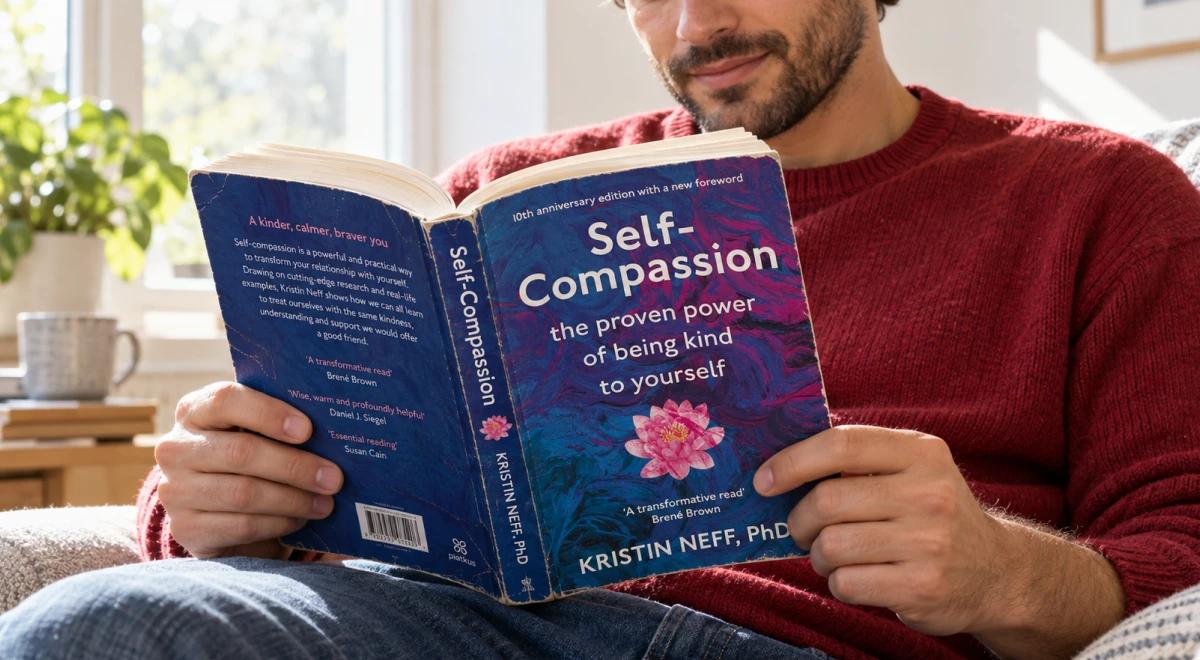

A four-year study by Duke University and the University of North Carolina shows that stress alone doesn't build resilience, and self-compassion alone doesn't either, but the two together do. That's likely why so many people go searching for the best books on self-compassion once they get tired of beating themselves up over every mistake.
Self-compassion means treating yourself with the same kindness you'd offer a friend, especially when you mess up. This list ranks six books on self-compassion by Kristin Neff, Christopher Germer, and Tara Brach, plus the workbook that turns the theory into daily practice.
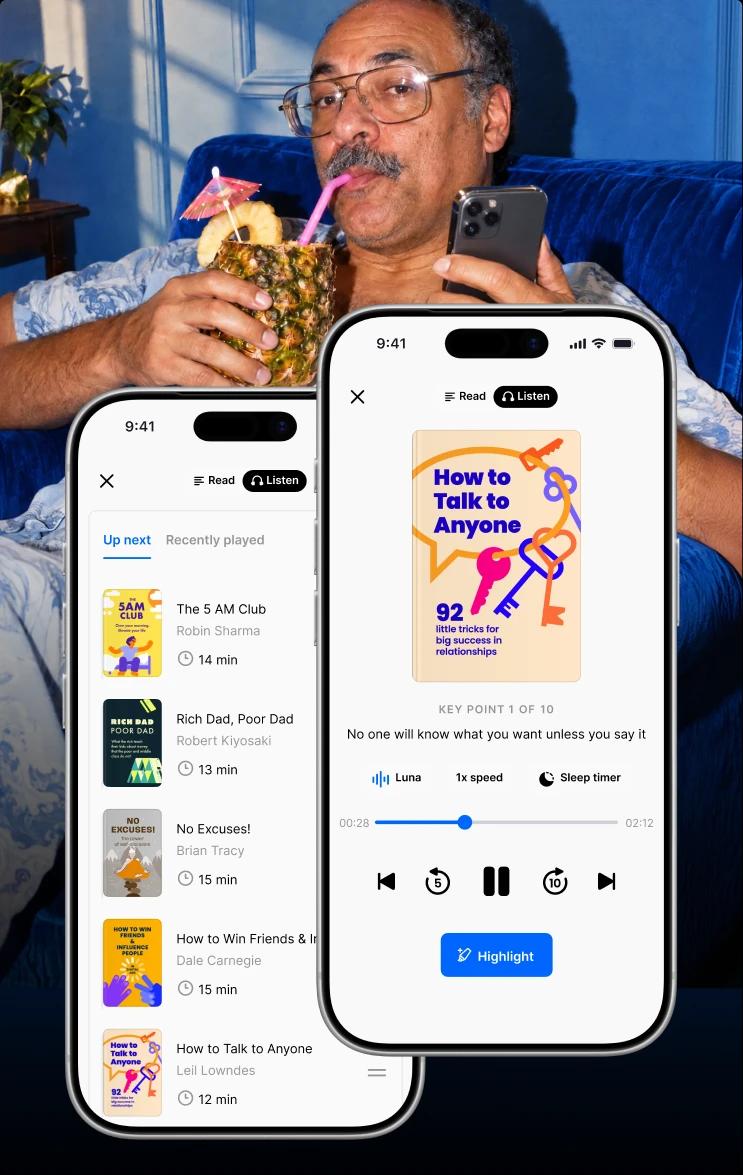
If reading five books feels like too much this month, Headway carries short summaries of all of them in one place, so you can start today instead of waiting until you finish one.
Download the Headway app and find insights from the top books that fit your busy day!

Quick summary: The best books on self-compassion, ranked
Short on time? Here's the shortlist before the full breakdown.
'Self-Compassion: The Proven Power of Being Kind to Yourself' by Kristin Neff is the foundational, research-backed place to start.
'The Mindful Path to Self-Compassion' by Christopher K. Germer works best if you're stuck in a self-criticism loop.
Headway's library holds bite-sized summaries of all five books on this list, plus dozens more on self-kindness and resilience.
'Radical Acceptance' by Tara Brach blends Buddhist mindfulness with Western psychology.
'The Gifts of Imperfection' by Brené Brown, Ph.D. tackles shame and self-worth from a more personal angle.
Keep reading for the full list, plus what the research actually says about why this works.
1. 'Self-Compassion: The Proven Power of Being Kind to Yourself' by Kristin Neff
Kristin Neff, an associate professor of educational psychology at the University of Texas at Austin, published 'Self-Compassion: The Proven Power of Being Kind to Yourself' through William Morrow in 2011.
It's widely considered the foundational book on this topic, since Neff ran the first empirical studies on self-compassion herself, grounded in solid empirical research rather than feel-good slogans.
The book pushes back against the relentless pursuit of higher self-esteem and unrealistic expectations of constant achievement, using her own groundbreaking research to show what actually helps in real life.
Unlike much self-help advice built on positive thinking, Neff backs every chapter with data from her studies rather than personal opinion alone.
For people who repeatedly judge themselves over small mistakes, the shift feels deeply personal. Neff's research links self-compassion to greater well-being and stronger self-worth scores across her studies, and the book spends real time on your inner life, not your résumé or your job title.
2. 'The Mindful Path to Self-Compassion' by Christopher K. Germer
Christopher K. Germer, PhD, is a clinical psychologist and psychiatry lecturer at Harvard Medical School, and his 2009 book carries the subtitle 'Freeing Yourself from Destructive Thoughts and Emotions.' 'The Mindful Path to Self-Compassion' guides readers through the specific emotional obstacles, like shame and fear, that keep self-criticism running on autopilot.
Germer treats chronic self-criticism as an emotionally debilitating struggle worth taking seriously, one worth addressing directly rather than pushing through with willpower alone. His approach centers on emotional healing, showing readers how to heal destructive emotional patterns instead of white-knuckling their way past them. That offers wise guidance for anyone navigating life's challenges after a string of hard weeks.
For readers who want to limit self-criticism without pretending it never happens, the book has become essential reading in the self-compassion field, packed with essential lessons on sitting with shame instead of running from it.
📘 Get gentler daily nudges toward self-kindness on Headway!
3. 'Radical Acceptance' by Tara Brach
Tara Brach, a psychologist and meditation teacher, published 'Radical Acceptance: Embracing Your Life with the Heart of a Buddha' in 2003. The book blends Western psychology with Buddhist mindfulness practices and Buddhist principles like non-attachment, drawing on decades of her own work with therapy clients and meditation students.
Brach leans on Eastern meditative strategies more than any other book here, but she doesn't turn any of it into a virtual religion. Even a brief moment of noticing pain without judgment counts as practice in her framework, which loops back to the same common humanity Neff studies from a research angle instead of a spiritual one.
The result feels deeply personal rather than clinical. Brach writes about her own struggles with self-hatred and addiction before finding a version of inner peace through these practices, part of why the book still resonates with readers more than two decades after it came out.
4. 'The Gifts of Imperfection' by Brené Brown, Ph.D.
Brené Brown, Ph.D., a courageous and compassionate author known for her research on shame and vulnerability, published 'The Gifts of Imperfection' through Hazelden in 2010. Her ideas have appeared everywhere from TED stages to a talk show host's couch, but the book itself stays grounded in her interview-based research.
Brown ties self-worth to what she calls Wholehearted living, and a lot of it comes down to self-love that doesn't hinge on unrealistic expectations of who you're supposed to be. She weaves in personal stories from her own research interviews, which makes the book read more like a conversation than a study.
Readers describe something close to a deep inner transformation after working through her guideposts on shame and belonging, and the book powerfully demonstrates how vulnerability research applies to something as ordinary as a bad day at work.
It's become essential reading for anyone who wants the emotional case for self-kindness before getting to the harder science.
5. 'The Mindful Self-Compassion Workbook' by Kristin Neff and Christopher K. Germer
'The Mindful Self-Compassion Workbook' by Kristin Neff and Christopher K. Germer came out through Guilford Press in 2018 and is built around Mindful Self-Compassion, the 8-week training program the two of them co-developed in 2010. Kristin Neff offers practical exercises you do week by week, rather than just explaining ideas.
The workbook teaches you to offer yourself the same caring support you'd give a close friend, swapping old habits of self-criticism for structured self-encouragement instead. It's an original and doable blueprint for becoming more self-compassionate, and a genuinely compassion-forward next step for anyone who finished Neff's first book and wanted more than theory.
Compare the core books at a glance
Here's how the five books stack up side by side.
| Book | Author | Best for |
|---|---|---|
'Self-Compassion' | Kristin Neff | Readers who want the research foundation first |
'The Mindful Path to Self-Compassion' | Christopher K. Germer | Readers stuck in a self-criticism loop |
'Radical Acceptance' | Tara Brach | Readers drawn to mindfulness and Buddhist psychology |
'The Gifts of Imperfection' | Brené Brown, Ph.D. | Readers who want the emotional case before the science |
'The Mindful Self-Compassion Workbook' | Neff and Germer | Readers who want structured, 8-week practice |
Practical exercises to try from these books before you finish reading them
You don't have to finish any of these books to start practicing. Here are four exercises pulled straight from the authors themselves.
Neff's self-compassion break: pause, name the pain out loud, remind yourself that struggling is part of being human, then place a hand over your heart for a few seconds.
Germer's soothing touch practice: notice where you hold tension when you're anxious, then place a hand there gently, the same way you'd comfort someone else.
Brach's RAIN technique, built on the ideas in 'Radical Acceptance': recognize what you're feeling, allow it to be there, investigate it with curiosity, then nurture yourself through it.
Brown's shame-resilience prompt: name the story you're telling yourself about why you're not enough, then ask what a friend would actually say back to you.
None of these take more than a brief moment, and none require finishing a single chapter first. Small as they are, these habits add up fast, which is the whole point of treating personal growth as something you practice in everyday living rather than something you only read about once.
📘 Try guided exercises for self-kindness on Headway!
Compassion-focused therapy and where these books draw from clinical psychology
Much of this research connects back to compassion-focused therapy, a framework developed by British clinical psychologist Paul Gilbert. Gilbert's approach blends evolutionary psychology, Buddhist psychology, and cognitive therapy, and he calls its central technique compassionate mind training, aimed at people stuck in shame and self-criticism loops.
Gilbert's work sits alongside research from other leading psychologists studying compassion and shame, and it's part of a bigger shift in how the field is designing positive psychology tools around what already works instead of just what's broken.
The profound implications go beyond any single book. This is now an active, growing research area, not a passing trend.
If clinical psychology like this interests you, our guide to psychology books for beginners is a solid next stop.
Why Headway works for turning these books into a daily habit
Reading the comprehensive research is one option. A 15-minute summary works better when a 300-page book doesn't fit into an already packed week, which is most weeks for most people. Headway turns personal growth into something you can fit into your personal life instead of a someday project.
Every book on this list is available in both audio and text, so you can listen during a commute or read on a break. Personalized growth plans surface the right summary based on what you're working through, and spaced repetition brings back your saved highlights so ideas stick instead of fading after a week.
Offline mode means a flight or a spotty signal won't interrupt a session, and CarPlay and Android Auto support turns a drive into learning time without touching your phone. Daily streaks keep the habit going on days when motivation alone wouldn't cut it, which matters for something built around everyday living, not a one-time read.
If stress relief is what brought you here, our roundup of the best books for stress relief covers more ground. And if you want more titles this short, our list of quick reads for adults rounds up short books built for exactly this kind of week.


What self-compassion means (and why self-esteem isn't the same thing)
Self-compassion includes three parts: self-kindness instead of self-judgment, common humanity instead of isolation, and mindfulness instead of over-identifying with pain. Kristin Neff built her research career around measuring these three pieces, and they show up in nearly every book on this list in one form or another.
Self-esteem depends on comparison. You feel good about yourself when you win, look good, or outperform someone else, and that same high self-esteem can crumble fast the moment things go sideways.
Self-compassion works differently: it asks you to be kind to yourself when you're struggling instead of measuring yourself against anyone else, which is why researchers now treat it as a genuinely healthier alternative to self-esteem.
This can sound like a revolutionary new idea, but Neff's first empirical studies on the topic go back more than 20 years. What she found again and again is that people chasing unrealistic expectations of constant achievement tend to burn out. In contrast, people practicing self-kindness report greater well-being and something closer to real happiness than a short-lived mood lift.
If you want a wider list to browse first, our roundup of the best books for self-improvement is a good place to start.
📘 Start building your own daily habit with Headway!

Be kinder to yourself starting today with Headway
These five books cover a lot of ground, from Neff's original research to Brach's meditative approach and Brown's take on shame and belonging. Whichever one fits your situation, the underlying idea stays the same: treating yourself with the same patience you'd offer a friend tends to work better than harsh self-talk ever did.
Headway turns all five of these books, plus thousands of others, into 15-minute summaries you can read or listen to whenever a spare few minutes shows up. Personalized recommendations point you toward what fits your current situation, and small gamified streaks and challenges help the habit stick past the first motivated week.
If self-criticism has been running the show for a while, that's a reasonable place to start changing it.
Download Headway and get your first self-compassion summary today, no full book required.
FAQs about best books on self-compassion
What are the three components of self-compassion?
Self-compassion has three parts, according to Kristin Neff's research: self-kindness instead of self-judgment, common humanity instead of isolation, and mindfulness instead of over-identifying with painful thoughts. All three show up across the books on this list, though each author leans into a different piece. Neff's own book breaks all three down in detail, with exercises for each one.
Is self-compassion the same as self-esteem?
No. Self-esteem usually depends on comparison, achievement, or how you measure up against other people, which means it can crash the moment things go wrong. Self-compassion doesn't require winning or comparison. It asks you to be kind to yourself when you're struggling, which is why researchers increasingly treat it as a steadier alternative to chasing high self-esteem.
What's the difference between self-compassion and self-pity?
Self-pity tends to isolate you, making your problems feel unique and overwhelming, while self-compassion leans on common humanity, the idea that struggling is something everyone goes through. Self-pity can also spiral into avoidance, while self-compassion pushes you toward taking responsibility and moving forward, just without the harsh self-talk that usually comes with it.
How long does it take to notice the benefits of practicing self-compassion?
Most people who work through structured programs like Mindful Self-Compassion, an 8-week training program developed by Kristin Neff and Christopher Germer, start noticing changes within a few weeks of consistent practice. Shorter daily habits, like a few minutes with a Headway summary, tend to build more gradually. The research points to consistency mattering more than intensity here.
Is self-compassion just letting yourself off the hook?
Not according to the research. Self-compassion actually correlates with taking more responsibility for mistakes, since people feel safer admitting when they messed up when they're not bracing for harsh self-judgment. It's closer to what a supportive coach does than what an overly permissive friend does, even though it sounds gentler on the surface.
Can practicing self-compassion make things feel worse before they feel better?
Sometimes, yes. Practicing self-compassion can initially trigger old emotional pain, something Mindful Self-Compassion training calls "backdraft." Opening the door to self-kindness after years of self-criticism can bring old grief, shame, or fear to the surface first. That reaction usually eases with continued practice, and it doesn't mean the approach isn't working for you.
Does self-compassion help with confidence, or just with feeling less anxious?
Both, based on the research. Reduced anxiety tends to show up first, since self-compassion softens the harsh inner voice that fuels a lot of anxious thinking. Confidence tends to follow more slowly, built less on comparison and more on knowing you can handle setbacks without falling apart. Several books on this list address both angles directly.
Is there a workbook for practicing self-compassion step by step?
Yes. 'The Mindful Self-Compassion Workbook,' published in 2018 by Kristin Neff and Christopher Germer, walks readers through the 8-week Mindful Self-Compassion program with guided exercises for each stage. It works well as a follow-up to Neff's first book for anyone who wants structured practice instead of just background reading.