Self-growth
 Business & Career
 Success
 Communication
 Healing
 Relationships
 Psychology
 Happiness
A book summary app can be a self-growth tool that fits any schedule and individual. These mobile apps condense bestselling nonfiction books into quick reads or audio summaries. You get the key concepts and key takeaways without spending weeks on a single title.
Looking for the best book summary app? The top three picks for 2026 are Headway (best for building daily habits), Blinkist (best for library size), and Shortform (best for in-depth analysis).
The market for nonfiction book summaries has grown fast. And honestly? There are too many options now. Some apps feel like they were built by engineers who never struggled to finish a book. Others get it, as they know you need more than just text on a screen.
But not all summary apps work in the same way. Some just give you text summaries. Others actually help you remember what you learn. And this difference matters when you want real personal growth, and not just a list of books that you've kinda-sorta read.
Quick answer: The top 3 book summary apps (2026)
| App | Best for | Library size | Key features |
|---|
Headway | Daily habits and visual learners | 2,500+ summaries | Gamification, flashcards, and spaced repetition |
Blinkist | Browsing a huge library | 9,000+ summaries | Professional narrators, AI summarization, Kindle sync, |
Shortform | Academic depth and study | 10,000+ summaries | Chapter-by-chapter breakdowns |
Each app has its strengths. Your best choice depends on how you like to learn and what you plan to do with the key ideas from the authors you consume.
What features make a book summary app truly great?
We have highlighted five features that separate good apps from great ones:
Audio quality: If you're listening during your morning coffee, you want clear narrators who don't sound like robots. Bad audio makes even great content feel like a chore.
User experience: Can you open your last book with one tap? Do you spend five minutes hunting for bedtime mode or figuring out how to download a book before a flight? The less friction you feel, the more likely you are to stick with your learning routine.
Learning styles support: Some people learn better from text summaries. Others need audio versions or pictures. The best book summary apps offer multiple formats, so you can pick the one you enjoy coming back to.
Retention tools: Reading something once doesn't mean you'll apply it to solve your challenge or at least remember it next week. Apps with spaced repetition features help move information from short-term to long-term memory. That is what microlearning science is all about, so pay attention to apps that will help you learn more effectively.
Habit-building features: Having streaks, challenges, quizzes, and growth plans might seem like extras, but they provide a foundation that helps you show up every day. And consistency beats intensity when it comes to self-improvement.
Deep-dive review of the three market leaders: Apps that summarize books
1. Headway — best for building a habit for self-growth
Headway is built around the simple idea that learning should feel like a win, not a chore.
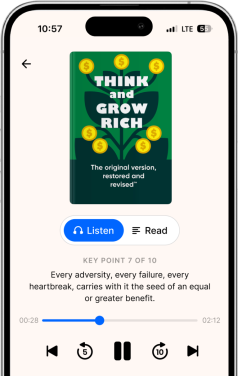
The app covers over 2,500 nonfiction book summaries across various categories, like productivity, psychology, parenting, relationships, career, and business. You can read or listen to them, and each summary takes about 10–20 minutes. But what makes Headway different is that everything revolves around the content:
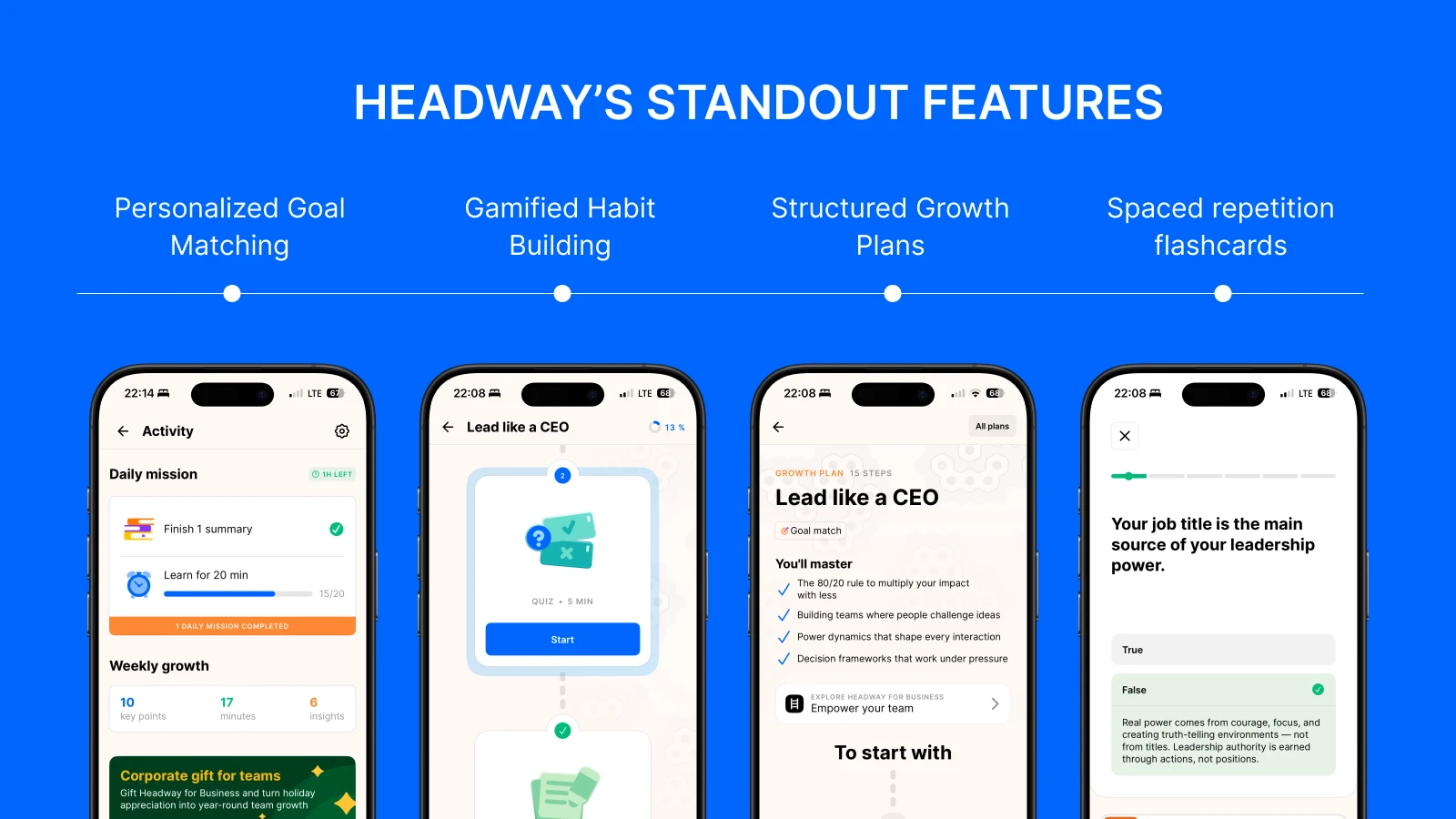
Personalized goal matching: When you set your goals on the first day, Headway offers you books that will help you achieve your goals or cope with the current challenges of life. No more scrolling through hundreds of summaries, wondering where to start.
The gamification that really entertains: Headway uses streaks, badges, and daily challenges to keep you feeling motivated. It sounds simple, but there's a reason why more than 55 million people use the app that summarizes books. When learning feels like a game, you want to keep playing. You'll find yourself opening the app just to keep your streak alive, and then actually reading while you're there.
Growth Plans that guide you: Headway organizes microlearning sessions into structured Growth Plans — multi-step paths built around specific goals (for example, "Reinvent yourself" or "Master time-management") just for you. Each plan combines summaries with recap activities, so you're not just reading — you're building toward something!
A visual map that shows your progress: The app uses an "island" system where each island represents a life goal or specific skill you're working on. It sounds like a video game because it kind of is. Seeing your progress visually, not just as a number, makes you want to keep going.
Spaced repetition flashcards: You can save words or key insights as flashcards or highlights, and the app reminds you to review them at optimal intervals. This technique (based on how memory actually works) helps you retain more than just reading once and moving on. Scientists refer to this phenomenon as the "spacing effect," and it's why cramming doesn't work, but consistent review does.
Growth challenges that build real habits: Headway offers themed challenges, such as the "Joyful Life" quest, which is 28 days of focused content centered around a single topic. It's enough time to actually change how you think, not just skim a few ideas.
Quizzes that help you get to know yourself better: Before you start, you can take a quick assessment (for example, "What is your intelligence type?") that helps the app understand how you learn best. The recommendations become more effective because they're tailored to your actual strengths.
Curated Collections: Want to read everything about developing strategic thinking? There's a collection for that. Interested in specific skills? Collections group related content together, so you can go even deeper into what matters to you.
Audio that fits your life: The audio versions have great narrators — not the robotic text-to-speech you'll find on the internet or generate yourself. Listen during your workout, while cooking, or while walking. The whole point of microlearning is that it fits into the gaps of your day.
Best for: People who want to learn new things despite their busy schedules, commuters or travelers who prefer audio summaries, visual learners who enjoy Shorts, and anyone trying to build a consistent habit.
📘 Ready to see what 55 million users already use? Download Headway and start building your self-growth plan today.
2. Blinkist — best for library size
Blinkist has been around since 2012, and it shows. With over 9,000 summaries, it offers one of the strongest libraries in the category. If you want options, Blinkist delivers.
Each summary (called a "blink") usually lasts about 15 minutes. You get both text summaries and audio versions, narrated by professional narrators. The audio quality is solid, and you can sync favorites to your Kindle for reading on an e-reader. They've also added podcasts and "shortcasts" — short audio pieces on trending topics.
The interface is clean. Finding a new book is really easy. Categories are well-organized. If you've heard about a title and want a quick overview before buying the whole book, Blinkist makes that simple.
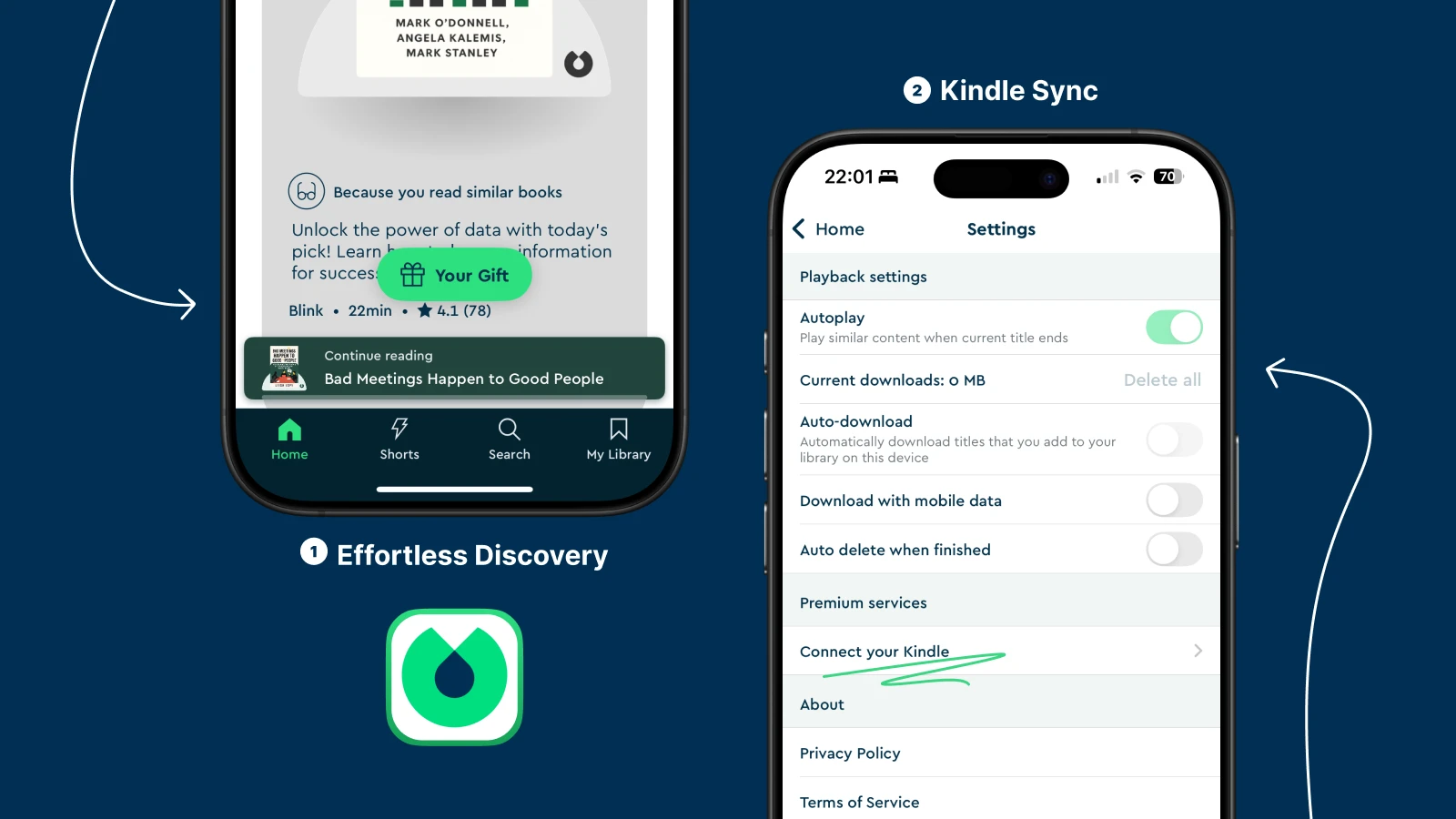
Blinkist is great for browsing and exploring new books. The library is massive, but here's the catch — it's more passive than interactive. You read or listen, and that's pretty much it. There's no spaced repetition, no flashcards, and no challenges to keep you engaged over time.
If you're already disciplined about learning and just want access to lots of content, Blinkist works. But if you struggle to stick with apps (like most of us do), the lack of habit-building features might leave you opening the app once a month instead of every day. Retention becomes your responsibility, and the app won't help you remember what you read.
Best for: People who want a big library and don't need gamification to stay motivated. Also good for those who already have an audiobook habit and want something shorter.
3. Shortform — best for deep analysis
Shortform takes a different approach. Instead of quick summaries, it gives you chapter-by-chapter breakdowns with commentary, exercises, and cross-references to other books.
The library has around 10,000 titles, and each summary feels more like a study guide than a quick overview. You'll find clarifications the original author didn't include, plus practical exercises to apply what you learn.
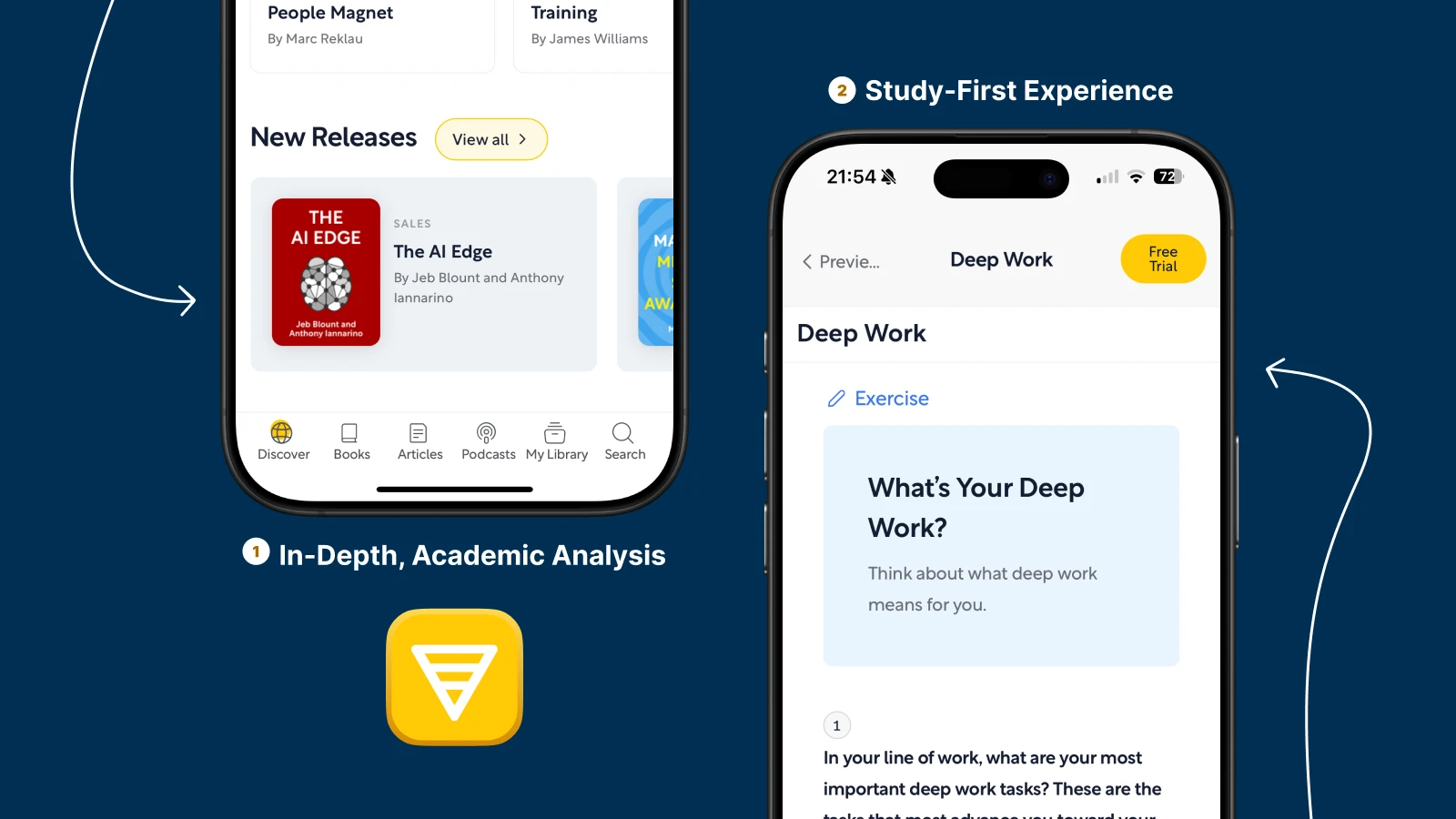
We see the Shortform as the most academic option here. That's good if you want to study a book seriously (or if you want additional comments that supplement the full book). But it's also more time-consuming.
A single Shortform summary might take 20 minutes to an hour — way longer than the 15-minute promise of other apps. For quick daily growth, Shortform feels like overkill. But for readers who want to really understand a few key books, it's worth considering.
Best for: Students, researchers, and anyone who prefers depth over speed.

4–8. The alternatives worth considering: Top book summary apps 2026
There are several other apps worth mentioning. None of them match the top three for different reasons, but they each have a niche.
getAbstract — This one has the biggest library of all (over 25,000 titles), but it's aimed at business professionals. The tone is more corporate and formal. The summaries read like executive briefings. If you work in management or leadership, it might be a good fit. For personal growth and self-improvement? Other apps may feel warmer and more accessible.
Instaread — It focuses on bestselling books in self-improvement and psychology. There is a good quality, but a smaller selection. The summaries are thorough, and the app is user-friendly. Nothing is wrong with it, but it doesn't stand out either. For a detailed breakdown, read our Blinkist vs Instaread comparison.
12min — The name says it all: 12-minute summaries. The texts are available in multiple languages, which is helpful for non-English speakers. It's a decent middle-ground option if you're looking for something quick and simple. The library offers resources on business, health, and personal growth.
StoryShots — This app claims to have over 1 million summaries, but many are AI-generated or aggregated from other sources. It includes video summaries and infographics, which visual learners might appreciate. But the quality varies a lot; some summaries are excellent, while others seem thin. And that's why the free version is worth trying (like all the other apps on this list).
👉 Still not sure what's the best book summary app? If you're looking for community-backed recommendations, check what users say about the best book summary app recommended by Reddit — real experiences often highlight which apps deliver genuine value. There are also in-depth reviews of Audible, Wiser, and Imprint — check them out before making your final decision.
Headway vs the field: Why gamification matters
Here's a question most app reviewers skip: What helps you change?
You can have access to every book summary in the world. But if you don't open the app, what's the point? Most people download self-improvement apps with good intentions. Then life gets busy. The app sits unopened for weeks. Sound familiar?
This is why gamification isn't just a gimmick. When you earn a streak badge for seven days in a row, something happens in your brain. You don't want to break the streak. That tiny bit of motivation — silly as it sounds — gets you to open the app again tomorrow.
Headway builds its whole experience around this idea. The streaks. The daily challenges. The flashcards that remind you to review. The questions in the Shorts gauge whether you are actually ready to change. It's designed for people who sometimes forget their goals, not productivity robots who never skip a day.
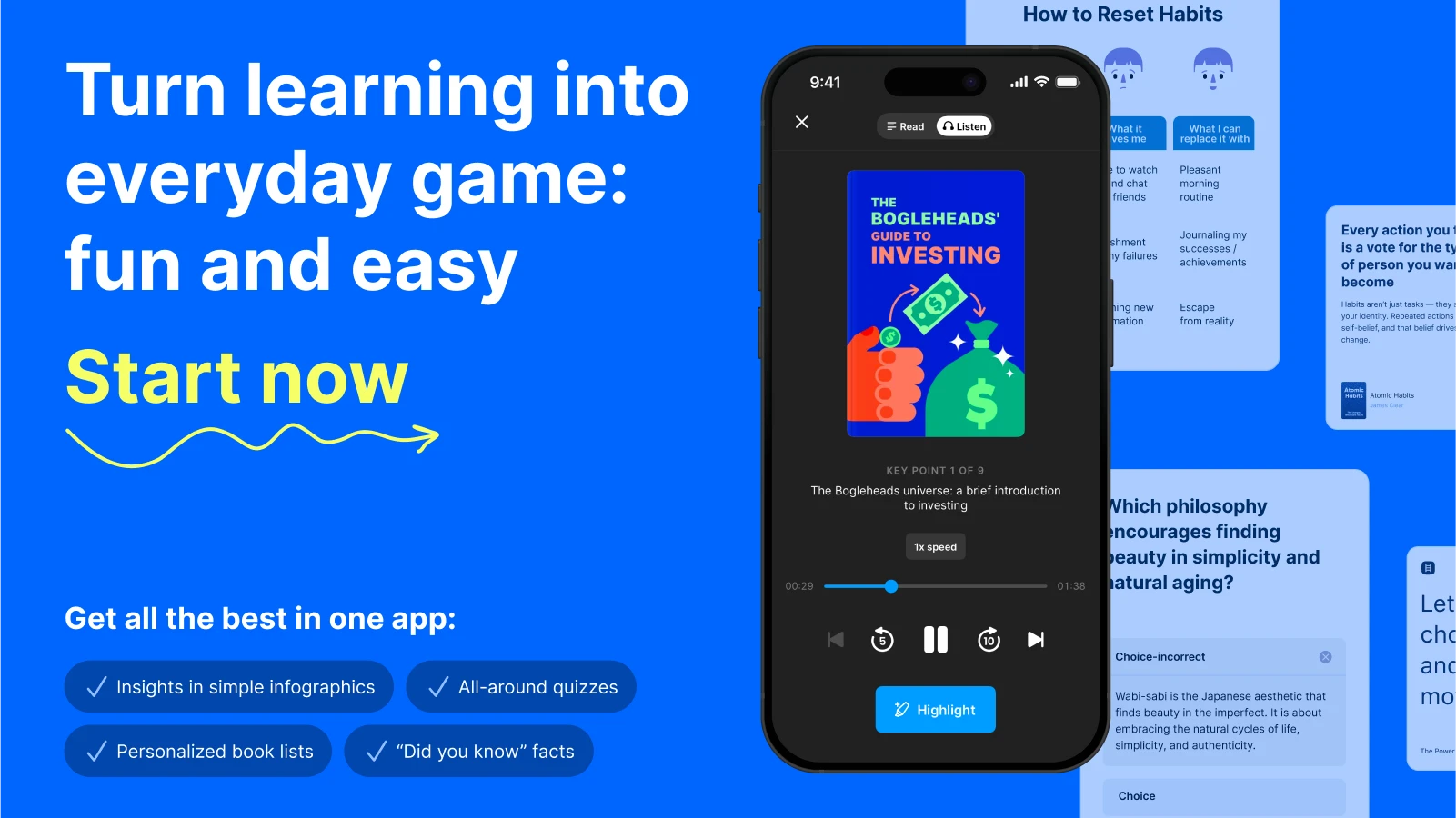
Reading the entire book on habits won't help if you can't build a reading habit first. Headway solves that problem. This app gets you to show up, so you're not just collecting summaries — you're building knowledge you can use in everyday life.
Blinkist and Shortform are good products. They have great content. But they assume you'll show up on your own. Headway doesn't ask for anything — it nudges you, rewards you, and makes learning feel like progress instead of homework.
If you just want to buy book summaries, any app will sell them to you. If you want to become a better version of yourself, pick the app that helps you actually show up.
📘 Download Headway and join over 55 million people who turned microlearning into a daily habit.
Frequently asked questions on the best book summary apps
Are book summary apps worth it?
If you use them regularly, then yes. An app with unread summaries is just one extra app on your phone. The trick is picking an app with features that help you build a habit.
Whether it's streaks, reminders, or highlights, these features make the difference between "I'll read it tomorrow" and real daily growth. If the app helps you show up every day, the subscription pays for itself in the knowledge you gain.
What is the best book summary app in 2026?
There are dozens of options on the market on best summary book app, but for most people, Headway is the best choice. It balances solid content with habit-building features that help you stick with it. Blinkist has more titles, Shortform goes deeper, but Headway hits the sweet spot for daily growth. The gamification tools give it an edge for retention.
What is the best free book summary app in 2026?
Headway is the best free book summary app, offering one daily summary at no cost. This free tier lets you build a consistent learning habit without paying upfront. While premium plans unlock unlimited access, the best book summary app free version provides enough value to start your self-growth journey and test the platform before committing.
Which app is best for summarizing books?
It depends on what you need. Headway is best for habit-builders. Blinkist is best for people who want the biggest library. Shortform is best for readers who want chapter-by-chapter breakdowns and academic depth. For most casual learners interested in self-improvement, Headway offers the best overall user experience.
Is Blinkist or Headway better?
Blinkist has more book summaries (over 9,000 vs more than 2,500). But Headway has better retention tools — flashcards, highlights, quizzes, skill islands, and gamification features that help you apply tips from books in real life.
Headway offers monthly, quarterly, and annual plans. Blinkist offers annual plans. So if quantity matters, pick Blinkist. If you look for learning that sticks, Headway wins. Both are available on iOS and Android.
Which is the best app for audio book summary for commuters?
For audio learners, Headway stands out as the best audio book summary app with professional narrators and high-quality recordings. The best app for audio book summary should fit seamlessly into your routine — Headway delivers 15-minute audio summaries perfect for commutes, workouts, or cooking. Unlike robotic text-to-speech alternatives, the audio quality keeps you engaged.
Is there a best AI app for book summary creation?
While some platforms use AI-generated summaries, the best AI app for book summary combines artificial intelligence with human expertise. Headway uses AI to personalize recommendations and create flashcards, but expert writers craft the actual summaries. This hybrid approach ensures accuracy and depth that pure AI summaries often lack, making it the best app book summary for serious learners.