Self-growth
 Apps & Digital Tools
 Business & Career
 Success
 Growth Tools
 Psychology
 Communication
 Relationships

When looking for the best AI voice apps, you have to acknowledge how rapidly this technology has evolved over the past few years.
Researchers at Queen Mary University of London and University College London found that listeners couldn't reliably tell the difference between a real human voice and an AI clone of it made from just four minutes of sample audio.
The clones fooled listeners into guessing "human" 58% of the time, essentially a coin flip, which says as much about how good these apps have gotten as any marketing claim could. But before diving into a list of tools, we need to clarify a massive point of confusion in the market.
The term "best AI voice apps" covers two entirely different categories of software. An AI voice generator is a platform that converts written text into spoken audio, whereas an AI voice assistant listens to your spoken words and responds to manage tasks or carry on a conversation.
If you are trying to narrate a video, you need a generator. If you are trying to organize your morning schedule while driving, you need an assistant. This article splits the landscape into these two distinct groups, ensuring you find the exact tool you need.
Find out about the best voice AI apps on the market, looking at pricing, voice quality, and actual usability.
📘 Finding the right tool takes time. Try the Headway app to read or listen to 15-minute book summaries on focus and time management.

Quick summary: The best AI voice apps, split by what they do
If you want a fast overview of how these tools perform, here are the key points to remember.
AI voice generators turn written text into natural-sounding spoken audio.
AI voice assistants listen and respond, managing tasks and conversations.
Best AI voice generator picks include free tiers and professional cloning.
Best AI voice assistants now handle multi-step tasks, not just commands.
Voice cloning technology can replicate a voice from a few minutes of audio.
How to evaluate an AI voice app before picking one
Before you subscribe to the best AI voice-over apps, you need a framework for evaluating their true quality. Reading feature sheets will not give you the full picture. Naturalness of voice output is important when evaluating AI voice applications.
True quality rankings come from blind audio sample comparisons, not from a marketing website's feature list. You have to listen to the audio file and judge the human-like speech for yourself, paying close attention to where the AI breathes, pauses, and emphasizes syllables.
For anyone building an interactive AI assistant, speed is critical. Latency under 300ms is a baseline requirement for real-time applications. If an application takes longer than 300 milliseconds to process spoken words and reply, voice conversations begin to feel painfully awkward and laggy, completely ruining the illusion of a natural conversation.
If you are evaluating these tools for enterprise use, compliance is non-negotiable. Many AI voice applications provide enterprise-grade security and compliance certifications.
Security compliance like SOC 2 and GDPR influences vendor selection heavily, especially when dealing with proprietary company data or internal scripts. Furthermore, privacy and consent controls are crucial for voice cloning and business applications to prevent unauthorized deepfakes and protect individual identities.
Customization is another massive differentiator. Voice customization allows users to adjust the tone, style, and pacing of AI-generated voices. Customization of voice performance includes controls for emotion, pitch, and pacing in AI voice applications.
A great tool lets you tweak the performance rather than accepting a generic output. Finally, for corporate integration, platforms should integrate with LMS and CMS for workflow efficiency. If you are already managing a tech stack full of various productivity apps, you want an AI voice generator that plugs seamlessly into your existing systems via a reliable TTS API rather than forcing you to download and upload files manually.
1–6. Best AI voice generator apps
The first half of our list covers the best apps for voice AI services that focus entirely on speech synthesis. AI voice generators convert text into spoken audio, making them ideal for video creators, podcasters, and corporate training teams.
1. ElevenLabs
ElevenLabs is widely considered the industry standard for ultra-realistic voice generation. The platform excels at producing human-like audio that captures subtle inflections and natural breathing patterns.
ElevenLabs offers a voice library spanning multiple languages. This multilingual capability allows creators to dub their videos or translate their podcasts while maintaining the same core vocal identity.
You do not have to commit immediately; ElevenLabs offers a free plan for ~12 minutes of text-to-speech per month, allowing you to test the output quality directly. Voice cloning and emotional performance are key evaluation factors here, and ElevenLabs consistently ranks at the top of blind listening tests for its realism.
2. Murf
When you are producing corporate content or marketing videos, you need precise control over how a script is delivered. Murf provides emphasis control for voice generation, letting you highlight specific words in a sentence to change the entire meaning of the delivery.
Instead of re-generating an entire paragraph, hoping the AI guesses the right inflection, you simply highlight the word you want stressed. Murf is heavily favored by production teams because it integrates smoothly into an entire workflow.
For regular users, Murf's creator plan costs $29/month for 100 projects and 2 hours of voice generation, providing excellent value for consistent content creators.
3. WellSaid
If you are developing highly technical e-learning modules or corporate training videos, generic AI voices often stumble over complex industry jargon or unique brand names. WellSaid solves this by focusing intensely on pronunciation controls.
WellSaid allows word-by-word control over pronunciation, ensuring that every technical term sounds flawless. This fine-tuning ability saves editors massive amounts of time. You do not have to spend hours trying to trick the AI into saying a word correctly using phonetic spelling hacks.
WellSaid's starter plan is $19/month for unlimited generation, making it a highly cost-effective choice for teams producing massive volumes of text-to-speech audio.
4. TTSMaker
Finding genuinely free tools in the AI space that do not aggressively restrict your usage limits is difficult. TTSMaker stands out as one of the best free AI voice generators available today.
TTSMaker offers over 600 voices across 100 languages. More importantly, TTSMaker allows unlimited voice generation on select voices for free.
While it may not offer the extreme emotional nuance of a premium platform, the sheer volume of voices and the generous free tier make it the perfect starting point for hobbyists, students, or anyone who simply needs to convert a quick script without hitting a paywall.
5. Hume Octave
Hume Octave approaches voice generation from a completely different angle, focusing on the psychological nuances of speech. It is built heavily around emotional intelligence in vocal performance.
Hume Octave can generate voices that convey specific emotional states — like exhaustion, excitement, or hesitation — giving the output a profoundly realistic texture. This level of emotional expression is crucial for narrative podcasts, video games, or any creative project where a flat, corporate voice would ruin the immersion.
Hume Octave's starter plan costs $3/month for 30 minutes of text-to-speech, offering an incredibly accessible entry point for highly expressive audio.
6. Speechify Studio
Speechify Studio is a powerhouse for large-scale content creation. While the standard Speechify app is known for reading web articles aloud, Speechify Studio is designed for professionals who need to generate polished voiceovers.
It is particularly popular among users looking for AI apps for iPhone that sync cleanly with desktop platforms. Speechify Studio's paid plan starts at $100/year for 86,400 studio credits.
This robust paid plan is targeted at high-volume users who need to produce hours of audio for audiobooks, massive YouTube channels, or extensive corporate training libraries, offering deep third-party integrations to speed up the process.
📘 Don't spend hours trying to read massive business books. Use the Headway app to absorb core concepts with high-quality audio summaries during your morning commute.

7–10. Best AI voice assistants
The second half of our list shifts focus to applications that actually listen. AI voice applications are categorized as voice assistants, voice generators, voice cloning tools, and business voice agents.
While traditional voice assistants were largely limited to simple voice commands like setting a timer or checking the weather, modern AI voice assistants can manage tasks and schedules with remarkable sophistication. These tools execute multi-step tasks and handle conversational context flawlessly.
7. ChatGPT Voice
ChatGPT Voice represents a massive leap forward from older technologies. Instead of barking rigid commands at your phone, you simply start talking. ChatGPT Voice allows natural conversation and brainstorming.
The system remembers the conversational context of your entire chat, allowing you to interrupt, change the subject, or ask follow-up questions without confusing the AI.
Whether you are practicing a foreign language, brainstorming marketing ideas, or asking it to answer questions about complex historical events, the interaction feels incredibly fluid and human-like.
8. Alexa+
Amazon's Alexa has been a household staple for years, but Alexa+ brings deeper integration and upgraded AI models to the ecosystem. Alexa+ integrates with thousands of third-party skills.
This makes it the absolute best AI voice tool for controlling smart home devices, managing external apps, and handling daily routines. While other assistants might struggle to interface with legacy smart home hardware, Alexa+ acts as a massive central hub.
You can use it to play music, dim the lights, and adjust device settings simultaneously using highly complex requests.
9. Siri
Siri remains the undisputed champion for individuals locked firmly inside the Apple ecosystem. Siri is designed for Apple device users and smart home control. While it historically lagged behind in handling complex, conversational queries, recent updates driven by advanced artificial intelligence are closing that gap.
Siri allows for deeper integration with native iOS apps than any third-party tool could ever achieve. If you are an Apple user looking to schedule meetings, send messages, or trigger specific Apple Shortcuts using nothing but your voice, Siri provides the most frictionless experience available.
(A brief note on Samsung Bixby: Samsung is actively overhauling Bixby by integrating Perplexity AI for Galaxy phones. This massive upgrade is designed specifically for Samsung users and Android users who want more conversational depth. While still rolling out across Samsung devices, it represents a major shift toward highly intelligent, conversational device control.)
10. Saner.AI
Unlike general-purpose assistants, Saner.AI is highly focused on workplace productivity.
Saner.AI helps organize tasks through natural conversation. Instead of manually typing out your to-do list, you can simply dictate your thoughts, and the AI will structure them into actionable items, sync them with Google Calendar, and help you complete tasks faster.
AI voice tools are helpful for turning spoken ideas into structured text or notes, and Saner.AI excels at this exact workflow. If you frequently test out the best to-do list apps, adding a conversational assistant like Saner.AI can dramatically speed up how you capture ideas on the go.
A quick note on voice vs. screen time
Embracing voice-first interactions is not just about convenience; it is a highly effective strategy for reducing digital fatigue. Every time you pick up your phone to manually type out a reminder or search for a song, you risk falling into a mindless scrolling loop.
By using an AI assistant to check your calendar or play music through a smart speaker, you accomplish the task without ever looking at a screen. If you are exploring apps to replace social media, shifting your daily habits toward voice commands is one of the best ways to reclaim your attention and reduce your passive screen time.
📘 Want to use your screen time intentionally? Download the Headway app to read actionable 15-minute nonfiction summaries.
Pricing at a glance: AI voice generator apps
Finding the best AI voice generator often comes down to budget. Free AI voice generators exist, but most serious professional use cases eventually require a paid plan to remove usage limits. Below is a quick breakdown of current pricing structures.
| App | Free tier | Starting paid plan |
|---|---|---|
ElevenLabs | ~12 minutes/month | Verify current pricing |
Murf | Limited free minutes | ~$29/month (100 projects, 2 hours) |
WellSaid | No free tier confirmed | ~$19/month (unlimited generation) |
TTSMaker | Unlimited (select voices) | Free |
Hume Octave | Limited | ~$3/month (30 minutes) |
Speechify Studio | Limited | ~$100/year (86,400 credits) |
(Note: Pricing in the AI voice sector is highly volatile. The figures above were accurate at the time of writing, but always verify current pricing directly on each platform's official website before subscribing.)


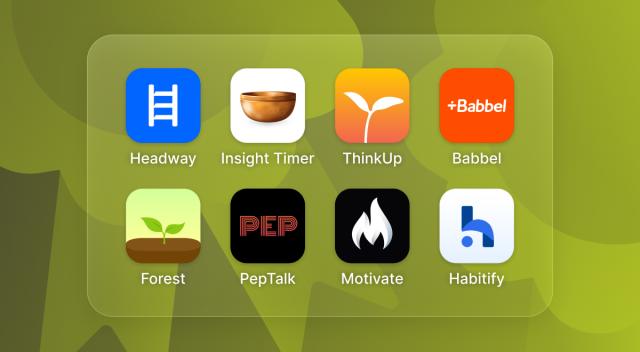
11. Best AI voice app for turning text into something worth listening to
11. Headway
While Headway is not a traditional voice generator or a conversational assistant, it firmly belongs on a list exploring how spoken audio improves daily life. AI voice tools improve accessibility for document reading and various content formats.
Headway applies this exact principle to personal development. Instead of forcing you to stare at a screen to read a massive nonfiction book, Headway provides high-quality, 15-minute audio summaries of the world's best titles.
If you already use self-improvement apps, you know that finding the time to actually sit down and read is the biggest hurdle to growth. Headway solves this by letting you absorb insights through audio while you commute, cook, or exercise.
It leverages the power of spoken words to make complex ideas accessible, proving that listening to high-quality audio is often the fastest way to learn.
Turn spoken ideas into daily learning with Headway!
The massive surge in popularity of the best AI voice apps proves one simple fact: people prefer to listen. Whether you are using an AI voice assistant to manage your schedule, a generator to narrate a YouTube video, or a dictation tool to draft emails, voice technology frees you from your screen.
If you want to capitalize on that freedom, you should apply the same listening habits to your personal growth. You can explore modern microlearning apps to discover how audio content accelerates learning.
📘 Start upgrading your daily routine today by downloading the Headway app and turning your empty commute into a highly productive listening session.
FAQs about the best AI voice apps
What's the difference between an AI voice generator and an AI voice assistant?
An AI voice generator is a software tool designed exclusively to convert written text into high-quality spoken audio, commonly used for narrating videos or creating podcasts. An AI voice assistant is an interactive tool that actively listens to your spoken commands, processes the conversational context, and responds to help you manage tasks.
Which AI voice apps offer a genuinely usable free plan?
TTSMaker is highly regarded for offering unlimited voice generation on select voices entirely for free. Additionally, ElevenLabs provides a highly capable free plan that allows users to generate approximately 12 minutes of text-to-speech audio per month, which is perfect for testing the platform's incredible output quality before upgrading.
Can AI voice cloning really replicate someone's voice from a few minutes of audio?
Yes, modern voice cloning technology is remarkably advanced. Top AI voice applications can now replicate a specific individual's vocal tone, pacing, and emotional cadence with astonishing accuracy using only a few minutes of clean sample audio, making the cloned output nearly indistinguishable from the actual human speaker.
How does latency affect the experience of using an AI voice assistant?
Latency dictates how natural a conversation feels. If an AI voice assistant takes longer than 300 milliseconds to process your speech and reply, the interaction feels incredibly sluggish and frustrating. Low latency ensures the back-and-forth dialogue flows smoothly, closely mimicking the rapid pacing of a real human conversation.
Are AI-generated voices indistinguishable from real human voices now?
In many cases, yes. A recent peer-reviewed study revealed that listeners could only correctly identify an AI voice clone 58% of the time, which is essentially the same odds as a random coin flip. High-end platforms now incorporate natural breathing sounds and emotional fluctuations that easily fool the average listener.
What should production teams look for before adopting an AI voice tool?
Production teams should prioritize platforms that offer deep customization controls, allowing editors to adjust pitch, emotion, and word-by-word emphasis. Additionally, teams must ensure the platform integrates smoothly with their existing tech stack and provides enterprise-grade security compliance to protect highly sensitive corporate scripts and proprietary data.
Which AI voice assistant works best for smart home device control?
Alexa+ remains the absolute best choice for smart home management. Because it boasts deep integration with thousands of third-party skills and external apps, it can seamlessly control lights, thermostats, and security systems across vastly different brands, handling complex, multi-step routines far more effectively than its competitors.
How much do the best AI voice generator apps typically cost per month?
Pricing varies widely based on usage limits. Entry-level paid plans usually start around $19 to $29 per month for creators who need a few hours of audio generation. However, enterprise-grade platforms designed for high-volume audio production or commercial API access can cost hundreds of dollars annually.