Self-growth
 Business & Career
 Success
 Communication
 Healing
 Relationships
 Psychology
 Happiness
Most "best apps" lists feature brain-training games that only teach you how to play them better. That's not intelligence. That's muscle memory with extra steps.
True brainpower isn't about reflexes or trivia scores. It's about mental models, ways of thinking that help you solve problems in your career and relationships. You've probably downloaded a "brain-training app," used it for two weeks, and forgotten it existed.
We tested the top apps that make you smarter to find the few that actually build long-term cognitive skills, not short-term dopamine hits. Keep reading. The difference will change how you spend your screen time.
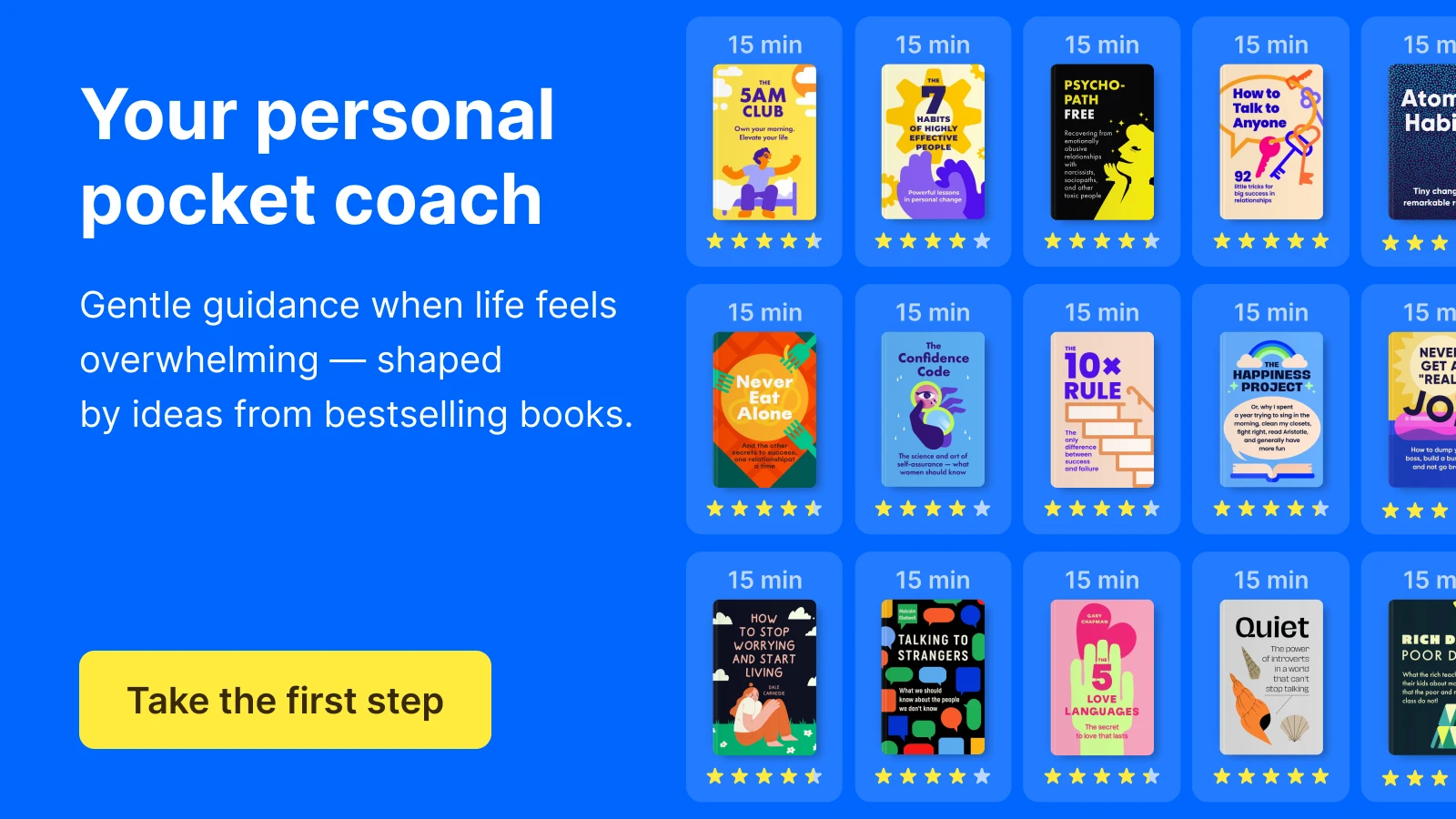
📘 Ready to stop guessing? Download the Headway app and get quick summaries of the world's best nonfiction books.
Quick answer: What are the best apps that make you smarter?
Duolingo: Best for neuroplasticity through language learning.
Khan Academy: Best for foundational academic knowledge.
TED app: Best for sparking curiosity through TED Talks and new perspectives.
Elevate app: Best for specific vocabulary and math drills.
Headway: Best for acquiring wisdom from nonfiction bestsellers in 15 minutes.
Nibble: Best for bite-sized general knowledge across topics.
Skillsta: Best for professional soft skills and communication.
Now, let's break down what each one actually does — and where they fall short.
The 10 best apps that make you smarter: systems that work
1. Headway (the growth system for busy minds)
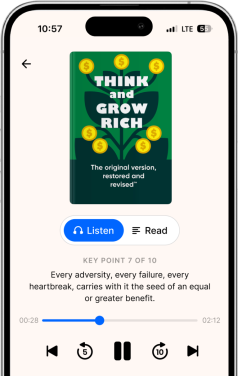
Headway isn't just an app that gives you book summaries. It's a survival kit for modern life.
The smartest people you know read constantly. They absorb ideas from psychology, business, relationships, and wellness. But you don't have four hours to read 'Thinking, Fast and Slow.' You have just 15 minutes on your commute.
Headway distills the key insights from nonfiction bestsellers into formats you can actually finish. Each summary delivers mental models that help you make better decisions and understand why you keep making the same mistakes.
The app uses spaced repetition to help move insights from short-term to long-term memory. You're not just reading. You're building a system of thinking that compounds.
Why this matters: Quora, podcasts, and random articles might scratch the surface. But Headway curates exactly the ideas you need. Without a structured system, you'll keep collecting information without ever changing your behavior. Change that with Headway now.

2. Language learning apps (Duolingo, Rosetta Stone, Promova)
Learning a new language is like going to the gym for your brain. Duolingo has gamified the process so well that millions of people actually stick with it.
Language-learning apps build cognitive skills in ways that brain-training games can't match. You're exercising memory, pattern recognition, and problem-solving all at once. Plus, studies show bilingual brains age more slowly!
Where they fall short: These apps teach you how to speak, not how to live. You might learn to order coffee in Spanish, but you won't know how to negotiate a raise. They're skills for maintenance, not growth. Consider Duolingo for neuroplasticity. But if you want wisdom, you need something else.
3. Deep knowledge apps (Khan Academy, TED app, Coursera)
Khan Academy offers free education across math, science, and history. The TED app delivers TED Talks from experts in every field. Coursera provides full university courses.
These are incredible resources for in-depth learning. They can teach you calculus or Python programming.
But what's the catch? These apps require serious time. Khan Academy is for when you have a semester. Headway is for when you have 5–15 minutes. Most people start courses with good intentions and abandon them within a week.
That's not a failure of willpower. It's a mismatch between format and reality.
4. Skill-specific apps (Elevate, Nibble, Skillsta)
The Elevate app drills vocabulary and math skills through daily challenges. Nibble offers bite-sized lessons across topics like art and personal finance.
And Skillsta focuses on professional soft skills. These apps are useful for targeted improvement, especially if your schedule is full-packed.
The limitation: They focus on fragments rather than frameworks. Real problem-solving requires mental models, big-picture ideas that connect dots across different areas. That's why summaries of books like 'Atomic Habits' create lasting change in ways trivia drills can't.
| Metric | Brain games (Lumosity, Peak) | Knowledge systems (Headway, Nibble, Skillsta) |
|---|
Time required | 5–10 minutes daily | 3–20 minutes daily |
Real-world application | Low — skills don't transfer | High — ideas apply to career and decisions |
Retention | Short-term | Long-term — concepts build over time |
What you learn | How to play the game | How to think differently |
Brain training apps are fun. They give you a sense of progress. But that progress stays inside the app. Learning systems change how you approach actual life.
📘 Build behavior systems with Headway.
If understanding focus were enough, you wouldn't still be distracted. The only thing that changes behavior is a system that removes daily decisions and automates growth.
What apps increase IQ, according to science?
Research suggests that while brain training games improve specific task performance, they rarely increase general fluid intelligence. The skills you build in one game don't transfer to real-world problem-solving.
A Florida State University (FAU) study found that people who practiced brain games improved at those games but showed no improvement in broader cognitive abilities, such as memory or reasoning. You become an expert at clicking colored bubbles, but was that really the kind of intelligence you were aiming for?
Neuroscientists recommend novelty and complexity for actual cognitive growth. Learning a new language lights up multiple brain regions. Absorbing complex ideas forces your brain to build new frameworks.
Apps like Wikipedia or TikTok are free. But free content is designed to keep you clicking and scrolling longer. Without a curated system, it's easy to get lost in a sea of content and mistake it for real learning.
📘 Think deeper with Headway.
How to use your phone to fix your focus
Social media isn't evil, but it's designed to capture attention. Every scroll triggers a tiny dopamine hit. Before you know it, an hour has vanished, and your mental health pays the price.
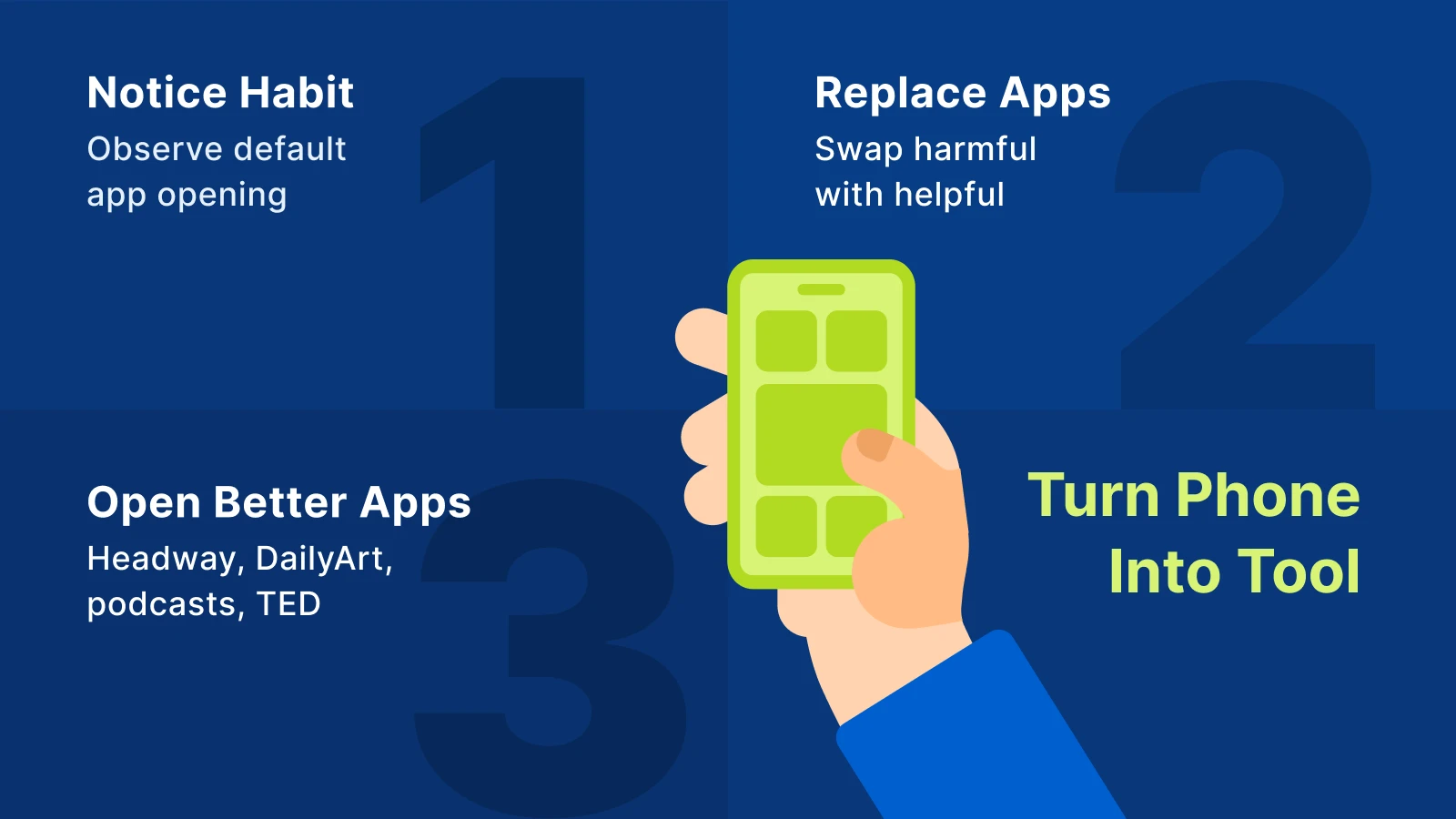
Here's a practical approach: instead of deleting apps in a burst of motivation, replace them with apps that build your brain. You can find all of these in your app store right now.
What if, out of habit, you reach for your iPhone and open Headway instead of the app you usually open? Your "mindless scrolling" time becomes "learning something useful" time.
DailyArt can give you a new painting to appreciate each day. Podcast apps can feed you real ideas. The TED app can spark curiosity during your coffee break.
The goal isn't perfection. It's replacement. You'll still get screen time. You just won't hate yourself afterward.
Information is cheap. Insight is priceless — gain it daily with Headway
You can download twenty apps on your iOS or Android device and feel busy. Or you can download one system and feel different.
The gap between where you are and where you want to be isn't "more time." It's "better inputs." Your brain runs on whatever you feed it. Feed it structured wisdom, and you'll start thinking and living differently.
Reading another article won't change your habits. You've read hundreds of articles, and here you are, still searching. The answer isn't more information. It's a system that removes friction and keeps you consistent when motivation fades.
📘 That's what Headway does. Stop guessing. Start growing. Download the Headway app today.
Frequently asked questions about apps that make you smarter
What is the best app to make you smarter?
Headway is the best app for building real-world intelligence. It delivers key insights from nonfiction bestsellers in 15-minute formats. Unlike brain training games, the ideas transfer directly to career decisions and relationships. You learn mental models that change how you think, not just how you score.
What is the most intelligent app?
Apps like ChatGPT, Claude, or Gemini provide real-time answers to specific questions, but their real power lies in helping you think and create: structuring ideas, challenging assumptions, creating images or code, simulating decisions, and turning vague thoughts into actionable systems.
Apps like Headway or Nibble offer curated wisdom from expert authors across topics like psychology, business, career, and wellness.
Apps like TED Talks translate complex ideas into short, emotionally resonant narratives that spark insight, shift perspectives, and plant seeds of long-term thinking rather than providing step-by-step solutions. The "smartest" app depends on your goal.
Do IQ boost apps really work?
Brain training games improve performance on specific tasks but don't increase general intelligence. Studies show the skills don't transfer to real life. Learning apps like Duolingo for languages or Headway for ideas build cognitive skills that actually apply to your career and daily problem-solving.
Do brain games really help?
Brain games help you get better at brain games. The same goes for crossword puzzles. Research shows limited transfer to broader cognitive abilities. For actual brainpower, focus on learning new skills, picking up a new language, or absorbing complex ideas from nonfiction books.
Is Khan Academy 100% free?
Yes, Khan Academy offers free access to its core educational content across subjects like math, science, and history. The platform runs on donations rather than subscriptions. Some advanced features may require support, but the primary library with thousands of videos is available without payment.
Is 30 minutes of study enough?
Consistency matters more than duration. Fifteen minutes of focused learning daily beats two hours once a week. Your brain retains more information through regular, short sessions than through occasional marathons. Apps like Headway are built around this principle: small doses of wisdom that compound over time.