Protect the world’s peace. Donate to support Ukraine

151 Essential Mental Toughness Books for Building Resilience

In a world that throws endless challenges your way, mental toughness is your quiet strength. It helps you stay calm under pressure, focused through the flow of distractions, and confident even when things don't go your way.

This collection of books on mental toughness serves as your guide to building lasting resilience — featuring inspiring reads like 'Can't Hurt Me' by David Goggins and 'Grit & Grace' by Tim McGraw. Each book shares practical lessons, real stories, and tools to help you grow stronger from within.

Take a moment to explore and discover new ways to strengthen your mind, one page at a time.

Top books on mental toughness to empower you

Welcome to your literary guide to nurturing a strong, steady mind. These books move past short-lived motivation and offer real ways to build lasting resilience. With patience and practice, you can grow the inner strength to face anything.

A key concept behind mental toughness is the 4Cs model. This model is built on four basic building blocks: Control, Commitment, Challenge, and Confidence. In 'High Performance Habits,' the author Brendon Burchard demonstrates how small, repeated efforts help make dedication and commitment natural parts of your life. 

In 'Extreme Ownership,' authors Jocko Willink and Leif Babin agree that taking full responsibility also helps you feel in control. 'Make It Stick' by Peter C. Brown, Henry L. Roediger, and Mark A. McDaniel then teaches you a couple of learning strategies to sharpen your focus and perseverance.

Within these pages, you'll find ways to stay grounded under pressure, pursue long-term goals with grit, and see failures as feedback, not defeat. 

Each book brings science and story together to show that toughness isn't about never falling — it's about always getting back up. By exploring Headway's library, you'll gain the tools to think clearly, act decisively, and lead yourself — and others — with confidence, even when life gets messy.

Transformative mental strength books for better habits

The most fundamental truth in books on mental strength is simple: mental strength comes from showing up, not from feeling ready. Being tough doesn't mean sitting around and waiting for inspiration — it means doing the job, with or without feeling like it, day in and day out. That's why mentally strong people, from elite athletes to business leaders, do: they focus on habits, not hype.

The reader-favorite 'How to Stop Feeling Like Sh*t…' book by Andrea Owen is a masterclass in pushing past limits, demonstrating how small daily wins over self-sabotaging behaviors build lasting self-belief. 

Mel Robbins' bestseller 'The 5 Second Rule' offers a clever, science-backed tool to stop hesitation and start action. You'll also discover the Navy SEAL strategy of chunking — breaking overwhelming challenges into smaller, doable tasks — as a proven way to stay steady under stress.

Books like 'Raise Your Game' by Alan Stein Jr. show how to mix strong habits with self-care and balance. They offer practical tools like visualization, stress recovery, and focus exercises. These reads make it clear that mental toughness isn't about never breaking — it's about staying flexible, steady, and ready to grow. Each page gives you new ways to turn life's challenges into opportunities to improve and move forward.

Find your next read with a short quiz

What is High Performance Habits about?

This book explores the habits that differentiate high performers from the rest, offering insights into their behaviors, mindsets, and strategies. Drawing on extensive research, it outlines six key habits crucial for achieving extraordinary success and fulfillment. With practical tips and exercises, readers are encouraged to develop their own effective habits, enhance their productivity, and cultivate a positive and focused mindset, all aimed at realizing their peak potential.

Who should read High Performance Habits

  • Aspiring leaders seeking personal growth strategies.
  • Individuals aiming to boost productivity and performance.
  • Self-help enthusiasts looking for actionable habits.
book

Make It Stick

by Peter C. Brown, Mark A. McDaniel, PhD, Henry L. Roediger III, PhD

What is Make It Stick about?

This book explores effective learning strategies based on cognitive science, challenging conventional study techniques. It emphasizes the importance of active recall, spaced repetition, and varied practice to enhance retention and understanding. Through engaging examples and practical applications, the authors provide insights into how to make learning more effective and memorable, making it invaluable for students, educators, and anyone interested in improving their learning outcomes.

Who should read Make It Stick

  • Students seeking effective learning strategies.
  • Educators aiming to enhance teaching methods.
  • Lifelong learners wanting to optimize knowledge retention.
book

Dare

by Barry McDonagh

What is Dare about?

This practical guide offers a revolutionary approach to overcoming anxiety and panic attacks. It introduces techniques to face fears head-on and regain control, empowering readers to understand their anxiety rather than avoid it. With step-by-step strategies and real-life examples, the book provides tools for building resilience and achieving lasting relief, transforming the relationship with one's mental health.

Who should read Dare

  • Individuals seeking effective anxiety management techniques.
  • Those struggling with panic attacks and anxiety disorders.
  • Readers interested in mental health and self-improvement strategies.
book

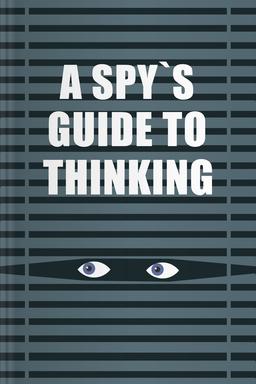
What is A Spy’s Guide to Thinking about?

This insightful guide delves into the mindset and tactics of espionage to enhance critical thinking and decision-making skills. It examines how spies analyze information, assess threats, and adapt to ever-changing situations. Through engaging examples and practical exercises, readers learn to adopt a spy's perspective, improving their ability to think strategically and creatively in everyday life.

Who should read A Spy’s Guide to Thinking

  • Aspiring spies seeking insight into strategic thinking.
  • Business professionals aiming to enhance their decision-making skills.
  • Students of psychology interested in espionage tactics and mindset.
book

What is E-Squared about?

This engaging guide offers nine simple experiments designed to demonstrate the power of thoughts in shaping reality. With a blend of humor and practical insights, the author encourages readers to explore the concept of energy and its influence on life. Each experiment empowers individuals to realize their potential, fostering a deeper understanding of how belief and intention can manifest tangible change in everyday experiences.

Who should read E-Squared

  • Mindset seekers exploring the power of thoughts.
  • Self-help enthusiasts interested in practical experiments.
  • Spiritual seekers wanting to understand manifestation techniques.
book

Frequently asked questions on mental toughness books

What are the best books on mental toughness?

Top picks include 'One Small Step Can Change Your Life' by Robert Maurer, 'Extreme Ownership' by Jocko Willink, and 'Fostering Grit' by Thomas R. Hoerr. You'll also love Tim S. Grover's 'Relentless' and Mel Robbins' 'The 5 Second Rule' — each packed with real-world lessons, research, and practical tools for building unshakable inner strength.

What are the 4 C's of mental toughness?

Control, Commitment, Challenge, and Confidence, or the 4Cs, are the core of strong, resilient minds. They describe how you manage emotions, stick to your goals, view setbacks, and trust your ability to perform. 'Developing Mental Toughness' by Peter Clough and Doug Strycharczyk explores how these four areas work together to create lasting personal strength.

How do Navy SEALs build mental toughness?

Navy SEALs train their minds as much as their bodies. They use techniques like chunking big goals into smaller steps, visualizing success before action, and practicing calm under extreme stress. 'Discipline Equals Freedom' by Jocko Willink gives a deep, firsthand look at this structured, high-accountability mindset.

Can mental toughness be taught?

Absolutely. Research shows mental toughness is a learnable skill. With consistent practice and psychological training, anyone can improve focus, persistence, and adaptability. 'Fostering Grit' by Thomas R. Hoerr explains how resilience grows through guided challenges, reflection, and intentional mindset shifts — not through luck or genetics.

What's the book 'Mental Toughness' about?

Books on mental toughness, like 'The Organized Mind' by Daniel J. Levitin, teach how to strengthen your focus and emotional control in everyday life. They combine neuroscience, psychology, and habit-building techniques to help you perform at your best — staying clear-headed, adaptable, and resilient under pressure.

What improves mental toughness?

Building mental toughness that lasts and survives through hard times begins with consistency and self-reflection. Headway recommends 'High Performance Habits' by Brendon Burchard to learn how small, everyday choices shape our personality in the long term. Yet, mindfulness must go hand in hand with self-compassion to nurture a steady mindset capable of facing life's ups and downs.

How do I make myself mentally tough?

To grow mentally stronger, start by tackling small, challenging tasks each day. 'The Power of Habit' by The New York Times reporter Charles Duhigg shows how consistent actions quietly build confidence. Step outside your comfort zone and pay attention to your emotions. Over time, these little efforts create a resilience that feels natural, empowering, and ready for anything.