Self-growth
 Apps & Digital Tools
 Business & Career
 Success
 Growth Tools
 Psychology
 Communication
 Relationships
You’ll learn
- Why feeling good about yourself isn't enough
- How much of confidence is inherited vs. built
- The exposure technique for taking real risks
- How to quiet the inner critic and reframe failure
- Why your confidence should look like yours
Grow every day with a personalized plan. Start here
first KEY POINT
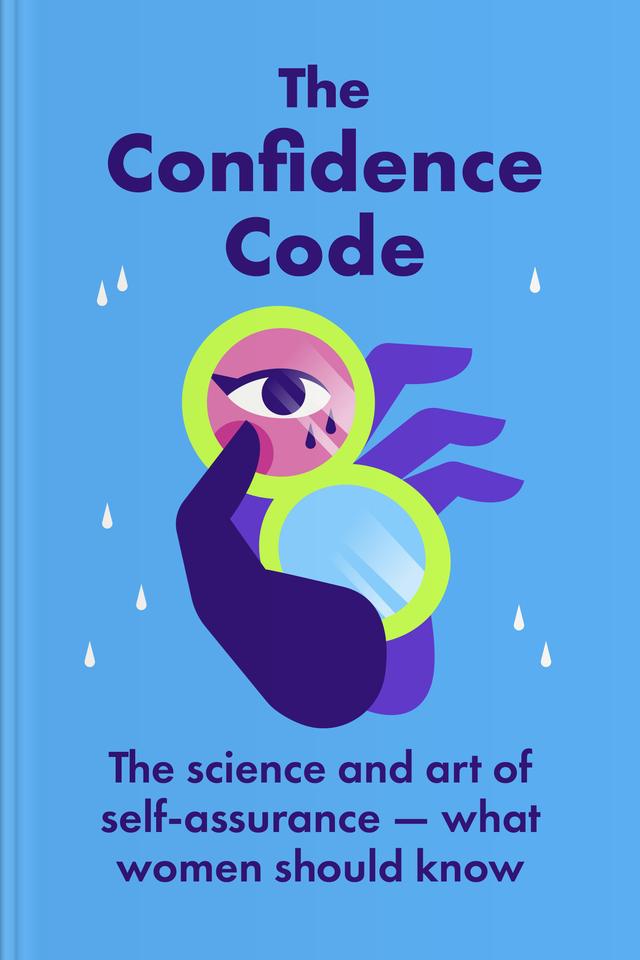
Marilyn Davidson asked her students, year after year, what they'd deserve to earn five years after graduating. The men said around $80,000. The women said $64,000 for the same work. That $16,000 is a gap in confidence, not talent.This distinction is at the heart of The Confidence Code. Journalists Katty Kay and Claire Shipman spent years with neuroscientists, geneticists, athletes, and leaders chasing one question: why do so many capable women hold back, and what can they do about it?Their answer is hopeful. Confidence is built through specific, repeatable moves you can start today. Over the next few minutes, you'll learn what confidence really is, how much of it lives in your genes, and the concrete habits that turn self-doubt into action.
second KEY POINT
Ask around, and you'll hear confidence described as a mood or a manner. The person who speaks the most or feels great about themselves seems to be the one who doubts themselves the least. Kay and Shipman started from roughly that assumption and abandoned it.Feeling good is pleasant but inert, and the loudest person in the room is usually just the loudest. What their research kept circling back to was more demanding: confidence is what gets you to act. It's the hinge between deciding something is possible and doing it.That's why reassurance so rarely changes anything. You can tell yourself you're capable or collect kind words from everyone around you and still not move. Words aren't the same as the willingness to step forward and risk coming up short.
Continue reading with Headway app
Continue readingfirst KEY POINT
second KEY POINT
third KEY POINT
fourth KEY POINT
fifth KEY POINT
Related blog articles

Elevate the way you learn with Headway — the smart, streamlin...

Discover top apps that help you learn in just 10 minutes a da...

Curious about the Deepstash app? Find out if this app offers ...

The answer to the question "Is Blinkist worth it?" depends on...

Discover practical tips, expert insights, and book-powered to...