Self-growth
 Apps & Digital Tools
 Business & Career
 Success
 Growth Tools
 Psychology
 Communication
 Relationships


A meta-analysis of 43 studies covering nearly 10,000 people turned up a plot twist about perfectionism and burnout. High personal standards had little or no link to exhaustion.
Fear of making mistakes, and of being judged for them, had a medium-to-large link. So the fear sitting on top of the bar does more damage than the bar itself.
Quick definitions. Perfectionism means setting very high, rigid standards and judging yourself harshly when you miss them. Burnout is emotional, physical, and mental exhaustion that builds up from chronic stress.
Researchers split perfectionism into two: strivings (the personal standards and the drive toward goals) and concerns (the worry about mistakes and the harsh judgment that follows). Burnout and perfectionism get tangled mostly through the second one.
Brené Brown, Kamal Ravikant, Mark Manson, and James Clear each offer a practical way to loosen that grip, and Headway turns their key ideas into 15-minute summaries you can read or listen to.
📘 This article pulls their best tips together with what research says. Download Headway and try one this week.
*Disclaimer: This article shares general information, and results vary by person. Headway is a microlearning and daily growth app, not a medical tool, so it can't diagnose or treat burnout, anxiety, depression, or any other mental health condition.

Quick summary: Perfectionism and burnout in brief
Here's the short version.
High personal standards alone show little link to burnout.
Fear of mistakes and harsh self-judgment track strongly with burnout.
The loop moves through high standards, pressure, exhaustion, and shame.
Self-compassion, boundaries, and good enough standards help break it.
Persistent anxiety or low mood deserves professional support.
Keep reading for the full breakdown and a few book-backed exercises you can try this week.
Healthy striving vs. perfectionistic concerns: Two sides of perfectionism
Not all perfectionism behaves the same way.
| Perfectionistic strivings | Perfectionistic concerns |
|---|---|
High personal standards | Fear of mistakes and judgment |
Working proactively toward goals | Doubt about every task |
Small negative or no link to burnout | Medium-to-large link to burnout |
Can support accomplishment | Linked to anxiety and exhaustion |
In Hill and Curran's 2016 review, healthy striving (high personal standards plus steady effort) showed a small negative link to burnout, or none at all. Concerns showed a medium-to-large positive link.
That's a correlation, so it doesn't prove concerns cause burnout. Most people carry a mix of both, which is why one person can feel sharp on Monday and flattened by Thursday.
How the perfectionism and burnout cycle works
It starts when self-worth gets welded to flawless work. Every email, report, or workout turns into a pop quiz on your competence. Unrealistic standards lead to constant pressure, and your effort outruns your energy. Then performance dips, and the desire to prove yourself kicks in harder.
Self-blame comes next, along with a nagging sense of inadequacy. You decide you should've tried harder, so the standards go up again. Even wins don't land, because the finish line keeps moving.
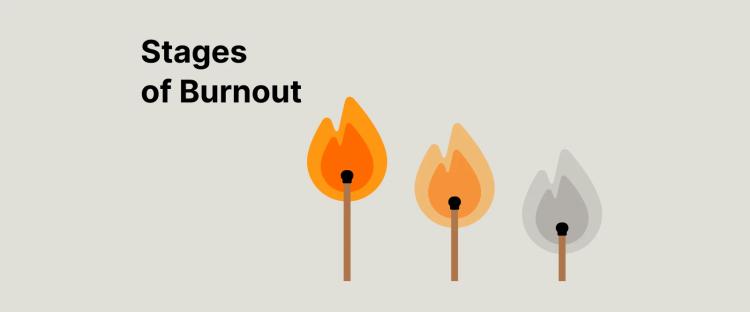
Psychologists who study perfectionism describe this as a loop that feeds itself, and it echoes the stages of burnout, where proving yourself and working harder come first. That's how high standards can turn motivation into chronic stress.
What chronic stress does to your nervous system
Without recovery time, the nervous system can stay stuck in a stress response. You might notice tight shoulders, light sleep, and a short fuse.
Skipping rest adds increased stress, and the effort needed to stay flawless keeps climbing as your energy drops. That's why the last 10% of a task can eat half your week with little gain in quality.
📘 Get calmer, book-backed tips for easing pressure with Headway!
Fear of failure and other early signs the cycle has you
Mental exhaustion and emotional exhaustion usually show up first. You feel drained, flat, or teary over small things. Procrastination is another early sign. It can look like laziness, but it often grows out of fear of failure, because not starting feels safer than starting and falling short.
Other signs include all-or-nothing thinking ("if it isn't perfect, it's garbage"), spending three hours on a one-hour task, irritability, and guilt when you rest.
Plenty of this overlaps with the symptoms of burnout. If anxiety, low mood, or exhaustion sticks around, talk to a doctor or a mental health professional. It's okay to seek support early.
A quick self-check: Are you burned out?
This is a reflection tool, not a diagnosis. Take a minute with three questions.
How do you talk to yourself after a small mistake?
Can you rest for an hour without guilt?
When you finish something big, do you feel relief, or do you start worrying about the next thing?
If those answers sting, that's useful information. Pick one tip below and test it for a week. This article can also help you figure out if you're burned out.
Where perfectionist tendencies come from
Perfectionism often starts as a way to feel safe or in control. In 'The Gifts of Imperfection', Brené Brown describes it as a shield against shame and judgment that chases approval.
Thomas Curran and Andrew Hill found that students' perceptions of their parents' high expectations and criticism have risen over the decades and are linked to perfectionism.
Culture plays a significant role too. Their 2019 study of more than 41,000 college students found that socially prescribed perfectionism, the sense that others demand perfection from you, rose 33% between 1989 and 2016. It's a personality trait, but traits can shift with new habits and thought patterns.

Are high standards wearing you down?
Headway's daily insights explore the fear behind high standards.
Read about perfectionismPerfectionism and burnout at work and in school
Work and school hand out deadlines, grades, reviews, and a steady supply of people to compare yourself with. Hill and Curran found that in some cases, concerns looked more harmful in the work setting. That may be one reason occupational burnout hits so many high performers.
Over-polishing rarely helps productivity, either. Students and early-career workers are worth watching, since nearly everything they do gets evaluated. If that sounds like your semester, this piece on academic burnout speaks to it.
📘 Try a short summary that eases pressure at work with Headway!
How to overcome perfectionism without lowering your standards
Keep the standards and drop the harsh self-criticism. If you're trying to recover from burnout while still working, small changes beat a total reset.
1) Set realistic goals and define good enough first
Before you start a task, write down what good enough looks like. Maybe it's three solid slides and one clear point. Then stop where you said you would. Realistic goals keep growth going without the pressure.
2) Reframe failure as feedback
A flop is information. Ask what it taught you, adjust, and move on. When you reframe failure this way, a growth mindset gets room to work, and the fear that feeds procrastination shrinks. Challenge all-or-nothing thoughts too. "It's ruined" often turns into "one section needs work" after a second look.
3) Practicing self-compassion in small ways
Self-compassion means treating yourself the way you'd treat a friend who's struggling. Research links it to lower self-criticism, and practicing self-compassion is also linked to fewer anxiety and depression symptoms. Try a compassionate tone after a mistake, with one kind sentence: "That was rough, and I'm still learning."
Calm your body, too. Deep breathing, a short walk, or a few quiet minutes of mindfulness can bring stress down and help you regain focus.
Set boundaries around work and recovery, like a hard stop at 6 pm, because rest interrupts the loop and keeps your week more balanced. Celebrate small wins as well. They build resilience and support your mental well-being.
When a therapy session can help your mental health
Self-help has limits. Consider talking to a therapist if dread, shame, or exhaustion doesn't lift after a few weeks of dealing with it on your own. A therapy session often involves talking through your thought patterns and practicing new tools, though what happens varies and no one can promise an outcome.
Perfectionism can sit alongside anxiety, depression, or OCD, so a clinician can sort out what's going on. If you're struggling, seek support. Looking after your mental health is a normal part of personal growth.
Five book summaries to try reading today
Here are five book summaries on Headway, each with one tip and one small exercise you can try today.
1. 'The Gifts of Imperfection' by Brené Brown
Tip: stop waiting to feel flawless before you start. Exercise: share one imperfect piece of work with someone you trust.
2. 'Daring Greatly' by Brené Brown
Tip: notice shame when it shows up. Exercise: write down the story you tell yourself after a mistake.
3. 'Love Yourself Like Your Life Depends on It' by Kamal Ravikant
Tip: use a short daily phrase of kindness. Exercise: say it once each morning for a week.
4. 'The Subtle Art of Not Giving a F*ck' by Mark Manson
Tip: choose what deserves your effort. Exercise: drop one standard that doesn't matter.
5. 'Atomic Habits' by James Clear
Tip: make progress small enough to repeat. Exercise: set a good enough version of tomorrow's main task.


Why Headway works when your schedule is already full
Headway turns bestselling nonfiction into summaries you can read or listen to in about 15 minutes, so reading stays one of the smartest ways to train your brain, even on a packed day. A short quiz builds a personalized growth plan, and spaced repetition and highlights bring key ideas back later so they stick.
Offline mode, Apple CarPlay, and Android Auto keep it with you on the commute, and daily streaks give a gentle nudge. It's also a handy shortcut for deciding which books deserve a full read.

Take the pressure down a notch with Headway!
Perfectionism and burnout don't have to travel together. High standards can stay, as long as the fear of mistakes loses its grip.
Good enough targets, kinder self-talk, firm boundaries, and support when you need it all help break the cycle, and Headway is a handy place to keep learning how.
Every summary takes about 15 minutes, in audio or text, and personalized recommendations point you to the books that match what you're working on. Streaks and challenges add a little fun, and none of it needs a perfect routine.
📘 Pick one book from the list above and download Headway to start. One small, imperfect step today beats waiting for the right moment.
FAQs about perfectionism and burnout
What is the connection between perfectionism and burnout?
Research links the two through fear. People who worry constantly about mistakes and judgment tend to report more burnout, while people with high personal standards but less fear often do fine. It's a correlation, so scientists can't say one causes the other. Still, the pattern shows up across work, school, and sport.
What is the difference between perfectionistic strivings and concerns?
Strivings are the standards you set and the effort you put toward goals. Concerns are the worry, doubt, and harsh self-judgment that tag along when results fall short. Strivings can fuel accomplishment. Concerns are the part linked to anxiety and exhaustion. Most people have some of each, and the balance can change.
Can high standards be healthy?
Yes, when they come with flexibility. Healthy striving means you aim high, enjoy the process, and treat a miss as useful information. It turns unhealthy when your self-worth rides on every result. A quick test: after a slip, do you ask what you can learn, or do you spiral into blame?
How do I stop perfectionism from causing burnout?
Start small. Set a timer for a task and stop when it rings, even if it feels unfinished. Plan one real break each day, and speak to yourself the way you'd speak to a coworker you respect. Over a few weeks, these habits can lower the pressure. If you're stuck, a therapist can help.
Is perfectionism a mental illness?
No. Perfectionism is a personality trait and thinking style, and it isn't a diagnosis on its own. It can show up alongside conditions like anxiety, depression, or OCD, though, which is why a licensed professional is the right person to sort out what's going on. Only a clinician can diagnose anything.
How does self-compassion help with perfectionism?
Self-compassion takes the sting out of mistakes, so they feel less like threats. Without that sting, it gets easier to try new things, ask for help, and finish tasks. Research suggests people who practice it tend to criticize themselves less. The bar can stay right where it is while you stay on your own side.
Why do perfectionists procrastinate?
Starting a task means risking an imperfect result, and for a perfectionist that can feel like a verdict on their worth. That's why difficulty starting is so common. Putting it off feels safer in the moment, though the stress piles up later. Shrinking the first step, like writing one rough paragraph, makes the risk feel smaller and gets things moving.
When should I see a therapist about perfectionism?
Consider booking a session if dread, shame, or exhaustion lasts for weeks, or if perfectionism gets in the way of sleep, relationships, or work. You don't need to wait for a crisis. A good therapist can help you sort out what's perfectionism, what's stress, and what might need extra care. If you ever feel unsafe, contact local emergency services right away.