Self-growth
 Apps & Digital Tools
 Business & Career
 Success
 Growth Tools
 Psychology
 Communication
 Relationships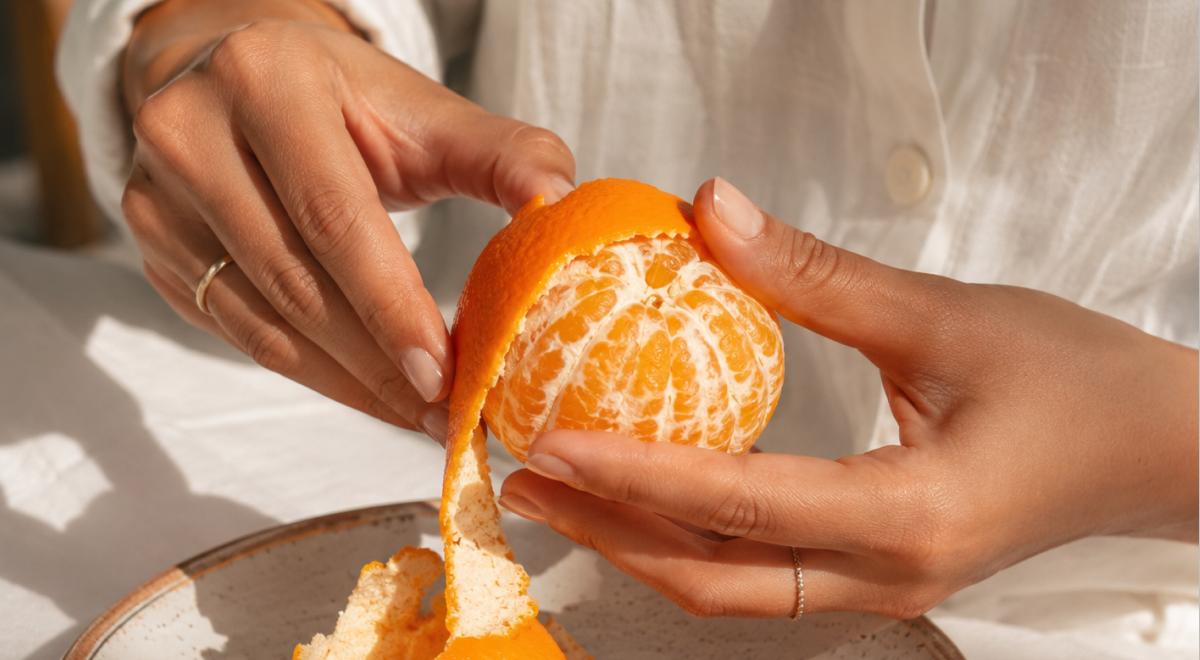

Spoiler: it was never about the orange.
Someone gives their partner an orange, asks them to peel it, and then films their reaction. This is the essence of the Orange Peel Theory – a social media trend that raises the question about the nature of devotion.
According to a study by the University of Washington, couples who remain together tend to respond to small "bids" for connection from their partner approximately 86% of the time.
How do we know someone cares, and is a tiny gesture a fair way to measure it? Let's define the trend, check out what relationship research says about small gestures, and show you how to use the idea safely.
Authors like Gary Chapman and Amir Levine have spent years studying how everyday care works. You don't have to guess how to build better habits with your partner. Finding the right tools makes a huge difference in how you show up for each other.
📘 You can get started right now and try Headway to learn from bestselling authors how to build a stronger connection!
*Note: This article is informational and doesn't replace couples counseling or professional support.
Go deeper into the ideas that fascinate you.
Explore thousands of book insights across any topic. A library built for lifelong learners.
Start exploringQuick summary: The Orange Peel theory in under a minute
Here's the whole idea before we get into the details.
The orange peel theory says small acts of service signal care in a relationship.
It started as a TikTok trend, not a clinical or scientific concept.
It links to the acts of service love language from Gary Chapman.
A single response doesn't define a relationship; patterns over time do.
Asking for what you need directly beats quietly testing a partner.
Keep reading for the full guide to understanding these tiny acts of care.
What is the Orange Peel theory?
The orange peel theory is the idea that if you ask your partner to peel an orange for you and they do it willingly, it reflects how much they care through small, everyday acts. The orange is symbolic. The actual point is the willingness to do a slightly annoying, small task for someone else.
This concept appears nowhere in clinical literature. It's a social media concept, not a diagnosis or a validated psychological test. People often ask, "What's the orange peel theory really trying to prove?" It simply points to a broader truth.
Feeling cared for often comes from small, consistent attentions rather than grand gestures. Caring for your partnership is also a big part of your overall mental health. You want to know your partner has your back in ordinary moments.
Where the Orange Peel theory came from
The orange peel theory TikTok trend gained major traction around late 2023 into 2024. Users started filming their partners peeling fruit and reading the reaction as a definitive sign of devotion. Where did the orange peel theory come from before that? It grew organically from internet conversations about healthy relationships.
The concept caught on quickly because it's incredibly simple and highly visual. It taps into a very real human wish to feel quietly looked after by the person you love.
Why the Orange Peel theory struck a nerve: The science of small moments
Dr. John Gottman's University of Washington study showed that couples who lasted responded to each other's small "bids for connection" about 86% of the time. Couples who later divorced only responded 33% of the time. That explains why the orange peel theory matters.
A bid for connection is any small attempt to get a partner's attention, help, or affection. Peeling an orange is exactly that kind of bid. How to communicate effectively in a relationship often comes down to noticing these tiny requests.
Small responses, repeated over time, are a real signal in relationship science. One single unpeeled orange isn't a red flag, but consistent small acts of service build a foundation of trust.
📘 Build stronger communication skills by learning the expert advice on Headway!
The Orange Peel theory and the acts of service love language
Peeling an orange is a textbook act of service, which is one of the five love languages described by Gary Chapman. People give and receive affection differently. An act of service that melts one person may barely register for another.
Mismatched love languages often explain why a sweet gesture lands flat. It rarely means there's a lack of love. How to be a better girlfriend or partner involves learning your shared languages.
The 5 love languages include:
Words of affirmation
Quality time
Receiving gifts
Acts of service
Physical touch
You can use the Headway summary of 'The 5 Love Languages' to quickly identify which language you and your partner respond to most.
What different reactions to the Orange Peel theory might mean
Before you read a partner's response as a verdict, look at the fuller picture. Here are a few orange peel theory examples and what they might signal.
| How they respond | The quick (surface) read | What's worth considering |
|---|---|---|
Peels it happily, no prompt needed | "They really get me" | A genuine green flag, especially if it fits a wider pattern of attentiveness |
Peels it when asked, no fuss | "Fine, they helped" | Healthy and normal; responding to a clear request is a turn toward connection |
Does it, but visibly annoyed | "They don't care" | Could be stress, tiredness, or a bad day, not a verdict on the relationship |
Says no or "not right now" | "Red flag" | Context matters; a single no isn't proof of anything on its own |
Never notices you might want help | "They're checked out" | Worth a direct conversation, not a silent test; they may simply not register the cue |
Understanding the orange peel theory meaning helps you realize that patterns over weeks matter far more than any single reaction.
Why the Orange Peel theory should not be a pass-or-fail test
Turning a gesture into a gotcha ignores context and sets silent traps. You can end up punishing a partner for failing a test they didn't know they were taking. Testing someone secretly creates unnecessary friction.
You should reframe the theory as a mirror for reflection rather than a scoreboard. An orange peel theory gone wrong usually says more about poor communication than a lack of love. You should take some time to honestly evaluate the following:
How often do I ask for what I need?
What comes up for me when I do?
Do I notice my partner's bids as much as I track theirs?



How to use the Orange Peel theory without turning care into a test
Direct communication consistently beats hinting. You can simply say, "I've had a long day, would you peel this for me? It would mean a lot."
Give a clear script: Ask directly instead of hoping they read your mind.
Practice reciprocity: Care flows both ways, not tit-for-tat.
Notice and name: Acknowledge your partner's small acts of service out loud.
Build tiny rituals: Add moments of care into ordinary days.
Love is something you practice, not a single result you measure. You might even look into apps for couples to help build those shared routines together.
📘 Start building tiny, positive habits on Headway!
Small-act practices from five book summaries
Reading widely is one of the smartest ways to understand how connection actually works, and you don't need a free weekend to do it.
Headway book summaries turn these relationship classics into 15-minute lessons. You can test an idea this week and decide later which book deserves a full read.
Practice attentive responding ('Attached' by Amir Levine and Rachel Heller). Notice your partner's small bids and your own attachment pattern when you make a request. Name one bid your partner made today and how you responded.
Attempt to correlate gestures to language ('The 5 Love Languages' by Gary Chapman). A peeled orange only lands if acts of service are a language your partner values. During this week, you both should take the time to identify one of your top love languages and then provide each other with an additional small gesture in the other's language.
Ask without testing ('Nonviolent Communication' by Marshall B. Rosenberg). Replace the silent test with a clear request that names a feeling and a need. Rewrite one recent hint as a direct "I feel... I need... would you..." statement.
Treat love as a daily practice ('All About Love' by bell hooks). Care is something you do on ordinary days, not a one-time thing. Choose one repeatable small act, like morning coffee or a text check-in, and keep it for a week.
Love without fear or control ('The Mastery of Love' by Don Miguel Ruiz). A partner's "no" to a small task isn't a referendum on your worth. When a gesture is declined, write down the story you told yourself, then a kinder, truer version.
See the small moments more clearly with Headway!
The orange peel theory matters because everyday attention, given and received, is what relationships are built on. When you don't have the time to read every relationship book on your list, you can still gain valuable insights.
Headway's quick summaries let you review proven ideas on love, communication, and attachment in minutes a day. You can listen to the audio formats on your commute, read the text versions, and track your progress.
It works like a personal nonfiction guide for the small habits that keep people close. You can easily decide which full book is worth a deeper read later.
📘 Find reliable relationship advice from bestselling authors on Headway!
FAQs about the Orange Peel theory
What is the orange peel theory?
The orange peel theory is the idea that if you ask a partner to peel an orange for you, their willingness reflects their overall care. It's a TikTok concept, not a clinical term, but it highlights the importance of small acts of service in a relationship.
Where did the orange peel theory come from?
The trend started on TikTok in late 2023. It spread quickly because it provides a simple, visual way to measure a partner's devotion, tapping into the universal desire to feel cared for.
Does the orange peel theory really predict a healthy relationship?
No single act predicts relationship success, as patterns matter far more than one reaction. However, Dr. John Gottman's research shows that couples who consistently respond to small bids for connection are much more likely to stay together.
What does it mean if your partner refuses to peel the orange?
A refusal doesn't automatically mean your partner doesn't care. Context is more important than a single verdict. Having a direct conversation is much healthier than silently testing them.
Is the orange peel theory the same as the acts of service love language?
They're closely linked, but not exactly the same. Peeling an orange is an example of an act of service. The theory focuses on testing a partner, while the love language is about understanding how someone naturally gives and receives affection.
Is the orange peel theory backed by science?
The TikTok trend itself isn't scientific. However, the underlying idea aligns perfectly with relationship research. Studies show that consistently responding to a partner's small needs builds long-lasting trust and connection.