Self-growth
 Apps & Digital Tools
 Business & Career
 Success
 Growth Tools
 Psychology
 Communication
 Relationships

The average adult now spends 2 hours and 23 minutes on social media every single day — almost a full waking month every year lost to feeds, loops, and shorts. That is not a willpower problem. It is the predictable result of platforms engineered to exploit your brain chemistry. If you want to know how to quit social media, you need a strategy that works with your biology rather than against it.
Breaking a social media addiction is entirely possible when you replace empty scrolling with simple, rewarding alternatives. Headway makes the swap easy — 15-minute book summaries on focus, habits, and psychology fit into the exact gaps where you used to scroll.
📘 Try Headway and start replacing your scroll today.
Quick answer: How to quit social media
Remove immediate access: Delete the apps from your smartphone entirely and only access them through a desktop web browser.
Build intentional friction: Log out of your accounts after every single session, so you must type your password to return.
Swap the scroll: Replace the physical habit of opening social media with a healthy microlearning alternative, like reading on the Headway app.
Establish accountability: Tell one close friend about your digital fast and ask them to hold you to your goals.
📘 Swap mindless scrolling for self-improvement with Headway

The psychology behind social media addiction
Understanding why you feel compelled to check your phone is the first step toward changing the behavior. Your favorite platforms are built around specific neurological systems that keep you coming back.
If you want to learn how to quit social media addiction, you must understand the neurological triggers that keep you clicking:
The dopamine loop: Social networks use variable reward schedules — much like slot machines — to stimulate your brain's dopamine pathways.
The anxiety of FOMO: Algorithms exploit your fear of missing out, making you feel that stepping away will break your personal connections.
Mindless doom scrolling: Infinite scroll design removes natural stopping cues, making it easy to lose track of time entirely.
The comparison trap: Constant exposure to curated highlight reels triggers low self-esteem and increases feelings of loneliness.
How to quit social media cold turkey without failing
Deciding to cut off your digital networks entirely can feel intimidating, but a clean break is often the most effective path. If you want to quit social media for good, you must prepare for the initial withdrawal phase.
To complete a successful digital fast, use these foundational preparation steps:
Conduct an honest inventory: Write down exactly why you want to leave and what you hope to gain, such as reduced stress or more time for reading.
Set a specific trial period: Commit to a 30-day digital fast rather than promising yourself you will stay away forever.
Prepare for boredom: Accept that you will feel restless at first, and understand that boredom is a necessary step to restore your focus.
Build an offline contact list: Save the phone numbers of close friends so you do not rely on app messengers to stay in touch.
Four practical steps to quit social media permanently
If going cold turkey feels too extreme, you can build permanent boundaries by systematically introducing friction. These structural changes make it much harder for algorithms to capture your attention.
Instead of relying on weak app time limits, make your phone less appealing with these practical adjustments:
Delete the apps: Remove shortcuts to TikTok, Snapchat, and other social networks from your phone, forcing yourself to use clunky browser versions.
Silence your notifications: Turn off all non-human alerts on your smartphone to prevent random pings from interrupting your day.
Establish physical phone limits: Keep your device out of your bedroom at night and avoid looking at screens during the first hour of your morning.
Log out of every browser: Force yourself to type your credentials manually every time you want to check a feed to disrupt mindless habits.
Reclaiming your focus with Headway book summaries
Breaking a social media addiction is only half the battle; you must also decide what to do with your newly reclaimed hours. Replacing the scroll with a low-energy, high-growth habit is the best way to prevent relapses.
The Headway app fits perfectly into those little gaps in your day when you would normally pull out your phone to scroll:
The perfect screen alternative: Instead of doom scrolling through negative news, you can open Headway to read a 15-minute summary of a book worth your attention.
Real takeaways on the go: Use text and audio summaries to learn about communication, psychology, and focus while you walk, commute, or cook.
Track your growth: Keep your learning streak alive with quick, three-minute reading sessions that build self-esteem instead of anxiety.
📘 Open Headway, pick one 15-minute summary, and read it the next time you reach for your phone — that single swap rewires the habit faster than any app blocker.


Recommended books on Headway to master your attention
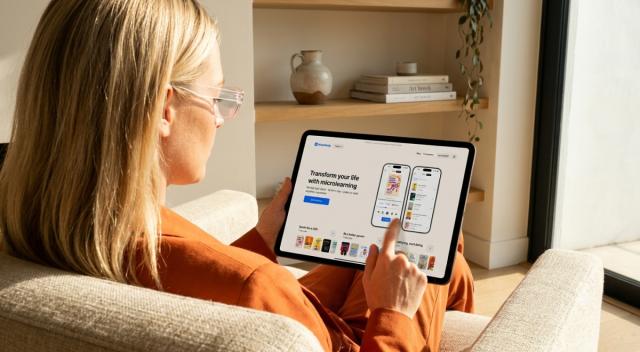
To help you rebuild your attention span, we have curated some of the best books on habits and focus available on the Headway app. Reading these summaries will give you the psychological tools to stay screen-free:
'Digital Minimalism' by Cal Newport: Learn how to perform a full digital declutter and choose which technologies serve your deep values.
'Atomic Habits' by James Clear: Discover how to make bad habits invisible and build positive systems by changing small, daily actions.
'Four Thousand Weeks' by Oliver Burkeman: A liberating look at time management that helps you embrace the joy of missing out (JOMO).
How to handle professional networks like LinkedIn
Many career-driven professionals struggle to stop using social media because they fear hurting their industry prospects. You do not need to delete your professional profile to protect your mental health.
You can maintain an active professional presence while protecting your time with these simple rules:
Keep your browser logged out: Only check your professional messages once a day on your computer, never on your phone.
Turn off the network feed: Use browser extensions to block the main social timeline entirely, keeping your focus on direct messages.
Focus on direct communication: Reach out directly to peers via email or phone calls rather than leaving public comments on posts.

Rebuilding your real-world connections
Moving away from digital feeds allows you to invest your energy back into deep, meaningful relationships. True life satisfaction comes from offline interactions that social apps can never replicate.
To translate your offline hours into real-world happiness, focus on these simple habits:
Schedule physical meetups: Replace passive status-viewing with actual coffee dates, walks, and face-to-face conversations.
Pick up tactile hobbies: Revisit analog activities like physical books, cooking, journaling, or playing a musical instrument.
Sit with quiet reflection: Allow yourself to be still without reaching for a screen, giving your mind space to process thoughts.
Ready to quit social media for good? Make the swap with Headway
You now have everything you need to quit social media: the psychology, the cold-turkey plan, the friction tactics, and a real replacement habit. The only thing left is the swap itself — every time the urge to scroll hits, open a Headway summary instead.
In 15 minutes, you can finish a book that rewires how you think about focus, habits, or attention. Over a month, that is 30 books instead of 30 hours of feed.
📘 Join 55M+ learners across 170 countries who chose growth over the scroll. Download Headway today and turn your reclaimed hours into real progress.
Frequently asked questions on how to quit social media for good
What is the 5-5-5 rule for social media?
The 5-5-5 rule is a simple usage cap: spend no more than 5 minutes per session, on 5 platforms maximum, checked 5 times a day. It forces intentional use instead of mindless scrolling by giving you hard limits on duration, breadth, and frequency. Many people pair it with app timers or a logged-out browser to make the rule self-enforcing.
How long does social media withdrawal last?
For most people, the initial craving to check their phone subsides after about three to five days of a digital detox. After two weeks, your dopamine baselines begin to reset, resulting in a significantly reduced urge to browse. Your mind will naturally start finding comfort in slower, focused tasks again.
Does quitting social media reduce anxiety?
Yes, stepping away from online platforms dramatically decreases your anxiety and stress levels. You stop comparing your daily life to the polished highlights of other people, which directly repairs your self-esteem. Without constant notifications triggering your fight-or-flight response, your nervous system can finally relax and recover fully.
How do I maintain friendships without social media?
You can keep your relationships strong by focusing on direct, personal communication. Reach out to friends through text messages, phone calls, or emails instead of commenting on public posts. Plan regular face-to-face get-togethers or phone dates, which build much deeper and more satisfying personal bonds over time.
Why is Gen Z quietly leaving social media?
Gen Z is stepping back because they grew up on these platforms and feel the damage first-hand: burnout, comparison anxiety, and shrinking attention spans. Many are switching to private group chats, "finstas," and offline hobbies instead of public feeds. Research from Pew and Gallup shows rising rates of social media fatigue and a growing preference for smaller, more private digital spaces.
Is life happier without social media?
For most people, yes. Studies from the University of Bath and others show that even a one-week break from social platforms improves mood, reduces anxiety, and increases life satisfaction. You stop comparing your real life to curated highlights, sleep better without late-night scrolling, and reclaim hours for hobbies, relationships, and rest. Happiness comes from what you replace the scroll with.
Is it a red flag if someone doesn't have social media?
No, it is usually the opposite. Choosing not to use social media often signals strong boundaries, protected attention, and a preference for direct communication. Many high-performers, therapists, and writers stay off public platforms to protect their focus and mental health. Judge people by how they treat you in person and over real conversation, not by a missing profile.
What happens after you quit social media?
The first 3–5 days bring restlessness and phantom phone-checking as your dopamine system recalibrates. By week two, cravings fade, and you sleep more deeply. Within a month, most people report sharper focus, lower anxiety, more reading and exercise, and stronger offline relationships. Boredom returns as a useful signal — your brain starts reaching for books, walks, and real conversation instead of feeds.