Self-growth
 Apps & Digital Tools
 Business & Career
 Success
 Growth Tools
 Psychology
 Communication
 Relationships

Have you ever walked away from a conversation and felt a sudden, cold wave of regret? It is that specific social hangover where you replay everything you said and wonder if you were just a bit "too much". You might worry about your social life or feel like you are constantly getting on people’s nerves without meaning to.
Learning how to stop being annoying is not about suppressing your personality. It is about sharpening your self-awareness to connect with others more effectively. Whether you feel like you are being weird and annoying or just want to polish your social skills, this guide will help you navigate your interactions with more grace and confidence.
If you are often short on time but want to master these skills, the Headway app offers 15-minute summaries of the world's best communication and psychology books. You can learn the secrets of charisma and emotional intelligence while commuting or grabbing coffee. Understanding the science of human behavior is the fastest way to become the person everyone wants to have in the room.
📘 Improve social awareness with Headway.
Quick answer: How to stop being annoying in three steps
If you need a fast way to stop being annoying to people, focus on these three high-impact adjustments immediately. These changes address the most common complaints people have about annoying behavior in social settings.
Practice the 70/30 rule: Listen for about 70% of the conversation and speak for only 30%. It's the simplest way to stop talking too much and avoid oversharing.
Monitor social cues: Watch for exit signals like the other person checking their watch, looking at their phone, or pointing their feet toward the door.
Pause before you speak: Take a deep breath before reacting to ensure you do not interrupt others or dominate the physical space.
Why do I feel like I'm being annoying?
If you keep asking yourself, "Why am I so annoying?" that nagging feeling of being "too much" usually stems from a mix of social anxiety and low self-esteem. When we do not feel secure in ourselves, we sometimes overcompensate by talking too fast, making too many jokes, or trying too hard to impress different people. This is a common psychological pattern where the fear of being disliked actually leads to the very behaviors that frustrate others.
It is also possible that you are simply not tuned into the social norms of your current environment. Every group has its own unwritten rules for how to behave. If you are struggling to figure out how to stop being so annoying, it might be that your internal thermostat for social interactions is just a little bit off. You are likely a well-meaning person who is just missing a few subtle signals.
Mental health also plays a significant role in how we perceive ourselves. Conditions like social anxiety can make you hyperfocus on your own flaws, leading to a spotlight effect in which you think everyone is judging your every move. Usually, people are much more focused on themselves than they are on your minor social slips. Learning to relax is the first step toward being a more pleasant companion.
📘 Build confident social habits with Headway.
10 Proven ways to stop being annoying to others
Changing how you interact with the world takes practice, but the rewards for your social life are massive. Here are ten science-backed habits to help you stop being annoying and start building deeper, more meaningful connections.
1. Become a better listener instead of waiting to talk
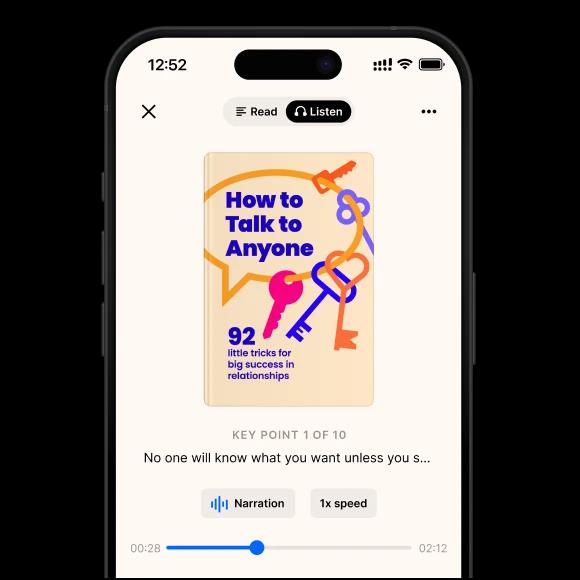
Most people listen just to wait for their turn to speak. If you want to know how not to be annoying, you have to shift your focus entirely to the other person. In the book 'How to Talk to Anyone', Leil Lowndes explains that being a great talker is actually about being a great listener. When you show genuine interest in someone else, they feel valued instead of drained.
Active listening involves more than just staying quiet. It means using your body language to show you are engaged and asking follow-up questions that prove you heard what they said. If you find yourself constantly waiting to jump in with your own story, try the two-second pause method. Wait two full seconds after someone finishes speaking before you respond.
2. Stop oversharing and trauma dumping
Oversharing is one of the quickest ways to get on people's nerves. While vulnerability is important for building trust, sharing deep personal struggles or trauma dumping on someone you just met can feel overwhelming. It forces the other person into an emotional caregiver role they did not sign up for. This behavior often occurs when we are seeking immediate validation.
To prevent this, try to match the depth of the person you are talking to. If they are talking about their weekend plans, that is not the time to bring up your deepest childhood wounds. Keep the conversation light until you have built a foundation of trust. This is a core part of developing strong social skills and respecting others' boundaries.
3. Respect personal space to make people instantly feel at ease around you
Your physical presence matters just as much as your words. Being a close talker or touching people without their consent can make them feel incredibly uncomfortable. Different people have different bubbles of personal space, and crossing that line is a classic sign of annoying behavior. It triggers a stress response in the other person, making them want to escape the interaction.
Watch the other person's body language. If they take a half-step back while you are talking, you are likely too close. Give people room to breathe. Respecting physical boundaries shows that you are self-aware and considerate of others' comfort. This small adjustment can instantly make you a less annoying person to be around in any setting.

Understand social boundaries and get practical insights on communication.
4. How to stop being loud and annoying
High energy is great, but there is a fine line between being enthusiastic and being too loud. If you are always the person whose voice carries across the entire office or restaurant, you might be disruptive without realizing it. People often find high-volume speech exhausting because it demands constant attention and makes it hard for others to hold their own side conversations.
Next time you are in a group, try to mirror the volume of those around you. If everyone is speaking in hushed tones, lower your voice. If the room is loud, you can ramp it up slightly, but always aim to be 10% quieter than the loudest person. This demonstrates that you can read the room and adjust your behavior to fit the social norms of the environment.
5. Stop interrupting people — and become the most trusted voice in any room
Interrupting people is a conversational power move that usually backfires. It tells the other person that what you have to say is more important than what they are currently saying. If you struggle with how to stop being annoying to your friends, this is likely the first habit you should break. It breaks the flow of the conversation and makes others feel invisible.
If you have a thought that you are dying to share, try to save it in your head. If the conversation moves on before you can say it, let it go. Not every thought needs to be voiced. By letting others finish their sentences, you show respect and build a reputation as a thoughtful, high-value communicator. This is a vital part of mastering social interactions.


6. Read the room: matching the group's vibe is the quickest social fix there is
Every social circle has its own vibe. What is acceptable at a frat party is not acceptable at a corporate networking event. If you are struggling with how to stop being annoying and weird, it might be because you are applying the wrong social rules to the wrong situation. Being weird is often just a symptom of being out of sync with the group’s expectations.
Observe the group before you jump in. Are they joking around, or is the tone serious? Do they use a lot of slang, or is the language more formal? By taking a moment to calibrate your behavior, you can integrate into any group without causing friction. This is what experts call "social chameleon" behavior, a hallmark of high emotional intelligence.
7. Improve your body language
Your body speaks before you even open your mouth. If you stand with your arms crossed, avoid eye contact, or fidget constantly, you might be sending annoying vibes without saying a word. Negative body language can make you seem unapproachable or untrustworthy. On the flip side, open body language — like uncrossed arms and a slight lean-in — makes you appear warm and inviting.
In 'Captivate', Vanessa Van Edwards notes that our hands are our most important social tool. Keeping your hands visible and using them to gesture naturally makes you more charismatic. If you find yourself fidgeting with your phone or keys, put them away. Giving someone your full physical attention is one of the best ways to stop being annoying to people.
8. Manage your social media presence to stop being annoying to others online, too
Being annoying is not limited to face-to-face social interactions. Your online behavior can also grate on people’s nerves. Posting 20 stories a day, vague-booking about your problems, or leaving argumentative comments on every post can damage your reputation. Social media is an extension of your personality, and the same rules of oversharing and volume apply there, too.
Before you post, ask yourself: "Does this provide value, or am I just looking for attention?" If the answer is the latter, maybe keep it in your drafts. Being more selective about what you share online makes you seem more mysterious and less desperate for validation. It also prevents you from clogging up your friends' feeds with low-quality content. The same goes for your DMs.
If you're wondering how to stop being annoying over text, watch for one-sided threads — double- and triple-texting before someone replies, or firing off ten short messages instead of one clear note. Give people the same room to respond that you would in person.
9. Take a deep breath before reacting
Impulsivity is a major contributor to annoying behavior. When we act on our first instinct, we often say things we regret or make jokes that land poorly. If you are feeling a surge of energy or frustration, take a deep breath. This short pause gives your rational brain time to catch up with your emotional brain, allowing you to choose a better response.
This habit is especially useful when you feel the urge to correct someone or show off your knowledge. Being a know-it-all is a very common way to annoy others. By pausing, you can decide if your input is actually helpful or if you are just trying to feel superior. Most of the time, letting a minor error slide is the better social move.
10. Practice genuine eye contact
Eye contact is a delicate balance. Too little, and you seem shifty or uninterested; too much, and you seem aggressive or weird. The sweet spot is usually around 60-70% of the time during a conversation. This shows that you are paying attention without making the other person feel like they are being stared down by a predator.

Balance your eye contact to communicate better and get expert ideas.
Try to look at the person’s eyes long enough to notice their eye color, then look away naturally for a moment. This makes your gaze feel warm rather than clinical. Good eye contact builds trust and helps you pick up on subtle social cues that reveal how the other person is feeling. It is a fundamental building block of any successful social life.
📘 Master confident communication with Headway.
How to stop being annoying with ADHD
Many people who worry about being "too much" are actually dealing with neurodivergence. It is important to realize that your brain is simply wired differently. You might struggle with executive function, which controls things like impulse control, volume regulation, and the ability to stop talking when someone else wants a turn.
This is not a character flaw; it is a biological reality. However, you can still develop strategies to manage these traits. Many people with ADHD find that fidget toys help them stay focused during conversations without being disruptive. You can also try the wait-three-seconds rule to help with the impulse to interrupt people.
Using an app like Headway can be a game-changer for people with ADHD. Since the summaries are only 15 minutes long, they fit perfectly into a shorter attention span while providing high-value insights from books like 'ADHD 2.0'. You can learn how your brain works and find practical ways to navigate social norms without feeling like you have to mask your true self.
How to stop being annoying to your brother or family members
Family dynamics are unique because the filters we use with strangers often disappear. You might find yourself being louder and more annoying with your siblings because you feel safe around them. However, even family members have limits. If you want to know how to stop your brother from being annoying, or how to make your brother stop being annoying to you, it starts with a conversation about boundaries.
| Family friction point | Try this instead | Why it works |
|---|---|---|
Interrupting focus time | Set "no-go" times — if your brother is working or gaming, leave him to it | Protects his attention and heads off resentment |
Barging into personal space | Ask before you enter — give family the privacy you'd give a roommate | Signals respect for boundaries |
Repeating the same joke | Retire a joke after it lands once | A joke that was funny once gets old by the tenth time |
Blaming language | Use "I" statements: "I feel frustrated when the TV is loud while I'm reading" | Lowers defensiveness and keeps things calm |
Respecting your family members' personal boundaries and mental health is the key to a peaceful home. Often, we are most annoying to the people we love the most because we take their presence for granted. By treating your family with the same social grace you give to friends, you can significantly improve your domestic social life.
Real stories: how three Headway users worked on the same habits
Advice sticks better with proof. Here are three Headway users who worked on the exact behaviors this guide covers — oversharing, reacting too fast, and misreading how they land with people.
Keti Diasamidze, a UX writing lead, grew up in what she calls a "warm, loud, and extremely oversharing culture" and admits, "I cannot relax. Never." That always-on intensity is often what tips someone from engaging into "too much." She used short summaries of self-care and mindfulness to build a daily breathing habit and turn the volume down — the same self-regulation that underlies pausing before you speak.
Abdelrahman Mohamed Soliman, a cost control manager, used to answer "right away to issues, emails, and requests without stopping." His turning point was learning to hold back: "I almost reacted defensively, but I paused — something I hadn't done before." That single pause is strategy nine in real life.
Deyvis Bebicaci, an executive coach, points to how easily we misjudge our own signals. One insight on non-verbal cues helped a client "realize how their silence was being interpreted as disengagement." Reading how you actually come across — not how you assume you do — is the heart of reading the room and improving your body language.
Stop being annoying for good: rebuild your social confidence with Headway
The journey to figuring out how to stop being annoying does not have to be done alone. You don't need to scroll through endless WikiHow pages or dry textbooks to find the answers. The best minds in psychology and communication have already done the work — you just need a fast way to access their wisdom.
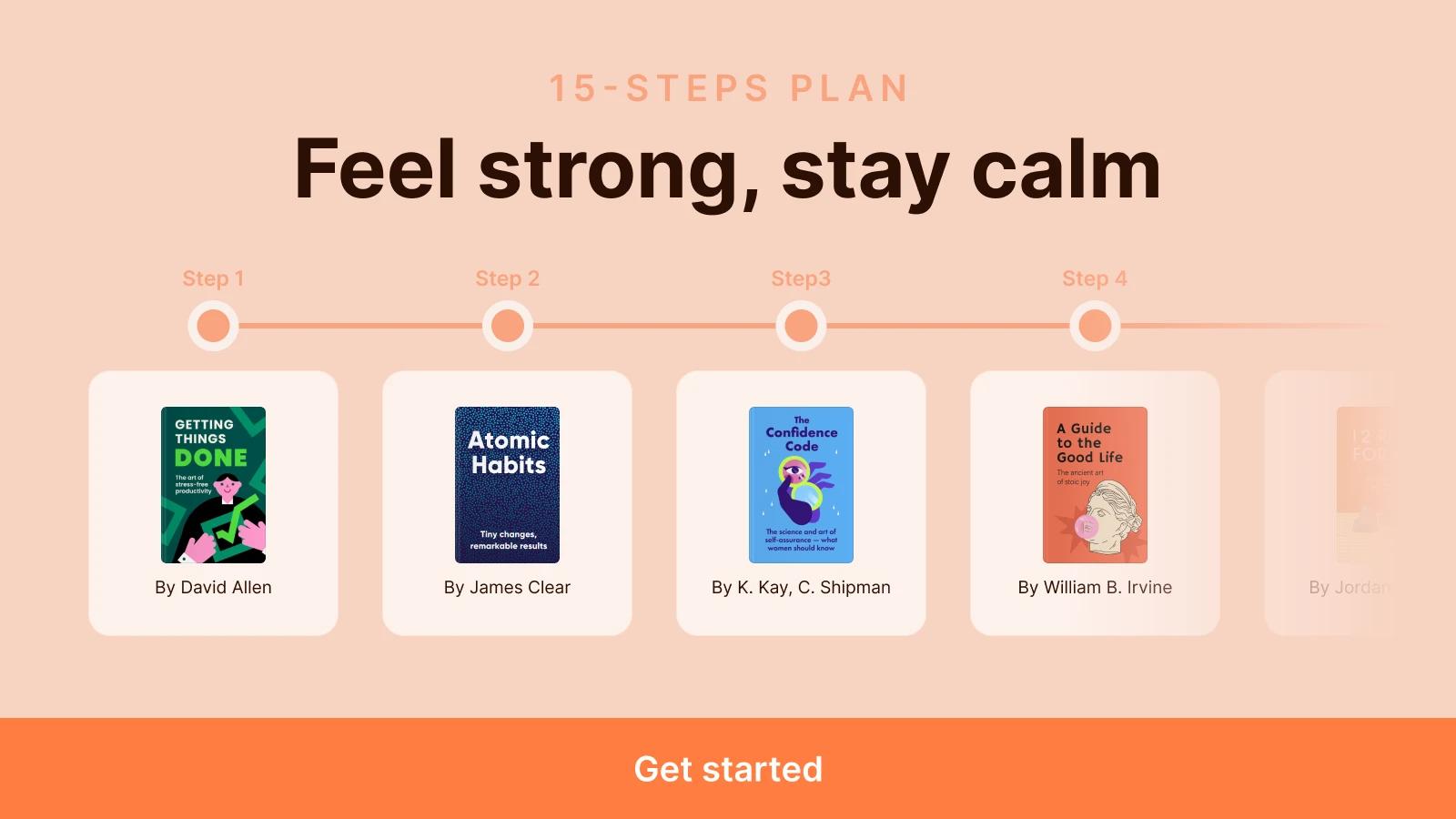
Headway turns these massive, life-changing books into 15-minute growth plans. You can listen to the key ideas from 'The Charisma Myth' to learn how to command a room with warmth, or 'Social Intelligence' by Daniel Goleman, to understand the science of human connection. Each summary provides actionable tips that you can use the very next time you walk into a social interaction.
By dedicating just a few minutes a day to learning about social cues and human behavior, you will notice a massive shift in how people respond to you. You will stop feeling like the annoying person and start feeling like a leader, a better friend, and a more confident version of yourself. Your social life is one of your most valuable assets — invest in it with Headway.
Frequently asked questions about annoying behavior
How to stop being so annoying and weird?
If you feel like you are being weird and annoying, the best approach is to slow down and observe. Weirdness often comes from being out of step with the group's rhythm. Take a deep breath and watch how others are interacting before you contribute. Focus on asking questions rather than making statements, as this shifts the focus away from your own behavior and onto the other person, making you seem more interested and less strange.
What is the annoying people paradox?
The annoying people paradox occurs when someone tries so hard to be liked that they end up pushing people away. This usually stems from low self-esteem or social anxiety. By over-functioning — meaning you talk too much, laugh too loudly, or offer too much help — you create an imbalance in social interactions. The fix is to relax and realize you don't need to perform to be worthy of others' friendship or respect.
How do I know if I'm annoying people?
You can tell if you are getting on people’s nerves by looking for subtle avoidance social cues. If people are giving you one-word answers, avoiding eye contact, or turning their backs on you, it is a sign they are feeling drained. Another clue is the mirroring test; if you are high-energy and they are staying very flat and quiet, you are likely overwhelming them. Being self-aware enough to notice these shifts is the first step to being less annoying.
How to stop being annoying to your friends?
To stop annoying your friends, focus on the quality of your interactions rather than the quantity. Don't feel the need to fill every silence with noise or jokes. Practice better listening skills and avoid oversharing every minor detail of your day unless they ask. If you think you’ve been too much lately, it’s okay to give them some personal space for a few days so the social dynamic can reset naturally and healthily.
How to make your brother stop being annoying?
If you want to make your brother stop being annoying, the most effective method is planned ignoring. When he does something to get a reaction out of you, don't give it to him. If the behavior is more serious, have a calm conversation during a quiet moment — not in the heat of an argument. Set clear boundaries about your personal space and stick to them. The most annoying behavior among family members is a bid for attention; by redirecting that attention to positive behaviors, the annoying ones usually fade.
How to stop being loud and annoying in public?
Managing your volume is essential for how to stop being annoying to others in public spaces. Use the mirroring technique: listen to the ambient noise level of the room and ensure your voice isn't rising significantly above it. If you're with a group of friends, remind each other to keep the volume down. Often, we get loud when we're excited, so taking a deep breath every few minutes can help you regulate your energy and stay mindful of the people around you.
How to stop being annoying with ADHD?
Focus on managing your conversational impulses. Your brain might want to jump from topic to topic or interrupt people, but practicing the two-second pause can help. Use small, discreet fidgets to manage your energy so it doesn't come out as restless movement. Most importantly, be kind to yourself; your mental health and brain function are unique, and with the right social skills tools, you can navigate any interaction successfully.
How do I stop being annoying without changing who I am?
You don't have to shrink your personality to be easier to be around. The goal is self-awareness, not self-erasure: notice when your energy, volume, or talking time is running ahead of the room, and adjust in the moment. Keep your humor and warmth — just pair them with sharper listening and a read on how people are responding. Small calibrations protect your relationships without turning you into someone you're not.
How to stop being annoying to people?
To stop being annoying to people, you must prioritize active listening over constant talking. Use the 70/30 rule: listen for most of the interaction and only speak when adding value. Pay close attention to social cues, like eye contact and body orientation, to ensure you are respecting personal space and not overstaying your welcome in the conversation.