Self-growth
 Apps & Digital Tools
 Business & Career
 Success
 Growth Tools
 Psychology
 Communication
 Relationships

Ever scrolled through your phone and suddenly felt like everyone else has their life together except for you? A classmate just landed a promotion. A friend just bought a house. And you're sitting there wondering why your own progress feels so slow.
That sinking feeling is what happens when comparing yourself to others becomes a habit. It's one of the most common mental traps out there, and it quietly chips away at your confidence every single day. And it's a habit you can actually change.
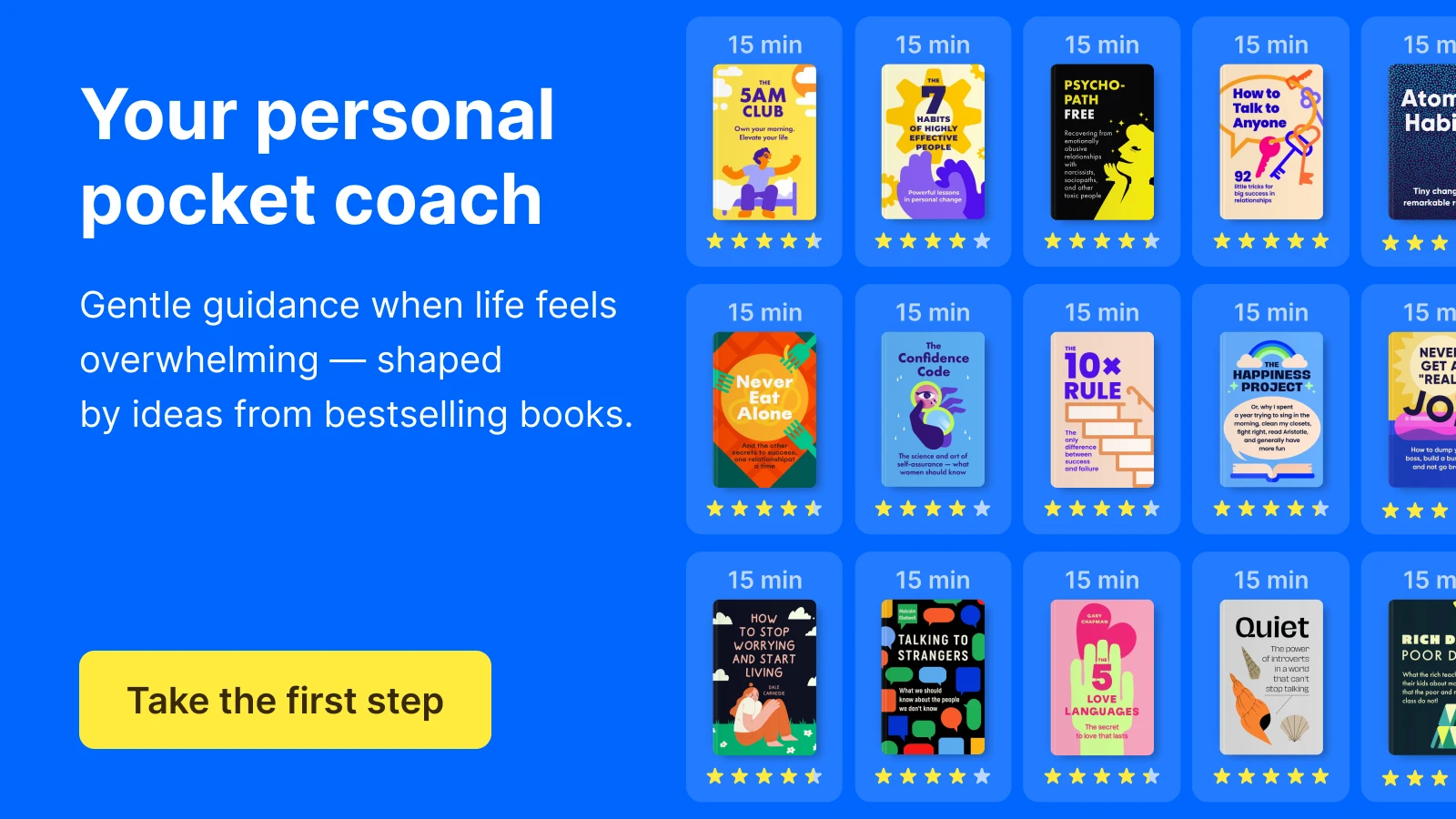
Drawing on insights from psychology researchers and authors like Brené Brown, Glennon Doyle, Rachel Hollis, and others, this article breaks down why your brain defaults to comparison and gives you seven practical steps to stop it. You'll also find a curated list of book summaries on the Headway app to help you go further, whenever you have 15 minutes to spare.
➡️ What is Headway, and how can it help me?
Quick answer: How to stop comparing yourself to others
Name the trigger: Notice which situations, such as social media, work meetings, and family gatherings, set off the comparison spiral. Awareness is the first step to breaking it.
Swap the metric: Stop measuring yourself against other people's timelines. Track your own progress instead, where you were six months ago vs where you are now.
Curate your feed: Unfollow accounts that consistently make you feel behind. Fill that space with content that actually motivates or entertains you.
Reframe envy as data: When you feel jealous of someone, ask yourself what that feeling is pointing to. It often reveals a goal you haven't yet admitted to yourself.
Focus on your own lane: The more invested you are in your own growth, the less mental space you have to track what everyone else is doing.
Use books as a reset: Authors like Brené Brown and Susie Moore have spent years studying why we seek approval, and how to stop. Their insights, available on Headway in quick summaries, give you the mental tools to break the cycle faster.
📘 Break comparison habits with Headway.
Why is comparing yourself to others bad? (The psychology of social comparison)
Comparing yourself to others is a natural human drive, but it often does more harm than good for your mental health. In the 1950s, a psychologist named Leon Festinger developed the Social Comparison Theory. He argued that human beings have an innate drive to evaluate themselves by looking at those around them.
When you engage in social comparison, you're essentially looking for a yardstick to measure your own success. But the problem is that we usually compare our "behind-the-scenes" footage with everyone else's "highlight reel." This creates a massive gap in how we perceive our own worth.
This habit is a major hit to your self-esteem. When you constantly measure your life against someone else's, you stop noticing the good things you already have. This leads to a cycle of self-doubt and overthinking, where you spend more time analyzing someone else's journey than you do walking your own.
Research shows that chronic comparison can activate the same parts of the brain as physical pain. It's a form of mental strain we often practice without even realizing it. To stop comparing yourself, you first need to acknowledge that your worth isn't a sliding scale based on your neighbor's promotion or your friend's vacation photos.
The two sides of the comparison game: upward vs. downward
Not all comparisons are created equal. Psychologists generally divide the comparison game into two categories: upward and downward. Understanding which one you are doing can help you stop the negative thoughts before they take root.
Upward comparison: This happens when you compare yourself to someone you perceive as "better" or more successful. While this can sometimes provide a spark of motivation, it more often leads to feelings of inadequacy and low self-confidence.
Downward comparison: This is when you look at people you think are worse off than you to feel better about your own life. While this might give you a temporary boost in well-being, it's a shallow foundation for self-worth. It relies on someone else's struggle to fuel your happiness.
Both types keep you stuck in a loop where your value is tied to others. True self-improvement happens when you stop looking sideways and start looking forward. Keep your eyes on the lanes next to you long enough, and you're bound to trip over your own feet.
Instead of playing this game, focus on your "personal best." Just like an athlete training for a marathon, your only real competition is the person you were yesterday. When you focus on your own life, the noise of everyone else's success starts to sound like background music rather than a siren.
How social media fueled the comparison trap
Social media has turned the natural urge of social comparison into a 24/7 competitive sport. In the past, you only compared yourself to your neighbors or coworkers. Now, you're comparing your Tuesday morning to a billionaire's vacation or a fitness influencer's filtered transformation.
The metrics of social media, likes, followers, and comments, act as a constant scoreboard. This comparison trap is particularly dangerous because social media is a curated reality. People do not post about their failures, their messy breakups, or the days they feel like a total fraud.
When you spend hours comparing yourself to others on social media, you're feeding your self-doubt with illusions. This constant stream of "perfect" lives can lead to a real decline in your mental health. It makes you feel like your own life is boring or stagnant, even when you're making great progress.
Think about your own posts for a second. You probably only share the good things. You don't post a selfie of your morning breath or a photo of your bank account after an expensive car repair. Neither does anyone else. Reminding yourself that you're looking at a "best-of" album can help you break the spell.


Seven actionable steps to stop comparing yourself to others
Breaking a lifelong habit of comparison takes time, but it's entirely possible. Here are seven practical strategies to help you stop comparing yourself and start living for you.
1. Practice self-care and gratitude
When you're busy looking at what you lack, you forget what you have. One of the best ways to combat negative thoughts is to ground yourself in gratitude. Start a daily practice of listing three good things that happened in your own life today.
Self-care isn't just about bubble baths. It's about protecting your mental space. When you feel the urge to compare, take a deep breath and remind yourself of your own wins. This shifts your brain's focus from "What do they have?" to "What am I building?"
2. Audit your social media feed
Your digital environment shapes your reality. If following a certain "perfect" influencer makes you feel bad about your body or your career, hit the unfollow button. You are the curator of your own experience.
Fill your feed with people who provide words of encouragement and authentic stories. Look for accounts that share the "messy middle" of personal growth, not just the finished product. This helps normalize the fact that everyone struggles, no matter how good their grid looks.
3. Recognize your triggers
We all have specific areas where we're more prone to the comparison game. For some, it's career success; for others, it's relationship status or physical appearance. Think back to your high school days; we often carry those old insecurities into adulthood.
Once you identify your triggers, you can create a plan to manage them. If seeing a specific friend's promotion news makes you overthink your career, acknowledge that feeling. Tell yourself: "Their success doesn't mean you're failing. You're on different paths."
4. Focus on internal metrics
Stop using external metrics like salary, job titles, or social media followers to define your self-worth. Instead, focus on your internal values. Are you kinder than you were last year? Are you more disciplined?
When you switch to internal metrics, you become your only competition. That's the heart of true self-improvement. You're not trying to be better than your neighbor. You're trying to be a better version of who you were yesterday.
5. Replace comparison with inspiration

Turn comparison into motivation and boost your confidence via our quiz.
It's possible to see someone else's success and feel good for them without feeling bad for yourself. This is called "benign envy." Instead of thinking, "I wish I had that," try thinking, "That is proof that it's possible."
If someone has a life you admire, use it as a source of ideas. What habits do they have? What books are they reading? Instead of sinking into self-doubt, turn their success into a learning opportunity.
6. Give yourself words of encouragement
We are often our own harshest critics. If you wouldn't say it to a friend, don't say it to yourself. When you catch yourself in a comparison spiral, use positive self-talk to break the cycle.
Remind yourself that everyone is fighting a battle you know nothing about. That person you're jealous of might be struggling with things you wouldn't want to trade for all their success.
7. Invest in your own growth
The best way to stop looking at other people's lives is to get genuinely excited about your own. Start a new project, learn a new skill, or explore a topic you've always been curious about.
When you're actively working on your personal growth, you simply don't have time to worry about what everyone else is doing. You become so focused on your own lane that the other runners disappear from your view.
Five books on Headway to help you stop the comparison game
Want to go further? The Headway library has several titles specifically designed to help you shake off the need for approval. These summaries provide the mental models you need to reclaim your time. You can listen to them like a podcast or read them in 15-minute bursts to strengthen your mindset.
1. 'Stop Checking Your Likes' by Susie Moore
Susie Moore writes directly to the experience of living in a world built around metrics. She makes the case that your happiness shouldn't be held hostage to your notification screen, and she backs it up with practical steps to get there.
Here's what this looks like in practice:
Shake off approval: Learn how to stop letting other people's opinions dictate your mood.
Embrace authenticity: Find the freedom that comes from being yourself rather than a curated version of yourself.
Live fully: Shift your focus from "how I look to others" to "how I feel in my own life."
2. 'The Gifts of Imperfection' by Brené Brown
Brené Brown is one of the clearest thinkers on why we feel the need to measure up. In this book, she explores how to let go of who you think you are "supposed" to be and embrace who you actually are. It's a powerful antidote to the comparison trap.
Here's what this looks like in practice:
Cultivate worthiness: Understand that you are enough right now, regardless of your current metrics.
Practice self-compassion: Learn to treat yourself with the same kindness you show your best friend.
Embrace vulnerability: See your flaws as a source of connection rather than a reason for shame.
3. 'Untamed' by Glennon Doyle
This memoir is a direct call to action to anyone living inside a "cage" of societal expectations. Glennon Doyle urges readers to stop people-pleasing and start listening to their own inner voice. It's a call to stop performing your life for other people's approval.
Here's what this looks like in practice:
Shed your fears: Identify the external "molds" you've been trying to fit into.
Reclaim your voice: Stop asking for permission to live your life the way you want to.
Start where you are: Learn how to build a life that feels good on the inside, not just one that looks good on the outside.
4. 'Girl, Wash Your Face' by Rachel Hollis
Rachel Hollis addresses the lies we tell ourselves every day. Many of them, like "I'm not good enough" or "I should be further along," stem directly from comparing yourself to others. She makes the case for calling those stories out and choosing different ones.
Here's what this looks like in practice:
Challenge the lies: Identify the false narratives that are holding you back from your true potential.
Address societal pressure: Understand that much of your self-doubt stems from unrealistic standards.
Become who you were meant to be: Let your specific path be the fuel for your personal growth, not the reason you feel behind.
5. 'How to Be an Imperfectionist' by Stephen Guise
Perfectionism is often just a fancy word for "worrying about how I compare to others." Stephen Guise offers a new way to find fearlessness and freedom by embracing imperfection. It's a useful read for anyone stuck waiting until things feel "ready" before they start.
Here's what this looks like in practice:
Overcome fear of failure: Learn how to take action even when you don't feel "perfect."
Master small wins: Focus on progress rather than a final, flawless result.
Find freedom: Break the paralyzing cycle of overthinking that keeps you from starting new projects.
📘 Build a self-worth mindset with Headway.
Quotes about comparing yourself to others to shift your perspective
If you're looking for more inspiration, you can explore our curated list of 120 Must-Read Self-Worth Quotes from Bestselling Authors. These words of encouragement serve as a reminder that your value is inherent and not something you have to earn by beating someone else.
Focusing on your own path becomes easier when you have these mental anchors to pull you back to reality. Instead of looking at a screen, let these insights from the world's greatest thinkers guide your next steps toward a more confident you.
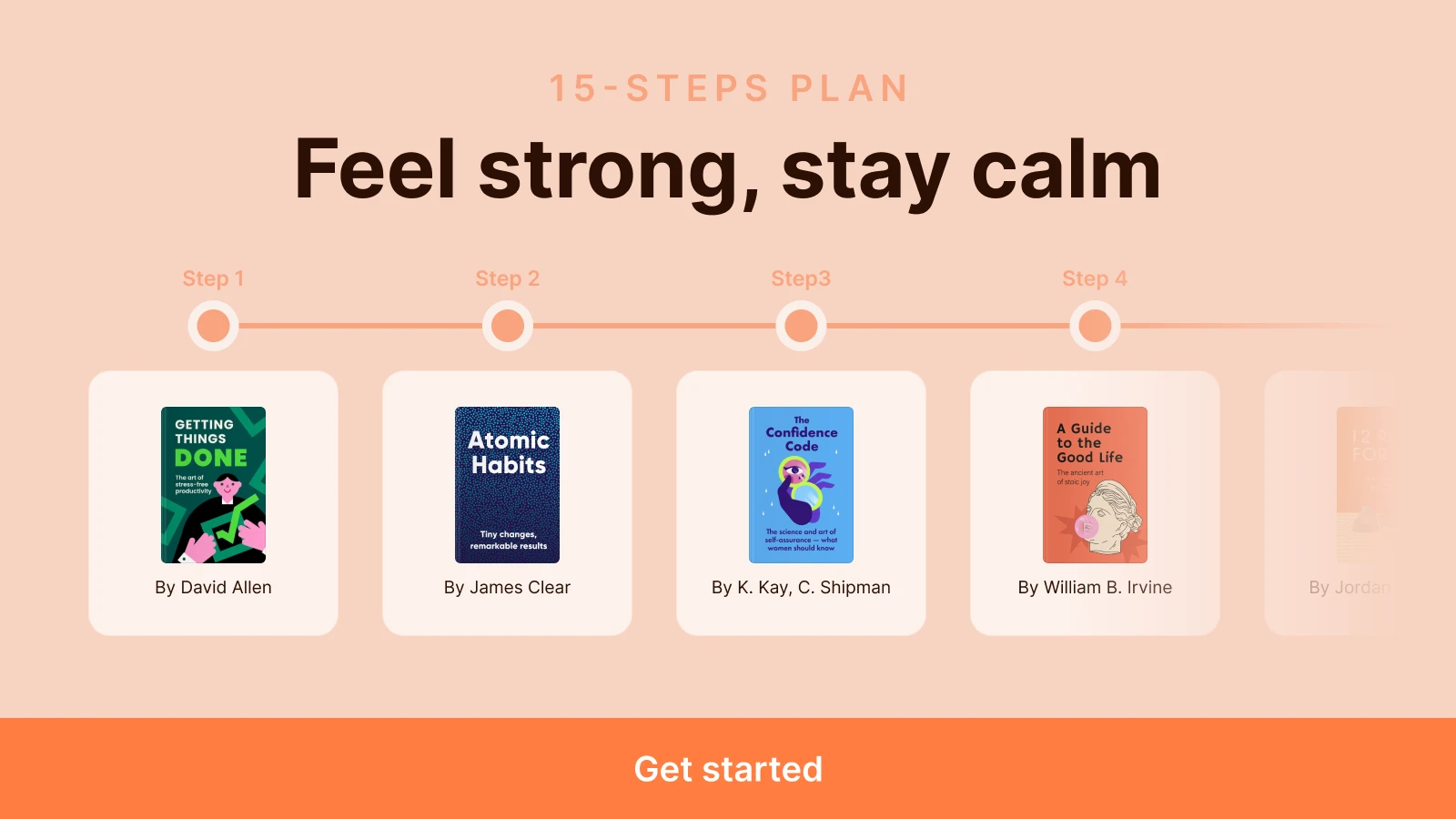
Use Headway daily to focus on your own life
If you want to stop comparing yourself to others, you need a new set of tools. The Headway app is designed to be your companion on this path. Instead of mindlessly scrolling through social media, you can use your phone to build self-confidence and knowledge.
Headway offers bite-sized summaries of thousands of bestselling books on psychology, mental health, and productivity. Here are features that can help you break the comparison habit:
Growth plans: Headway has specific growth plans, such as "Social Media Detox" and "Build Self-Esteem," that give you daily tasks to reshape your mindset.
Audio summaries: You can listen to a summary of a book like 'Digital Minimalism' by Cal Newport or 'The Gifts of Imperfection' by Brené Brown like a podcast while you commute or work out.
Daily reminders: Get a quick hit of inspiration or a "word of encouragement" sent to your phone to keep you focused on your own life.
By replacing 15 minutes of social media with 15 minutes of learning on Headway, you're choosing progress over comparison. You're investing in your own well-being and building the life you actually want to live. Isn't this exactly what you were looking for?
📘 Focus on your growth with Headway.
Frequently asked questions about comparing yourself to others
Why is comparing yourself to others bad for self-worth?
When you engage in social comparison, you're using a flawed scale to measure your value. You often compare your internal struggles to someone else's external successes. This leads to a distorted view of reality, fueling self-doubt and lowering your self-confidence because you feel you can never truly measure up to an illusion. You end up feeling like you're losing a race you never signed up for.
How to stop comparing yourself to others on social media?
The first step to stop comparing yourself to others on social media is to realize that your feed is a highlight reel, not reality. Limit your screen time, unfollow accounts that trigger negative thoughts, and use apps like Headway to replace scrolling with self-improvement. Focusing on your own personal growth makes the digital noise fade away, allowing you to appreciate the unique "user experience" of your own life without constant distraction.
Is comparing yourself to others bad if it motivates you?
It depends on the type of comparison. If you use someone else's success as inspiration to work harder on your own goals, it can be a useful tool for self-improvement. If that comparison makes you feel "less than" or creates resentment, it harms your long-term well-being and mental health. The best motivation comes from wanting to improve for yourself, not wanting to "win" against someone else.
What does the Bible say about comparing yourself to others?
The Bible emphasizes that each person is unique and has a specific purpose. It warns against the comparison trap by encouraging contentment and cautioning that "they who measure themselves by one another are not wise." Focusing on your own life and avoiding envy can bring a sense of peace that doesn't depend on how you measure up to others.
Is comparing yourself to others a sin?
In many spiritual and philosophical traditions, comparing yourself to others is seen as a barrier to peace. It's often linked to the "sin" of envy or pride. Regardless of your beliefs, focusing on your own life and practicing gratitude is widely recognized as a path to a more fulfilling and virtuous existence. It helps you stay grounded in your current reality rather than living in a world of "what ifs" and resentment.
Which Bible verse about comparing yourself to others is most helpful?
One of the most cited Bible verses about comparing yourself to others is Galatians 6:4. It advises everyone to "test their own actions" so they can take pride in themselves alone, without comparing themselves to someone else. This encourages personal growth and self-reflection, reminding you that your journey is distinct and shouldn't be judged by another person's milestones or metrics.
Where can I find comparing yourself to others quotes?
Headway's curated collections of wisdom from authors like Brené Brown and Susie Moore are a good place to start. These insights help shift your focus from external metrics to internal self-worth. You can find a collection of them in our guide to self-worth quotes right here on the blog.