Self-growth
 Apps & Digital Tools
 Business & Career
 Success
 Growth Tools
 Psychology
 Communication
 Relationships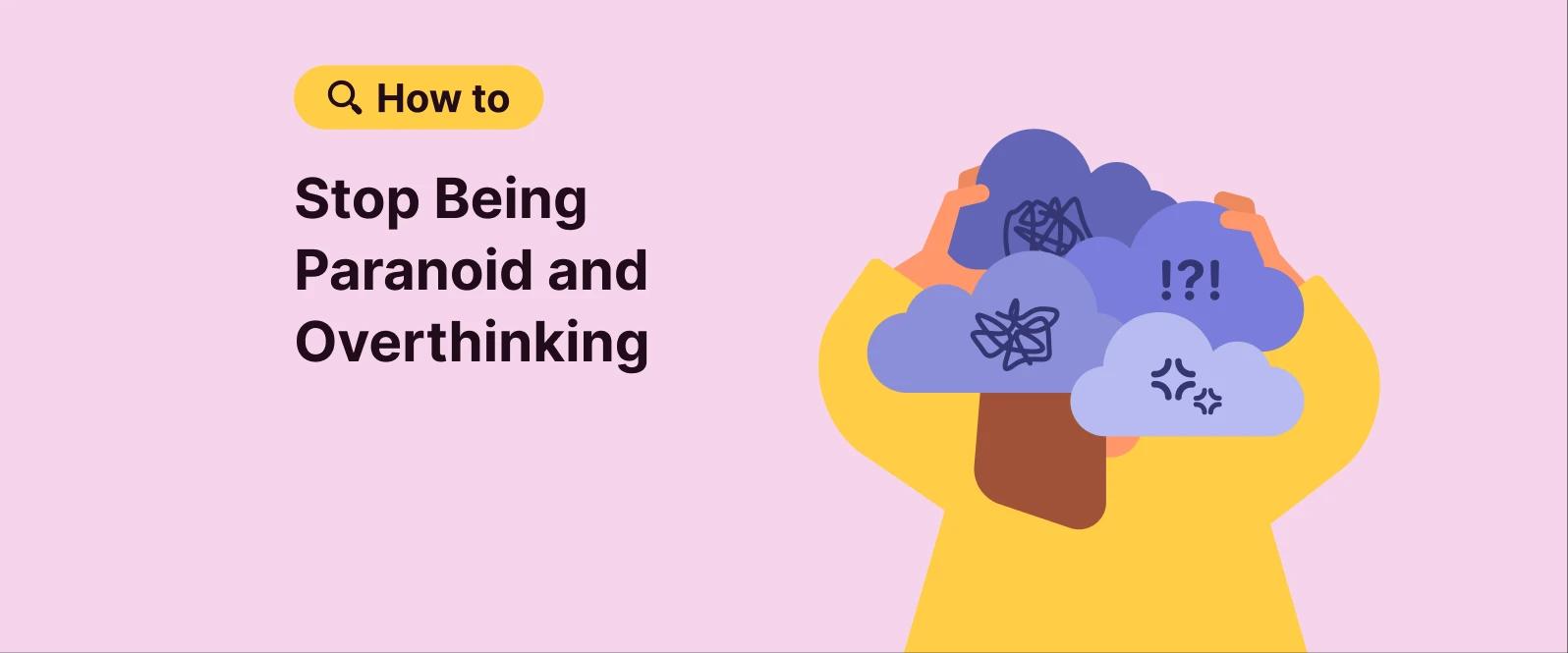

Have you ever found yourself spiraling down a rabbit hole of what-ifs? Maybe you replay a conversation from earlier, analyzing every word, every pause, every look. Or you lie awake at night, convinced something bad is about to happen — even though nothing's gone wrong yet.
That's the exhausting loop of paranoid thoughts and overthinking. And if you're here, chances are you're ready to break free.
As a somatic trauma-informed practitioner, I want to remind you that you're not broken. Your mind and body are doing their best to protect you, but sometimes, they get stuck in overdrive. But guess what? There is a way for you to interrupt these patterns and create more space for calm, clarity, and confidence.
Quick answer: How to stop being paranoid and overthinking
Paranoid thoughts and overthinking are protective responses that got stuck in overdrive — and you can retrain them. Here's what works:
Ground yourself in the present. Use the 5-4-3-2-1 technique, body scans, or slow breathing with extended exhales to interrupt the spiral.
Question the thought. Ask, "What's the evidence for this?" and reframe worst-case predictions into balanced ones.
Fix the basics. Prioritize sleep, move daily, and cut back on doomscrolling — all three directly feed paranoid thinking.
Stay connected. Isolation amplifies suspicion; safe relationships rebuild trust.
Get professional support if the thoughts persist, feel intense, or interfere with daily life.
The rest of this article breaks down each step, plus the book insights behind them.
What are paranoia and overthinking?
Paranoia is a heightened sense of mistrust or fear that others may be out to harm you. It can range from mild suspicion to intense, intrusive beliefs. While not always linked to a mental health condition, persistent paranoia may signal something else. Deeper emotional wounds or unresolved trauma may be at play here.
Paranoid thinking is also far more common than most people realize. Research published in Frontiers in Psychiatry (2021) found that 10–20% of individuals endorse paranoid thoughts with strong conviction and significant distress — even without any diagnosed psychotic disorder. The same research identified worry, negative self-beliefs, and sleep disturbance as contributing factors.
Overthinking is the tendency to dwell excessively on your thoughts, decisions, or past events, often leading to anxiety, indecision, or mental fatigue. Imagine if your brain were a computer —this would be similar to having too many browser tabs open.
Keep in mind that paranoia and ordinary anxiety shouldn't be treated as interchangeable. Paranoia generally involves excessive or unsupported mistrust or beliefs that others intend harm, while rumination refers to repetitive thought patterns that interfere with other mental activity.
Both of these tendencies are rooted in one thing: fear (fear of failure, rejection, uncertainty). And both are exhausting, and both can be managed on multiple levels.
What causes paranoia and overthinking?
Many people wonder what causes paranoid thoughts or ask themselves, "Why am I so paranoid all the time?" While these patterns may feel sudden or random, they often have deeper roots.
Some potential causes include:
Environmental factors such as chronic stress, trauma, or unstable relationships
Substance abuse or the use of stimulants like caffeine or amphetamines
Overexposure to social media, conspiracy theories, or negative news
Sleep deprivation, burnout, or significant life changes
Nervous system dysregulation
In more clinical cases, conditions like schizophrenia, delusional disorder, or paranoid personality disorder may be involved. These should always be assessed by a licensed mental health professional.
Recognizing symptoms of paranoia and overthinking
Not every anxious thought means you're paranoid. But recognizing some particular signs can help you better understand what's going on.
Common symptoms of paranoia:
Believing others are watching, judging, or planning against you without concrete evidence
Reading hidden meanings into ordinary actions
Avoiding social situations due to mistrust
Recurring questions like "Why do I think people are talking about me?" or "Why do I assume people are mad at me?" can also point to paranoid thinking — especially when there's no real evidence behind them.
Symptoms of overthinking:
Persistent intrusive thoughts
Constantly reviewing past events or planning for worst-case scenarios
Trouble sleeping due to racing thoughts
If these experiences are causing distress or interfering with your life, it may be time to talk with a mental health professional or a nervous system specialist.
How overthinking affects your self-esteem and relationships
When you get stuck in cycles of paranoid thinking or anxious rumination, it's easy to start doubting yourself and everyone around you.
These patterns can damage your self-esteem and strain relationships with loved ones and family members. You might:
Withdraw emotionally.
Misinterpret neutral actions as personal attacks.
Apologize excessively or lash out defensively.
If you're wondering how to stop overthinking everything, self-awareness is the starting point: learning to name your emotions and understand your nervous system states helps someone struggling with overthinking and feeling paranoid. Finding safe spaces and opening up to safe people can help rebuild trust with yourself and others.
How paranoia and overthinking impact your daily life
| Life area | How paranoia and overthinking show up |
|---|---|
Relationships | Constant suspicion or emotional shutdowns create distance and conflict with dear ones |
Work and productivity | Perfectionism, imposter syndrome, or second-guessing can lead to burnout |
Physical health | Chronic anxiety disrupts your sleep, digestion, and immune system |
Emotional well-being | You may feel exhausted, confused, or disconnected from your inner self |
These patterns can often feel isolating. If they sound too familiar, know this: you can learn to shift them.
Effective strategies to overcome paranoia and overthinking
Learning how to deal with paranoia and overthinking starts with small, repeatable practices. Here are trauma-informed strategies to calm your mind, reconnect with your body, and create inner safety.
Mindfulness practices to calm paranoid thoughts
Being present and embodied interrupts the loop of anxious future-thinking and ruminating on the past. Why? Because your body is always in the here and now, even when your mind is racing elsewhere. Mindfulness helps bring the two back into alignment, offering a sense of inner safety and calm.
You don't need to change your entire routine overnight. Small, consistent acts of presence and care can gradually shift your relationship with anxiety and help you feel more grounded in your daily life.
Try these simple practices:
Grounding techniques: Use the 5-4-3-2-1 method to connect with your senses. Repeat as needed—it's a great tool for when your thoughts feel overwhelming.
Body scans: Bring gentle awareness to areas of tension in your body. If it feels okay, stay with the sensation and breathe through it.
Breathwork: Practice long, slow breaths with extended exhales to soothe your nervous system. Box breathing, or 4-7-8 breathing, can work wonders when your mind is spinning.
Mindful breaks: Even five minutes of stillness can shift your mood. Try just being — staring at the ceiling, walking without headphones, or sipping tea in silence.
Self-awareness tools: Use a journal or an app to track patterns in your thoughts and emotions. The act of noticing is powerful in itself.
As Eckhart Tolle writes in 'The Power of Now,'
"Realize deeply that the present moment is all you ever have. Make the Now the primary focus of your life."
Think of mindfulness and self-care not as a task list but as an ongoing, compassionate conversation between your body and mind.
Reframe your thinking to break the cycle of overthinking
Paranoia and overthinking are often fueled by distorted beliefs. You can learn to challenge them using techniques from CBT (cognitive behavioral therapy).
Try these:
Journaling prompts: Ask yourself, "What's the evidence for this thought?"
Cognitive reframing: Stop assuming the worst by shifting toward more balanced perspectives.
Naming the inner critic: This creates emotional distance from harsh thoughts.
In 'The Gifts of Imperfection,' Brené Brown writes,
"When we can let go of what other people think and own our story, we gain access to our worthiness—the feeling that we are enough just as we are and that we are worthy of love and belonging."
Adjust your lifestyle
Daily habits impact your mental health more than you think.
Movement: Gentle exercises like walking or yoga can ease mental fog.
Nutrition: Stabilize blood sugar with balanced meals.
Sleep: Create a wind-down routine.
Nature time: Spending time outdoors regulates the nervous system.
In 'The Subtle Art of Not Giving a F*ck', Mark Manson reminds us:
"You can't be an important and life-changing presence for some people without also being a joke and an embarrassment to others."
Your daily choices — how you move, eat, rest, and connect with nature — are powerful responses that can shift your whole inner landscape.
Reclaim your inner freedom
Healing is about slowly learning to trust yourself again and feeling at home in the world around you. When something painful happens, it can shake your sense of what's real or safe. It's okay to feel lost for a while. But the truth is, your body and spirit remember how to find their way back. Healing isn't about fixing something broken. It's about coming back to yourself, little by little, and feeling safe in your own skin again.
Try these:
Somatic practices: Shake, stretch, or hum to release stored-up tension. Notice how all of the following resonate in your body. Did your mind get quieter?
Boundary work: Learn to say "no" and notice when you feel overextended. It's important to start in a safe space, whether with a trusted friend or therapist.
Joyful rituals: Music, art, and movement restore balance. Find what works for you and make it part of your routine!
Supportive relationships: Safety is built in connection. It's worth investing in creating those.
In 'The Four Agreements,' Don Miguel Ruiz offers this wisdom:
"Don't take anything personally. Nothing others do is because of you. What others say and do is a projection of their own reality."
One reader's experience: Trading mental noise for clarity
Small daily shifts really can change how your mind feels. Enrique García Galán, a software engineer and PhD researcher, used to spend about 20 minutes every morning scrolling through news feeds — exactly the kind of input that keeps an anxious mind spinning.
He redirected that same time into learning with Headway. "My mind is less tired and less overwhelmed by information I don't want," he shares. Instead of starting the day drowning in random feeds, he begins with morning pages to clear his head, followed by a 15-minute book summary — a habit that even led him to explore mindfulness books.
After a year, the biggest change isn't the 58 summaries he's absorbed. In his words, it's gaining "more control over where my attention goes" — the same skill at the heart of quieting paranoid thoughts and overthinking.
The role of therapy and professional support
As thoughtful, complex beings, it's entirely normal for us to put a lot of trust in our minds. But sometimes, our thoughts can become overwhelming or start to spiral, leaving us feeling confused or stuck. You don't have to navigate that mental noise alone. Talking to a mental health professional can bring clarity, relief, and real support when you need it most.
Options include:
CBT (cognitive behavioral therapy) to challenge negative thoughts and patterns
Talk therapy or psychotherapy for emotional processing
Medication (like antipsychotic medications) if a healthcare provider believes it's appropriate
Peer support groups for connection and shared experience
If you're unsure where to start, reach out to a healthcare provider or browse life coaching resources.
When paranoid thoughts point to something deeper
While occasional suspicion can be a response to stress or past experiences, more intense or persistent paranoid feelings might point to a more complex mental health condition. These may include:
Paranoid personality disorder
Delusional disorder
Psychosis or schizophrenia
These kinds of experiences are often part of what professionals call psychotic disorders, and they're nothing to be ashamed of. Getting support from a qualified mental health provider can make a big difference. Treatment might include therapy, medication, and help from a team of specialists trained to guide you through it with care.
The National Institute of Mental Health reminds us that early support can improve outcomes. So, if you — or someone you love — are struggling with intense or ongoing feelings of paranoia, know that you're not alone, and help is available. Reaching out is a strong and hopeful first step.
How to support a loved one dealing with paranoia
It can be incredibly painful and confusing to watch someone you care about struggle with paranoid thoughts. You might feel helpless, frustrated, or unsure of what to say, but your steady presence and support can truly make a difference.
Here are a few things that can help:
Offer empathy, not judgment. Try to validate their feelings, even if you don't share their beliefs.
Avoid confrontation, especially when they're feeling scared or vulnerable. Stay calm and grounded.
Gently suggest seeking support from a mental health professional or healthcare provider.
Offer to help them look for information or explore peer support groups together.
Consider family therapy — it can be a safe space to have honest conversations, rebuild trust, and process complex emotions together.
Remember: you don't have to do it all alone either. Getting support for yourself matters, too. Compassion — for them and for you — goes a long way.
Quiet your racing mind with Headway — one 15-minute summary at a time
Learning how to stop being paranoid and overthinking begins with one realization: these patterns aren't who you are — they're responses to overwhelm, fear, or past experiences.
And the good news is, they're not permanent. With compassion, curiosity, and the right support, you can learn to quiet your mind and come back to the present moment, one breath at a time.

The four books from this article are a solid place to start — and you don't need weeks to get through them. On Headway, each one is condensed into a 15-minute summary you can read or listen to whenever the mental noise gets loud: on a morning walk, during a commute, or as part of your wind-down routine.
📘 Download the Headway app and start with whichever title matches today's worry. Fifteen minutes is enough to take the first step toward a quieter mind.
Frequently asked questions on how to stop being paranoid and overthinking
Am I anxious or paranoid?
Anxiety involves excessive worry about realistic concerns (health, finances, relationships) blown out of proportion. Paranoia involves believing others intend to harm you without reasonable evidence. If you suspect people are plotting against you or watching you without justification, that suggests paranoia. Consult a mental health professional for accurate assessment.
How do I make paranoia go away?
Paranoia often requires professional treatment. Therapy (especially cognitive-behavioral therapy) helps challenge suspicious thoughts. Sometimes medication is necessary. Meanwhile, reduce stress, avoid drugs and alcohol, maintain sleep routines, and stay connected with trusted people. Don't isolate yourself. If paranoia is severe or worsening, seek immediate professional help.
Why am I so suspicious of everyone?
Chronic suspiciousness can stem from past betrayals, trauma, anxiety disorders, or certain mental health conditions. Sometimes it's a learned protective mechanism. If suspicion interferes with relationships or daily functioning, consider therapy. A mental health professional can help identify underlying causes and develop healthier ways of interpreting others' intentions.
What triggers paranoia?
Common triggers include stress, sleep deprivation, substance use (especially marijuana, stimulants, or alcohol), certain medications, isolation, and traumatic experiences. Underlying conditions like anxiety disorders, PTSD, bipolar disorder, or schizophrenia can also cause paranoia. Environmental factors like feeling unsafe or experiencing actual threats may contribute. Professional evaluation helps identify specific causes.
How do I know if my anxiety is severe?
Severe anxiety significantly disrupts daily functioning—affecting work, relationships, or self-care. Signs include: constant, overwhelming worry, frequent panic attacks, avoiding many situations due to fear, physical symptoms interfering with activities, difficulty leaving home, and thoughts of self-harm. If anxiety prevents normal living or feels unmanageable, seek professional help immediately.
How can I tell the difference between a gut feeling and an overthinking spiral?
A gut feeling usually feels calm and immediate, whereas overthinking is loud, repetitive, and driven by fearful "what-if" scenarios. If the thought leaves you feeling drained rather than directed, it’s likely a spiral. To better understand your internal cues, use the Headway app to explore summaries on intuition and logic to help you make clearer, more confident decisions.
Why do I always think something bad will happen?
Constantly expecting the worst usually reflects your brain's negativity bias working overtime. Chronic stress, past trauma, or anxiety can train your nervous system to scan for threats even when you're safe. Grounding techniques, breathwork, and cognitive reframing help interrupt this pattern. If catastrophic thinking persists or disrupts your daily life, a mental health professional can help you address the underlying cause.
How do I stop negative thoughts and overthinking?
Start by noticing the thought without judging it, then question its evidence: "Is this a fact or a fear?" Journaling, cognitive reframing, and mindfulness practices reduce the grip of constant negative thoughts over time. Lifestyle basics matter too — regular sleep, movement, and limiting doomscrolling all lower mental noise. If negative thinking feels unmanageable, therapy offers structured tools like CBT.