Self-growth
 Business & Career
 Success
 Communication
 Healing
 Relationships
 Psychology
 Happiness
Ever feel like your mind is everywhere except where you actually are? Studies show that 47% of our waking hours are spent thinking about something other than what we're doing, directly impacting our happiness and mental health.
The solution lies in learning how to practice mindfulness. Mindfulness meditation can take your well-being and headspace to a new dimension. In this guide, you'll learn more about mindfulness.
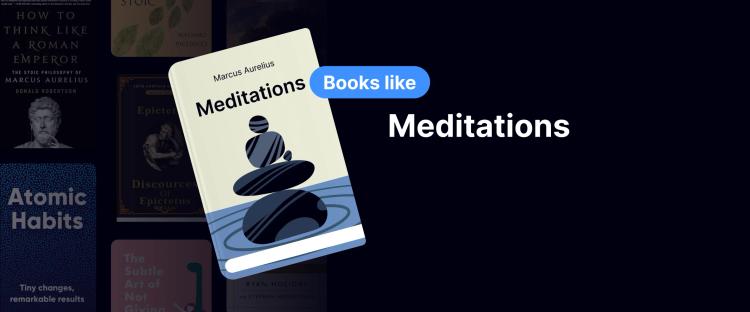
Using insights from best-selling books like 'Meditations,' ‘Wherever You Go, and ‘Think Like a Monk,’ you'll also understand how to practice it and where to start. With the Headway app, you can access bite-sized summaries of these transformative books in under 15 minutes, making mindfulness accessible through microlearning lessons.
Download the Headway app today and find mindfulness hacks that work for you!
Quick guide on how to practice mindfulness:
Master mindful breathing with the 4-7-8 technique
Try body scan meditation
Practice mindful walking
Transform meals with mindful eating principles
Improve relationships through mindful communication
Ready to discover techniques that actually fit your lifestyle? Keep reading for the complete guide.
📘 Master mindfulness daily with the Headway app!
Top five mindfulness techniques and exercises you can start today
While mindfulness can be as simple as sitting still and thinking about absolutely nothing at all, there are some particular mindfulness practices for intentional focus.
These range from just focusing on the action you're performing to a more meditative approach. You can easily integrate many of these exercises into your daily life, and they don't take much time.
Remember, mindfulness is a personal journey that you take for yourself. You don't have to follow any strict rules as long as it works for you.
Take a look at the techniques below and see if any call out to you. Then, give them a try and see how they feel, keeping in mind that results may not arrive overnight. Practice makes perfect!
📘 Try Headway to unlock inner peace and present-moment awareness!
1. Mindful breathing: Your reset button for chaos
When your mind is racing with a million things, it's easy to forget that one of the simplest tools is literally right under your nose – your breath.
When you focus on your breathing, you slow everything down, giving you the time to reset your mind. It's a quick way to ground yourself when life feels chaotic.
The best part? You don't need any fancy equipment or special skills to try breathing meditation in your daily practice.

Marcus Aurelius talks extensively in his masterpiece, 'Meditations,' about self-reflection and the easiest way to do that is to focus on yourself in the here and now.
"You have power over your mind - not outside events. Realize this, and you will find strength."
For instance, here is a quick and easy meditation practice anyone can do.
The 4-7-8 technique
Breathe in through your nose for 4 seconds.
Hold your breath for 7 seconds.
Breathe out slowly through your mouth for 8 seconds.
Repeat this cycle 4-5 times.
Box breathing
Inhale through your nose for 4 seconds.
Hold your breath for 4 seconds.
Exhale through your mouth for 4 seconds.
Hold again for 4 seconds.
As you do this, imagine tracing a box with your breath. Inhale up one side, hold across the top, exhale down the other side, and hold along the bottom.
Diaphragmatic breathing
Place one hand on your chest and the other on your belly.
Take a deep breath in, focusing on making your belly rise while your chest stays still.
Breathe out slowly, feeling your belly deflate.
Repeat.
Try this mindfulness-based stress reduction technique and see how you feel after a few tries. Maybe your high blood pressure will thank you for it!
📘 Download Headway and start your mindfulness journey today!
2. Body scan meditation: Reconnect with your physical self
In his best-selling book 'Think Like a Monk,' Jay Shetty talks about his experiences as a monk in India and the UK.
He delves deep into the fascinating effects of creating a positive mindset through self-reflection and awareness. Body scan meditation is just one of the tools that can help you achieve your aims.
"When we accept the temporary nature of everything in our lives, we can feel gratitude for the good fortune of getting to borrow them for a time."

Here's how to do it:
Find a comfortable spot: Sit or lie down somewhere comfortable, in a quiet place. This can be your bed, a yoga mat, or even the couch. Just make sure you won't be disturbed.
Start at the top of your head: Close your eyes and take a few deep breaths. Then, gently shift your attention to your head. Notice how it feels — no judgment, just awareness.
Move slowly downward: Slowly guide your focus down your body. Check-in with your neck, shoulders, arms, chest, and so on, all the way to your toes. If you notice tension, physical sensations, or discomfort, just acknowledge it and move on.
Stay present: If your mind wanders (which it will), that's okay. Just bring your attention back to the part of your body you were exploring.
Take a moment: Once you've scanned your whole body, take a moment to notice how you feel. Do you feel lighter, calmer, and more grounded?
📘 Transform stress into calm — get Headway now!
3. Mindful walking meditation: Movement meets mindfulness
Jay Shetty also talks about the fact you can perform mindfulness meditation anywhere, at any time, even when you’re walking and simply focusing on your breathing.
So, you can practice mindfulness while you're outside, getting a little exercise, or walking from A to B as part of your daily routine.
However, this type of meditation is not about getting somewhere fast; it's about being present with every step.
Start slow: Choose a quiet spot, such as a park, your backyard, or even your hallway at home. Stand still for a moment, feel the ground beneath your feet, and take a deep breath.
Focus on your steps: As you walk, focus your attention on the sensation of your feet touching the ground. Heel, ball, toe. Notice the rhythm. Are you stomping? Gliding? Maybe somewhere in between?
Engage your senses: Look around. What do you see? Can you hear the rustling leaves or people talking? What can you smell? Take it all in without judgment and give it your full attention.
Keep it short: Mindful walking doesn't have to be a big effort. Five or ten minutes is enough to hit “refresh” on your brain. The key is consistency; try it daily and see how it transforms your mindset.
📘 Add Headway to your toolkit for daily mindfulness practice!
4. Mindful eating: Savor every bite
In 'Meditations,' Marcus Aurelius talks about gratitude and how this plays a part in happiness.
You can weave this into your life the moment you wake up and eat your breakfast.
"When you arise in the morning think of what a privilege it is to be alive, to think, to enjoy, to love …"
After all, how many times have you finished a meal only to realize you didn't really taste it? Sometimes, we're so caught up in our thoughts that we forget to savor our meals.
A good solution to this is mindful eating, a way to enjoy your food and practice mindfulness at the same time.
Eat away from distractions: Put down your phone and turn off the TV. Sit somewhere cozy and focus on what's in front of you.
Observe: Take a moment to appreciate your meal, including how it looks and smells and even the effort it took to get it to your plate.
Take it slow: When you take that first bite, slow it down. Notice the flavors, textures, and how the food feels as you chew. Try to chew thoroughly and really let the taste sink in. Between bites, put your fork down. Remember, there's no rush!
How does it feel? Pay attention to how your body feels as you eat. Are you still hungry, or are you just eating out of habit? It's all about reconnecting with your natural hunger cues.
Mindful eating isn't about restrictions or rules; it's about building a better relationship with food and savoring the enjoyment of eating.
Your tastebuds will thank you for trying this easy sitting meditation!

📘 Want to live more mindfully? Start with Headway!
5. Mindful communication: Transform your relationships
It's easy to believe that relationships require little effort if they're meant to be, but in 'Peace is Every Step,' Thich Nhat Hanh explains how being fully present is a critical step to maintaining close connections.
He talks about the interconnectedness of everything and everyone and the vital importance of compassion toward ourselves and others.
"When you begin to see that your enemy is suffering, that is the beginning of insight."
Within that, mindful communication is all about staying present, listening attentively, and responding thoughtfully.
All too often, we either don't listen or we say something that other people misunderstand. Here's how to right that wrong.
Pause before you speak: Ever sent a text you wish you could unsend? Or blurted out something you instantly regretted? A mindful pause can save you. Take a breath. Ask yourself: “Is what I'm about to say helpful, kind, or necessary?” If the answer is no, maybe it's better left unsaid.
Really listen: Instead of waiting for your turn to talk, focus entirely on the other person. Nod, make eye contact, and let them know you're there with a simple “mhm” or “I see.”
Focus on empathy: Try to step into the other person's shoes and acknowledge their feelings or perspective. Empathy doesn't mean you have to agree with everything; it just means you care enough to try.
Speak with intention: Mindful communication isn't about saying less; it's about saying things that matter. Remember, your words have weight, so use them wisely.
Be mindful of your body language: Your body can sometimes speak louder than your words. Make sure your body language isn't showing negativity, such as crossed arms, glancing at your phone, and avoiding eye contact. Stay open and engaged.
Accept silence: Conversations don't need to be a constant stream of chatter. Pausing to reflect or just sitting quietly with someone can be a form of mindful connection. Don't be afraid of silence.
Give yourself a break: You're not going to get it right every time. Sometimes, you'll interrupt or say the wrong thing, and that's okay. Being mindful also means being kind to yourself. Apologize if needed, learn from it, and move on.

📘 Build your mindfulness skills daily with the Headway app!



What is mindfulness and why does it matter?
Mindfulness is all about being present in the moment. It allows you to be fully engaged with what you're doing, thinking, and feeling without any judgment or need to act.
It's like giving your brain a mini vacation from its usual cycle of planning, worrying, or rehashing the past. Be honest, it's something you do occasionally, right? We all do!

Mindfulness has roots in ancient Budddhits traditions but has since evolved into a widely accepted approach to mental well-being, embraced by modern psychology. I
In fact, Jon Kabat-Zinn, author of 'Wherever You Go, There You Are,' is widely considered the person responsible for bringing mindfulness to the masses.
The practice encourages you to notice your thoughts and feelings as they arise, letting them pass like clouds in the sky rather than getting swept up in the storm.
This non-reactive awareness can reduce stress, improve focus, and foster greater emotional resilience.
Does it happen overnight? No, but learning mindfulness skills isn't that difficult, either.
📘 Try Headway and turn every moment into an opportunity for peace!
What's the difference between mindfulness and meditation?
Mindfulness does include meditation, but it's not all about it. Meditation is a formal practice, often done sitting quietly, where you focus on a specific anchor — like your breath, a mantra, or even a visualization.
Mindfulness, on the other hand, is more like a way of life. You can practice it while washing dishes, walking the dog, or savoring your morning coffee.
However, combining mindfulness and meditation can bring fantastic results. Mindfulness meditation can cement the here and now into your mindset, bringing exceptional benefits to your life.
In fact, in their best-selling book 'Mindfulness: A Practical Guide to Finding Peace in a Frantic World,' Mark Williams and Danny Penman explain how simple mindfulness techniques can help push away negative emotions and thought patterns, creating balance and calmness in your everyday life.

"We try so hard to be happy that we end up missing the most important parts of our lives and destroying the very peace that we were seeking."
📘 Stop living on autopilot — download Headway today!
Why learning mindfulness will transform your life: Eight key benefits
Speaking of benefits, let's explore them in more detail.
Stress reduction: Stress is a worldwide issue. If you're feeling overwhelmed, mindfulness helps you step out of autopilot and respond to stress with a cool head instead of a panic button. Over time, reduced stress may also help with symptoms of depression, albeit with medical help if necessary.
Better focus: If you're always multitasking and rushing from one thing to another, mindfulness trains your brain to stay present, making it easier to concentrate on one thing at a time. Of course, this also reduces the chances of burnout.
Improved mood: Studies show that mindfulness can boost your happiness levels and even reduce symptoms of anxiety and depression.
Enhanced sleep: When you have an endless to-do list, sleep can be a tricky beast. However, mindfulness can help you wind down, making it easier to drift off and stay asleep.
Stronger relationships: By being present, you're better able to connect with others, listen actively, and nurture meaningful bonds.
Increased self-awareness: Practicing mindfulness helps you understand your thoughts and emotions better, leading to more thoughtful decisions and, let's be honest, fewer regrets!
Boosted creativity: Learning mindfulness skills is a way to declutter your mind from all the useless junk sitting around waiting to sabotage your day. Clearing mental clutter gives your creative juices room to flow, perfect for solving problems or thinking outside the box.
Physical health perks: From lower blood pressure to a stronger immune system, mindfulness isn't just good for your mind; it's great for your body, too.
Some experts also believe that using mindfulness regularly can help you tap into your psychic abilities.
In fact, Dr Joe Dispenza explains this in his best-selling book 'Becoming Supernatural.' Dr Dispenza uses insights from neuroscience and quantum physics to explain his theory, helping you achieve a higher state of consciousness over time.
📘 Discover mindfulness secrets from top authors with Headway!
Two tips to set yourself up for mindfulness success
The first step to implementing mindfulness exercises into your everyday life is simply making the decision to go for it. If you've done that, you're already on the right path!

In honesty, implementing mindfulness into your life doesn't have to feel overwhelming or involve a huge shift in your routine. I
t's simply about recognizing the need to prioritize your health and well-being with small habits that have a huge impact on how your body feels and how you perceive the world around you.
So, how can you get started?
📘 Ready for mental clarity? Get the Headway app now!
1. Start with clear intentions that drive your practice
Before diving in, take a moment to think about why you want to practice mindfulness.
Are you looking to reduce stress? Feel more present in your daily life? Improve focus? Your intention doesn't have to be anything too deep; it just needs to resonate with you.
Writing it down or keeping it in mind can help anchor your practice, especially on those “meh” days when everything feels like a chore.
Think of your intention as your “why.” It's what will keep you coming back, whether you're meditating for five minutes or just taking a mindful pause during your day.
📘 Master meditation techniques with bite-sized lessons on Headway!
2. Create your perfect mindfulness space
Mindfulness can happen anywhere, but it's useful to have a dedicated space to help you focus your mind.
Find a spot that feels calm and comfortable. It could be a cozy corner, a spot by the window, or even a quiet area in the park.

Once you find your ideal spot, here are some tips to make it perfect for your mindfulness meditation practice.
Declutter: Remember, a clear space leads to a clear mind.
Add a touch of comfort: Think cushions, a soft blanket, or even a favorite candle.
Minimize distractions: Turn off notifications, let others know you need a few minutes, and, if possible, keep pets and kids occupied elsewhere.
There is no right or wrong when it comes to creating your ideal mindfulness spot. It simply needs to feel right for you.
📘 Join 50 million users finding peace through Headway!
Start your mindfulness journey with Headway
Planning for the future and having dreams is good, but constantly living in a time that hasn't arrived yet isn't healthy. There's so much happening around you, and you're missing the good stuff!
Thus, learning how to practice mindfulness can be your best chance to start enjoying the present moment. And daily self-growth lessons from top experts on the Headway app can make it happen.
In just 15 minutes, you can read or listen to summaries of the world's bestsellers on self-reflection, mindfulness, and self-care. Over time, you'll build your personal toolkit to keep your mind here and now/
Download Headway today and start your mindfulness journey with intent and positivity!

FAQs
What are 5 ways I can practice mindfulness?
You can practice mindfulness through breathing exercises, body scan meditation, mindful walking, mindful eating, and mindful communication. Many people also benefit from mindfulness-based cognitive therapy, which combines mindfulness practices with therapeutic techniques to address negative thought patterns and improve mental health outcomes.
What causes a lack of mindfulness?
Lack of mindfulness often stems from constant distractions, stress, multitasking, and living on autopilot. Modern life's endless notifications, demands, and fast pace make it difficult to stay present. Additionally, unresolved anxiety, trauma, or habitual worry about the past or future can prevent mindful awareness from developing naturally.
How do I start a daily mindfulness practice?
Start small with a 5-minute meditation session each morning, focusing on your breath or body sensations. Choose a consistent time and quiet space where you won't be disturbed. Begin with simple techniques like mindful breathing or a body scan, and gradually increase duration as the practice becomes habitual and comfortable.
How is mindfulness different from meditation?
Mindfulness is a way of living with present-moment awareness that you can practice anytime during daily activities like eating, walking, or talking. Meditation is a formal, structured practice where you dedicate specific time to focus on breath, mantras, or visualization. Meditation develops mindfulness, but mindfulness extends beyond meditation sessions.
What is mindful walking?
Mindful walking is a meditation practice where you focus full attention on the physical sensations and movements of walking. Instead of walking on autopilot, you notice each step, the ground beneath your feet, your breath, and surrounding sights, sounds, and smells, bringing complete awareness to the walking experience.
How do you practice mindfulness?
Practice mindfulness by intentionally focusing on the present moment without judgment. Start with simple exercises like conscious breathing, body scans, or mindful eating. Reduce social media consumption and other distractions that pull you away from the present. Consistency matters more than duration — even five mindful minutes daily creates meaningful change.