Self-growth
 Business & Career
 Success
 Communication
 Healing
 Relationships
 Psychology
 Happiness
You just got the job offer you wanted. Great news, right? But now your stomach drops because the salary feels... lower than expected. You're not alone — and here's the thing: most people accept the first offer without pushing back. That's money left on the table. Learning how to negotiate salary after a job offer isn't about being pushy or greedy. It's about knowing your worth and communicating it clearly.
Research shows that among workers who negotiated for higher pay, 28% received exactly what they requested, and 38% got more than the initial offer. This proves that negotiating can lead to a better deal — it's all about knowing when and how to ask.
In this article, inspired by 'Never Split the Difference: Negotiating As If Your Life Depended On It' and 'Difficult Conversations,' we'll show you how to prepare for salary negotiations, stand out from other job candidates, and successfully secure the compensation package you deserve.
Want practical negotiation strategies you can use right away? The Headway app offers 15-minute summaries of books like 'Never Split the Difference' to help you sharpen your skills before your next conversation with a hiring manager.
Start learning negotiation tactics with Headway today.
Quick answer: How to negotiate salary after a job offer
Research first: Use Glassdoor, LinkedIn, and industry reports to find the market rate for similar roles in your area.
Know your target salary: Set a specific number based on your skill set, experience, and certifications — aim 10-20% higher than your minimum.
Wait for the right moment: Let the employer make the first offer before discussing numbers.
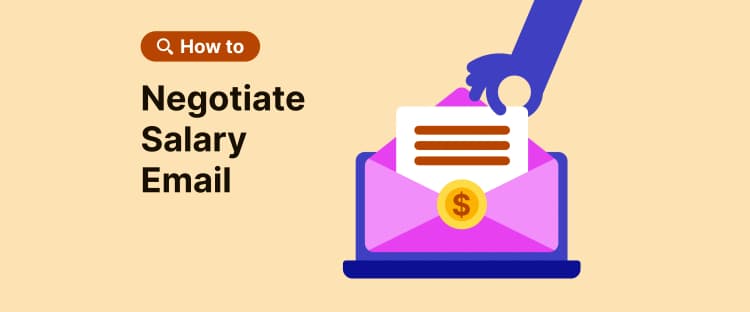
Make a counteroffer in writing: Send a professional email that thanks them, states your desired salary, and briefly explains why.
Negotiate beyond base salary: Consider the full benefits package — remote work options, signing bonus, stock options, vacation days, and health insurance.
Stay calm and collaborative: Treat it as a conversation, not a confrontation.
Prepare to negotiate before the hiring process begins
The saying "forewarned is forearmed" fits perfectly here. Start by researching current market rates before you even walk into a job interview. You need to evaluate how you and your skills fit in the labor market. Be objective and honest when conducting market research to ensure that your salary expectations align with the market rate for your expertise level.
While you may not find a specific amount, identify an acceptable salary range. Analyze the average salary level in your region — location matters more than you might think.
Use online resources like Glassdoor or LinkedIn for research: Consider job search platforms and additional factors, such as the company's size and financial condition. These resources help you benchmark the employer's offer against industry averages and prepare a compelling counteroffer.
Collect recommendations from acquaintances: Recruiters, hiring managers, or colleagues in your field from different companies often encounter various vacancies, so they can tell you about salary ranges and what influences them.
Analyze the resumes of other job seekers with similar roles: Carefully examine candidates applying for positions at a certain salary level with comparable skill sets.
Understanding your potential employer's "pain points" before the interview gives you an advantage. Research the company or ask friends who work there. You can also ask questions to the recruiter who invites you for an interview. Don't be afraid to ask questions during the interview to understand the employer's needs better.
"What does a good babysitter sell, really? It's not child care exactly, but a relaxed evening. A furnace salesperson? Cozy rooms for family time. A locksmith? A feeling of security. Know the emotional drivers and you can frame the benefits of any deal in language that will resonate. Bend." ― Chris Voss, 'Never Split the Difference'

For aspiring marketers, delve into the company's marketing goals. Those seeking a sales manager role should explore the sales team's current challenges. Similarly, people pursuing an accounting position can benefit from understanding the tasks and issues the accounting department handles.
📘 Master these strategies faster with Headway book summaries.
Know exactly why you deserve that specific amount
Employers often ask candidates to explain why they need a particular amount. Focus your response on your experience, achievements, qualifications (educational programs, certifications), and the scope of work involved. Never justify your desired earnings with life circumstances, marriage, or children.
Psychologists recommend giving the employer a figure 10–20% higher than your target salary. By this percentage, your interviewer will likely try to reduce your request. As a result, you'll receive your desired salary while the employer feels they've negotiated a deal.

Here's a calculation presented by Chris Voss in 'Never Split the Difference:'
"1. Set your target price (your goal). 2.Set your first offer at 65 percent of your target price. 3.Calculate three raises of decreasing increments (to 85, 95, and 100 percent). 4.Use lots of empathy and different ways of saying "No" to get the other side to counter before you increase your offer. 5.When calculating the final amount, use precise, nonround numbers like, say, $37,893 rather than $38,000. It gives the number credibility and weight. 6.On your final number, throw in a nonmonetary item (that they probably don't want) to show you're at your limit."
This approach works because specific numbers signal you've done your homework. A hiring manager takes $87,500 more seriously than "around $90K."
Negotiate beyond base salary — perks matter too
According to Glassdoor, three out of five people consider perks one of the most important factors when deciding to work for a company. These bonuses help attract new employees and retain existing ones.
Your compensation package includes more than just your monthly paycheck. Consider negotiating for:
Health insurance coverage and quality
Signing bonus for immediate financial benefit
Stock options for long-term wealth building
Remote work flexibility
Vacation days beyond the standard offering
Professional development budgets and certifications
The company may justify offering a lower starting salary if the benefits package is strong. Sometimes, a slightly lower base salary with excellent additional benefits actually puts more money in your pocket over time.
📘 Learn how top negotiators think with Headway.
How to write a counteroffer that gets results
Once you've received the initial offer and you're ready to negotiate, the next step is presenting your counteroffer clearly and professionally. Email is the most common and appropriate format unless the employer has explicitly suggested a phone or video call. Email gives you time to organize your thoughts and present your case in a structured way.
Your message should be concise, but make sure you do these five things:
Thank the employer for the job offer and express genuine enthusiasm for the new role.
Reference the salary offer specifically.
State your desired salary clearly — avoid vague phrases like "something higher" or "a bit more."
Include a brief justification — the scope of the role, your level of experience, or industry standards.
Show flexibility — indicate you're open to discussion and committed to reaching a solution that works for both sides.
This tone sets the stage for a constructive salary negotiation process and demonstrates professionalism. Remember, most employers expect some wiggle room in the first offer — they're prepared for you to negotiate.

Define your acceptable salary range before talking numbers
Are you prepared to demonstrate your true potential and distinguish yourself as the perfect candidate? This moment requires you to objectively evaluate both your hard and soft skills. Take stock of your experience, achievements, education, and training certifications — everything that shapes your professional journey. Your base salary should align with the position's requirements and your qualifications.

"Ask calibrated questions that start with the words "How" or "What." By implicitly asking the other party for help, these questions will give your counterpart an illusion of control and will inspire them to speak at length, revealing important information." ― Chris Voss, 'Never Split the Difference'
There's always wiggle room in the first offer because employers expect you to negotiate. Many HR professionals save salary discussions until after they've heard everything the candidate says about themselves and their skills. Based on this information, the employer calculates a particular candidate's financial compensation.
Some companies postpone the salary discussion until they can officially offer a position. Most employers are open to negotiation and want to work with strong candidates to reach an agreement. If the interview process is ending and you haven't discussed compensation, initiate this conversation first.
One common mistake to avoid: Setting your starting salary expectations too low might signal that you don't value your work — or worse, that you're not as competent as you seemed at first glance. The employer might refuse to hire you altogether.
"Most people in a negotiation are driven by fear or by the desire to avoid pain. Too few are driven by their actual goals." ― Chris Voss, 'Never Split the Difference'
📘 Build your negotiation skills on the go with Headway.
How to stay confident during the interview process
You need to answer confidently, calmly, and with clear reasoning. Here's a template:
"I am considering offers from $[amount]/annually since I have the necessary experience for your company and a track record of solving tasks relevant to you: (list the problems, the "pain points" that the potential employer brought up). Additionally, I have experience in a related field and with similar work specifics."
"Negotiate in their world. Persuasion is not about how bright or smooth or forceful you are. It's about the other party convincing themselves that the solution you want is their own idea. So don't beat them with logic or brute force. Ask them questions that open paths to your goals. It's not about you."― Chris Voss, 'Never Split the Difference'
The hiring process continues when the recruiter voices a salary that satisfies the candidate. At this stage, state your specific salary requirements. But how do you determine this amount? Ask yourself:
Have you considered all the nuances you learned about during the interviews?
Were additional responsibilities added to your role that weren't included in the original job description?
Does the full scope of your tasks in the new role meet your primary expectations?
Even after initial discussions with your potential supervisor, you can negotiate a higher salary than the previous range — especially if the workload differs from your earlier conversations with the recruiter.




When to push harder for a much higher salary
Don't be afraid to ask for significantly more if:
The company recruited you through headhunters — specialists who look for the best candidates and lure them to client companies.
You bring rare qualifications — experience at a large or international company, multiple foreign languages, and outstanding diplomatic skills.
You have valuable certifications, additional education, and prestigious credentials that set you apart.
The job title comes with unusual demands — irregular schedules, frequent business travel, or difficult conditions.
These situations give you more leverage. The employer already decided they want you specifically — use that to your advantage.
Manage your emotions and stay composed
"Never be afraid of the conversations you are having. Be afraid of the conversations you are not having." ― Susan Scott, 'Fierce Conversations'
When preparing for an interview, showcase your strengths in a balanced way — too much confidence can come across as arrogant, while being overly modest may work against you. Remember, this is likely the recruiter's first impression of you, so show them your true value.
Share your past project contributions and the skills you've developed confidently. By staying calm, confident, and genuine, you present a positive attitude that shows you're ready for the new job.

The right communication strategies and job interview preparation help you discuss your expected salary with confidence. And a decent wage often encourages people to do their work with joy and inspiration.
Our work, our relationships, and our lives succeed or fail one conversation at a time. While no single conversation is guaranteed to transform a company, a relationship, or a life, any single conversation can. Speak and listen as if this is the most important conversation you will ever have with this person. It could be. Participate as if it matters. It does. ― Susan Scott, 'Fierce Conversations'
Key takeaways for getting higher pay after a job offer

1. Preparation reduces anxiety and shows employers you're serious. Understanding the company's mission and values is essential. Your story should be clear, structured, and focused on highlighting your skills and experience. Confidence in your abilities helps overcome the fear of discussing your desired salary.
2. Focus on tone of voice, body language, and listening skills. Practice answering questions while working on your delivery. Active listening and appropriate responses to the employer's questions are key to achieving a positive result.
3. Ask about the company and team goals, plus the department strategy. Clarify working conditions, desired salary, and perks early. Raise additional questions immediately — not days after accepting an initial offer. Waiting too long can leave a bad impression, and you'll likely gain nothing.
4. Always try to negotiate. While it doesn't guarantee more compensation, not trying guarantees you won't get more. If you've been working somewhere and want to discuss a raise with your current employer, the same principles apply.
Negotiation is not an act of battle; it's a process of discovery. The goal is to uncover as much information as possible. ― Chris Voss, 'Never Split the Difference'
Boost your salary negotiation confidence with Headway
Interviews create stress. Talking to a future employer about money — and asking for higher pay than they initially offer — feels uncomfortable for most people. Insecurity and fear can prevent you from getting what you deserve.
That's where Headway helps. The app offers a library of books covering negotiation, diplomacy, and conversation skills — all condensed into 15-minute summaries you can listen to on your commute or during a lunch break.
With Headway, you get:
Practical negotiation tactics from experts like Chris Voss
Confidence-building strategies backed by psychology research
Quick, actionable insights that fit your busy schedule
Audio and text formats so you can learn however works best for you
Knowledge gives you confidence. Confidence helps you negotiate better. And better negotiations mean more money in your pocket — not just now, but compounding throughout your career.
Start building your negotiation skills with Headway.
Frequently asked questions on how to negotiate salary after a job offer
How to respond to a low salary offer?
When you get an offer that's lower than expected, start by thanking the employer and asking for a bit of time to review it. Then look up the market rate for similar roles on Glassdoor or LinkedIn — and if you want a deeper check, tools like Gemini or ChatGPT can help you benchmark ranges. When you reply, keep the tone friendly and confident: share a data-backed counteroffer and explain why it aligns with industry standards and the value you bring.
How to professionally say the pay is too low?
A respectful line works best: "Thank you for the offer — I'm genuinely excited about the role. Based on my research and experience, I was expecting a salary closer to [your target range]. Could we explore adjusting the compensation so it better reflects the market rate and my background?" It keeps the conversation constructive.
Can I lose a job offer for negotiating salary?
It can happen, but it's uncommon. Most employers — nearly 9 out of 10 — expect and even welcome negotiation. The real risk isn't asking; it's approaching the conversation emotionally or without data. If a company pulls an offer just because you politely negotiated, that usually signals a poor culture.
Is 20% off a lowball offer?
Generally, yes. If the offer is 20% or more below your minimum or the market benchmark, most professionals would consider it a lowball. When the gap is that large, you may need to negotiate the full package — things like remote flexibility, extra PTO, or a signing bonus — not just the base salary.
What not to say when negotiating?
Skip anything that weakens your position: don't apologize, don't reveal your current salary, and don't throw out the first number unless required. Avoid ultimatums or exaggerating competing offers. And never accept on the spot — take time to review the full package so you can negotiate from a place of clarity, not pressure.
How to ask for more money after a job offer?
Reach out to schedule a quick conversation. Start with appreciation for the offer and your excitement about the role, then share a counteroffer supported by market research. Highlight the impact you can bring and aim for a range of 10–20% above what they proposed. If base salary can't move, shift the conversation toward bonuses or development opportunities.
Do employers expect you to negotiate salary?
Absolutely. Employers assume candidates will negotiate, and many companies start a bit lower, expecting a counteroffer. Those who negotiate usually land higher starting salaries — sometimes by thousands of dollars. In other words, skipping negotiation often means leaving money on the table.