Self-growth
 Apps & Digital Tools
 Business & Career
 Success
 Growth Tools
 Psychology
 Communication
 Relationships

Learning how to do nothing usually starts with a very specific, physical itch.
You sit down on the couch with no plan, and within sixty seconds, your hand automatically reaches for your phone. If the phone is out of reach, your brain starts listing tomorrow's chores or urging you to tidy the coffee table.
Doing nothing means resting without a goal, a screen, or a task for a set stretch of time. If you struggle with this, it is not a personal failing.
According to ongoing research by informatics professor Gloria Mark, the average time people spend on a single screen before switching has dropped from two and a half minutes in 2004 to roughly 47 seconds today.
We are trained to react instantly. Figuring out how to do nothing requires you to actively unlearn that training. This guide covers why sitting still feels so difficult and offers specific ways to actually rest.
📘 Ready to rethink your habits? Try Headway to read or listen to bite-sized book summaries on the go.

Quick answer: How to do nothing without it feeling wrong
Here is the short version before the full breakdown.
Doing nothing means going without a goal, a screen, or a task for a set stretch of time.
The discomfort is trained, not a character flaw; attention spans have measurably shortened over 20 years.
Start with short stretches (5 to 10 minutes) rather than an entire unstructured afternoon.
Doing nothing is different from avoidance, which is about escaping a specific feeling or task.
A few nonfiction books offer specific, testable ways to practice this, not just the advice to "relax."
What doing nothing means
True rest looks completely unproductive from the outside. Doing nothing means sitting, walking, or lying down without attempting to achieve a quantified result. It is not about data productivity, tracking your steps, or listening to a self-help podcast while you walk. It is just existing in the physical world.
Writer Jenny Odell explores this deeply in her book 'How to Do Nothing: Resisting the Attention Economy'. She argues that capitalism and modern algorithms view our attention as a resource to be harvested.
Choosing to step away from social media and simply engage with your environment — like taking time for birdwatching, looking at visual art, or observing a local park — becomes a quiet form of resistance.
It is not just an anti-technology screed or a simple digital detox; it is a manifest dismantling of the idea that we must always be useful. Odell points out that earlier labor movements fought hard for an eight-hour workday precisely so people could have time for themselves.
Rest reclaims your interiority. When you swap structured productivity for simple relaxing activities, you exercise your right not to express yourself or produce anything of commercial value for a few minutes. It rejects techno-determinism and reminds us that we are more than just output machines.
Why sitting still feels so uncomfortable at first
If you sit still and feel a sudden spike of anxiety, your brain is reacting to a sudden drop in dopamine. Over the last two decades, our daily routines have become dominated by digital switching. If your attention shifts every 47 seconds, suddenly staring at a wall for ten minutes feels jarring.
The first few minutes of stillness often feel closer to withdrawal than actual rest. Your mind will desperately search for a problem to solve, wondering how to do absolutely nothing without losing your edge. Learning how to quiet your mind requires you to sit through this initial wave of discomfort.
You have to let the urge to move or check a screen wash over you without reacting to it. It is not a structured back-to-nature meditation, but rather a simple physical tolerance for quiet.
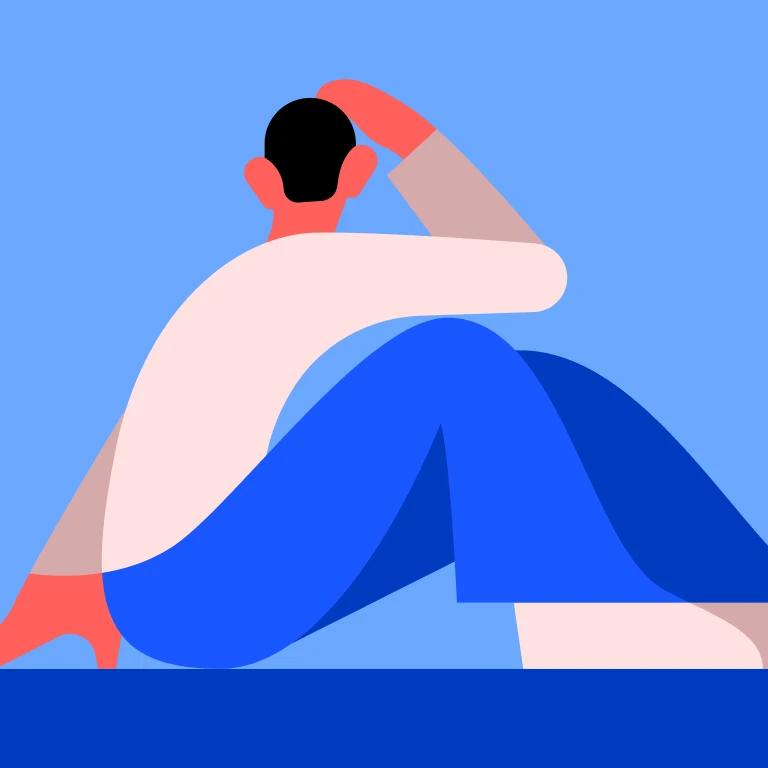
Your mind won't stop making lists
Headway's listen modes bring ambient sound to a busy mind.
Explore listen modesThe guilt that keeps you from doing nothing
Beyond the physical itch to move, there is often a heavy layer of guilt attached to unstructured time. Many of us operate under the assumption that rest must be earned through exhaustion. If you are not completely burned out, taking a break feels lazy.
This guilt forces people to turn basic downtime into productive tasks. A quiet bath turns into a chance to answer emails on a waterproof phone.
A walk becomes an opportunity to hit a daily step goal. To break this cycle, you must learn how to stop worrying about things you can't control and accept that time spent resting is valid on its own. You do not need to justify your existence with constant output.
📘 Give your brain a different kind of break. Download Headway to discover new perspectives from the world's best authors in just 15 minutes.
Five ways to actually practice doing nothing, based on five different books
'Do Nothing' by Celeste Headlee: Treat unstructured time as a scheduled appointment, not a leftover. Exercise: Block 15 minutes on your calendar labeled "nothing," with no phone in the room.
'Digital Minimalism' by Cal Newport: Separate the urge to check a device from an actual need. Exercise: Leave your phone in another room for one hour and notice how many times the urge to check it shows up.
'Four Thousand Weeks' by Oliver Burkeman: Accept that not everything will get done, on purpose. Exercise: Write down one task you are deliberately leaving undone today, and sit with the discomfort of that choice.
'The Power of Now' by Eckhart Tolle: Anchor your attention in a physical sensation rather than a thought. Exercise: Spend two minutes focused only on the feeling of your feet on the floor or your breath moving.
'Stolen Focus' by Johann Hari: Recognize that shrinking focus is partly systemic, not purely personal. Exercise: Pick one app notification to turn off permanently this week, and notice any difference after a few days.
Doing nothing vs avoidance vs distraction
It is easy to confuse real rest with procrastination or numbing out. Sitting on the couch scrolling through video feeds might look like resting, but it keeps your brain highly stimulated.
Similarly, taking a nap just to avoid a difficult conversation is not true downtime. Learning how to let things go often requires knowing the difference between taking a break and running away.
The table below offers a simple guide to tell these behaviors apart.
| What it looks like | What it does for you | How to tell it apart | |
|---|---|---|---|
Doing nothing | Sitting, walking, or resting with no goal or screen | Lets attention reset and lowers overstimulation | Chosen on purpose, for a set amount of time |
Avoidance | Delaying a specific task or conversation | Temporary relief, but the task or feeling remains | Tied to one specific thing you're avoiding |
Distraction | Scrolling, snacking, or background noise to fill time | Occupies attention without actually resting it | Leaves you feeling just as scattered afterward |
When doing nothing turns into overthinking
Sometimes you successfully put the phone away, sit in a quiet room, and immediately start replaying an awkward conversation from three years ago. Your brain hates a vacuum. When you remove external noise, internal noise gets much louder.
If you want to stop overthinking at night or during your quiet hours, do not try to forcefully clear your mind. Trying not to think about a pink elephant only makes you think about a pink elephant.
Instead, simply name the thought. Say to yourself, "I am thinking about work," and then return your attention to a physical anchor, like the hum of the refrigerator or the feeling of the chair against your back.
📘 Build a healthier mindset at your own pace. Try Headway to access audio and text summaries of top psychology and self-growth books.


What if unhelpful thoughts show up when you slow down
For some people, slowing down does not just bring up boring thoughts about grocery lists. It can surface heavy, distressing, or sudden negative imagery. It helps to understand the difference between intrusive thoughts vs impulsive thoughts.
An intrusive thought is an unwanted mental image or worry that pops up uninvited, whereas an impulsive thought is a sudden urge to take an action.
Mind-wandering is normal, but if attempting to sit in silence consistently triggers severe anxiety or highly distressing thoughts, it is completely okay to stop.
*This article is educational, not medical. If quiet time always leads to distress, discussing it with a therapist or medical professional is a much better step than forcing yourself to sit still.

Turn some of your nothing time into learning time with Headway!
When full unstructured stillness feels a bit too intimidating, you can still step away from the heavy demands of your workday. Reading offers one of the calmer, more restorative ways to spend the attention you free up when you put down social media.
Not every quiet moment needs to be filled with a massive, cover-to-cover reading session. A 15-minute book summary fits perfectly into the exact same window of time you would normally spend scrolling through timelines or checking emails.
You can use Headway if you still don't know how to do nothing or when doing absolutely nothing feels too hard. It serves as a gentle middle step between the chaos of busyness and complete silence. Let your mind engage with one clear, positive idea, and give your nervous system a chance to breathe.
📘 Ready to rebuild your attention span? Get Headway today and start your learning habit!
FAQs about how to do nothing
Is doing nothing actually good for you?
Yes, doing nothing is incredibly beneficial for your brain. It gives your nervous system a chance to recover from constant overstimulation. Stepping away from tasks and screens allows your mind to consolidate memories, process complex emotions, and recover the cognitive energy required for deep, focused work later on.
How long should you practice doing nothing when you're just starting out?
When you are a beginner, you should aim for just five to ten minutes at a time. Trying to sit still for an entire hour will likely frustrate you. Start small, allow yourself to get used to the initial discomfort, and slowly increase the time as your tolerance for quiet builds.
What's the difference between doing nothing and being lazy?
Being lazy implies a failure to meet your responsibilities out of apathy. Doing nothing is a deliberate, scheduled choice to rest and reset your attention. True rest is an active decision you make to protect your mental health, whereas laziness is generally a passive avoidance of necessary effort.
Why does doing nothing feel so uncomfortable at first?
Your brain is accustomed to high levels of dopamine from constant digital stimulation and task-switching. When you abruptly remove those inputs, your brain registers the drop in stimulation as a problem. The resulting discomfort is essentially a mild form of withdrawal from the constant noise of modern life.
Can doing nothing help with anxiety or overthinking?
Yes, taking time to do absolutely nothing can lower your baseline anxiety by giving your nervous system a break from constant input. However, in the very first few minutes, your overthinking might feel louder simply because there are no external distractions drowning it out. Practice helps this subsides.
Is scrolling on your phone a form of doing nothing?
No, scrolling on a smartphone is a form of active distraction. While it might feel low-effort physically, it forces your brain to rapidly process new text, images, and videos every few seconds. This keeps your cognitive load high and prevents your mind from actually entering a restful state.
What's a simple first exercise for practicing doing nothing?
A great starting point is simply leaving your phone in another room while you drink your morning coffee. Do not bring a book, a newspaper, or a podcast. Just sit at the table for five minutes and focus entirely on the taste of the coffee and the sounds outside.
How is doing nothing different from meditation?
Meditation is usually a specific practice with clear rules, like focusing intensely on your breath or repeating a mantra to train your awareness. Doing nothing is much less structured. It simply involves existing in a space without a goal, allowing your mind to wander naturally without forcing concentration.