Self-growth
 Business & Career
 Success
 Communication
 Healing
 Relationships
 Psychology
 Happiness
Every self-help guru tells you to leave your comfort zone. But nobody explains where that zone actually is — or what you're supposed to do once you've left it.
Meanwhile, you're stuck in the same daily life patterns. Same snooze button. Same excuses. Same promises to yourself that tomorrow will be the day you finally get it together. Maybe you've tried overhauling your entire life before — new gym membership in January, meditation app downloaded, vision board complete — only to find yourself back at square one by March.
You're not lazy. You're just missing a system.
The authors behind books like 'Atomic Habits,' 'The 7 Habits of Highly Effective People,' and 'The Power of Now' have spent decades figuring out why change sticks for some people and not others. Their insights can help you reconnect with your loved ones, improve your physical health, and finally make progress on goals that actually matter to you. And with Headway, you don't need to clear your entire schedule to start learning.
Here's what they recommend.
Quick answer: What are the first steps to changing my life?
Clarify your life purpose. Without knowing why you want to change, you'll quit the moment things get uncomfortable.
Shrink the habit until it's stupid easy. One push-up. One page. One minute of deep breathing. Start there.
Design your space for success. Want to eat healthier? Put the fruit on the counter and hide the cookies.
Focus on systems, not goals. As James Clear puts it: "You don't rise to the level of your goals. You fall to the level of your systems."
Protect your mornings. What you do in the first place sets the tone for everything else — whether that's entrepreneurship, fitness, or just showing up better for your family.
James Clear’s small improvements discovery
Many people seek happiness and success, but don’t know how to achieve them. Be it external pressures or internal motivations, the push for change can be strong, yet the path forward is often unclear.
According to James Clear in his book 'Atomic Habits,' the journey toward a better life begins with small, actionable steps, no matter which goal you want to achieve.

Whether you want to break bad habits, improve your mental health, or achieve personal growth, this guide will help you form a simple path to change, supported by wisdom from best-selling books. By the end, you'll have what you need to start changing your own life.
“What separates winners from losers is the system of continuous small improvements that the winners implement which help them to achieve their goal,” James Clear says in his 'Atomic Habits.'
Changing your life: Where do you start?
Before starting any journey, you need to understand where you stand. Assessing your current situation is like a health check-up for your life. It is in the first step.
Reflect on your daily routines, mental health, and overall well-being. Ask yourself:
What parts of my life are making me unhappy?
What bad habits are holding me back?
Am I living true to my purpose?
Viktor E. Frankl's classic, 'Man's Search for Meaning,' can help you rethink the importance of purpose in your life. Frankl, who survived the horrors of a concentration camp, found that those who identified a purpose, even in the darkest times, were more likely to survive and thrive. He wrote,
"When we are no longer able to change a situation, we are challenged to change ourselves."
This principle can be an eye-opener for those seeking meaning in their daily routines.
📘 Find purpose daily with Headway.
Seven steps to change your life
To make lasting changes, start with these seven steps. Begin by setting clear goals, then build habits and create a supportive environment. Prioritize your mental well-being, establish consistent routines, and embrace small but steady actions. Dive into each step now to experience the positive transformation in you for a better life.
1. Set clear and achievable goals
Once you've assessed your current situation, setting goals is the next step. Goals give direction and meaning to your efforts. The popular SMART framework — Specific, Measurable, Achievable, Relevant, and Time-bound — is particularly effective. For example, rather than saying, "I want to get fit," specify the amount of time you will dedicate to developing healthy habits: "I will exercise for 30 minutes, five times a week."
In 'Atomic Habits,' James Clear distinguishes keystone habits — small changes that have a positive ripple effect across your life. Clear argues,
"You do not rise to the level of your goals. You fall to the level of your systems."
Thus, day-to-day keystone habits, such as starting your day with a structured morning routine, can lead to improvements in productivity, mental health, and overall well-being.

Benjamin Franklin, for example, practiced daily journaling. He used it to set goals and reflect on his progress. Franklin’s disciplined approach to his daily routine helped him achieve monumental successes in life, proving the power of goal setting and good habit formation.
📘 Build disciplined habits with Headway.
2. Build and maintain good habits
Good habits are the building blocks of a successful life. To create new habits, start small; consider adopting just one new habit at a time. Perhaps begin with daily meditation to enhance mental clarity or journaling each morning to improve self-awareness.
James Clear emphasizes that habits are formed by following a cue-routine-reward loop. Identifying the cues that trigger your bad habits is the first step to breaking them. For example, if stress triggers unhealthy eating, replace that habit with a healthier routine, like going for a walk or practicing deep breathing.
In 'The Power of Habit,' Charles Duhigg also highlights the importance of understanding this loop to replace harmful routines with positive ones. Duhigg notes,
"Change might not be fast, and it isn’t always easy. But with time and effort, almost any habit can be reshaped."
3. Create a supportive environment
No one changes their life in isolation. Surrounding yourself with the right people is crucial.
Stephen R. Covey, for instance, in his '7 Habits of Highly Effective People,' emphasizes the importance of interdependence — working with others while also being a reliable partner yourself. Covey's habit of "Seek first to understand, then to be understood" is particularly relevant when building a supportive network.
So, find mentors who have achieved the changes you aspire to make, test their guidance, and see what works best for you in your context.
In his book 'The Four Agreements,' Don Miguel Ruiz also addresses the power of community. The popular phrase "Don't take anything personally" reminds us that the support (or lack thereof) we receive is often more about the other person's journey than our own. Keep this in mind while creating a network that will uplift and support your goals.
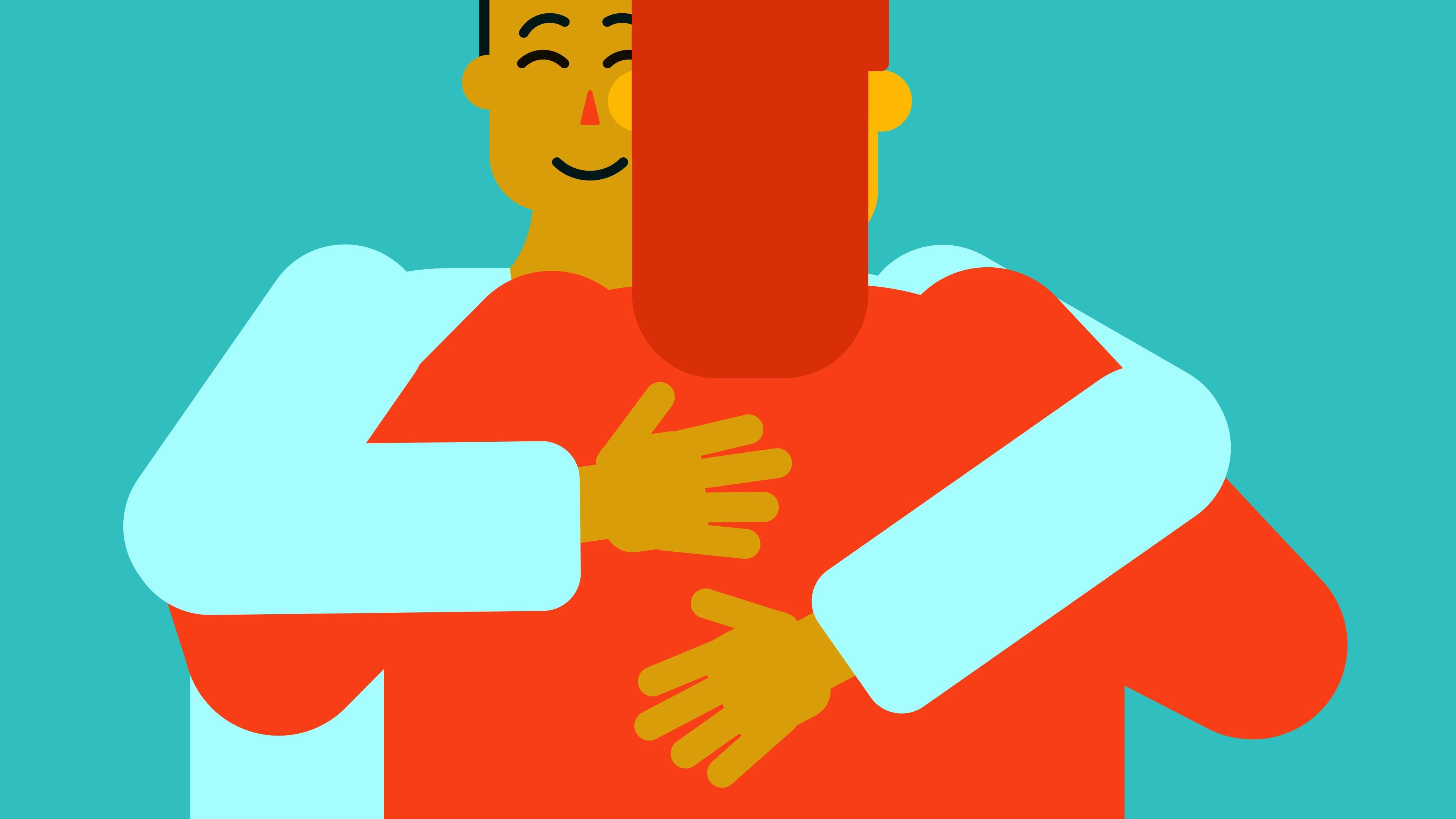
For many, church fellowship can be a perfect place to find support, understanding, and new friends to form a supportive environment in your life.
Engaging with wider communities through podcasts, social media groups, or online forums can also give you motivation or fresh perspectives.
📘 Build supportive communities with Headway.
4. Foster your mental and emotional well-being
In 'The Power of Now,' Eckhart Tolle emphasizes the importance of living in the present moment. Tolle writes,
"Realize deeply that the present moment is all you ever have. Make the Now the primary focus of your life."
Thus, practicing mindfulness can help reduce stress, mitigate negative thoughts, and enhance overall well-being.
Self-care is essential for sustaining positive change. Whether through meditation, exercise, or simply spending quality time with a family member, taking care of your emotional health is crucial.
So, prioritize activities that bring you joy and peace, and remember that self-care is not selfish — it's necessary.
Marie Kondo’s 'The Life-Changing Magic of Tidying Up' offers another angle on mental well-being through physical space. Kondo argues that decluttering your environment can also help declutter your mind. She famously asks, "Does this spark joy?" as a criterion for keeping items. You can apply this concept to your life by focusing on what brings joy and letting go of the rest.
Mental and emotional well-being truly form the foundation of a fulfilling life.
5. Set the tone
Sometimes, small changes in day-to-day routines can lead to significant improvements. For example, adopting a minimalist approach to your possessions can lead to a clearer mind and more focused activity. As Marie Kondo suggests, simplifying your physical space can be the first step toward making bigger changes in your life.
Consider the benefits of a structured morning routine. Many successful people, including Tim Ferriss, author of 'The 4-Hour Workweek,' emphasize the importance of starting the day with intention. Whether it’s through exercise, journaling, or meditation, a consistent morning routine can set the tone for a productive day.
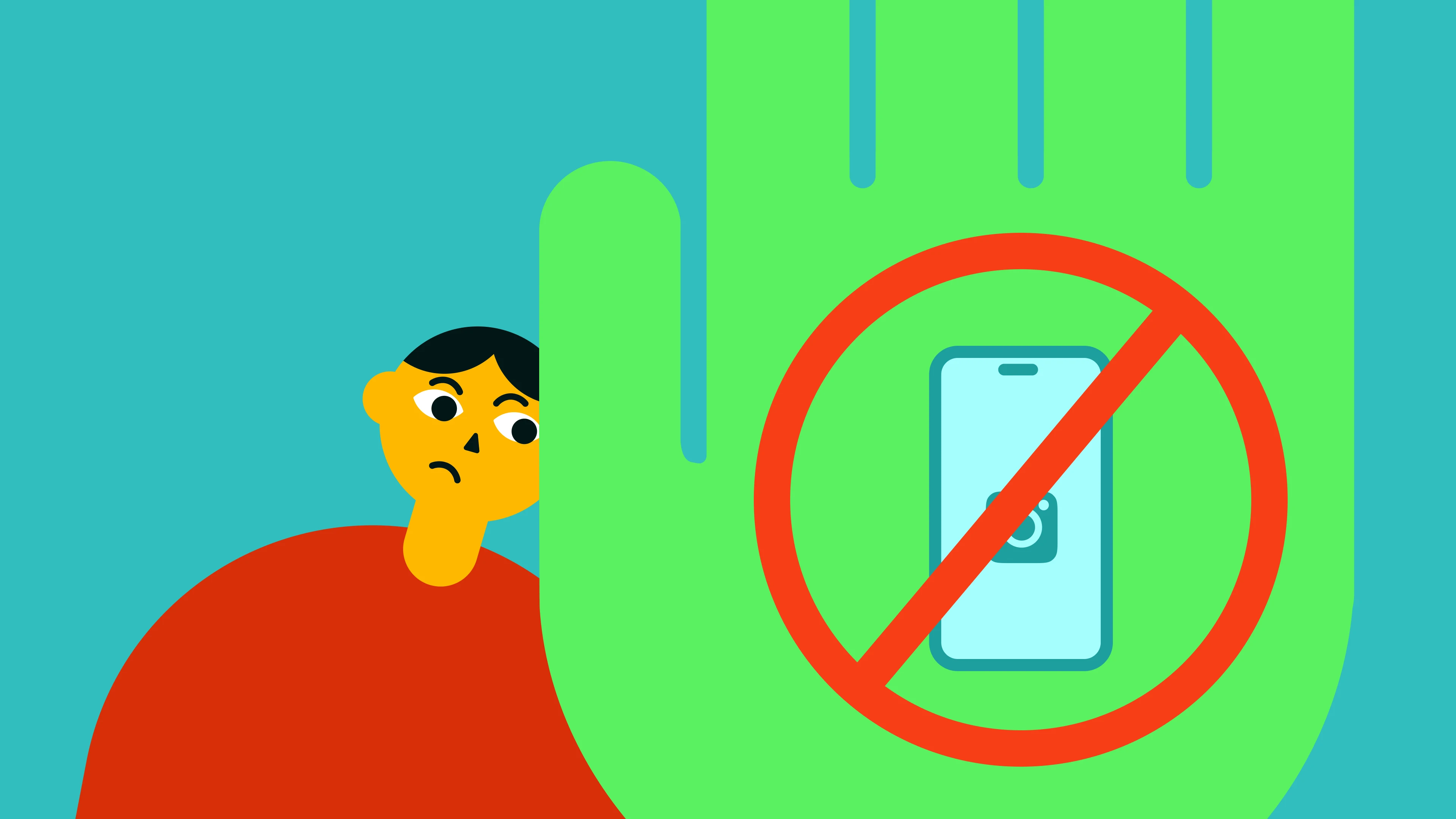
In addition to physical changes, consider how you spend your time online. Simple as it sounds, limiting social media use can free up time for more productive activities and reduce mental clutter. Focus on spending time in ways that contribute to your goals and well-being.
6. Pursue consistency
Change is not a one-time event; it’s an ongoing process. You may use tools to track your goals and habits, making adjustments as needed. For instance, habit-tracking apps likeHabitica or Strides can help.
Adapting to challenges is important. Take Steve Jobs, for example. After being fired from Apple, he remained true to his vision and values. Instead of compromising or giving up, he founded NeXT and Pixar, which eventually led him back to Apple, where he became more successful than before.
At the same time, adapting isn’t just about “flexibility.” Stay committed to your core beliefs while finding new solutions when things go wrong.
Consistency is equally important for changing your life. Take Serena Williams, one of the greatest tennis players of all time, who has 23 Grand Slam singles titles. Her success wasn’t the result of occasional effort but years of consistent practice and sticking to daily routines, even when it was tough.
📘 Stay consistent daily with Headway.
7. Learn from others
Don Miguel Ruiz’s 'The Four Agreements' emphasizes being impeccable with your word, which means being honest with yourself and others. For example, when faced with a tough decision at work, like balancing ethical choices with pressure to meet deadlines, sticking to your principles will help you build trust and personal integrity.
Another example is Bill Gates, co-founder of Microsoft, who has built his success on a habit of lifelong learning. He dedicates time every day to reading and expanding his knowledge, which has helped him drive innovation.
Or take Keanu Reeves, known for 'The Matrix' and 'John Wick.' Early in his career, Keanu went through tough times. He lost his best friend, River Phoenix, to a drug overdose and faced the heartbreak of his daughter being stillborn. On top of that, he was often typecast as the lovable, goofy character from 'Bill & Ted's Excellent Adventure,' which made it hard for him to land more serious roles. Despite these personal and professional challenges, Reeves pushed through and eventually became one of Hollywood’s highest-paid actors, with The Matrix earning him over $250 million.
📘 Learn and persevere daily with Headway.
Reeves' persistence was key to his success. He didn’t let personal losses or being typecast stop him. Instead, he focused on letting go of the past and moving forward, actively seeking out more serious and diverse roles, like in 'Speed' and 'The Devil's Advocate,' which helped him break away from his earlier image. His determination to keep pushing for challenging projects eventually led him to land the iconic role in 'The Matrix,' making him one of Hollywood's highest-paid actors.
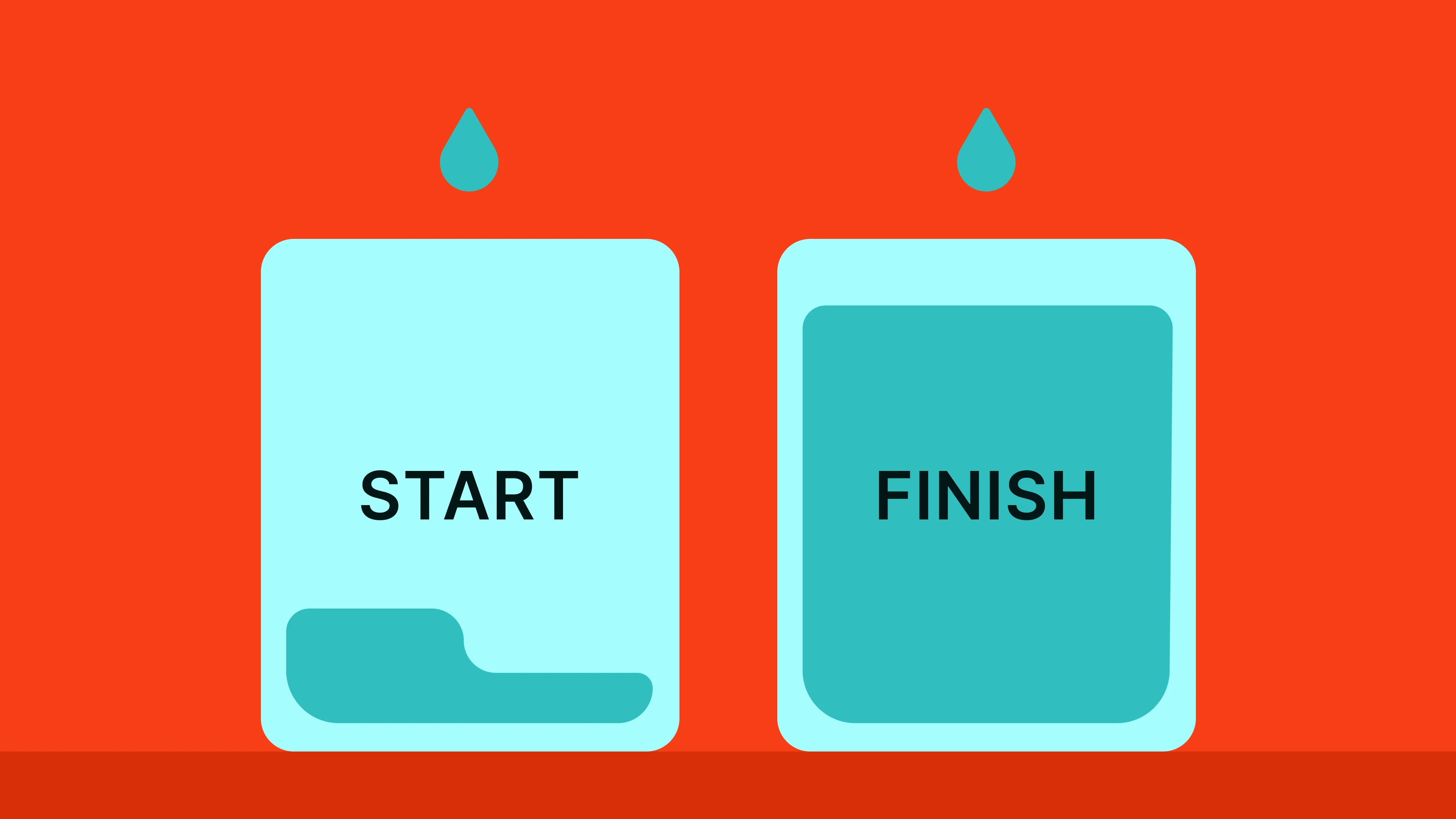
As we see, small, steady actions — like sticking to a workout routine or reflecting on your progress weekly — are what truly drive change. It’s not about being perfect but about showing up regularly, adjusting when things don’t go as planned, and making a continuous effort toward your goals.
Key questions on life changes
Many people want to change their lives because they feel stuck or want more purpose, but the uncertainty and fear of the unknown may feel overwhelming. You can make real progress toward transforming your life by asking the right questions and taking small, steady steps.
How to start over
Starting over can be tough but also rewarding. If you're looking to make a big change — whether moving to a new city, starting a new job, learning new skills, or even ending a relationship — having a plan is crucial. Although the first step is always the hardest, it sets everything else in motion.
Stephen R. Covey’s 'The 7 Habits of Highly Effective People' suggests a strategy for starting over — beginning with the end in mind. Visualize where you want to be, and then work backward to determine the steps needed to get there. By setting goals and creating a plan (the “backward” approach), you can make the process of starting over easier.
Small changes, big results
If starting over seems too overwhelming, remember that small changes can lead to big results. As James Clear suggests in 'Atomic Habits,' focusing on tiny, incremental improvements can lead to significant life changes over time.
So, start by identifying one small habit you can change today — perhaps drinking a glass of water each morning, spending a few minutes in quiet reflection, or practicing gratitude. Noticing and being grateful for the little things we enjoy, such as a hot shower, fresh air, or even clean socks, will increase our feelings of happiness and satisfaction.
You can also apply Marie Kondo’s approach to decluttering to your habits. Start by identifying one habit that no longer serves you and replace it with something positive. Over time, these small changes will accumulate, leading to significant improvements in your life.
📘 Build better habits with Headway.
Seven popular questions on how to change your life
Take a look at seven popular questions on how to change your life. Pay attention to how simple and similar the answers are. What hinders you from putting them into practice? Remember, change is a gradual process.
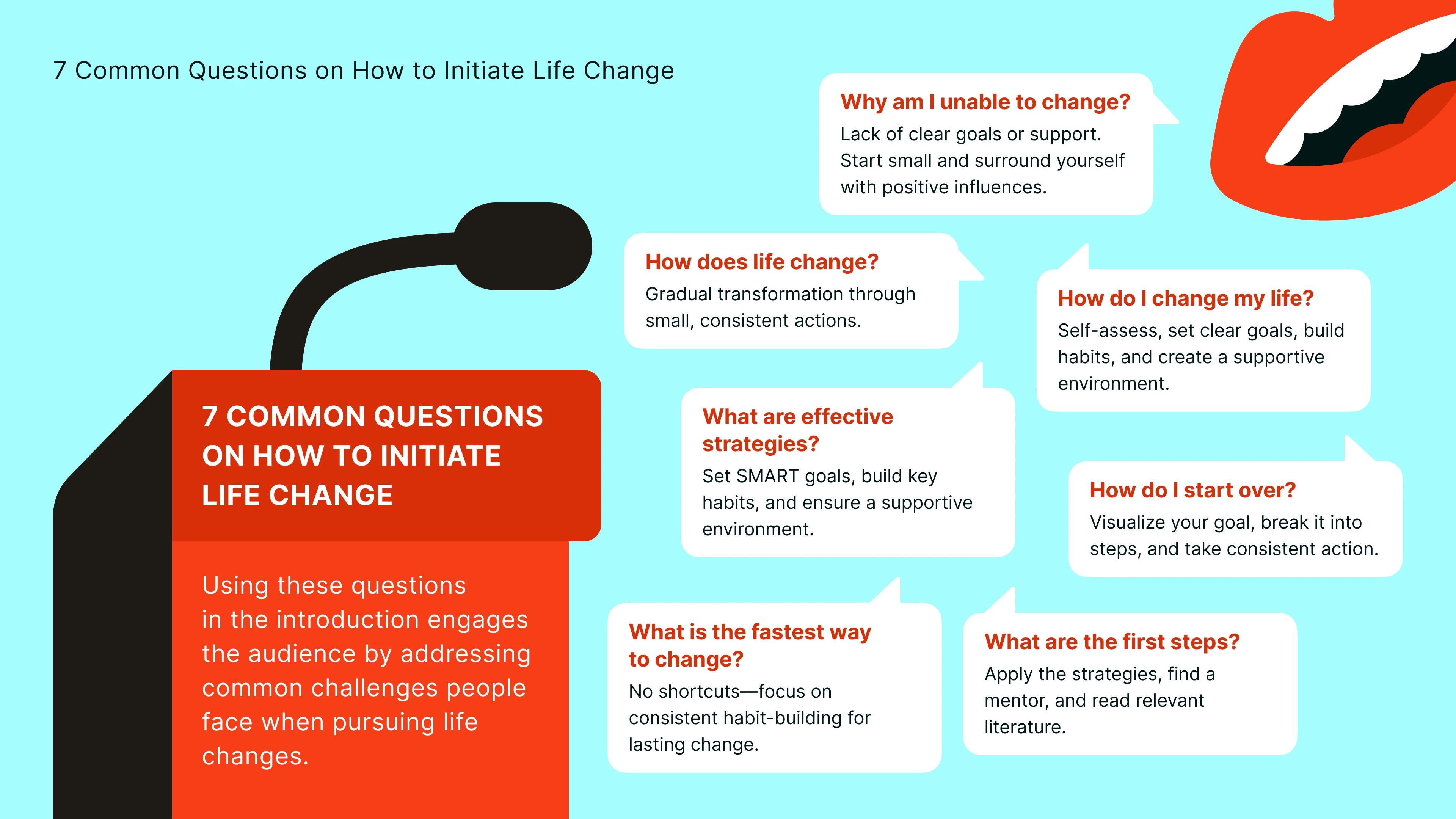
How do I change my life?
Start by assessing where you are now. Eckhart Tolle’s 'The Power of Now' is an excellent book to lay the foundation for change.
2 How do I start over?
Visualize your desired outcome: start “from the end” and create a plan to get there. Break the process into small, manageable steps and take action daily.
3 What is the fastest way to change my life?
There’s no shortcut to meaningful change. However, James Clear, author of 'Atomic Habits,' will shed light on how to make it happen in a natural and strategic way.
4 Why am I unable to change my life?
The inability to change often comes from a lack of clear goals or a supportive environment. Reflect on what’s holding you back, and take small, consistent steps toward progress. Surround yourself with supportive people.
5 How does life change?
Life changes through the consistent accumulation of small actions and decisions. By focusing on daily improvements, you can gradually transform your life.
6 What are some effective strategies for making a positive life change?
Stephen R. Covey provides an extensive answer to this question in his '7 Habits of Highly Effective People.' The book helps set priorities and offers foundational ideas for building an effective life.
7 What are the first steps to take when I want to change my life?
Follow the recommendations from the previous six questions. Additionally, consider finding a good mentor and reading helpful books on how to improve your life.
One habit, one book, one step — start today
Changing your life is a journey, not a destination. You can achieve the life you desire by assessing your current situation, setting clear goals, building good habits, and nurturing your mental health. The books referenced in this guide — 'Atomic Habits,' 'The Power of Now,' 'The 7 Habits of Highly Effective People,' 'The Four Agreements,' 'Man's Search for Meaning,' and 'The Life-Changing Magic of Tidying Up' — offer invaluable insights and strategies that have transformed many lives.
If you're ready to take the next step, explore the summaries of these life-changing books in the Headway app. It provides concise and powerful insights to help you implement these strategies into your daily routine.
Remember, significant changes begin with small steps. Start today by choosing one habit to focus on, one area to improve, or one goal to set. As you begin to see the positive changes in your life, you'll gain the momentum to proceed. Your journey to a better life starts now. What will be your first step?
Recommended book reviews
James Clear, 'Atomic Habits: An Easy & Proven Way to Build Good Habits & Break Bad Ones.'
Eckhart Tolle, 'The Power of Now: A Guide to Spiritual Enlightenment.'
Stephen R. Covey, 'The 7 Habits of Highly Effective People: Powerful Lessons in Personal Change.'
Don Miguel Ruiz, 'The Four Agreements: A Practical Guide to Personal Freedom.'
Viktor E. Frankl, 'Man's Search for Meaning.'
Marie Kondo, 'The Life-Changing Magic of Tidying Up: The Japanese Art of Decluttering and Organizing.'
Discover the Headway app to improve your well-being
To support your self-improvement journey, the Headway app can help with three simple features:
bite-sized book summaries;
curated reading lists;
personal development plans, skill enhancement and recommendations.
Those of you seeking to discover more about yourself are welcome to check out Headway's collection '146 Best Self-Discovery Books.' Women seeking inspiration may also visit our library (see the list of '113 Best Women Empowerment Books for Inspiration'). Finally, all of you who are interested in improving your well-being and finding inner peace should explore '137 Best Self-Care Books' on our Headway app.
📘 Explore mindful growth with Headway.
Frequently asked questions about changing your life
How can I truly change my life?
Start by getting honest about what's not working. Pick one area — your physical health, career, relationships — and focus there first. Real change comes from small, consistent actions, not dramatic overhauls. Read 'Atomic Habits' by James Clear for a practical system that actually sticks. The Headway app offers a 15-minute summary if you're short on time.
How can you change your life by yourself?
You can make serious progress solo, but don't confuse independence with isolation. Books become mentors when real ones aren't available. Start with 'The 7 Habits of Highly Effective People' by Stephen Covey — it's a solid foundation for self-directed growth. That said, lasting change often gets easier when you eventually involve loved ones or find an accountability partner.
How to change your life immediately?
Immediate change is mostly a myth, but immediate action isn't. You can start right now by making one tiny decision — a 10-minute walk, deleting a distracting app, texting someone you've been avoiding. Mel Robbins' 'The 5 Second Rule' explains why counting 5-4-3-2-1 and moving beats waiting for motivation. Small moves today create momentum for tomorrow.
How to change your life in 7 days?
One week won't transform your entire life, but it can shift your direction. Use the first few days to identify what's draining you and what energizes you. Then pick one keystone habit — like a morning routine or daily journaling — and protect it. Seven days builds proof that you're capable of showing up for yourself.
How to change your life in 6 months?
Six months is enough time to see real results if you stay consistent. Focus on one or two areas — maybe your physical health and one professional skill. Track your progress weekly, not daily, so small setbacks don't derail you. James Clear's 'Atomic Habits' breaks down how 1% improvements compound into something you'll barely recognize by month six.
I want to change my life, but I can't. What should I do?
That "can't" feeling usually means you're overwhelmed, not incapable. You're probably trying to change too much at once. Shrink the goal until it feels almost embarrassing — one page, one push-up, one minute of silence. Viktor Frankl's 'Man's Search for Meaning' reminds us that even in impossible circumstances, we still choose our response. Start smaller than you think.