Self-growth
 Apps & Digital Tools
 Business & Career
 Success
 Growth Tools
 Psychology
 Communication
 Relationships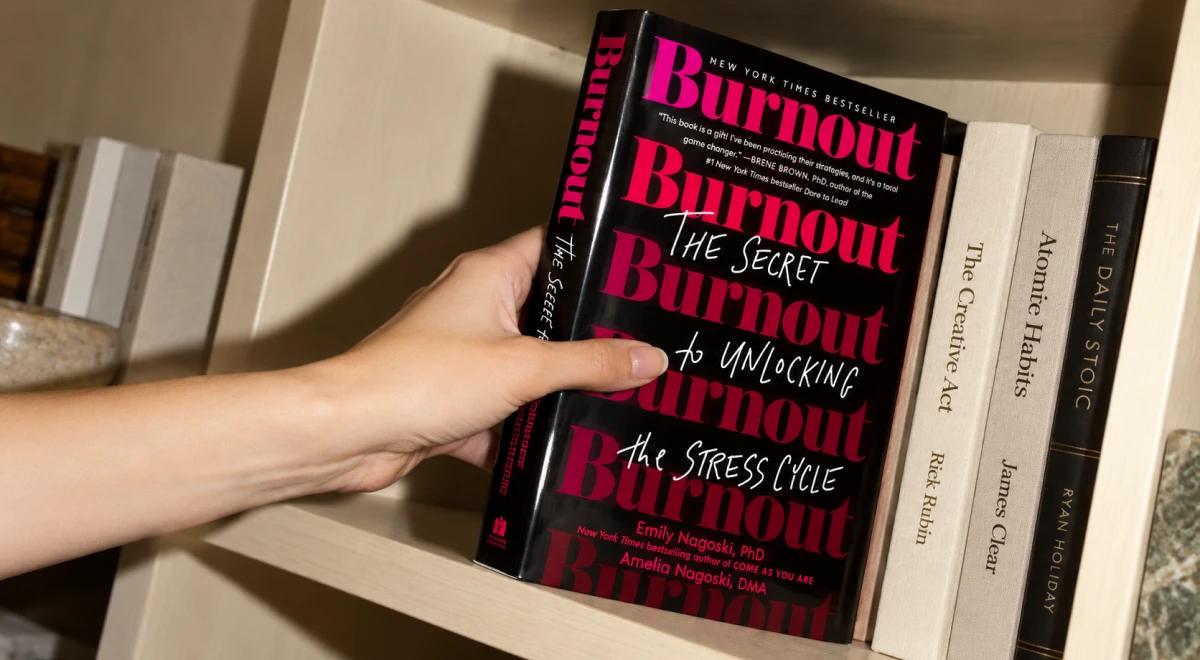

You took the whole weekend off. You slept in, skipped the emails, maybe even made it outside for a walk. Monday morning shows up, and you're just as drained as you were on Friday.
That gap — between resting and actually feeling recovered — is the puzzle at the center of 'Burnout: The Secret to Unlocking the Stress Cycle' by Emily Nagoski, PhD, and Amelia Nagoski, DMA.
The two sisters — Emily, a health educator and sex educator who earned her doctorate in health behavior at Indiana University, and Amelia, a choral conductor who has taught at Western New England University — wrote this groundbreaking book after watching each other crash.
It became a New York Times bestseller because the award-winning authors do something most stress advice skips: they explain emotional exhaustion in terms your body can act on, not just your calendar.
Below you'll find the key takeaways from the Nagoskis' work, plus seven more books about burnout, stress, and rest worth picking up next. And if you'd rather start with a plan than a stack of titles, Headway can get you there sooner.
📘 Build a personalized burnout recovery plan with Headway.

Quick answer: What are the best books about burnout?
If you only read one, make it the Nagoski book. These four cover the most ground between them, from the biology of chronic stress to the pull of overwork.
| Book | Best for | What you'll take away |
|---|---|---|
'Burnout: The Secret to Unlocking the Stress Cycle' by Emily and Amelia Nagoski | Women stuck in chronic stress | How to complete the stress cycle, not just manage the stressor |
'Why Zebras Don't Get Ulcers' by Robert M. Sapolsky | Understanding the biology | Why humans stay stressed long after the threat is gone |
'Do Nothing' by Celeste Headlee | Breaking the busyness habit | How overwork quietly backfires on you |
'Rest' by Alex Soojung-Kim Pang | Reclaiming real downtime | Why working less can mean doing more |
'Burnout' by Emily Nagoski and Amelia Nagoski: separating the stressor from the stress
The Nagoskis open with the distinction most of us miss, and it reframes everything that follows. A stressor is the thing that sets you off: the deadline, the inbox, the relative who comments on your life choices. The stress response is what happens inside you — the cortisol and adrenaline, the braced shoulders, the heart that won't slow down. You can deal with the stressor and still leave the stress itself stuck in your body.
Drawing on affective neuroscience, health-behavior research, and communications science, the sisters compassionately explain what's actually happening under the hood, and why you can solve the problem and feel no better. It's the mechanism behind a lot of mental exhaustion and the quieter symptoms of burnout people chalk up to a bad week.
Their fix is to complete the stress cycle — to give your body the physical signal that the threat has passed. Movement is the most reliable method: physical activity measurably lowers cortisol, the stress hormone that spikes under pressure, which is the biological stress cycle the Nagoskis are describing. They also point to slow breathing, a proper cry, laughter, affection, creative expression, and the human connection they treat as a biological need.
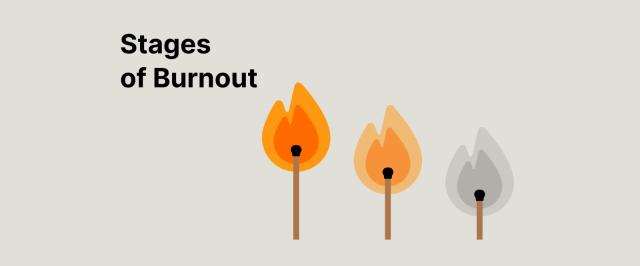
The same body that climbs through the 12 stages of burnout when stress piles up can be walked back down, deliberately, until you've closed all the cycles it's been holding open — pulling you out of that all too familiar cycle of pushing through and crashing.
Much of the book speaks directly to women and why they experience burnout differently. In today's world, the way the world can dictate how most American women should look, feel, and behave adds a layer of societal pressures men rarely carry.
The Nagoskis name "Human Giver Syndrome" — the expectation that women owe their time, bodies, and attention to everyone else — alongside the "Bikini Industrial Complex" that makes money from female self-doubt and the "Superwoman schema" that treats doing it all as a personality trait. They set out to teach women to stop letting the inner critic run the show.
If you've felt the specific depletion of mom burnout or caregiving, this is the section that will stay with you.

Why rest doesn't fix burnout
Headway turns stress research into 15-minute summaries.
Read about restKey takeaways from the 'Burnout' book
The eye-opening science here comes with prescriptive advice you can use the same day — practical strategies for managing emotions, minimizing stress, and preventing burnout before it flattens you.
Stressors and stress are not the same thing. Removing the cause doesn't discharge the feeling your body is still holding.
You have to complete the cycle. Movement, breathing, crying, laughter, affection, and connection all tell your nervous system the danger is over.
Rest is non-negotiable, not a reward. You don't earn recovery by finishing the to-do list; your body needs it to function.
Small health-behavior changes create positive change. You don't need a life overhaul — a brisk walk is enough to close a cycle.
Human Giver Syndrome drives women's burnout. Societal expectations, not personal weakness, keep the pattern running.
The payoff the sisters promise isn't just survival. It's embodied wellness — the kind of true wellness that lets you feel the joy inside again and build a more joyful life. Their claim is that you can achieve wellness through small, repeatable changes rather than a dramatic reinvention.
The main book is dense with stories, quotes, and exercises, and if you want to go further, the Nagoskis also published a companion burnout workbook — an interactive workbook of engaging questions, exercises, and helpful worksheets. If you only read 'Burnout' this year, it earns the slot; it's essential reading for anyone living with chronic stress.
📘 Running on empty and short on time? Get the stress-cycle tools from 'Burnout' in about 15 minutes on Headway.
More science on stress and your body
Once the stress cycle clicks into place, these two books fill in the biology behind it.
1. 'Come as You Are' by Emily Nagoski
Emily Nagoski's other bestseller aims the same nervous-system lens at desire and intimacy. Where 'Burnout' explains why you can't switch off, 'Come as You Are' lays out the surprising new science of why stress quietly flattens your sex life — and why context, not willpower, is what actually shifts it.
It's a natural extension of her sex education work and a smart companion read if you want the fuller picture of how the Nagoski approach plays out in your relationships. Clear, warm, and refreshingly free of judgment.
2. 'Why Zebras Don't Get Ulcers' by Robert M. Sapolsky
Stanford neuroscientist Robert Sapolsky explains why a zebra sprinting from a lion resets within minutes while humans stew in chronic stress for years. It's the biological backstory to everything the Nagoskis prescribe, told with enough wit to carry a few hundred pages of physiology.
Dense in spots, but it remains the single best explanation of what long-term stress does to your health — from your sleep to your immune system to your memory. Read it when you want the "why" behind the advice.

Books on rest, overwork, and slowing down
A big slice of modern burnout is occupational burnout — the kind that builds when you're overwhelmed at work and can't find the off switch. These three take rest seriously.
3. 'Do Nothing' by Celeste Headlee
Celeste Headlee traces how we turned busyness into a badge of honor, then makes a well-sourced case that nonstop productivity is making us worse at both our jobs and our lives.
It's practical and a little bracing, with concrete ways to reclaim real downtime instead of the fake kind you spend half-answering Slack. Good for anyone who feels guilty the moment they stop moving.
4. 'Rest' by Alex Soojung-Kim Pang
Alex Soojung-Kim Pang argues that deliberate rest is a skill, and that history's most prolific people guarded it fiercely — long walks, naps, hard stops at the end of the day.
If you suspect you'd get more done by working less, this is the evidence, and it doubles as a blueprint for burnout prevention that doesn't involve quitting your job. A solid antidote to hustle guilt, and a quick read for a book that could genuinely change your schedule.
5. 'The Ruthless Elimination of Hurry' by John Mark Comer
John Mark Comer writes from a spiritual angle, but you don't have to share his faith to feel the argument land: hurry is corrosive, and slowing down is a practice you build rather than a mood you wait for.
It's gentle and reflective, with real suggestions for anyone stuck in permanent fast-forward. Best read slowly, ideally with your phone in another room.
Burnout at work and getting yourself back
When the exhaustion is coming from your job, the cause often isn't you. These two make that case and offer a way through.
6. 'Work Won't Love You Back' by Sarah Jaffe
Sarah Jaffe takes apart the "do what you love" myth and shows how it keeps workers exhausted, underpaid, and strangely grateful for it.
If your burnout is occupational, this is less about avoiding burnout through sheer willpower and more about naming the system that causes it — the same honesty that makes trends like quiet quitting make sense. A clear-eyed look at why devotion to a job so rarely loves you back.
7. 'Present Over Perfect' by Shauna Niequist
Shauna Niequist walked away from a frantic, overcommitted life and wrote about what she found on the other side of it. It reads more like a memoir than a manual, which is the appeal — it's for readers who want permission to stop performing and enough warmth to actually believe they can.
Quiet, honest, and easy to finish in a sitting or two, especially on a night when you need the reminder.
Complete the stress cycle with Headway — a little every day
Reading about burnout and recovering from it are two different projects, and the books above add up to a lot of hours you may not have while you're this tired. Headway condenses each one into a 15-minute summary you can read or listen to — on a walk, in the pickup line, or in bed instead of scrolling.
Answer a few quick questions and Headway builds a burnout recovery plan around your actual situation: what's draining you, what feels hardest right now, and where you'd like to start. You get the stress-cycle tools from 'Burnout,' paired with the related titles, in a format that survives a depleted schedule.
Plenty of readers have done exactly that. One wrote about reading more books in a year without the overwhelm, another swapped doomscrolling for daily learning, and a third described what six months of microlearning did to her life — several call the stress-cycle approach a total game-changer. With 60M+ downloads, Headway is one of the most downloaded book summary apps in the world, made for people who want the ideas without the 300 pages.
📘 Get your burnout recovery plan with Headway today.
Frequently asked questions about 'Burnout' by Emily Nagoski
What is the main idea of 'Burnout' by Emily Nagoski?
The core idea is that a stressor and your body's stress response are two separate things. Solving the problem that stressed you out doesn't automatically discharge the stress sitting in your nervous system. To feel better, Emily and Amelia Nagoski argue, you have to complete the stress cycle through movement, connection, and other physical signals that tell your body the threat has passed.
What are the three components of burnout?
The Nagoskis build on researcher Christina Maslach's definition, which breaks burnout into three parts: emotional exhaustion, depersonalization or cynicism, and a reduced sense of accomplishment. In plain terms, you feel drained, you start going numb or detached, and nothing you do seems to matter. Recognizing which of these burnout symptoms is loudest can point you toward what needs attention first.
How long does it take to recover from burnout?
There's no fixed timeline, and anyone who promises one is guessing. Burnout recovery depends on how long you've been running on empty, how much of the original stressor you can change, and whether you're completing the stress cycle day to day. Some people feel steadier in a few weeks; deeper, long-standing exhaustion can take months of consistent rest, movement, and support.
Is burnout the same as depression or anxiety?
Not quite, though they overlap and can feed each other. Burnout is usually tied to a specific context, like work or caregiving, and tends to ease when that load lifts. Depression and anxiety reach into every corner of life and often need clinical care. If low mood, dread, or hopelessness lingers no matter what changes, it's worth talking to a professional rather than sorting burnout vs depression alone.
What should you do first when you feel burned out?
Start with your body, not your to-do list. The fastest way to stop feeling overwhelmed is to complete one stress cycle — take a brisk walk, do twenty minutes of anything physical, or let yourself cry it out. Then name the stressor driving the exhaustion so you can change what's actually changeable. Small, repeatable actions beat waiting for a free weekend that never comes.
Does burnout go away on its own?
Rarely, if the thing causing it stays the same. You can rest for a weekend, but if Monday drops you back into the same workload with no change in how you handle stress, the cycle just restarts. Lasting relief comes from pairing recovery habits with real adjustments to the stressors — fewer commitments, firmer boundaries, or support you've been reluctant to ask for.
Is 'Burnout' by Emily and Amelia Nagoski worth reading?
Yes, particularly if rest never seems to recharge you. It's grounded in science but written for real life, with exercises, stories, and prompts you can use right away. The stress-cycle framework alone tends to shift how readers handle pressure. If you're short on time, a 15-minute Headway summary covers the key takeaways before you commit to the full book.
Where can I read or listen to 'Burnout'?
'Burnout' is available as an audiobook, ebook, and paperback, plus a companion workbook if you want the exercises in one place. Pick whichever format fits your routine. For the key ideas fast, Headway offers a 'Burnout' book summary you can read or listen to in about 15 minutes — handy when you're too drained to start a full book but still want the stress-cycle tools.