Self-growth
 Apps & Digital Tools
 Business & Career
 Success
 Growth Tools
 Psychology
 Communication
 Relationships

Studying isn't one problem. It's five or six problems wearing the same hoodie: staying focused, remembering what you read, taking notes you'll actually use later, learning a language without quitting in week two, blocking out time, dealing with procrastination, and somehow doing all that to the best of your ability without your phone winning the day.
The best study apps each solve one of those, not all of them. Trying to download 15 tools at once is its own kind of procrastination. What actually works is picking two or three that match where you're getting stuck, and using them consistently.
This article covers ten of the best study apps 2026 has produced — what each one is good for, a few study tips for using them well, and how to pair them by goal. Productivity apps like Todoist also get a mention where they fit.
📘 If you want to build better learning habits beyond class, try Headway — the app gives you key ideas from bestselling nonfiction books in 15-minute summaries. Worth knowing about for the productivity, focus, and study habit books in particular.
All app features described in this article are accurate as of August 2026. Prices may vary depending on your region, current promotions, and seasonal offers.
The ten best study apps at a glance (TL;DR)
The best study apps are the ones that match the problem you're trying to solve. Here's the quick version:
| Need | Best app |
|---|---|
Best for handwritten notes | Goodnotes |
Best for learning key ideas fast | Headway |
Best for flashcards | Quizlet |
Best for bite-sized learning and practice quizzes | Nibble (a free microlearning app) |
Best for spaced repetition | Anki |
Best for focus and beating procrastination | Forest |
Best for language learning | Duolingo |
Best for organizing study materials | Notion |
Best for AI study support | NotebookLM |
Best for scheduling study time | Google Calendar |
Choose the one that suits your needs best — here's the top 10 study apps:
1. Goodnotes — Best for handwritten notes and digital notebooks
Goodnotes is best for students who prefer handwritten notes but still want digital organization. If you're an iPad user with an Apple Pencil, this is the one. You can mark up lecture slides, sketch diagrams next to written notes, annotate PDFs, and keep everything searchable.
Visual learners benefit most — being able to draw arrows, redraw a diagram you didn't get, or color-code by topic is something paper notebooks can't match. The handwriting recognition is good enough that even messy notes turn up in search. It also handles classic formats like Cornell notes: set the template once and reuse it all semester.

2. Headway — Best for learning big ideas in less time
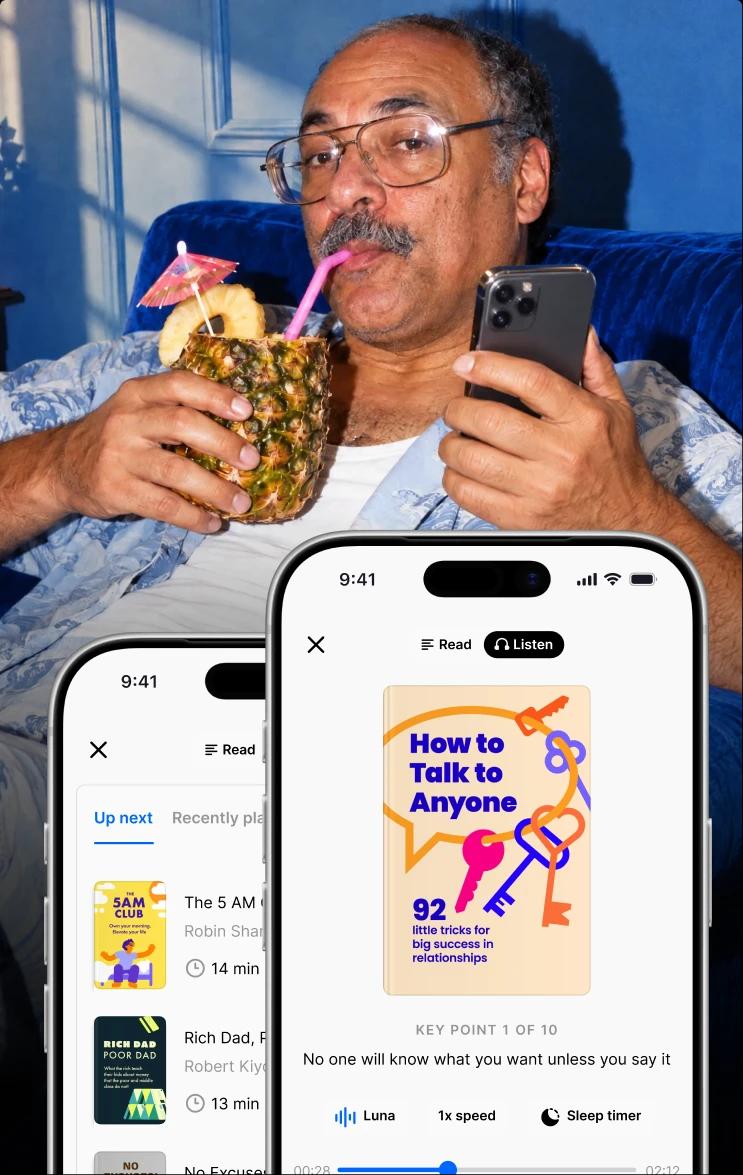
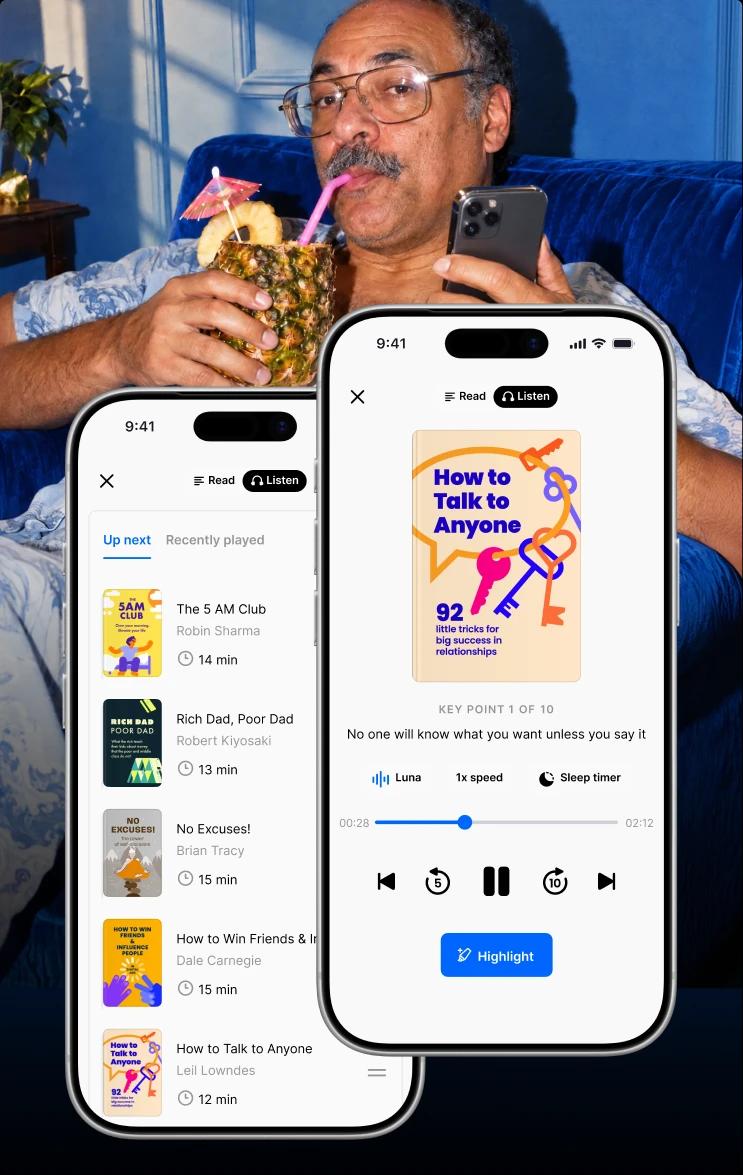
Headway is best for students who want to learn key ideas from nonfiction books quickly and build better study habits. It's the #1 most downloaded book summary app with over 55 million downloads — most of us don't have time to read every productivity or psychology book that gets recommended.
Headway isn't a replacement for class notes or a flashcard app. It's the layer around your studying — the mindset and knowledge base. Want to understand how memory works? There's a summary. Need a book on focus, deep work, or motivation? Same.
Each summary is short enough to read between classes, and the audio versions (the app reads book summaries to you) work well as podcasts on the walk to campus. Think of it as the self-improvement app that sits next to your coursework.
📘 Want to fix the habits underneath your study setup? Start with Headway.
3. Quizlet — Best for flashcards and quick test prep
Quizlet is the fastest way to make flashcards for an exam coming up next week. The premade decks are useful — there's a good chance someone else in your class has already built one for your textbook.
The test mode and match games make review less painful than flipping cards. Compared to Anki, Quizlet is easier and faster, but it doesn't build long-term retention as well. Use it for short-term cramming. Use Anki for material you need to remember in six months. (And if the Quizlet paywall annoys you, Anki is the free alternative most students land on anyway.)
4. Nibble — Best for bite-sized learning and quizzes
Nibble is a microlearning app built around short lessons and practice quizzes you can finish in 5 minutes. Each lesson covers one concept, with quick questions afterward that help it stick. It works well in the in-between moments — waiting for class, sitting on the bus, the ten minutes before bed when you'd otherwise open Instagram.
If you've been looking for an app to replace social media with something that leaves you smarter, this is one of the cleaner options. Pairs naturally with Headway — short summary, quick recall, done.
5. Anki — Best for spaced repetition and long-term memory
Anki is best for students who need to memorize large amounts of information over time. Med students, law students, language learners, anyone preparing for boards — Anki is the standard.
The spaced repetition algorithm shows you cards right before you'd forget them, which is more efficient than reviewing everything on a fixed schedule. The interface looks dated, and the learning curve is real, but the people who stick with it swear by it. Free on desktop and Android, paid on iOS. Combined with active recall — testing yourself instead of rereading — it is the most evidence-backed study method there is.
6. Forest — Best for staying focused while studying
Forest tackles the problem most students actually have: knowing what to study but being unable to put the phone down. You set a focus timer, a virtual tree grows while you're working, and if you leave the app to scroll TikTok, the tree dies.
It sounds silly, but it works because the dopamine loop is built in. Some use it as a dopamine detox app, blocking social media for a few hours to focus on real study. Pomodoro-style sessions (25 on, 5 off) are the default and a solid starting point. For students with ADHD, that kind of external structure is often what turns intending to study into actually starting.
7. Duolingo — Best for language learning
Duolingo is great for consistency and basics. The daily streaks, gamified lessons, vocabulary repetition, and built-in translator tool make it easier to keep going than any textbook would.
Honest caveat: it'll get you to a conversational level in most languages, but not to fluency. Use it for the first 6–12 months of a new language, then pair it with a tutor or Anki decks. For English grammar review, the practice format is also genuinely useful.
8. Notion — Best for organizing classes, notes, and deadlines
Notion is a system-builder, not a memorization app. You can run a semester out of it — class dashboards, assignment trackers, a to-do list, reading lists, citation management, and group project pages.
The templates do most of the heavy lifting. One warning: it's easy to spend a week perfecting your Notion setup instead of actually studying. Build something simple and add to it as needed.
9. NotebookLM — Best for AI-powered study support
NotebookLM lets you upload your study materials, like lecture notes, PDFs, articles, and ask questions about them. It is a strong contender for best AI app for iPhone in the study category.
NotebookLM can turn a stack of sources into a study guide, generate practice questions, or explain a concept from your own materials in plain language. One caution: AI is best when you use it to understand material faster, not to skip the work. Treat it like a tutor you're checking against, not a shortcut.
10. Google Calendar — Best for planning study time
Google Calendar is the boring answer that actually works. Block out study time the way you'd block out a class. Set recurring sessions for each subject. Put your exam dates on it weeks ahead so you can work backward. If you grew up calling this a revision timetable, same idea — just digital and harder to lose.
Pair it with one of the better note-taking apps or Notion, and you've got the bones of a real study system. Free, syncs across everything, and most students already have it open.
📘 Want one good 15-minute read tonight to finish strong this semester? Try the Headway app.


How to choose the best study app for you and your needs
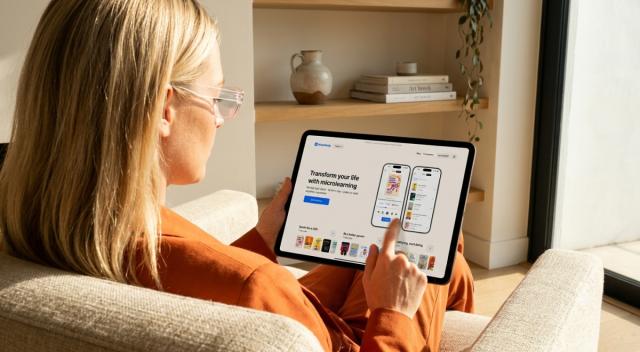
Don't start with the app. Start with what's actually broken in your study routine.
Pin down your biggest study problem first. Is it focus? Memory? Notes you can't find later? A language you keep abandoning? Planning? Each of these has a different fix. If you don't know which is the real issue, watch yourself for a week and see where you keep getting stuck.
Pick something you'll actually open daily. A simple to-do list app you use every day beats a complicated productivity system you abandon by Friday. Daily use wins. And if you focus better around other people, look for shared sessions — virtual study rooms and body doubling work for a reason.
Look for active learning, not passive reading. Apps that make you recall things — flashcard app tools, practice quizzes, spaced repetition — work better than apps that just let you reread. Highlighting feels productive. It mostly isn't.
Check the price and where it runs. Free plans, iOS, Android, offline access, sync. Some have great free tiers (Anki, Google Calendar, Duolingo's basics). Others lock the parts you actually need behind a paywall.
Best study apps grouped by goal: Exam, focus, learning
Combinations that work well together, depending on what you're trying to fix:
| Goal | App combo |
|---|---|
Prepare for exams | Quizlet + Anki + Google Calendar |
Stay focused | Forest + Google Calendar |
Take better notes | Goodnotes + Notion (or OneNote as an alternative) |
Learn outside of class | Headway + Nibble |
Learn a language | Duolingo + Anki |
Use AI responsibly | NotebookLM + your own notes |
Find an app that reads books to you | Headway (audio summaries) for nonfiction |
Goal | App combo |
Prepare for exams | Quizlet + Anki + Google Calendar |
Stay focused | Forest + Google Calendar |
Take better notes | Goodnotes + Notion (or One Note as an alternative) |
Learn outside of class | Headway + Nibble |
Learn a language | Duolingo + Anki |
Use AI responsibly | NotebookLM + your own notes |
Find an app that read books to you | Headway (audio summaries) for nonfict |
Build better study habits with the Headway app!
The best learning apps will help with tasks. They won't fix the habits underneath — focus, consistency, motivation, sleep, and how you handle setbacks. That part takes a different kind of input.
Headway gives you fast access to the ideas in the best books on those topics.
'Atomic Habits' on routines.
'Deep Work' on focus.
'Make It Stick' on how memory actually works.
Each one is a 15-minute summary you can read between classes or listen to on the way to the library. If you've been looking for an app for motivation that doesn't feel hollow — or a smarter way to absorb the books that change how you study — this is the one.
📘 Download Headway and start building a smarter study routine today!
FAQs about the best study apps
Which are the best study apps?
Depends on what's actually broken in your studying. Goodnotes for handwritten notes, Anki for memorization, Forest for focus, Notion for organizing the chaos, Duolingo for languages, Google Calendar for planning, and Headway for the books on focus and habits you don't have time to read in full. Pick two or three, not all of them.
Which study app is most effective?
Anki, probably — if you stick with it. Spaced repetition is the closest thing to a memory cheat code that exists, and the research backs it up. The catch is the learning curve. Most students who try Anki bounce off it in the first week. The ones who push through usually swear by it for the rest of their academic life.
Can I use ChatGPT or Claude to study?
Yeah, but be careful how. AI's best when you treat it like a tutor you can ask questions of — explain this concept, quiz me on this, walk me through this proof. It's worse when you use it to skip work and copy answers. NotebookLM is the better option for actually studying your own materials, since it sticks to what you upload.
Is the Headway app good for studying?
Headway app is good for the layer around studying: focus, habits, time management, motivation, and productivity. The kinds of books your professors casually recommend that you never actually read. Headway gets you the ideas in 15 minutes per book, which is realistic when you're already overloaded.
What's better than Duolingo?
It depends on what stage you're at. Duolingo's solid for the first 6–12 months — vocabulary, daily streaks, basic grammar. After that, you've outgrown it. The next step is a tutor (iTalki, Preply), immersion content (Netflix in the target language with subtitles), or Anki decks for grammar drills. The honest answer: Duolingo plus something else, not Duolingo replaced.