Self-growth
 Apps & Digital Tools
 Business & Career
 Success
 Growth Tools
 Psychology
 Communication
 Relationships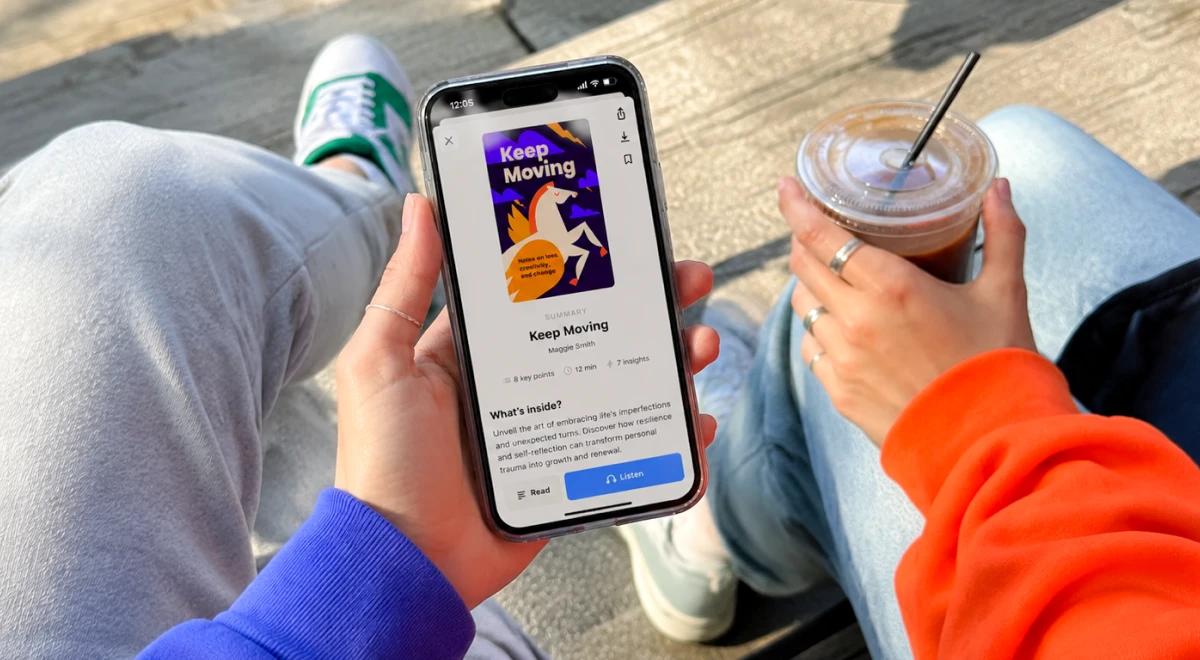

College is basically a balancing act that never ends. Between endless lectures, looming deadlines, and a social life, your brain is already at capacity. Most college students don't need more tasks; they need better systems. The best study apps for college students don't add to the chaos — they remove it.
However, the wrong ones just add notifications and decision fatigue to your day. The secret is picking a few tools that actually improve your focus and retention. Before you scroll the list, consider this: one of the most overlooked best study apps is a book summary app.
📘 Headway offers summaries of the world's best nonfiction into 15-minute reads. Our app gives you the edge on ideas professors reference, but your peers haven't read yet — try Headway today.

All app features described in this article are accurate as of August 2026. Prices may vary depending on your region, current promotions, and seasonal offers.
The best study apps for college students: Quick answer
The best study apps for college students fall into five categories: focus, notes, retention (flashcards/spaced repetition), planning, and broader learning:
Top picks include Notion (note-taking), Anki or Quizlet (flashcards), Forest (focus), and Todoist (planning).
Using too many study apps is a mistake; 3–4 consistent tools outperform a rotating list of ten.
To find the best study apps for college students, pick one app per function and stick with it for a full semester.
How to choose the right study app (before you download anything)
Don't turn your phone into another source of stress. Research from Rosen, Carrier & Cheever (2013) shows something interesting. College students who stick with 3–4 apps do better than those who constantly switch. Overcomplicating things leads to distraction. Here are three rules to keep your student life simple.
One app per function. Don't have three different to-do lists. Use one for note-taking, one for flashcards, and one for focus.
Free tier first. Most students don't need paid features. Stick to a free app until you know you'll use it daily.
Integration over features. Choose a productivity app that syncs with your Google Calendar or laptop.
Your phone is usually for streaming apps and TikTok. But with the right study tools, it becomes a way to study smarter. Don't feel like you need a dozen best learning apps. Even classic sites like Khan Academy are better when they're part of a small, focused toolkit. The goal is a system that works in the middle of a busy semester.
The eight best study apps for college students in 2026
Finding the best study apps for college students 2026 is about building a system that works when you're tired.
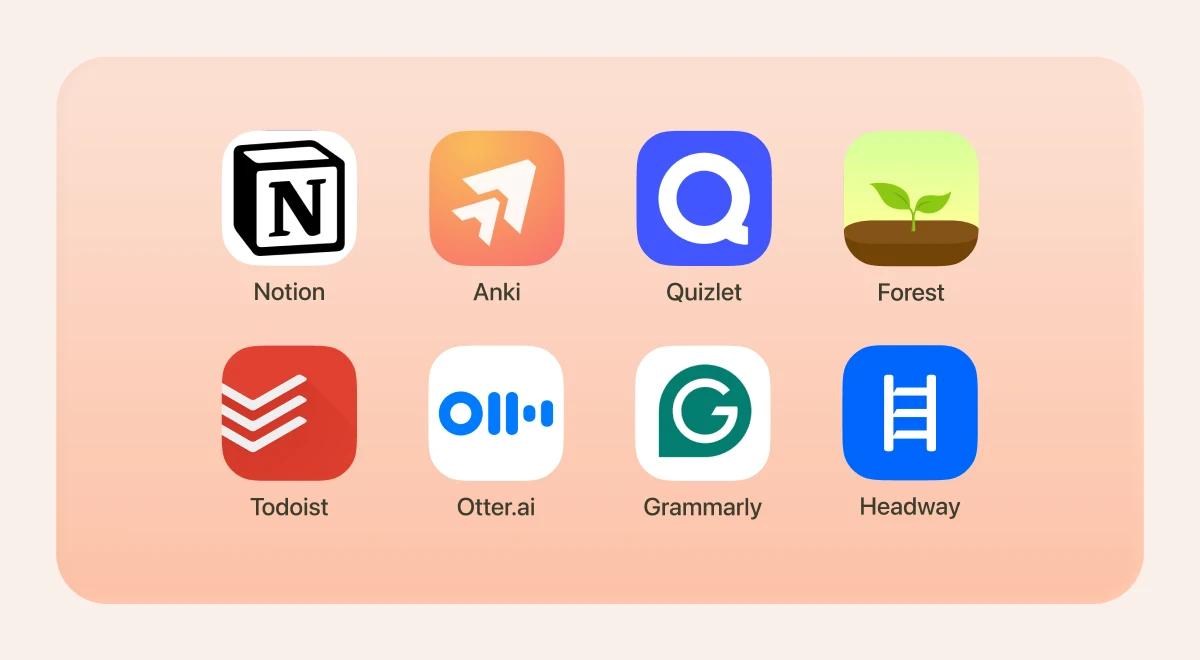
1. Notion — for note-taking and second-brain organization
What it does: It puts your class notes, research, and checklists in one spot.
Best for: Learners who want a customizable note-taking app for their whole college experience.
Pricing: Free for students; Plus starts at $10/month.
2. Anki — for long-term retention through spaced repetition
What it does: It uses active recall — flashcards that show up right before you're about to forget them.
Best for: Maximizing retention among subjects with high raw data, such as biology or languages. It's also the classic free alternative to paid flashcard apps.
Pricing: Free on desktop and Android; one-time $25 fee on iOS.
3. Quizlet — for fast, social flashcards
What it does: You can find peer-created quizzes or make your own sets in minutes. Many high school students start here and continue through college.
Best for: Quick study sessions and finding decks already made for your specific courses.
Pricing: Free version available; Plus is around $36/year.
📘 Stop struggling with textbooks and start mastering big ideas in 15 minutes with Headway.

4. Forest — for focus and phone-free study sessions
What it does: It acts like a dopamine detox app by growing a tree while you study. It's one of the best apps to replace social media during finals.
Best for: Cutting down screen time and staying off TikTok or other social media. Use it with the Pomodoro method for best results — many students with ADHD find this kind of visual timer especially helpful.
Pricing: Free on Android; $3.99 on the Apple App Store.
5. Todoist or MyStudyLife — for assignments and deadlines
What they do: These digital planners track due dates, exams, and group projects so you don't miss anything.
Best for: Building a study schedule, organizing your time management, and syncing with your Google Calendar.
Pricing: Todoist has a solid free tier; MyStudyLife is a completely free app.
6. Otter.ai — for lecture transcription
What it does: This AI app for iPhone and Android records and transcribes lectures in real time. It also integrates with tools like Evernote.
Best for: Students who want to listen more and type less during study groups or lectures.
Pricing: Free for 300 minutes a month; Pro plans available.
7. Grammarly — for writing assignments
What it does: It checks your essays for clarity and mistakes to ensure academic success.
Best for: Anyone who wants to study smarter by spending less time proofreading. It's one of those helpful apps for motivation when you're staring at a blank page.
Pricing: Free basic version; Premium for more advanced functionality.
📘 Stay ahead of the syllabus with the big-picture insights inside Headway.
8. Headway — for the books behind the courses
What it does: It belongs to the best learning apps because it summarizes core nonfiction texts. It effectively acts as one of the best apps that read books for you in bite-sized chunks.
Best for: Students who need to understand big ideas without reading five full books a week. It's one of the top free microlearning apps for self-improvement.
Pricing: Free trial available; Subscription for full access.


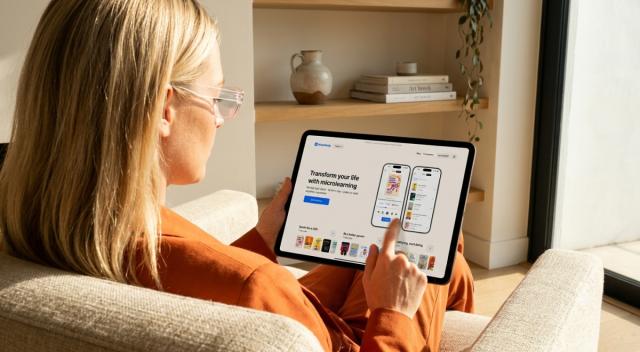
Try Headway, the study app college students are sleeping on!
Most study tools focus on helping you survive the work you've already been assigned. They help you organize due dates or manage group projects. But Headway is different: our app is likely the best study app for college students who want to actually stand out in class discussions and future interviews.
Your professors will often drop names like Daniel Kahneman, Carol Dweck, or Cal Newport. They usually assume you've already read the foundational books these experts wrote. Let's be real: between a job and student life, you don't have time to read 500-page books on top of your heavy textbooks.
Our productivity app gives you the 15-minute breakdown of big thinkers like James Clear and Adam Grant. You get the core frameworks and arguments that your classmates are probably missing. Instead of wasting your screen time scrolling through social media, you are building a library of ideas that lead to real academic success.
It's one of the few apps for self-improvement that directly impacts how you think and communicate in a professional setting. By using this study app, you're not just passing a class — you're preparing for life after graduation.
📘 Join millions of people, including thousands of college students, using Headway to learn faster and stand out!
FAQs about the best study apps for college students
What are the best studying apps for college students?
In 2026, you really just need a few solid tools. Notion is great for keeping your notes from getting messy, and Anki helps those tough formulas actually stick. But don't sleep on Headway. It summarizes the deep nonfiction books your professors always reference. You get the big ideas in 15 minutes without having to pull another all-nighter.
Which is the No.1 app for studying?
There's no single best one because everyone learns differently, but Headway is a total game-changer for 2026. Most apps just organize the work you already have. Headway actually feeds you new, high-level ideas from world-class authors. It turns your boring commute into a learning session, helping you think way ahead of everyone else in your class.
Can study apps really improve my grades?
Definitely, as long as you stop just "reading" and start "doing." Don't just stare at your notes. Use Anki for active testing and Headway to actually get the concepts behind the lectures. When you understand the "why" instead of just memorizing facts, your essays get a lot better, and your GPA naturally starts to climb on its own.
What are good study tools?
Good tools simplify your life — they shouldn't make it busier. A basic planner keeps your deadlines clear, and noise-canceling headphones are a lifesaver in the library. Digitally, Headway is essential now. It bridges the gap between boring textbooks and the expert-level insights that make your assignments stand out. It's the easiest way to find that extra edge.
Are there free study apps for college students?
Yeah, most of the top apps have great free versions. MyStudyLife is free for your schedule, and Anki's desktop version doesn't cost anything. Headway also has a free trial and daily summaries. It lets you absorb life-changing ideas from the world's best books without having to stress about your budget.
How do I stop getting distracted by social media while studying?
You have to make the distraction harder than the work. Use an app like Forest to lock your phone, or just delete TikTok during finals. If you're bored, swap the scrolling for something useful. Open Headway instead. You still get that quick hit of new info, but it actually helps your brain grow instead of just draining your energy.
What is the most important app for time management?
Todoist is king for managing your time. The mental side matters, too: sticking to the schedule you set builds trust with yourself. Use Headway to learn from experts like James Clear. Stacking small wins and feeding your mind better ideas is the only real way to build trust.