Self-growth
 Business & Career
 Success
 Communication
 Healing
 Relationships
 Psychology
 Happiness
The numbers don't lie about cultural shifts. Bad Bunny's 'Debí Tirar Más Fotos' became the first entirely Spanish-language album to win Album of the Year at the 2026 Grammys. His Super Bowl performance drew over 120 million viewers, many watching a show that celebrated Puerto Rican identity without apology. And three quotes from his recent speeches have gone viral across social media because they hit something people are hungry to hear right now.
But here's what's interesting about viral quotes — they feel good to share, but they're hard to live. "We are still here" sounds powerful until you're the only one like you in a room. "You should believe in yourself too" rings hollow when self-doubt shows up at 3 AM. "The only thing more powerful than hate is love" becomes a platitude when you're actually facing hate.
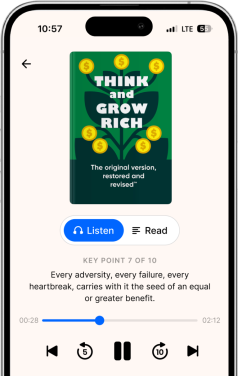
The difference between inspiration and real change comes down to whether you have the frameworks to make these ideas work in your actual life. Headway, a microlearning app trusted by 55 million users worldwide, connects people to books that turn abstract principles into concrete skills. These five books give you the tools to actually live what Bad Bunny's words represent — resilience, self-belief, and the transformative power of love in 2026's complex cultural moment.
📘 Turn inspiration into practice with Headway.
➡️ What is Headway and how does it work?
'The Undocumented Americans' by Karla Cornejo Villavicencio
'The Undocumented Americans' by Karla Cornejo Villavicencio documents the lives of undocumented immigrants across the United States with the kind of specificity that challenges every stereotype. Villavicencio, who was undocumented herself until DACA, spent years talking to workers rebuilding Ground Zero, laborers in the Midwest, and families navigating the healthcare system without papers. What emerges isn't a monolithic immigrant story, but a collection of individuals building American infrastructure, caring for American children, and contributing to communities that don't always acknowledge their existence.
The book's power comes from its refusal to sanitize or simplify. These aren't perfect victims or inspiring heroes — they're complicated people making difficult choices with limited options. When Bad Bunny says "We are still here," he's echoing what Villavicencio documents: the persistence of communities that American policy tries to erase but can't. The 2026 immigration debates rage on, but the people at the center of those debates keep working, keep building families, keep showing up. Visibility becomes its own form of resistance.
'You Are a Badass' by Jen Sincero
'You Are a Badass: How to Stop Doubting Your Greatness and Start Living an Awesome Life' by Jen Sincero attacks self-doubt with the kind of directness Bad Bunny brings to everything he does. Sincero spent years in a van, broke and confused about why her life wasn't working. Then she figured out that her biggest obstacle wasn't circumstances or luck — it was the running commentary in her head telling her she wasn't good enough for what she wanted.
The book walks you through identifying the specific beliefs holding you back and replacing them with ones that actually serve you. Sincero doesn't pretend confidence comes easily or that positive thinking solves everything. But she shows how self-belief operates as a skill you build through practice, not a personality trait you either have or don't. Bad Bunny's career trajectory — from bagging groceries to headlining the Super Bowl — demonstrates what becomes possible when you stop apologizing for wanting more. His quote "You should believe in yourself too" isn't motivational fluff. It's a challenge to examine what you're telling yourself about what you deserve.
'The Magic of Believing' by Claude M. Bristol
'The Magic of Believing: Unlock Your Potentials' by Claude M. Bristol was written in 1948, but its core premise keeps proving true: what you consistently believe shapes what you attempt, and what you attempt determines what becomes possible. Bristol studied successful people across fields and found they shared one trait — they genuinely believed their goals were achievable before any evidence supported that belief.

The book teaches you to use visualization, affirmations, and mental rehearsal not as wishful thinking but as tools for programming your subconscious mind. When Bad Bunny talks about believing in yourself, he's describing the mindset that let him create music in Spanish when everyone said English was necessary for global success. That album just won a Grammy. His belief didn't make the win automatic — it made the attempt possible. Bristol gives you the frameworks to build that same kind of belief for your own goals, whether they're creative, professional, or personal. The "magic" is just your brain working for you instead of against you.
'All About Love' by bell hooks
'All About Love: New Visions' by bell hooks argues that most of us don't actually know what love is. We know romance, possession, and need. We know transactions disguised as affection. But love as a verb — as consistent action toward someone's growth — that's rarer. hooks spent her career examining how systems of oppression teach us to fear real love because it requires vulnerability, honesty, and a willingness to see others fully.
The book rebuilds love from the ground up as a practice of care, commitment, knowledge, responsibility, respect, and trust. hooks shows how patriarchy, racism, and capitalism all profit from keeping us disconnected and afraid of genuine connection. When Bad Bunny says "The only thing more powerful than hate is love," he's not being abstract. His entire career challenges machismo in Latin music, celebrates queerness, and centers Puerto Rican identity in spaces that wanted him to assimilate. That's love as resistance. hooks gives you the language and tools to build that same quality of love in your relationships, your work, and your community — not as a feeling that comes and goes, but as a deliberate choice you make daily.
'Everybody Always' by Bob Goff
'Everybody Always: Becoming Love in a World Full of Setbacks and Difficult People' by Bob Goff starts with a simple premise that's surprisingly hard to live: love everybody, always, even the people you find impossible. Goff, a lawyer who's done everything from rescuing children from trafficking to teaching law in conflict zones, admits he fails at this constantly. But he keeps trying because loving difficult people is where growth actually happens.
The book isn't preachy or naive. Goff acknowledges that some people will hurt you, some relationships need boundaries, and loving someone doesn't mean letting them harm you. But it does mean choosing to see them as whole humans, even when it's easier to write them off. He shares stories of loving politicians he disagrees with, neighbors who've wronged him, and people who made his life significantly harder — not because it felt good, but because the alternative was carrying around bitterness that poisoned everything else. Bad Bunny's message about love being more powerful than hate connects directly to this: hate shrinks your world, love expands it. Goff shows you how to practice that expansion, especially with people who make it difficult.
Start living these messages through Headway
Bad Bunny's three quotes went viral because they name what people are feeling in 2026 — the need to assert presence, build self-belief, and choose love over division. But inspiration only lasts as long as you're scrolling. Real change requires tools.
These five books give you those tools. 'The Undocumented Americans' shows resilience in action. 'You Are a Badass' and 'The Magic of Believing' build authentic self-belief. 'All About Love' and 'Everybody Always' transform how you show up for others, even when it's hard.
You don't need hours you don't have to read them. Headway's quick reads let you absorb the key insights during your commute, between meetings, or before bed. The app also offers audio summaries for when you're moving, personalized self-development plans that adapt to your goals, quizzes to reinforce what you learn, daily Shorts for quick inspiration, focus sounds to help you concentrate while reading, and bedtime mode for winding down with something meaningful.
Bad Bunny stood on that Super Bowl stage representing Puerto Rico, Latin America, and everyone who's been told they don't belong. His message was clear: we're here, we matter, and love will outlast the noise. These books show you how to carry that message into your actual life — not as a bumper sticker, but as daily practice.
📘 Live the message daily with Headway.
Frequently asked questions about books on resilience, self-belief, and love
What makes 'The Undocumented Americans' different from other immigration books?
Villavicencio writes from personal experience as a formerly undocumented person and focuses on individual stories rather than policy arguments. The book documents real people in specific communities — workers rebuilding Ground Zero, laborers in the Midwest, families navigating healthcare without papers. It avoids both victimization and heroic narratives, showing complicated humans making difficult choices. The specificity makes it harder to reduce immigration to abstract debates.
Can you actually "think yourself successful" with books like 'The Magic of Believing'?
Bristol's book isn't about wishing things into existence. It teaches visualization and mental rehearsal as tools for programming your subconscious to recognize opportunities and persist through setbacks. Your belief doesn't guarantee success, but it makes you more likely to attempt difficult things and continue when faced with obstacles. The "magic" is really about aligning your thoughts with your actions instead of letting self-doubt sabotage your efforts before you start.
Is 'You Are a Badass' just another motivational book?
Sincero stands out because she focuses on identifying specific limiting beliefs rather than generic pump-up messages. The book includes practical exercises for recognizing self-sabotaging thoughts and replacing them with useful ones. It acknowledges that confidence builds through action, not affirmations alone. What makes it effective is the combination of mindset work with concrete steps — you're not just told to believe in yourself, you're shown how to practice self-belief until it becomes automatic.
What does bell hooks mean by "love as a verb"?
hooks defines love as consistent action toward someone's growth, not a feeling that comes and goes. She breaks it down into care, commitment, knowledge, responsibility, respect, and trust — all things you do, not emotions you experience passively. The book argues that real love requires work, honesty, and willingness to be vulnerable. This reframes love from something that happens to you into something you choose to practice daily, even when it's difficult.
How do you love difficult people without getting hurt?
Goff's 'Everybody Always' emphasizes that loving someone doesn't mean accepting harmful behavior. You can maintain boundaries while still seeing someone as a full human instead of reducing them to the worst thing they did. The book teaches the difference between loving someone and liking them, between choosing compassion and allowing abuse. Loving difficult people often means accepting they may never reciprocate while refusing to let their behavior determine who you become.
Why connect Bad Bunny to books about love and self-belief?
Bad Bunny's career and public statements consistently challenge systems that tell people they're not enough — whether that's language barriers in music, machismo in Latin culture, or political pressure to stay silent. His three viral quotes capture themes these books explore: persistence despite erasure, unshakable self-belief, and love as resistance. The connection isn't surface-level inspiration, it's about the frameworks that make those principles livable when the social media high wears off.
Can reading really change how you show up in the world?
Books don't change you by themselves — but they can shift how you think about problems and give you language for experiences you couldn't name before. 'The Undocumented Americans' might change how you see service workers. 'All About Love' might reframe a difficult relationship. The impact depends on whether you engage with the ideas seriously and try applying them. Headway's summaries make this more accessible by breaking books into 15-minute chunks you can revisit when specific challenges arise.