You work full-time but still can't afford rent. You grew up poor, and nobody talks about it honestly. You're Black and queer and tired of pretending everything's fine. These three social commentary books refuse to look away from the America most people ignore.
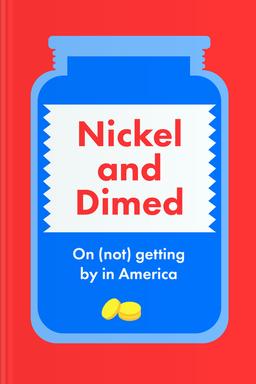
'Nickel and Dimed' by Barbara Ehrenreich goes undercover in low-wage jobs to expose why just working harder is a lie.
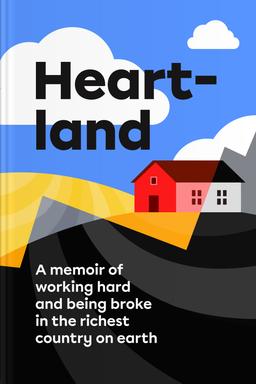
Sarah Smarsh's 'Heartland' breaks the silence around growing up poor in Kansas, challenging every stereotype about rural America.
'Here for It' by R. Eric Thomas employs sharp humor to explore what it means to be Black, gay, and constantly adapting to white spaces.
These aren't distant observations from ivory towers. They're written by people who lived it, survived it, and decided to tell the truth about it.
Social commentary books expose inequality
Social commentary books are effective when they reveal the gap between what America promises and what it actually delivers. Barbara Ehrenreich's 'Nickel and Dimed' does exactly that. She leaves her comfortable writer's life to work as a waitress, hotel maid, and Walmart employee. The experiment reveals something darker than low wages: the system is designed to keep people in poverty.
Ehrenreich discovers that the cost of cheap motels is more per month than the apartment deposits she can't afford. She learns that "unskilled labor" destroys your body just as thoroughly as any factory job. She watches coworkers skip meals to save money, then get written up for low energy.
Sarah Smarsh's 'Heartland' takes a different approach. Smarsh writes to her unborn daughter, explaining the cycles of poverty that shaped their family. She grew up in rural Kansas, where being poor meant you were blamed for your own circumstances. The book challenges the stereotype of the "white trash" family by showing the complexity poverty hides.
Smarsh's grandmother worked herself to the point of exhaustion. Her mother got pregnant young and faced judgment instead of support. Economic hardship wasn't about bad choices — it was about limited options, predatory lending, and a country that abandoned rural communities. 'Heartland' insists that class matters just as much as race or gender in American inequality.
How books with social commentary connect personal stories to broken systems
These books succeed because they connect personal experience to larger systems. When Ehrenreich can't find affordable housing on a waitress's salary, you understand why homelessness exists despite record employment. When Smarsh describes her family's medical debt, you see how one illness can destroy financial stability for generations.
'Nickel and Dimed' exposes the impossible math of low-wage work: rent is more than they will earn, but to get a better job you need clean clothes, a place to live, and dependable transportation; you simply cannot afford to pay for any of that. Ehrenreich's coworkers weren't lazy. They worked harder than most people ever will. The system simply refused to reward that effort.
'Heartland' shows how poverty, limited opportunities, and structural inequality shape political views and life choices. Through her personal family history, Smarsh highlights problems of education, economic injustice, and how social and political systems leave certain groups marginalized. The book critiques the concept of the "American Dream," demonstrating that success often depends not only on effort but also on social and economic context.
Thomas's book 'Here for It' looks at the mental gymnastics of existing as a Black queer person in predominantly white spaces. Thomas recalls experiences such as being the only Black student in a classroom, being the only gay person at a family gathering, and being the one to explain why certain jokes aren't funny. His essays exemplify the exhausting and laborious nature of being constantly amended for the comfort of others.
You finish these books understanding that poverty isn't a personal failure, that rural communities aren't backward, and that marginalized people aren't asking for special treatment — they're asking to stop being treated as problems. That's what good social commentary does: it makes you question who decided what's "normal" in the first place.

 Self-growth
 Business & Career
 Success
 Communication
 Healing
 Relationships
 Psychology
 Happiness