Are you interested in climate change, space exploration, modern technology, health, and genetic engineering? Or do you want to understand how your brain works and how to stay healthy in a plastic-filled world of fast food? Science books can turn complex ideas into clear insights. Our curated collection includes 51 engaging reads that make science accessible and easy. You'll find books by noted researchers, award-winning authors, and thought leaders who've shaped our understanding of the natural world.
Books about science that make life better
Books about science bridge the gap between laboratory discoveries and everyday understanding. They transform abstract concepts into relatable stories showing how scientific principles shape daily life. When you read books about science, you're not just learning facts — you're developing critical thinking skills and gaining tools to navigate a world driven by technology and innovation.
Understanding human biology, nutrition, and health through scientific literature empowers you to make informed decisions about your well-being.
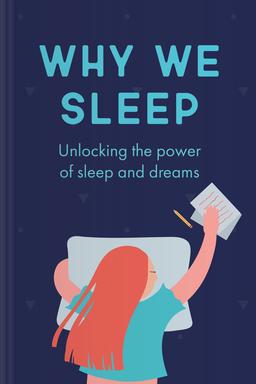
In 'Why We Sleep,' Matthew Walker shows how sleep deprivation shortens your lifespan and harms your memory.
In 'Immunity,' Dr. Jenna Macciochi explains how the immune system functions as a complex and thoughtful defense network that can be strengthened through lifestyle choices, diet, and stress management.
These books demystify your body's functions, helping you recognize warning signs and optimize your health.
Quality books about science also tackle pregnancy (see 'Expecting Better' by Emily Oster, PhD), longevity ('Outlive' by Peter Attia, MD), and disease prevention (for example, 'The Obesity Code' by Dr. Jason Fung) with evidence-based insights. The science books and research debunk myths about a healthy lifestyle and marketing hype, instead providing objective information for critical evaluation of medical advice.
Science books for making sense of our era
Whether you are a scientist, a student seeking to grow your knowledge, or a lifelong learner seeking to explore the world, science books for adults will provide new ideas for reflection and discussion with other like-minded people.
Climate change and technological innovation define our era, so understanding them is crucial to navigating the future.
'The Climate Book' by Greta Thunberg compiles insights from over 100 leading scientists, activists, historians, economists, and journalists worldwide to explain the climate crisis from the science behind it to practical solutions and policy action.
'The Future We Choose' by Christiana Figueres and Tom Rivett-Carnac presents two possible futures and actionable steps to avoid a climate catastrophe.
'How to Spend a Trillion Dollars' by Rowan Hooper explores how massive scientific investment could solve humanity's biggest challenges — from climate change, deforestation, and poverty to fighting disease, exploring space, and creating clean energy.
Technology's transformative power comes alive through the stories of innovators pushing boundaries.
Ashlee Vance's 'Elon Musk' chronicles how one entrepreneur revolutionized electric vehicles, space travel, and renewable energy — showing how audacious thinking turns science fiction into reality.
Mark Miodownik's 'Stuff Matters' reveals the hidden science behind materials that power modern technology, from smartphone screens to rocket fuel.
Books about science provide a deep understanding of the world. They allow us to think logically, critically, and structurally. Science books enrich knowledge and help us become more critical, aware, and effective people.

 Self-growth
 Business & Career
 Success
 Communication
 Healing
 Relationships
 Psychology
 Happiness