russia has launched a full-scale war in Ukraine. Donate to support Ukraine and protect the world’s peace.

4 Best Books On Perception

These books share a common theme – they all explore how people perceive and understand the world, and how our biases, limitations, and perceptions influence our decisions, judgments, and perceptions of reality.

All four authors explore how people see, think, and make mistakes:

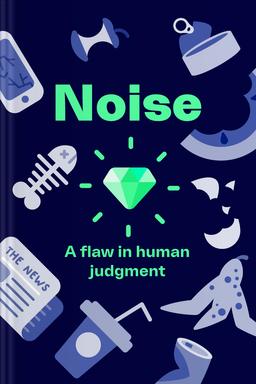
  • 'Noise' by Daniel Kahneman, PhD, Olivier Sibony, PhD, and Cass R. Sunstein, JD, is about how "noise" (random deviations in judgment) affects decision-making.

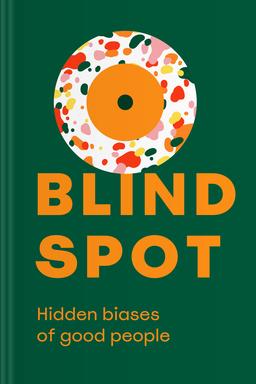
  • 'Blindspot' by Mahzarin R. Banaji and Anthony G. Greenwald is about the unconscious biases that guide our actions.

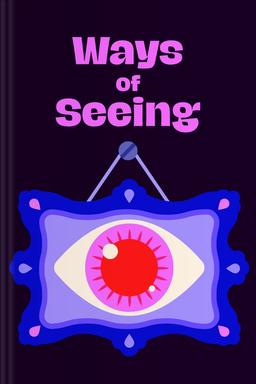
  • 'Ways of Seeing' by John Berger is about how culture and context shape our view of art and the world.

  • 'Factfulness' by Hans Rosling, Anna Rosling Rönnlund, and Ola Rosling is about how we often misunderstand the world through instincts of fear, generalization, and negativity.

What perception books reveal about you

Ever wondered what insights these books can provide for you? Perception books:

  • Helps to clarify why two people can see the same situation differently.

  • Shows how we're all prone to illusions, distortions, or stereotypes.

  • Encourages students to focus on essential aspects and filter out the noise of information.

  • Teaches us to "read" people's emotions and intentions.

People should perceive and accept themselves as a complete being, understanding that all aspects of their body and mind create a cohesive unity. We can meet our needs by interacting with our environment, and how we engage with the world around us plays a crucial role in whether those needs are fulfilled.

Perception of the world is how a person understands and sees their surroundings, events, information, and interactions. It includes psychological, cultural, and personal aspects of perception.

Everyone perceives the world in their own unique way through:

1. Sensory perception: Accepting new knowledge through our senses (sight, hearing, smell, touch, and taste). Our senses allow us to perceive things and respond to environmental changes.

2. Cognition: The process of purposeful and active reflection of reality in a person's consciousness, resulting in the acquisition of new knowledge about the world. It helps us create an understanding of the world and make decisions.

3. Emotions and feelings: Sensory responses to events and situations around us. Feelings and emotions can influence how we perceive and respond to external triggers.

4. Sociocultural context: Cultural, social, and historical circumstances in which we live impact our perceptions and beliefs. 

5. Individual differences: Each person is unique, and the perception of the world can vary depending on factors like personality, character, and previous experiences.

How books about perception shift mindset

Many psychologists argue that our perception of the world can be changed and improved. We must develop awareness of our perceptions, reflect on them, and understand that others may perceive the world differently. 

Empathy and the ability to see a situation from another person's perspective can help enrich our perceptions and improve our relationships with others.

These books teach us to think more precisely, see more broadly, and recognize our own cognitive traps. Each book, in its own way, helps us understand the world better — not through emotions or illusions, but through facts, context, and awareness.

These books are united by the desire to teach us to see reality more clearly — not through prejudice, but through understanding how we think and perceive the world.

Noise

by Daniel Kahneman, PhD, Olivier Sibony, PhD, Cass R. Sunstein

What is Noise about?

This book explores the concept of 'noise'—the unwanted variability in human judgment. It reveals how decisions are often clouded by inconsistencies, leading to errors in various fields such as law, medicine, and business. By distinguishing between bias and noise, the authors provide insightful analysis and practical strategies for reducing noise in decision-making processes, ultimately aiming to improve outcomes in diverse settings.

Who should read Noise

Psychology enthusiasts seeking to understand decision-making flaws.
Business professionals looking to improve judgment in hiring.
Students of behavioral economics interested in cognitive biases.

Ways of Seeing

by John Berger

What is Ways of Seeing about?

This influential book explores the relationship between art, culture, and perception, challenging traditional views of how we see and interpret visual images. Through a series of essays and illustrations, the author examines the impact of societal norms on our understanding of art, revealing how context and ideology shape our visual experiences. It encourages readers to reconsider the illusions created by the media and art institutions in the modern world.

Who should read Ways of Seeing

Art students exploring image interpretation.
Those interested in visual culture and media studies.
Readers seeking to challenge conventional perspectives on art.

Blindspot

by Mahzarin R. Banaji, Anthony G. Greenwald

What is Blindspot about?

This insightful exploration delves into the hidden biases that affect our thoughts and actions, often without our awareness. Through compelling research and engaging anecdotes, the authors reveal how these biases influence judgements, decisions, and interactions in various facets of life. By uncovering these unconscious influences, readers can gain awareness and actively work towards overcoming prejudices, fostering a more equitable society.

Who should read Blindspot

Psychology enthusiasts seeking to understand biases.
Educators looking to promote inclusivity in schools.
Corporate leaders aiming to improve workplace diversity.

Factfulness

by Hans Rosling, PhD, Ola Rosling, Anna Rosling Rönnlund

What is Factfulness about?

This insightful book challenges common misconceptions about global trends, revealing how the world is improving in numerous ways. Through engaging data and compelling anecdotes, it explores ten biases that distort our understanding of reality, urging readers to adopt a fact-based worldview. By highlighting progress in health, poverty, and education, it inspires optimism and encourages a clearer perspective on global issues.

Who should read Factfulness

Data enthusiasts seeking a more accurate worldview.
Students and educators needing facts over misconceptions.
Anyone wanting a positive perspective on global progress.

Frequently asked questions about books on perception

What are the four types of perception?

The four main types of information perception are visual, auditory, kinesthetic, and discrete. Visual perceives the world through images and pictures, auditory through sounds and music, kinesthetic through feeling and touch, and discrete (or digital) through logic, analysis, and numbers.

What's the #1 most-read book of all time?

The Bible is the most-read book in the world. This eternal book is the most popular despite the presence of many other religious teachings. Its total circulation is over 4 billion copies, that's half of the Earth's current population! The Bible has been translated into more than 2,000 languages worldwide.

What are some books that can change your perspective?

Some classic novels can completely change how you see the world:

'One Hundred Years of Solitude,' by Gabriel García Márquez, is a story about time.

'The Catcher in the Rye,' by J.D. Salinger, is about finding yourself.

Among the non-fiction and contemporary:

'Sapiens' by Yuval Noah Harari

'Thinking Fast and Slow' by Daniel Kahneman

'Essentialism' by Greg McKeown

What's the leading psychology book?

'Thinking, Fast and Slow' is a top book on psychology by Daniel Kahneman; many psychologists and readers recognize it as a must-read. It has changed the way people think and make decisions. Kahneman proved that most of our decisions are irrational but guided by fast, intuitive thinking. The book combines cognitive psychology, behavioral economics, and practical wisdom.

What are the five stages of perception?

The five stages of perception in psychology are the sequence of how a person receives, processes, and interprets information from the world around them: perception (sensation), sorting (organization), interpretation (evaluation), memory (storage), and reaction (response). It isn't just about receiving information; it's an active process. People always perceive the world through the filter of their own experience, emotions, and culture.

What are the six principles of perception in psychology?

In psychology, several classical principles of perception explain how people organize and interpret sensory information. They are most often described through Gestalt psychology. The six principles of perception in psychology are the Figure and Ground Principle, the Proximity Principle, the Similarity Principle, the Closure Principle, the Continuity Principle, and the Symmetry and Order Principle.