Self-growth
 Apps & Digital Tools
 Business & Career
 Success
 Growth Tools
 Psychology
 Communication
 Relationships
Key takeaways:
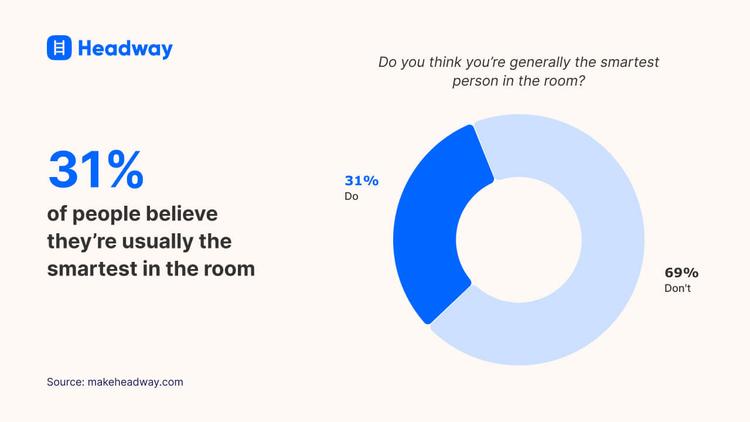
Some 30% believe reading makes them better than others. Likewise, 82% say not reading regularly is intellectually limiting, while 22% judge people based on the books they enjoy.
Books often influence relationships, with 12% less likely to befriend non-readers and 24% unwilling to date someone whose reading habits don’t align with their own.
Some 48% now enjoy fiction and non-fiction equally, and 59% turning to the self-help category to work through problems instead of seeking professional help.
Despite recognizing the benefits of reading, 43% read fewer than three books a year, and 6% don’t finish any. However, this doesn’t signal a lack of intent, given 66% buy books they don’t end up reading.
Reading sharpens the mind and expands our knowledge. But there’s more to it than that. What we read and discuss helps us to express our personalities, connect with like-minded people, and shape how we learn and improve.
Unpacking the stories behind the words we consume, Headway app surveyed 2,000 people on how the insight they’ve gathered influences their relationships and helps them grow, and whether their reading habits match their reading intentions.
Knowledge as status: Does reading impact your social standing?
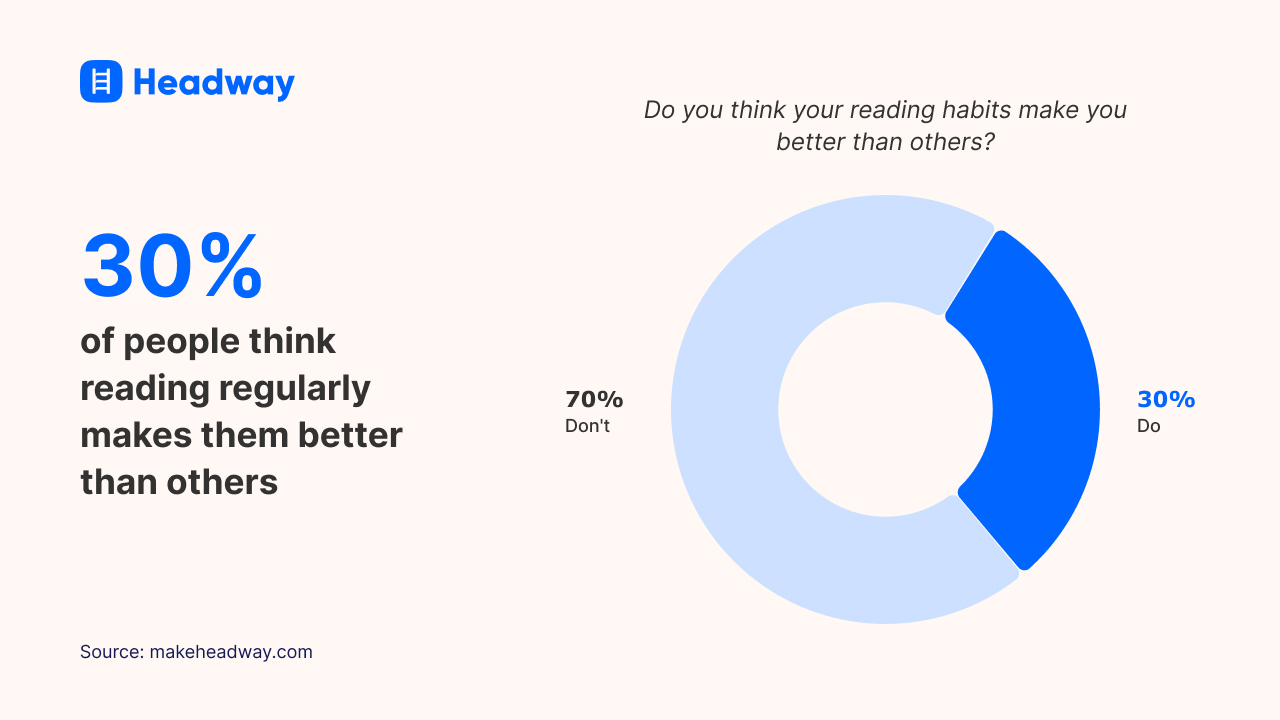
For some, getting lost in a good book is more than a positive pastime. It’s a way to feel superior, with 30% believing that reading regularly makes them better than others.
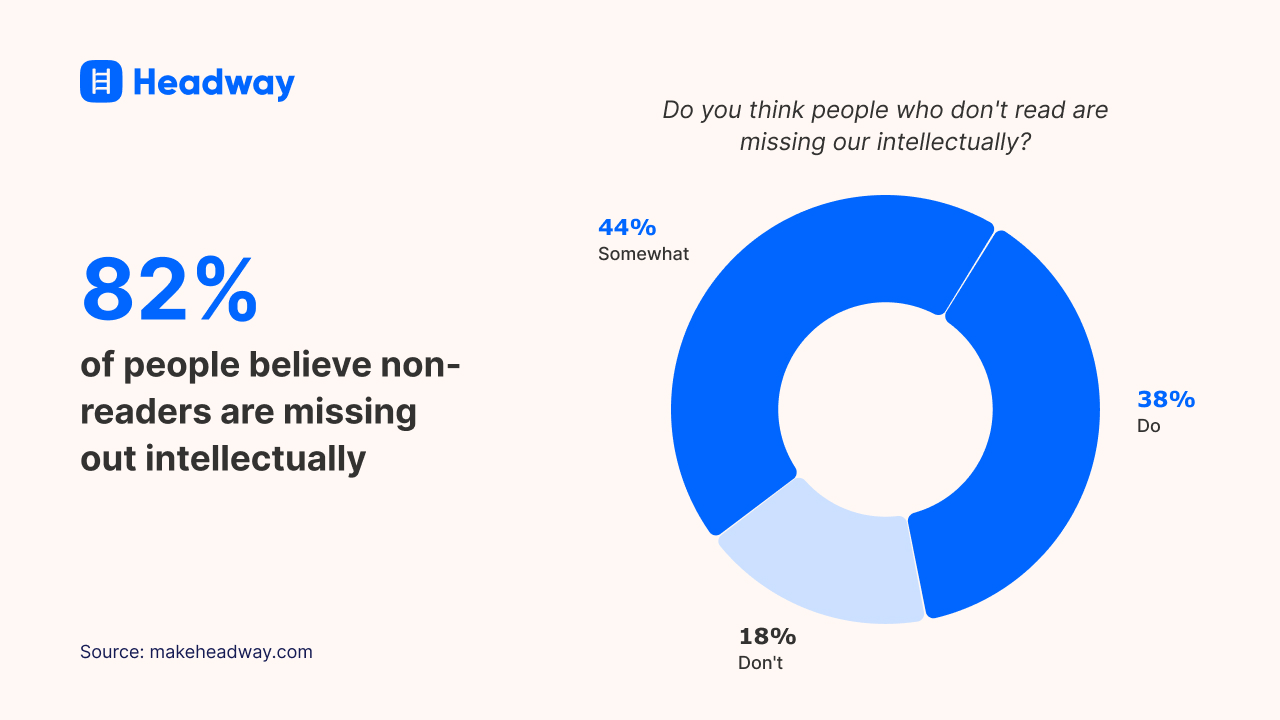
Some 82% believe that life without reading starves you intellectually. Or, in the words of Joseph Addison: “Reading is to the mind what exercise is to the body.”
And there’s truth to it. The benefits of reading include improved cognitive function, a wider vocabulary, sharper critical thinking, and the ability to process information, connect dots, and form ideas.
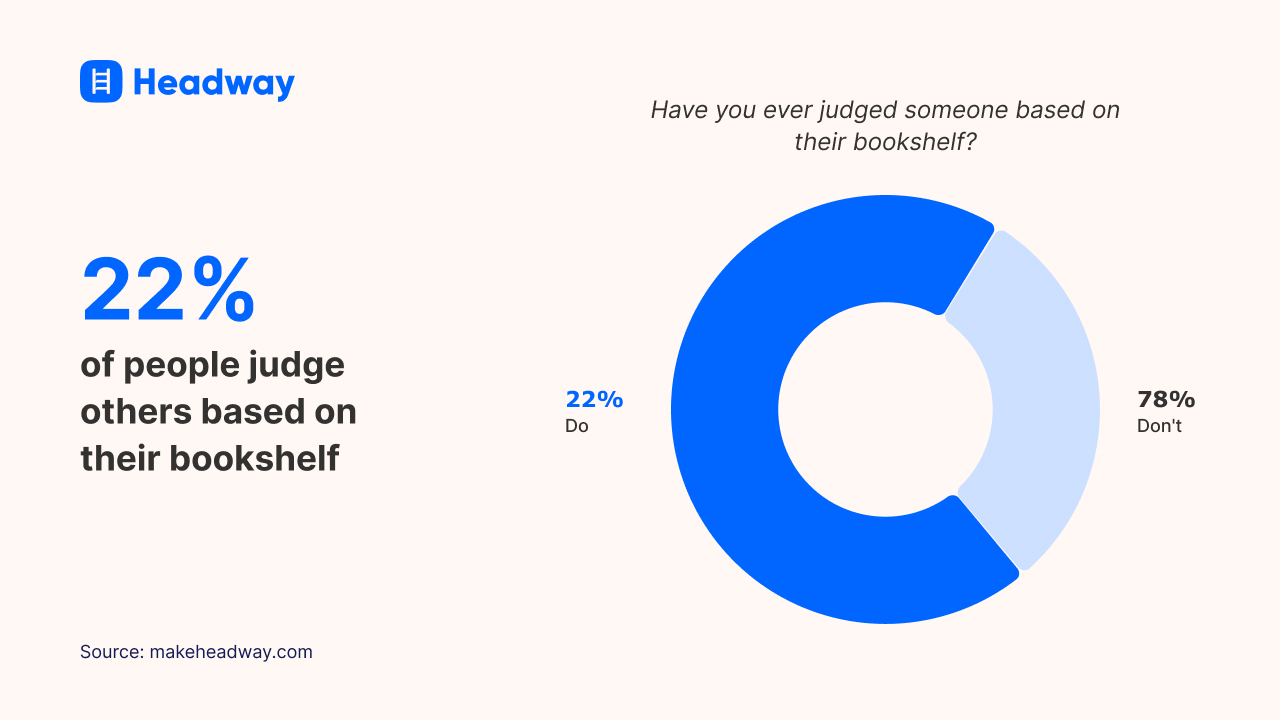
However, when it comes to earning the respect of bookworms, it isn’t just having a full bookcase that counts, but what it contains. With 22% admitting they judge people based on the books they own, that dog-eared copy of Twilight and the countless James Patterson novels might not win everyone over.
Shelf appeal: How books are shaping our relationship choices
You shouldn’t judge a book by its cover, but let’s be honest… we all do it sometimes.
While non-readers can be just as sharp, engaging, and fun to be around as anyone, for some, a lack of literary interest is a dealbreaker – with 12% admitting they’re less likely to befriend someone who doesn’t read.
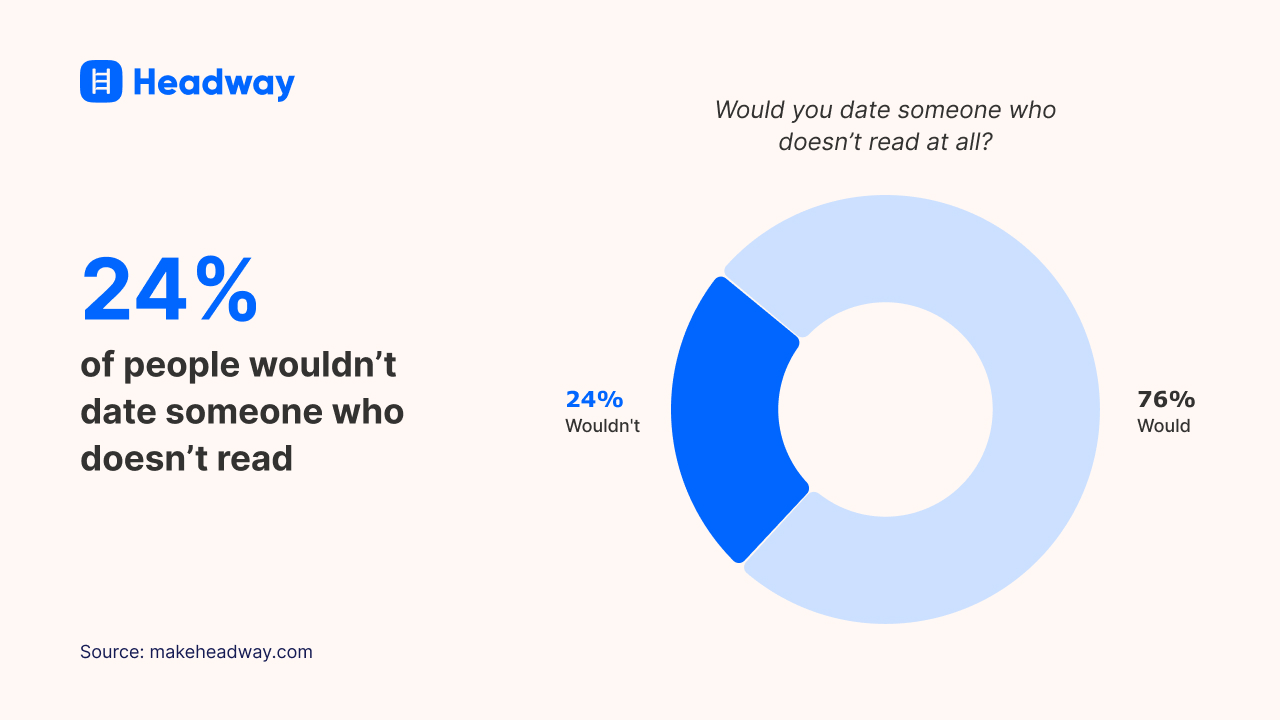
No love for books? Red flag. Some 24% say they wouldn’t date someone whose reading habits don’t match their own. After all, successful relationships require compatibility.
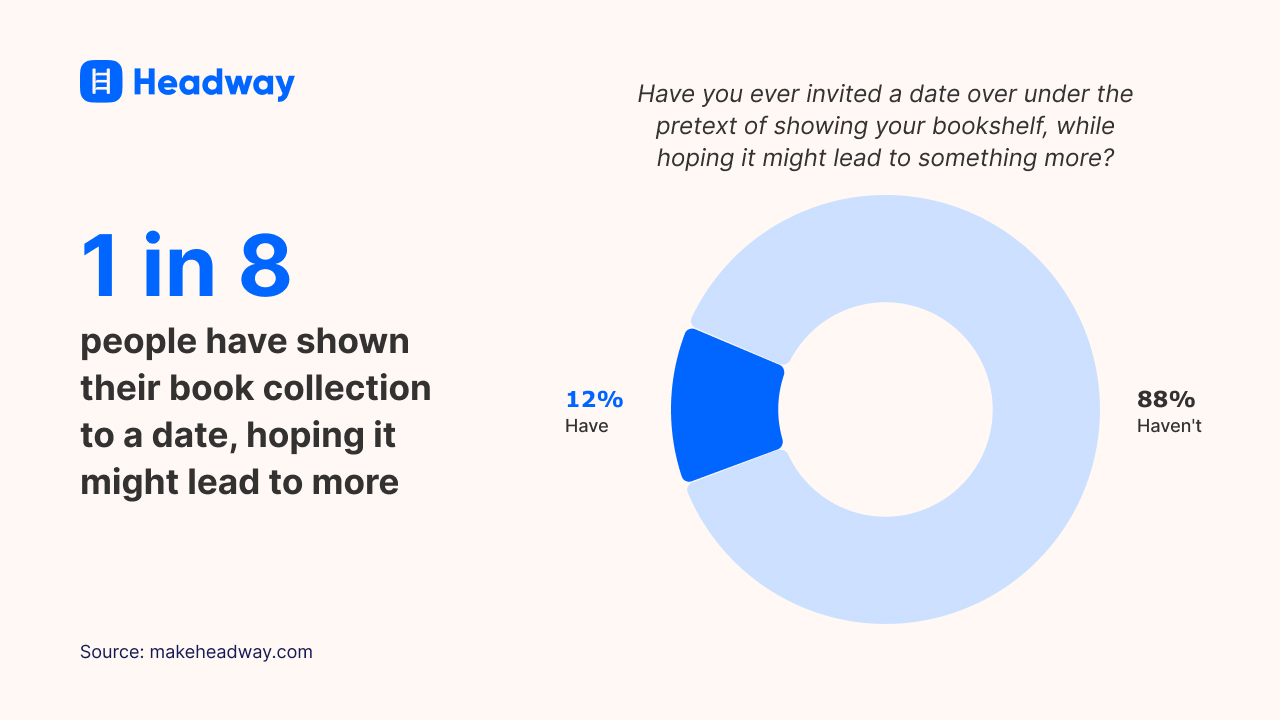
When it comes to dating, many book lovers use their shared passion to steer the plot towards romance – with 12% having invited a date over to show off their book collection, hoping to impress and see where the story leads.
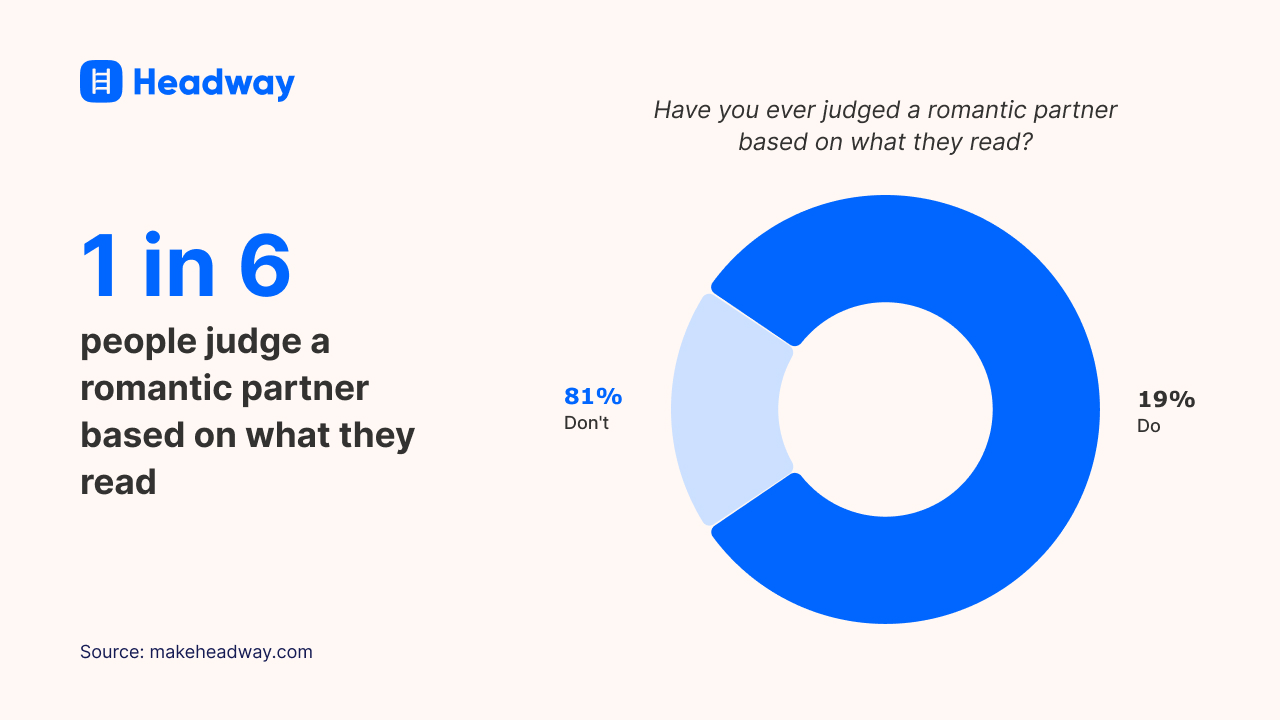
Just as literary taste can spark intrigue in the early stages of a relationship, the wrong title can just as quickly give us the ick – with 19% admitting they’ve judged a romantic partner based on what they read.
The betterment bookclub: Helping others to learn and grow
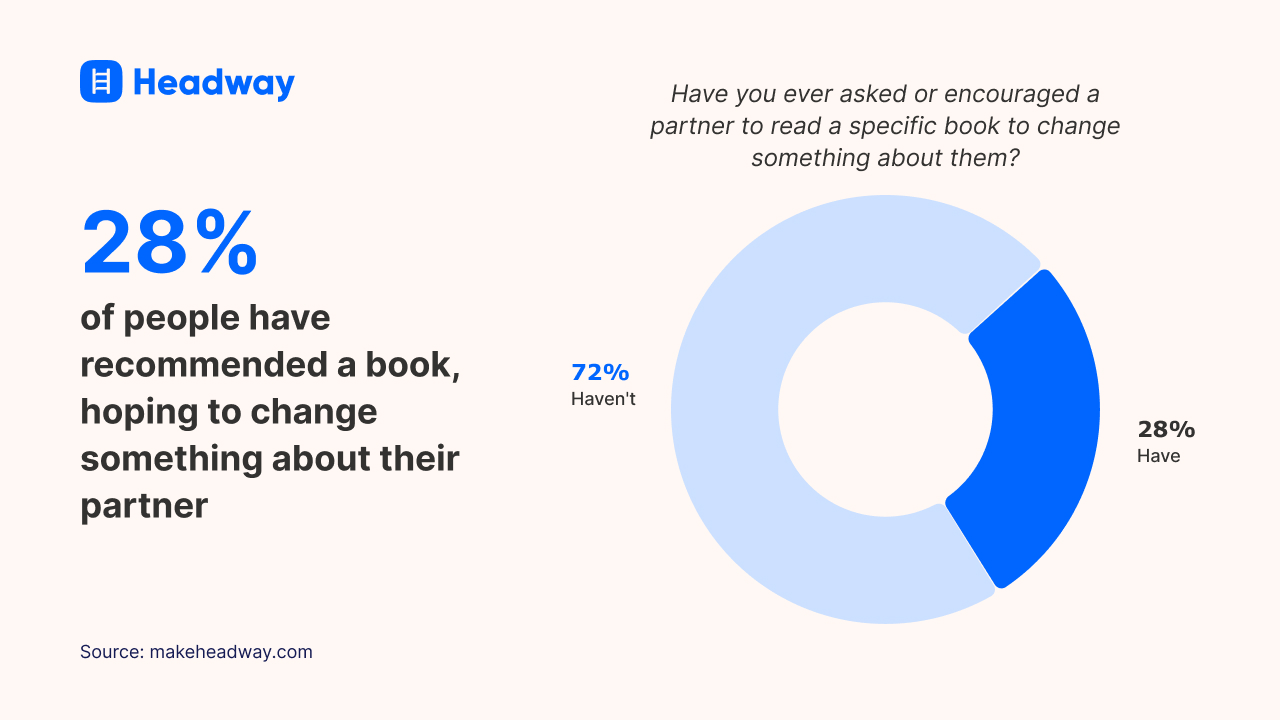
Some 28% of people have recommended a specific book to a partner, hoping it will help to change something about them.
Less “How to Win Friends and Influence People”, more “How to Change Friends and Influence Partners.”
Sure, it sounds a little anti-villain, but those recommendations don’t always come from a place of malice or desire to control.
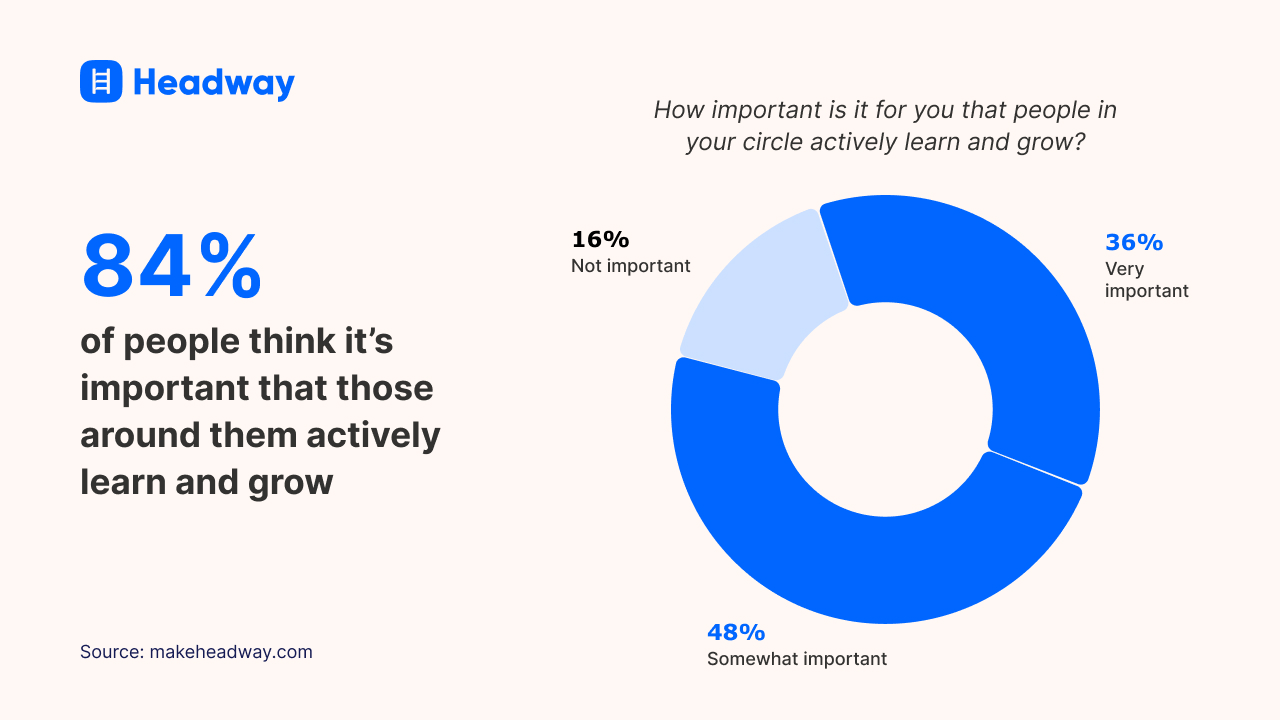
Rather, 36% think it’s very important, and 48% say it’s somewhat important that those around them are actively learning and growing – and they’ve seen the cognitive, intellectual, and psychological effects of reading for themselves, from reduced stress to improved focus, better sleep, and a clearer mind.
Shelf-improvement: The growth of self-help books (and those reading them)
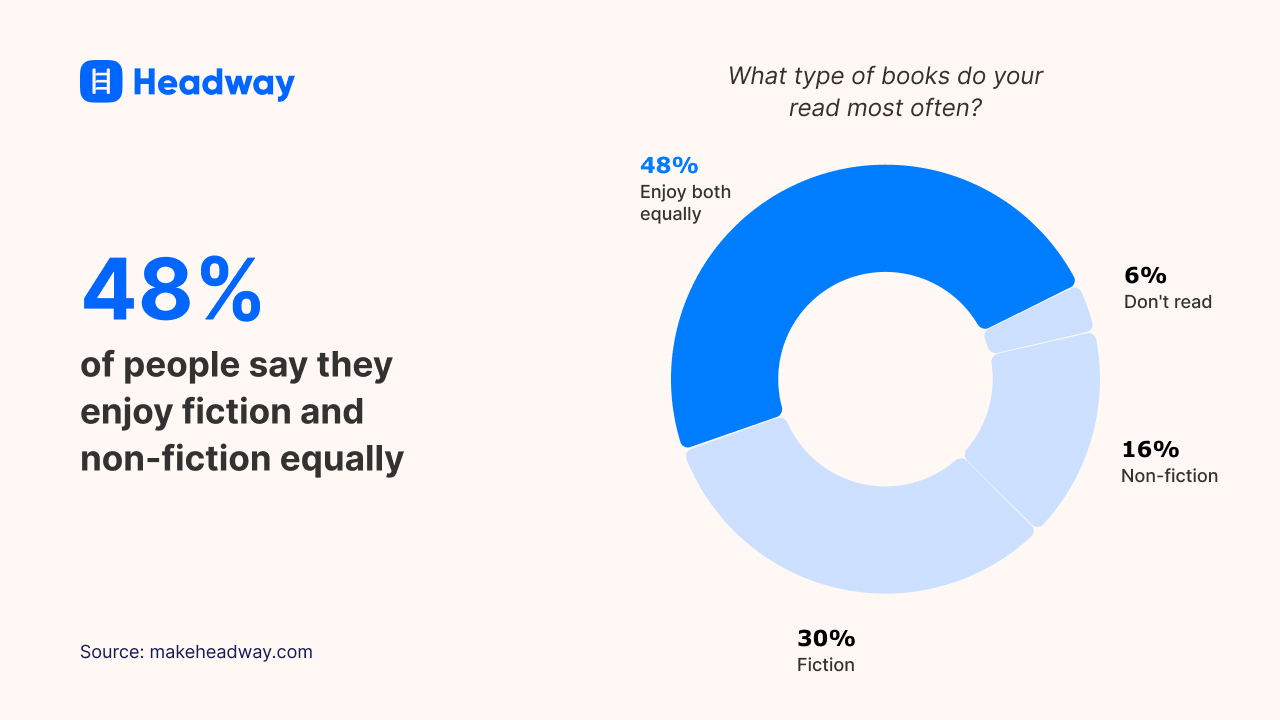
Fiction no longer dominates the shelves and bestseller lists. Boosted by spicy celebrity memoirs, the intrigue of true crime, and a growing appetite for self-improvement, 48% of people now say that they enjoy reading fiction and non-fiction equally.
Every reader has their own idea of the perfect book. Even when it comes to non-fiction, we’re all searching for different answers and anecdotes that reflect our own unique lives.
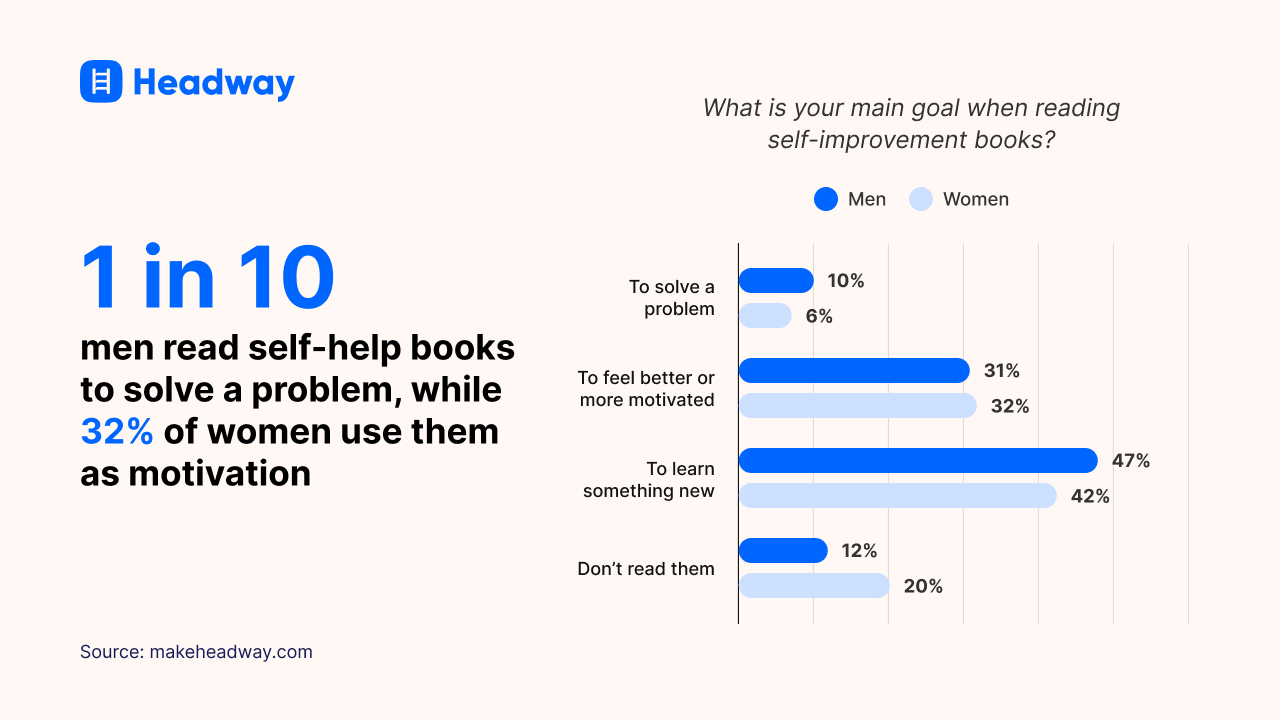
One in ten men turns to self-help books to help them overcome a problem, for instance, while 32% of women use them for motivation. Likewise, 45% of all readers turn to them in search of new information.
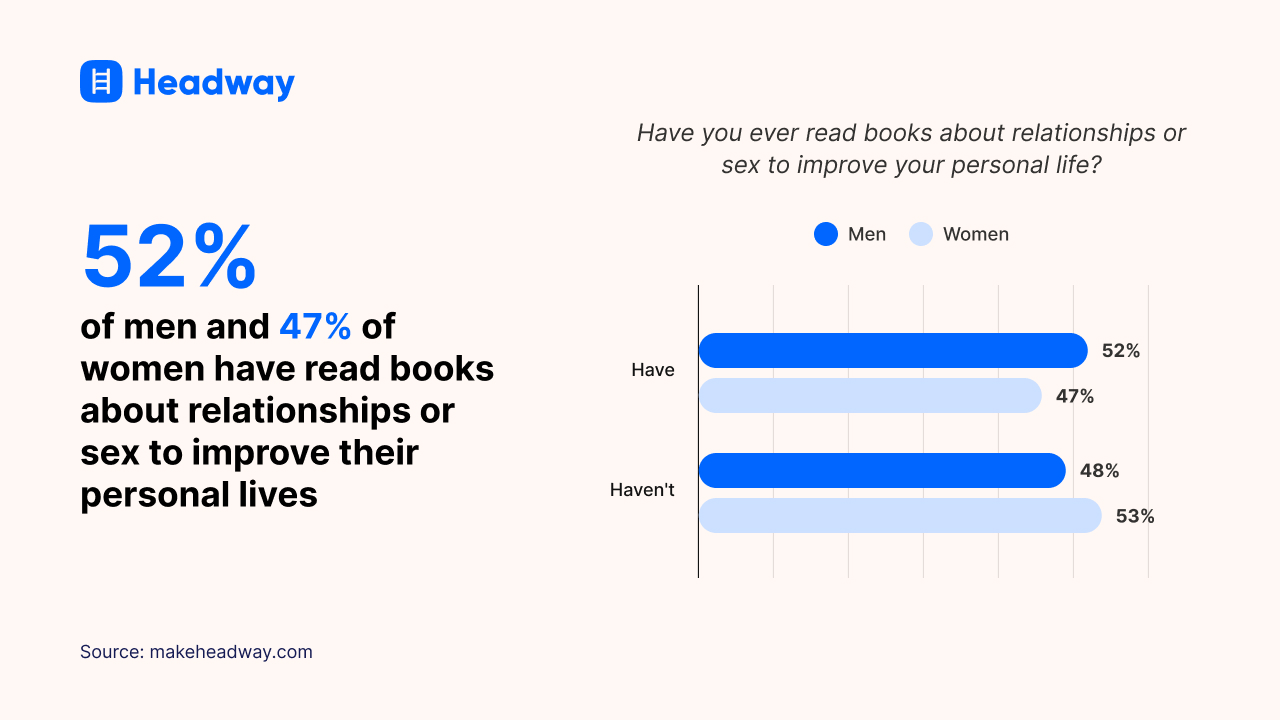
Love and romance, in particular, are subjects that bind readers. And, surprisingly, while romance novels are often targeted at women, it’s actually men who engage more with books about relationships and sex, with 52% having read them to improve their personal lives, compared to 47% of women.
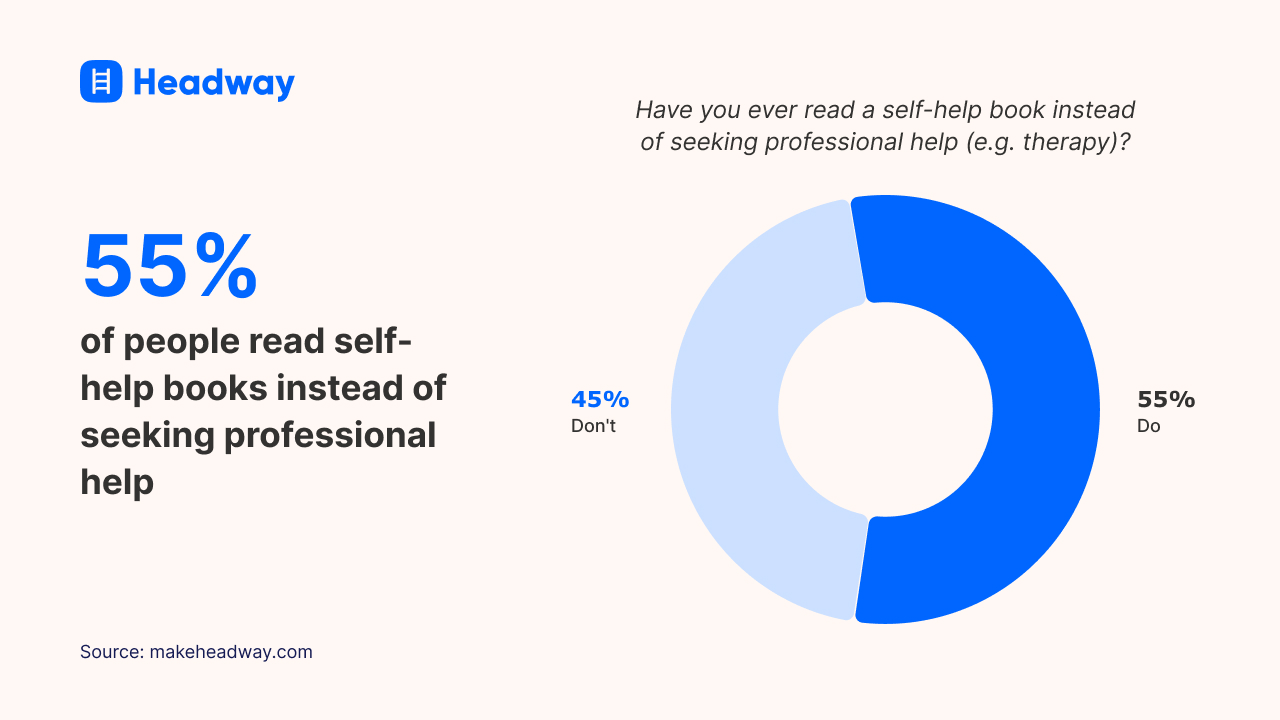
People today are taking their well-being far more seriously and actively investing in self-improvement. But instead of seeking expensive and time-consuming professional help to work through life’s hurdles, 55% are turning to self-help books instead.
Uncreased spines & unturned pages: Just how much do people read?
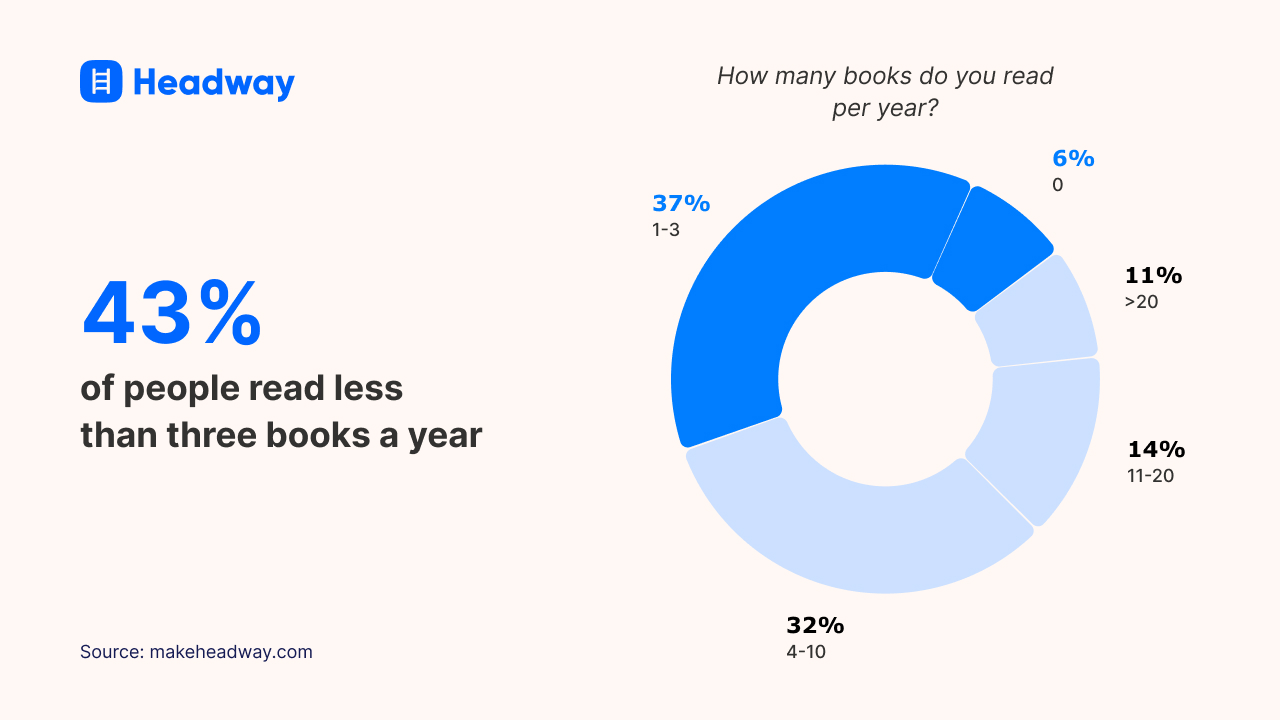
Most see the benefits of reading books and value the impact of reading on their intellect, focus, and growth. Yet, for many, that understanding doesn’t translate into habit. Reading statistics show that 43% of people read fewer than three books a year, with 6% not making it to “The End” even once.
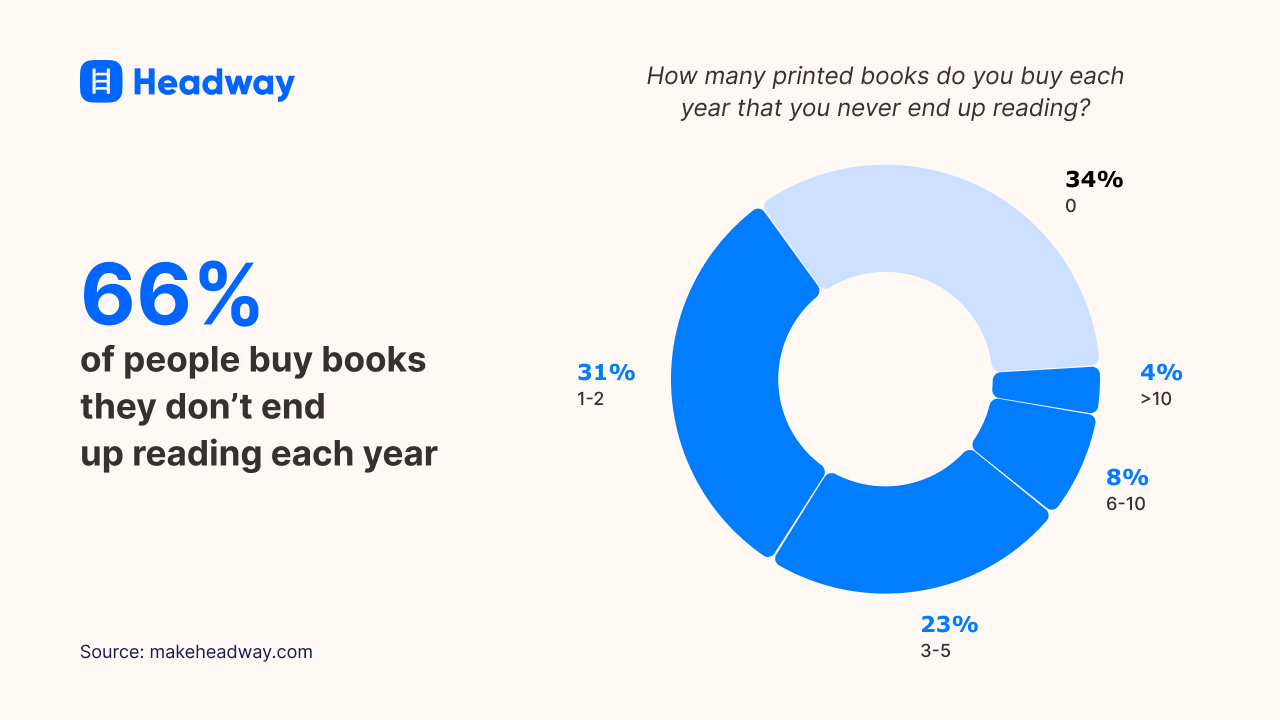
But while many aren’t reading all that much, it isn’t due to a lack of desire. Some 66% of people buy at least one book a year that they never get around to reading. Likewise, 35% buy three or more, and 4% add ten titles to their ever-growing to-read pile.
So if most would love to curl up with a good brain-booster, why don’t they? The main reason why people stop reading books is time. Life’s busy, and finding 30 minutes to get through even a single chapter can feel like a luxury.
However, you don’t have to commit to reading cover to cover to get to the moral of the story. Often, a bite-sized summary can tell it just as well.
Methodology: To create this study, researchers from the Headway app surveyed 2,000 professionals of all genders, aged 18 and over.
About the Headway app
With over 50 million users in 170+ countries, the Headway app is the world's most downloaded book summary app. It offers 15-minute audio and text summaries of nonfiction bestsellers, as well as daily microlearning sessions and gamified challenges. The app is designed to help people achieve their self-development goals. Headway received the Editor's Choice award from the US App Store and constantly hits the App Store home screen as App of the Day.