Self-growth
 Apps & Digital Tools
 Business & Career
 Success
 Growth Tools
 Psychology
 Communication
 Relationships

In July 2026, the World Health Organization updated its global dementia prevention guidelines and officially added cognitive training to its list of recommended interventions. The research highlights how targeted exercises can support neuroplasticity and maintain healthy brain function. That's a strong reason to care about which of the best brain training apps you can try.
A brain training app is any tool designed to challenge your memory, attention, or reasoning through repeated exercises, games, or structured learning. Below, you'll find 25 options, including well-known names like BrainHQ, Elevate, and NeuroNation, plus Headway, a book summary app that trains cognitive skills through knowledge retention and daily habit-building.
Try Headway and start building your own learning habit.
Quick summary: The three best brain training apps to start with
If you want the short version before diving into the best apps to improve memory, here it is.
BrainHQ has the strongest peer-reviewed foundation of any brain training app, especially for older adults working on processing speed.
Elevate targets practical language and writing skills, which sidesteps the transfer problem most brain training games struggle with.
Peak offers the most engaging daily training program for people who need gamification to stay consistent.
Keep reading for the full rundown of all 25 apps, honest verdicts, and a pricing table you can compare at a glance.

All app features described in this article are accurate as of September 2026. Prices may vary depending on your region, current promotions, and seasonal offers.
The 25 best brain training apps in 2026, reviewed
The following list covers the most downloaded, most researched, and most recommended brain training apps available on the App Store and Android, including several that work on fundamentally different principles from the traditional puzzle-game format.
The most popular daily habit-forming apps
Consistency is often the biggest hurdle in brain training; these apps use gamification and engaging interface design to help you turn a 10-minute session into a sustainable daily habit.
1. Lumosity
After the 2016 FTC settlement, Lumosity shifted toward research through its Lumos Labs Human Cognition Project, sharing anonymized data with researchers. A 2020 study in PNAS found improvements compared to a crossword puzzle control group, though effect sizes were modest.
Each brain teaser is designed to challenge specific neural pathways. With over 100 million users, Lumosity has the strongest daily workout routine of any brain training app on this list.
Price: about $12/month or $60/year, with three free games a day.
Honest verdict: Hard to beat for forming a consistent brain training habit. The science has become more credible since 2016, but real-world transfer remains limited and contested.
2. Peak
Peak partners with universities including Yale, Cambridge, and UCL and uses an AI-powered Coach to deliver personalized training plans in memory, attention, problem-solving, language, and mental agility. Strong gamification means better long-term adherence, which matters more than most people realize.
Price: about $7/month or $35/year, with a limited free version.
Honest verdict: The most entertaining brain training app on this list. If you need motivation to show up daily, Peak's game design will keep you coming back.
3. Headway
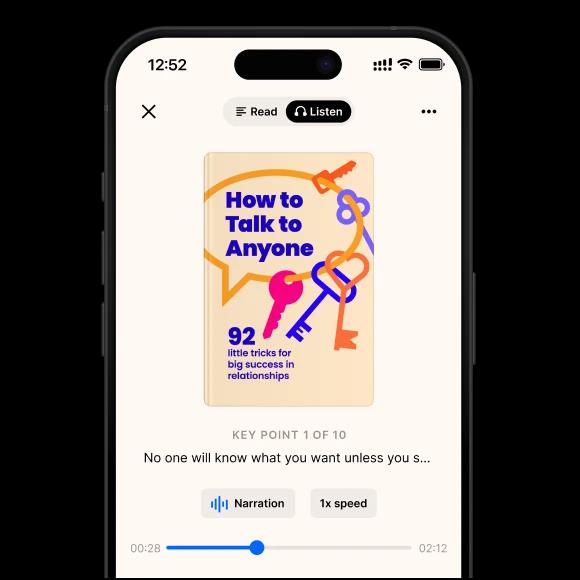
Most brain training apps train you to perform specific tasks faster or more accurately. Headway trains what your brain knows and how it processes ideas through 15-minute audio and text summaries of nonfiction bestsellers, daily insights, personalized reading lists, challenges, and progress tracking. Discover more productivity apps.
This isn't competing with BrainHQ on processing speed. It occupies a distinct, complementary space: consistent structured reading drives vocabulary growth and conceptual reasoning in ways that pattern-matching games simply don't touch. Users can get full access to all summaries and features with a premium subscription.
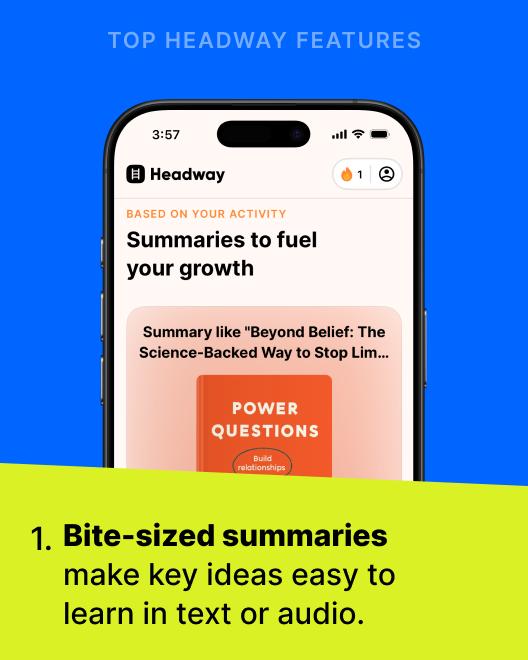
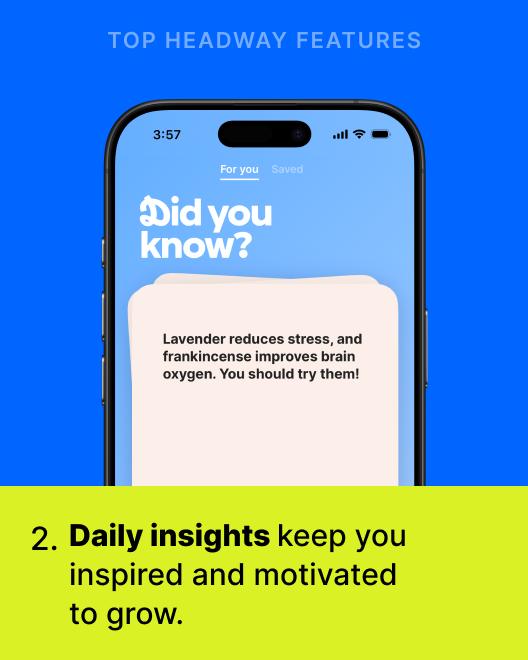


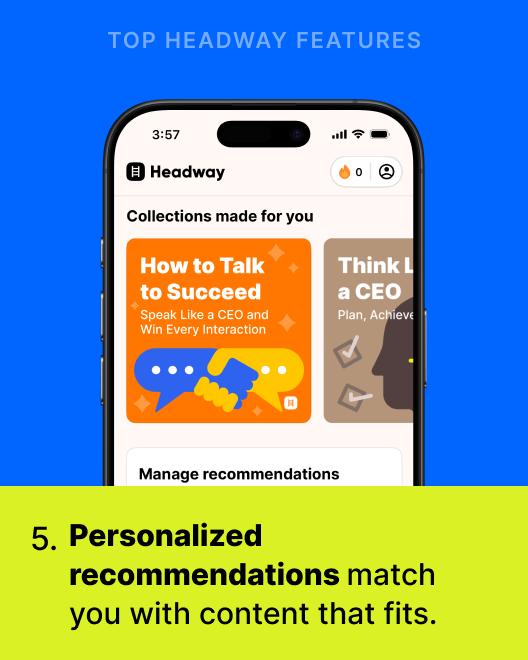
Price: 7-day trial, then about $8/month or $40/year.
Honest verdict: Headway isn't a traditional brain training app or standard app brain training program. It's a tool for cognitive growth through structured reading and knowledge absorption, and a natural complement to any training routine on this list.
📘 Give your brain the daily workout it deserves with Headway!
4. Impulse
Impulse focuses on focus and attention through gamified exercises covering reaction time, inhibition control, sustained attention, and cognitive flexibility. Research is limited compared to clinical tools, but ratings are strong, and the price is low.
Price: free with optional premium (about $5/month or $30/year).
Honest verdict: A solid low-cost option for attention training. Not a clinical intervention, but a legitimate daily focus-building tool.
5. MindPal
MindPal keeps things simple with memory and word games, making it an easy no-cost entry point for users seeking brain apps free of charge. Low friction means people actually open it. Peer-reviewed backing is limited compared to BrainHQ or CogniFit. Check out apps that make you smarter for similar tools.
Price: free.
Honest verdict: A reasonable free starting point for anyone curious about brain training. The low-friction format means most users will actually build the habit.
📘 Give your brain a break from puzzle games and try Headway instead!
Apps backed by the strongest research
For users prioritizing evidence-based results, these platforms stand out for their rigorous development and alignment with clinical or neuroscientific research standards, establishing themselves as key options among brain training programs.
6. BrainHQ (A Top Brain App)
Created by neuroscientist Michael Merzenich and recognized by the National Academy of Sciences, BrainHQ focuses on processing speed.
The ACTIVE trial followed nearly 2,800 older adults for 10 years and found a 29% reduction in dementia risk among those who trained their cognitive abilities through processing speed exercises.
Over 200 peer-reviewed papers reference its exercises. The strongest evidence applies to older adults and specific processing speed tasks, not blanket cognitive enhancement for everyone. For more options, see our guide on best learning apps.
Price: about $14/month or $96/year, with a limited free version.
Honest verdict: The most evidence-backed brain training app available. Particularly strong for adults over 50 focused on brain health. Younger users chasing general productivity gains may find the results less dramatic than the marketing suggests.
7. CogniFit
CogniFit takes a clinical approach, running an assessment first to identify specific cognitive abilities that need work before building a personalized training plan. It's used in healthcare settings for ADHD, mild cognitive impairment, and post-brain-injury recovery. It's also the most expensive option on this list and less polished in its interface.
Price: about $20-30/month depending on plan.
Honest verdict: The closest thing to a clinical tool in consumer app form. Hard to justify as a casual wellness habit for healthy users, but worth considering if you're managing a specific concern with a healthcare provider.
8. NeuroNation
Built with a connection to the Free University of Berlin, NeuroNation uses real-time adaptive difficulty, keeping training challenging without overwhelming you. Its working memory training draws on Torkel Klingberg's research at the Karolinska Institute. Transfer is narrowest for tasks that share cognitive demands with the exercises themselves.
Price: about $8/month or $55/year, with a limited free version.
Honest verdict: One of the better-designed adaptive systems available. Working memory is one of the few cognitive skills where training transfer has decent research support.
9. Cogmed
Cogmed comes from the Karolinska Institute and is primarily used in pediatric ADHD treatment and cognitive rehabilitation, often accessed through a licensed provider rather than downloaded directly. It has strong randomized controlled trial data behind its working memory claims. Explore further with our best microlearning apps list.
Price: varies by provider.
Honest verdict: The most clinically rigorous working memory training app in this category. If a specialist has recommended it, the evidence base is solid.
📘 Turn your daily commute into a memory workout with Headway!
Apps for language, writing, and practical real-life skills
These tools pivot away from abstract puzzles, focusing instead on refining the linguistic and analytical skills you rely on throughout your workday.
10. Elevate
Elevate focuses on language, writing, reading comprehension, vocabulary, and mental math. Because you practice the same skills you use in daily life, the gap between in-app scores and real-world performance is smaller than with abstract puzzles.
It won Apple's App of the Year, and a 2021 internal study found a 69% improvement on writing and grammar tasks (company-funded, not yet independently replicated).
Price: about $10/month or $50/year, with three free exercises a day.
Honest verdict: The most practical brain training app for everyday skill-building. Best for writers, communicators, and non-native English speakers who want gains they can use right away.
11. Brilliant
Brilliant focuses on science, math, logic, and data analysis through interactive problem-solving rather than timed drills. It functions more like a structured learning platform than a traditional brain app, which is worth knowing before you sign up.
Price: about $15/month or $70/year, with a limited free version.
Honest verdict: Not a traditional brain training app, but a strong choice for anyone who wants real intellectual challenge with measurable subject-matter learning built in.
12. Duolingo
Duolingo doubles as cognitive training through vocabulary acquisition, pattern recognition, working memory, and auditory processing, with a spaced repetition algorithm built into its lessons. Bilingualism has been linked to delayed cognitive decline in multiple studies.
Price: free with ads, or $7-13/month for Duolingo Max.
Honest verdict: Learning a language is one of the most cognitively demanding things you can do in 10 minutes a day. The benefits are more diffuse than processing speed training, but broader too.
13. Fit Brains Trainer
Developed by Vivity Labs and later acquired by Rosetta Stone, Fit Brains Trainer offers 360-plus games covering memory, concentration, speed, language, and problem-solving skills. Scientific backing is moderate compared to BrainHQ, but the variety keeps things interesting. Find more apps to replace social media here.
Price: free tier available; premium varies.
Honest verdict: A solid mid-tier choice among the best brain game apps with more variety across cognitive domains than many competitors, good for users who get bored easily.
Memory and retention tools powered by learning science: Effective memory improvement apps
Leveraging proven learning principles like active recall and spaced repetition, these tools are designed to help you commit new information to long-term memory more effectively.
14. Anki
Anki is one of the best free memory apps for adults on mobile and desktop, built on spaced repetition—a learning science principle where you review information at increasing intervals based on how well you recall it. The transfer argument is simple: you're memorizing real content, not abstract patterns.
Price: free on Android and desktop; a one-time $25 purchase on iOS.
Honest verdict: The best memory-building tool for anyone with specific content to retain, whether that's medical terms, vocabulary, or work facts.
15. Quizlet
Quizlet uses active recall, testing yourself through flashcards, matching, and interactive quizzes, which has strong research support for long-term retention over passive review. With more than 500 million shared study sets, you can start training memory on almost any topic without building your own materials.
Price: free with ads; $3-8/month for Quizlet Plus (a solid option if you need a free memory app tier).
Honest verdict: A better-supported memory tool than most dedicated brain training games, because it uses a proven mechanism on real content.
16. Memrise
Memrise combines spaced repetition, native speaker videos, and recall-based testing for language learning. It emphasizes real-world exposure over gamification, and the cognitive benefit is similar to Duolingo: a new language is a genuine brain workout.
Price: free tier available; about $9/month or $50/year for Pro.
Honest verdict: A strong alternative to Duolingo for anyone who wants more exposure to how a language actually sounds.
17. Personal Zen
Created by Tracy Dennis-Tiwary at CUNY Hunter College, Personal Zen is based on peer-reviewed research showing that training attentional patterns can support mental health, reduce anxiety, and improve cognitive control under stress. It trains the direction of attention rather than speed or accuracy. See more educational apps.
Price: free.
Honest verdict: A genuinely distinctive app, targeting the attentional bias that underlies anxiety-related cognitive interference. A strong free option if stress affects your focus.
Learning-forward tools that double as cognitive training
Beyond simple memory games, these platforms offer structured learning experiences that naturally challenge your executive function, reasoning, and pattern recognition.
Did you know? In July 2026, the World Health Organization officially recommended cognitive training as an evidence-based dementia prevention strategy, noting that up to 45% of dementia risk factors are modifiable.
18. Khan Academy
Khan Academy is a free nonprofit learning platform that functions as cognitive training through structured problem-solving in math, logic, science, and computing. Working through math problems demands working memory, pattern recognition, and sequential reasoning.
Price: completely free.
Honest verdict: Not a brain training app in the traditional sense, but one of the most cognitively demanding free tools available, with a strong educational research base behind it.
19. Happify
Now operating as Twill Therapeutics, Happify incorporates cognitive behavioral therapy techniques, positive psychology exercises, and attention training to improve mental health. A 2015 trial in the Journal of Medical Internet Research found users showed significant improvements in subjective well-being compared to control groups.
Price: free tier; $10-15/month for Happify Plus.
Honest verdict: A solid option if stress or low mood is dragging down your cognitive function, since the CBT-based approach is more clinically grounded than most brain game platforms.
20. Brainwell
Brainwell offers memory, focus, language, and problem-solving exercises designed with neuroscientists, landing between casual puzzle apps and clinical training platforms. Scientific backing is moderate.
Price: free with optional in-app purchases.
Honest verdict: A well-designed free option. It won't match BrainHQ's outcomes, but the daily habit is easy to build.
A different kind of brain training: What you learn matters
Some of the most effective 'brain training' isn't about playing games at all—it's about how you absorb, synthesize, and apply new knowledge in your daily life.
21. Happy Neuron
Developed by neuroscientists, it offers games based on psychology that target memory, attention, executive functions, language, and visual/spatial skills.
Price: about $10/month.
Honest verdict: A highly structured and science-first approach that feels more like a clinical program than a game, great for those who want clear, targetable goals.
22. The Clockwork Brain
This app provides a collection of fun, fast-paced puzzles; each brain teaser is designed to improve reaction time, memory, and concentration on your iPhone or tablet.
Price: free with in-app purchases.
Honest verdict: One of the most engaging options for a train your brain app, perfect for casual users who want to exercise their mind without it feeling like a chore.
23. Mensa Brain Training
Offers puzzles and games designed to test and improve your logic, reasoning, and memory under the guidance of Mensa's standards.
Price: about $3/month.
Honest verdict: A solid option if you're looking for the best brain games app that uses standard IQ-style puzzles and a recognizable brand to track your progress against.
24. Dual N-Back Pro
Focused strictly on the dual n-back task, which is one of the few brain training exercises with potential for improving working memory.
Price: about $5/month.
Honest verdict: A niche, no-frills tool for serious brain trainers who don't care about gamification and only want the most scientifically interesting drills.
25. Memory Match
A classic card-flipping game updated for modern mobile devices, designed to improve visual recall and concentration.
Price: free.
Honest verdict: Simple, low-stress, and effective for quick memory maintenance; a good 'beginner' app before moving to complex cognitive training.
📘 Grow your knowledge and your thinking with Headway!


What the research says about brain training apps (and why it matters before you download one)
Most brain training apps improve your performance on the games inside the app. Whether that improvement carries over into daily life is a separate question, and the answer depends on which app you use.
Researchers call this "near transfer" versus "far transfer." Near transfer means practice makes you better at that specific task. Far transfer means the skill spreads to unrelated areas of your life, and that's much harder to prove.
In 2016, Lumosity paid a $2 million FTC fine for unsupported claims about preventing cognitive decline and protecting against Alzheimer's. It's worth knowing as context, not as a reason to write off brain games altogether.
Some training types show stronger transfer evidence than others. Processing speed training, working memory exercises, and practical skill practice that mirrors real daily tasks tend to hold up better under scrutiny than abstract puzzle games.
Screen time can sharpen your thinking
True cognitive strength comes from engaging with deep, practical ideas daily.
Challenge your mindHow to pick the right brain training app before you download anything
The best brain training app for a 70-year-old managing memory concerns isn't the same one that helps a 30-year-old sharpen their writing. Here's a quick framework.
Think about your goal first: memory retention, focus and attention, language skills, logical reasoning, knowledge building, or ADHD-related concentration. Finding dedicated memory apps or apps that stimulate the brain points toward a different type of solution.
Next, consider your habit style. Some people need gamified streaks and scores, like Lumosity or Peak, to stay engaged. Others do better with structured clinical plans like BrainHQ or Cogmed, active recall systems like Anki or Quizlet, or content-based learning like Headway or Khan Academy.
Finally, factor in time and budget. Some apps ask for 5 to 10 minutes a day, others closer to 25. Some are fully free, others run $10 to $30 a month.

Honest verdict: Which brain training apps are worth your time in 2026
For evidence-backed cognitive health support if you're 50 or older, start with BrainHQ, then consider CogniFit if you're working with a provider, or Cogmed if ADHD is a factor.
For building a daily habit with strong engagement, Lumosity has the best UX and Peak has the best gamification. Fit Brains Trainer is a solid variety-focused alternative to either.
For practical, real-life skill improvement, Elevate covers language and writing, Brilliant handles reasoning and logic, and Duolingo or Memrise turn language learning into brain training.
For memory and retention of real content, Anki works well with spaced repetition, and Quizlet fits active recall, depending on whether you want premade material or your own.
For stress- and attention-related challenges, Personal Zen or Happify target the mechanisms that anxiety and worry disrupt. For budget-friendly casual training, MindPal, Brainwell, and Impulse are great choices among free brain training apps.
For knowledge-based cognitive growth, Headway stands on its own, or pairs well with Khan Academy if you want structured subject learning alongside broader nonfiction reading.
A two-track approach, BrainHQ for processing speed and Headway for knowledge growth, covers both the hardware and the software of a sharper brain. Neither replaces the other.
Pricing at a glance: All 25 best brain training apps compared
Prices below are approximate and may vary by platform, region, or current promotion. Always check the App Store or Google Play for current pricing before subscribing.
App | Free version | Monthly price | Annual price | Best for |
BrainHQ | Limited | ~$14/mo | ~$96/yr | Processing speed, brain health (50+) |
CogniFit | Limited | ~$20-30/mo | Varies | Clinical use, specific concerns |
NeuroNation | Yes (limited) | ~$8/mo | ~$55/yr | Adaptive working memory training |
Cogmed | No (via provider) | Varies | Varies | Clinical ADHD and working memory rehab |
Elevate | Yes (3/day) | ~$10/mo | ~$50/yr | Language and communication skills |
Brilliant | Yes (limited) | ~$15/mo | ~$70/yr | Logic, math, and reasoning |
Duolingo | Yes (ads) | ~$7-13/mo | ~$84/yr | Language learning as brain training |
Fit Brains Trainer | Yes (limited) | Varies | Varies | Multi-domain daily variety |
Lumosity | Yes (3/day) | ~$12/mo | ~$60/yr | Daily habit building, broad games |
Peak | Yes (limited) | ~$7/mo | ~$35/yr | Gamified daily training |
Impulse | Yes (full) | Free / ~$5/mo | ~$30/yr | Focus and attention exercises |
MindPal | Yes (full) | Free | Free | Budget-friendly starting point |
Anki | Yes (Android/desktop) | Free | ~$25 (iOS, one-time) | Spaced repetition for real content |
Quizlet | Yes (ads) | ~$3-8/mo | ~$36/yr | Active recall, any subject |
Memrise | Yes (limited) | ~$9/mo | ~$50/yr | Language learning + native speaker input |
Personal Zen | Yes (full) | Free | Free | Attention bias, stress-related focus |
Happify | Yes (limited) | ~$10-15/mo | Varies | Emotional wellness + cognitive training |
Brainwell | Yes (full) | Free | Free | Free daily brain workouts |
Khan Academy | Yes (full) | Free | Free | Math, logic, reasoning |
Headway | 7-day trial | ~$8/mo | ~$40/yr | Knowledge growth, structured reading |
Happy Neuron | N/A | ~$10/mo | N/A | Structured science-first approach |
The Clockwork Brain | Yes | Free/in-app | N/A | Casual users, reaction time |
Mensa Brain Training | N/A | ~$3/mo | N/A | Standard IQ-style puzzles |
Dual N-Back Pro | N/A | ~$5/mo | N/A | Serious brain trainers, working memory |
Memory Match | Yes | Free | N/A | Visual recall, concentration |
What Headway users are saying
Curious whether daily reading actually feels like a workout for the brain? Here's what real users say.
"I've been using Headway for a few months now, and it has genuinely changed how I spend my downtime. Instead of mindlessly scrolling, I get through a summary and actually remember what I read." — App Store review
"The variety of topics keeps me coming back every day. I feel like I'm learning something new constantly, and the audio option makes it easy to fit in during my commute." — App Store review
"I was skeptical at first, but the daily streaks actually got me to stick with it longer than any other app I've tried." — Google Play review
"Short, easy-to-digest summaries that fit into my day without feeling like a chore. My focus and vocabulary have genuinely improved." — App Store review
📘 See why thousands of users made Headway part of their daily routine!
Build cognitive skills with Headway daily learning sessions
Headway pairs 15-minute audio and text summaries with personalized growth plans built around your goals and interests. Spaced repetition and highlights help key ideas stick instead of fading after a day.
Offline mode means you can keep training your brain on a flight or subway with no signal. CarPlay and Android Auto support turns your commute into a learning session, and daily streaks keep the habit going without feeling forced.
Ready to build a sharper mind with the Headway app? Between the best brain training apps above, most people will find at least two or three worth trying, whether that's BrainHQ for processing speed, Elevate for writing, or Headway for knowledge growth.
Headway isn't trying to replace processing speed games or clinical working memory tools. It fills a different gap: giving your brain real ideas to chew on, in a format that fits a busy schedule and doesn't require a subscription to a puzzle leaderboard.
Download Headway today and start building the kind of cognitive habit that sticks, one 15-minute summary at a time.
FAQs about best brain training apps
Do brain training apps improve memory in real life?
Some do, some don't. Apps with strong research behind them, like BrainHQ for processing speed or Anki as a best memory app for spaced repetition, show more evidence of real-world benefit than casual puzzle apps. Most brain games improve performance on the specific tasks trained, so check the science before assuming an improved memory app translates to everyday memory gains.
What is the most scientifically proven brain training app?
BrainHQ has the strongest research base among brain training apps, making it a top brain training program backed by the ACTIVE trial and over 200 peer-reviewed papers. It's particularly well-studied for processing speed in older adults. Cogmed also has solid clinical trial data for working memory, though it's typically accessed through a healthcare provider rather than downloaded directly by consumers.
Is there a best app for brain training that's completely free?
Yes. MindPal, Brainwell, Personal Zen, and Khan Academy are all solid options if you are searching for free brain apps without subscription requirements. Anki is also among the best free memory improvement apps on Android and desktop. They won't match the depth of clinical tools like CogniFit, but they're a reasonable no-cost entry point into daily brain workouts.
Can brain training apps help with ADHD or focus problems?
Some can. Cogmed has clinical trial data supporting its use for pediatric ADHD, and Impulse offers accessible exercises targeting attention and inhibition control on the iPhone. Personal Zen acts as a targeted cognitive app to train attentional bias, which can affect focus under stress. None of these apps for brain training replace a diagnosis or treatment plan from a licensed provider.
How many minutes a day should you use a brain training app?
Most brain training apps recommend 10 to 20 minutes daily for meaningful engagement without burnout. Consistency tends to matter more than duration, so a short daily workout session beats an occasional hour-long one. Options like Peak, Lumosity, and other apps like Elevate are built around quick daily sessions for exactly this reason.
What is the difference between brain training apps and spaced repetition tools like Anki?
Traditional brain training apps use abstract games designed to test specific cognitive skills, such as reaction time or working memory. Spaced repetition tools like Anki and Quizlet are often considered some of the best apps for memory improvement because they have you memorize real content, vocabulary, facts, or concepts you actually need. That difference matters because retaining real information tends to transfer to daily life more reliably than abstract game scores.
Which brain training app is best for older adults?
BrainHQ ranks high among the best brain apps for older adults, with a decade-long randomized trial showing a 29% reduction in dementia risk tied to processing speed training. CogniFit is another option if you're managing a specific cognitive concern with a provider. Khan Academy and Headway also offer low-pressure ways to stay mentally active daily.
What is the best free brain training app for Android and iOS?
MindPal and Brainwell are both fully free and available on Android and iOS, offering memory, word, and problem-solving games without a paywall, making them strong contenders if you want the best brain training apps free of charge. Khan Academy is free and cross-platform for structured learning. If you want something research-backed with a free tier, NeuroNation and Duolingo also offer solid limited free versions.